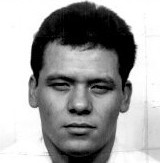
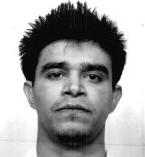
Irineo Tristan Montoya
Murderer Brian Kevin Rosenfeld
Murderer · USA · 1985
Brian Kevin Rosenfeld Brian Kevin Rosenfeld was sentenced to three concurrent l…
23 victims
Brian Kevin Rosenfeld
Murderer · USA · 1985
Brian Kevin Rosenfeld Brian Kevin Rosenfeld was sentenced to three concurrent l…
23 victims
 Marvin Gray
Murderer · USA · 1975
Marvin Gray was convicted killer who claimed responsibility for 23 slayings and…
23 victims
Marvin Gray
Murderer · USA · 1975
Marvin Gray was convicted killer who claimed responsibility for 23 slayings and…
23 victims
 Yahweh ben Yahweh
Murderer · USA · 1980
Yahweh ben Yahweh was born and legally named Hulon Mitchell Jr. (October 27, 19…
23 victims
Yahweh ben Yahweh
Murderer · USA · 1980
Yahweh ben Yahweh was born and legally named Hulon Mitchell Jr. (October 27, 19…
23 victims
 Russell Ellwood
Murderer · USA · 1991
Russell Ellwood was a former taxi driver. Authorities suspected him of killing…
20 victims
Russell Ellwood
Murderer · USA · 1991
Russell Ellwood was a former taxi driver. Authorities suspected him of killing…
20 victims
 Robert Pickton
Serial killer · Canada · 1995
Robert William "Willie" Pickton (born October 26, 1949) of Port Coquitlam, Brit…
49 victims
Robert Pickton
Serial killer · Canada · 1995
Robert William "Willie" Pickton (born October 26, 1949) of Port Coquitlam, Brit…
49 victims
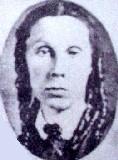 Phoebe Campbell
Murderer · Canada · 1871
Phoebe Campbell (c. 1847 – 20 June 1872) was a Canadian woman executed by hangi…
1 victim
Phoebe Campbell
Murderer · Canada · 1871
Phoebe Campbell (c. 1847 – 20 June 1872) was a Canadian woman executed by hangi…
1 victim
 De'Marquise Elkins
Homicide · USA · 2013
De'Marquise Elkins was a Georgia teenager who fatally shot a baby in a stroller…
1 victim
De'Marquise Elkins
Homicide · USA · 2013
De'Marquise Elkins was a Georgia teenager who fatally shot a baby in a stroller…
1 victim
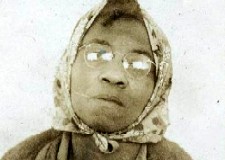 Lena Baker
Homicide · USA · 1944
Lena Baker was born on June 8, 1901, and was executed on March 5, 1945. She was…
1 victim
Lena Baker
Homicide · USA · 1944
Lena Baker was born on June 8, 1901, and was executed on March 5, 1945. She was…
1 victim
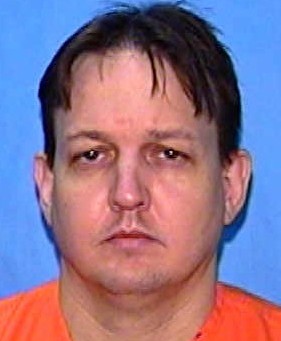 Ronald Wayne Clark
Murderer · 1990
Ronald Wayne Clark was sentenced to death on February 22, 1991. · 01/12/90 — Ro…
2 victims
Ronald Wayne Clark
Murderer · 1990
Ronald Wayne Clark was sentenced to death on February 22, 1991. · 01/12/90 — Ro…
2 victims
- Gender
- male
- Country
- USA
- Location
- Cameron County, Texas, USA
- Date of birth
- J une 3, 1967
- Age at first offence
- 18
- Characteristics
- robbery, rape
- Victim profile
- John Edgar Kilheffer, 46
- Method of murder
- St abbing with knife
- Date(s) of murder
- November 17, 1985
- Years active
- 1985
- Date of arrest
- —
- Status
-
Executed
Executed by lethal injection in Texas on June 18, 1997
Case details
Irineo Tristan Montoya, offender No. 847, was executed by lethal injection in Texas on June 18, 1997.
Timeline
- June 18, 1997 — Irineo Montoya was executed by lethal injection in Texas.
- June 19, 1997 — The New York Times reported that a Mexican man was executed for the 1985 stabbing and beating death of John Kilheffer.
Background
A Mexican man was executed for the 1985 stabbing and beating death of John Kilheffer, who had given Irineo Montoya and a companion a ride after they were picked up hitchhiking home from the Port of Brownsville, Texas.
Montoya’s supporters contended that he signed a confession in English that he did not understand, without a lawyer present, and was not allowed to contact the Mexican consulate when arrested, violating an international treaty. The Mexican government had protested the death sentence. Mexico has no civilian death penalty.
The offence
Montoya and a friend, Juan Villavicencio, killed John Kilheffer after Kilheffer picked them up hitchhiking home from the Port of Brownsville, Texas.
In his confession, Montoya claimed that he held Kilheffer in the back seat while Villavicencio, who had pushed Kilheffer out of the driver’s seat and was driving Kilheffer’s vehicle, stabbed Kilheffer.
A witness at trial testified that Villavicencio had told him, in Montoya’s presence, that Montoya had held Kilheffer in the back seat and stabbed him. The witness further testified that while Villavicencio told the story, Montoya made faces as if he were laughing.
Montoya and Villavicencio stole Kilheffer’s jewelry, clothes, and wallet and left his body in a grapefruit grove.
The State introduced evidence at the sentencing phase that, during the months in and around the time of the murder, Montoya had raped one woman and sexually assaulted and robbed another at knife point.
Montoya called witnesses who testified that he was a responsible and respectful young man and that they had never seen him with a weapon or acting disrespectfully toward women.
Trial
A jury convicted Montoya of capital murder.
At sentencing, the jury answered “yes” to the first two Texas special issues, and the trial court sentenced Montoya to death.
The Texas Court of Criminal Appeals affirmed Montoya’s conviction and sentence, and the United States Supreme Court denied certiorari.
Appeals
Montoya filed a petition for a state writ of habeas corpus. The state trial court entered findings of fact and conclusions of law the day after Montoya filed his petition. Later that day, the Texas Court of Criminal Appeals denied the writ based on the trial court’s findings of fact and conclusions of law.
The next day, Montoya filed a petition for a federal writ of habeas corpus, and the district court stayed Montoya’s execution pending its consideration of Montoya’s claims.
The district court granted Montoya’s petition on two of his claims and denied relief on the other twenty-five. The court also issued a certificate of probable cause to appeal.
Wayne Scott, Director of the Texas Department of Criminal Justice, Institutional Division, appealed from the district court’s judgment with respect to the two claims on which the district court granted Montoya habeas relief. Montoya cross-appealed with respect to six of the claims on which the district court denied relief.
Fifth Circuit decision (65 F.3d 405)
The United States Court of Appeals, Fifth Circuit, affirmed in part, reversed in part, and remanded with instructions to deny relief.
Claim: alleged jury coercion by supplemental instructions
Scott argued that the district court erroneously held that the state trial court judge coerced the jury into answering the Texas special issues affirmatively.
After deliberating on the special issues for an hour and forty minutes, the jury foreman sent the court two notes:
- The first read: “We have not been able to reach a unanimous decision on yes or no.”
- The second, which the court received minutes later, read: “We are awaiting further instructions. We are all definite in our decisions.”
The court proposed asking the jury: “Ladies and Gentlemen of the Jury: Without telling me for what answer the jury has cast its votes, could you please indicate what the numerical vote is for each special issue?”
Defense counsel moved for a directed verdict, and the court overruled the motion and sent its note inquiring as to the jury’s vote.
The jury responded that it was divided nine to three on the first special issue and ten to two on the second special issue.
Defense counsel renewed his motion for a directed verdict, and the court sent the following note to the jury: “Would you please deliberate for another 30 minutes to see if you are able to reach an answer to the special issues in accordance with the Court's instructions and please report to me after that.”
Forty minutes later, the jury informed the court that it had reached a verdict.
The district court held that the state trial court’s request that the jury continue deliberating for thirty minutes, following its inquiry into the jury’s numerical division, unconstitutionally coerced the jury.
The Fifth Circuit held that the district court erred in granting Montoya’s request for habeas relief on the grounds that the state trial court unconstitutionally coerced the jury into answering “yes” to the special issues.
The Fifth Circuit noted that the trial court’s supplemental instruction did not contain language suggesting that the jury was required to reach a verdict and instead simply asked the jury to deliberate for another half hour “to see if you are able to reach an answer to the special issues.”
The Fifth Circuit also discussed the inquiry into the numerical division of the jury in the habeas context and concluded that, on balance, the state trial court’s instruction to continue deliberating for thirty minutes was not under the circumstances so coercive as to have rendered Montoya’s trial fundamentally unfair.
Claim: jury instruction on Texas “law of parties” and conspiracy theory
Scott also challenged the district court’s holding that the state trial court unconstitutionally instructed the jury on Texas’ “law of parties” because Montoya had not been charged with conspiracy to commit murder.
The trial court instructed the jury under Texas’ “law of parties” statute, Tex. Penal Code Ann. Sec. 7.02 (West 1994), on an aiding and abetting theory of criminal liability, Tex. Penal Code Ann. Sec. 7.02(a)(2), and a conspiracy theory of criminal liability, Tex. Penal Code Ann. Sec. 7.02(b).
Under section 7.02(b) of the Texas Penal Code, the court quoted: “If, in the attempt to carry out a conspiracy to commit one felony, another felony is committed by one of the conspirators, all conspirators are guilty of the felony actually committed, though having no intent to commit it, if the offense was committed in furtherance of the unlawful purpose and was one that should have been anticipated as a result of the carrying out of the conspiracy.”
The Fifth Circuit held that Jacobs v. Scott foreclosed the district court’s holding and rejected Montoya’s argument for habeas relief based on the trial court’s Sec. 7.02(b) instruction.
Claim: mitigating evidence and the “law of parties” instruction at penalty phase
In his cross-appeal, Montoya argued that the district court erroneously rejected his eighth claim that the jury instructions prevented the jury from considering his mitigating evidence that he was not the principal actor in the murder.
Montoya argued that because the trial court instructed the jury on Texas’ “law of parties” but failed to clarify that the “law of parties” does not apply during the penalty phase of his trial, the jury was precluded from considering or giving effect to his mitigating evidence that Villavicencio and not he killed Kilheffer.
The Fifth Circuit applied Boyde v. California’s standard and held that Montoya’s claim was foreclosed because the Fifth Circuit had previously rejected similar claims, stating that if a jury believed that the defendant’s accomplice killed the murder victim, the jury could answer “no” to either of the first two Texas special issues.
Claim: jury instructions excluding parole eligibility evidence
Montoya argued that the trial court’s instructions unconstitutionally prevented the jury from giving mitigating effect to the fact that if he had been sentenced to life in prison, he would have been required to serve twenty years before becoming eligible for parole.
The trial court instructed the jury not to consider Montoya’s eligibility for parole, as Texas law required it to do, citing O’Bryan v. Estelle: “Under Texas law, a jury may not consider the possibility of parole in its deliberation on punishment.”
Montoya’s claim relied on Simmons v. South Carolina.
The Fifth Circuit held that Simmons claims were foreclosed by circuit authority rejecting an extension beyond situations in which a defendant is statutorily ineligible for parole.
The Fifth Circuit quoted from Allridge v. Scott: “We rejected his claim, reading Simmons ‘to mean that due process requires the state to inform a sentencing jury about a defendant's parole ineligibility when, and only when, (1) the state argues that a defendant represents a future danger to society, and (2) the defendant is legally ineligible for parole.’”
Claim: denial of discovery and evidentiary hearing on juror knowing the victim
Montoya argued that the district court erroneously denied him discovery and an evidentiary hearing on his claim that one of the jurors who convicted him knew the victim.
The Fifth Circuit discussed the standard for discovery and an evidentiary hearing in federal habeas proceedings.
Montoya’s allegations were: “All jurors were asked at voir dire whether they knew the alleged victim, John E. Kilheffer. No juror admitted any knowledge of him. In fact, [Juror X] knew Kilheffer, had known him for a while, and admitted this to a fellow juror. Her failure to respond to the court's inquiry on voir dire concealed critical information regarding grounds for striking her for cause and her potential biases and prejudices.... [Juror X's] failure to tell the truth on voir dire is itself evidence of bias. The law implies bias in this situation. In the unlikely event that the court does not find bias as a matter of law, Petitioner will demonstrate actual bias at the evidentiary hearing.”
In response to the State’s motion for summary judgment, Montoya described his claim: “[Juror X's] concealment of her acquaintance with the deceased was obviously a failure to answer honestly a material question on voir dire. Further, her friendship with the deceased certainly would have formed the basis of a challenge for cause.”
The Fifth Circuit discussed the McDonough Power Equipment, Inc. v. Greenwood standard for juror dishonesty on voir dire and held that Montoya’s claim failed because he failed to establish the second prong regarding whether Juror X’s correct response would have constituted a valid basis for challenging Juror X for cause under Texas law.
Because Montoya’s allegations failed to establish a prima facie case, the Fifth Circuit held that the district court did not abuse its discretion in denying discovery and an evidentiary hearing.
Claim: Caldwell violation regarding jury responsibility for death penalty
Montoya contended that the trial court, in its instructions during voir dire, diminished the jury’s sense of responsibility for imposing the death penalty by misinforming it of its role.
The Fifth Circuit held that the instructions accurately characterized the jury’s role under Texas law and therefore did not violate Caldwell.
The Fifth Circuit described Texas’ death penalty procedure in effect at the time of Montoya’s conviction, stating that if the jury returned affirmative findings on each issue submitted, the court sentenced the defendant to death; if the jury returned a negative finding on any issue, the court sentenced the defendant to confinement for life.
The Fifth Circuit also noted that the “total trial scene” included communications to the jury of their responsibility, including that the prosecutor asked potential jurors during voir dire if they understood that the jury’s answers to the special issues would determine whether or not Montoya received the death penalty.
The Fifth Circuit held that the district court properly rejected Montoya’s Caldwell claim.
Other claims
The Fifth Circuit stated that the remainder of Montoya’s claims warranted little discussion. Montoya argued that the trial court violated his fifth, eighth, and fourteenth Amendment rights by introducing evidence of unadjudicated criminal conduct at the penalty phase; the Fifth Circuit held these issues were foreclosed by circuit precedent.
Montoya also argued he was illegally detained without a prompt determination of probable cause in violation of Gerstein v. Pugh.
The Fifth Circuit stated Montoya’s claim was unsupported by the record and, even if supported, illegal detention did not void a subsequent conviction under Gerstein.
Sentencing
Last statement
Montoya’s last statement was: “Goodbye. I will wait for you in Heaven. I will be waiting for you. I love my parents. I am at peace with God. Fight for the good.”
Other details
Wayne Scott, Director of the Texas Department of Criminal Justice, Institutional Division, was the respondent in the federal appeal.
The Fifth Circuit decision included a special concurring opinion by Garwood and Jones, Circuit Judges.
The Fifth Circuit’s decision also referenced that additional grounds were considered for rejecting Montoya’s request for discovery and an evidentiary hearing related to juror knowledge of the victim.
The concurring opinion described additional details about what Montoya alleged in state court and federal court regarding Juror X and his efforts to obtain discovery and an evidentiary hearing.

Spotted an error, or have more information about this case?