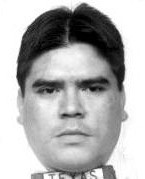
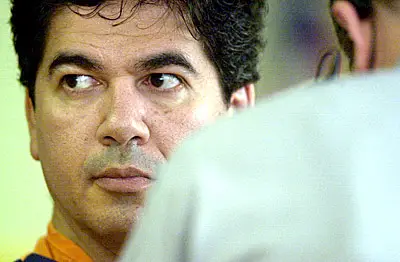
Jose Alfredo Rivera
Murderer Brian Kevin Rosenfeld
Murderer · USA · 1985
Brian Kevin Rosenfeld Brian Kevin Rosenfeld was sentenced to three concurrent l…
23 victims
Brian Kevin Rosenfeld
Murderer · USA · 1985
Brian Kevin Rosenfeld Brian Kevin Rosenfeld was sentenced to three concurrent l…
23 victims
 Russell Ellwood
Murderer · USA · 1991
Russell Ellwood was a former taxi driver. Authorities suspected him of killing…
20 victims
Russell Ellwood
Murderer · USA · 1991
Russell Ellwood was a former taxi driver. Authorities suspected him of killing…
20 victims
 Robert Martines Perez
Murderer · USA · 1994
Name: Robert Martines Perez · Other name used in proceedings: Robert Martinez P…
15 victims
Robert Martines Perez
Murderer · USA · 1994
Name: Robert Martines Perez · Other name used in proceedings: Robert Martinez P…
15 victims
 Billy Frank Vickers
Murderer · USA · 1993
Billy Frank Vickers Vickers was executed by lethal injection in Texas on Januar…
14 victims
Billy Frank Vickers
Murderer · USA · 1993
Billy Frank Vickers Vickers was executed by lethal injection in Texas on Januar…
14 victims
 Damon Matthews
Murderer · USA · 2003
Damon Matthews (TDCJ Number 999476) was convicted of capital murder in Harris C…
1 victim
Damon Matthews
Murderer · USA · 2003
Damon Matthews (TDCJ Number 999476) was convicted of capital murder in Harris C…
1 victim
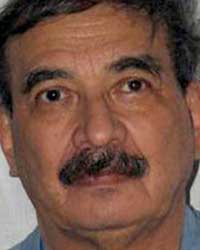 Robert Diaz
Serial killer · USA · 1981
Robert Rubane Diaz (also known as David Robert Diaz), American nurse; convicted…
12 victims
Robert Diaz
Serial killer · USA · 1981
Robert Rubane Diaz (also known as David Robert Diaz), American nurse; convicted…
12 victims
 Nasra al-Enezi
Mass murderer · Kuwait · 2009
Nasra Yussef Mohammad al-Enezi, known as Nasra al-Enezi, was the 23-year-old ex…
58 victims
Nasra al-Enezi
Mass murderer · Kuwait · 2009
Nasra Yussef Mohammad al-Enezi, known as Nasra al-Enezi, was the 23-year-old ex…
58 victims
 Louise Vermilyea
Serial killer · USA · 1893
Louise Vermilyea was a “black widow” poisoner who killed husbands and children,…
9 victims
Louise Vermilyea
Serial killer · USA · 1893
Louise Vermilyea was a “black widow” poisoner who killed husbands and children,…
9 victims
- Gender
- male
- Country
- USA
- Location
- Cameron County, Texas, USA
- Date of birth
- December 23, 1962
- Age at first offence
- 31
- Characteristics
- rape, murder for hire
- Victim profile
- Daniel Luis Blanco, 3
- Method of murder
- Ligature strangulation
- Date(s) of murder
- July 9, 1993
- Years active
- 1993
- Date of arrest
- Next day
- Status
-
Executed
Sentenced to death on June 2, 1994; conviction and sentence were affirmed on March 6, 1996; habeas relief and DNA testing were denied, and Rivera was scheduled to be executed after 6 p.m. on Wednesday, Aug. 6, 2003.
Case record: Jose Alfredo Rivera
Status and procedural posture
Jose Alfredo Rivera was sentenced to death on June 2, 1994. His direct appeal resulted in affirmation of his conviction and sentence on March 6, 1996. He was scheduled to be executed after 6 p.m. on Wednesday, Aug. 6, 2003.
Timeline
- 10/13/93 — Jose Alfredo Rivera was indicted for the capital murder of Daniel Luis Blanco.
- 05/12/94 — Rivera was found guilty of capital murder; after a separate punishment hearing, he was sentenced to death.
- 06/30/94 — Rivera's motion for a new trial was overruled following a hearing.
- 04/19/95 — Rivera filed a direct appeal brief raising six points of error.
- 05/19/95 — The State responded through the Cameron County District Attorney's Office.
- 03/06/96 — The Texas Court of Criminal Appeals affirmed Rivera's conviction and sentence in an unpublished opinion on direct appeal.
- 04/21/97 — Rivera filed his original state writ of habeas corpus application, supplementing it on Dec. 8, 1997, and raising a total of 30 claims.
- 01/09/98 — The State answered the writ through the Cameron County District Attorney's Office.
- 11/06/98 — The state habeas court issued findings of fact and conclusions of law, recommending that relief be denied on all claims.
- 12/16/98 — The Texas Court of Criminal Appeals adopted the habeas court's findings and conclusions and denied habeas relief.
- 07/27/99 — Rivera filed a federal petition for writ of habeas corpus raising 24 claims.
- 04/12/00 — The State answered the writ, representing Gary Johnson, former Director for the Texas Department of Criminal Justice's Institutional Division.
- 05/21/01 — Rivera replied to the Director's answer.
- 08/27/01 — A United States Magistrate Judge issued a report recommending denial of an evidentiary hearing, the granting of the Director's motion for summary judgment, and denial of all habeas relief.
- 10/03/01 — The United States District Court for the Southern District of Texas, Brownsville Division, denied relief and entered final judgment.
- 12/03/01 — The district court denied a certificate of appealability (“COA”) on each of Rivera's claims.
- 12/06/01 — Rivera moved the state trial court for post-conviction DNA testing.
- 05/13/02 — Rivera applied for a COA from the Fifth Circuit Court of Appeals raising 26 issues.
- 07/15/02 — The State opposed Rivera's request for COA, representing current TDCJ-ID Director Janie Cockrell.
- 09/18/02 — Oral argument was heard at the Court of Criminal Appeals on Rivera's appeal of the denial of post-conviction DNA testing.
- 11/06/02 — The Court of Criminal Appeals affirmed the trial court's order denying DNA testing.
- 11/27/02 — The Fifth Circuit denied Rivera's COA application in an unpublished opinion.
- 03/14/03 — The 197th District Court of Cameron County, Texas, set Rivera's execution for Wednesday, Aug. 6, 2003.
- 06/21/03 — Rivera filed a successive state habeas application in the trial court and separately moved for expert psychiatric assistance to evaluate his mental condition and for post-conviction DNA testing.
- 07/07/03 — Rivera petitioned for clemency from the Texas Board of Pardons and Paroles.
- 07/25/03 — The Court of Criminal Appeals dismissed Rivera's successive state writ alleging mental retardation.
- 08/01/03 — Rivera petitioned for rehearing of the Court of Criminal Appeals' July 25 order dismissing his successive state habeas application.
- 08/4/03 — The Texas Board of Pardons and Paroles denied Rivera's request for clemency.
- 08/04/03 — Rivera lodged in the Fifth Circuit Court of Appeals a motion for authorization to file a successive federal habeas petition seeking permission to return to the United States District Court, Brownsville Division, to litigate a claim of mental retardation and a claim of actual innocence.
- 11/06/02 — Date delivered: November 6, 2002.
Other court actors and named officials
- KELLER, P.J. delivered the unanimous opinion of the Court.
- HERVEY, J. filed a concurring opinion joined by PRICE, JOHNSON, and KEASLER, JJ.
- Gary Johnson was identified as former Director for the Texas Department of Criminal Justice's Institutional Division.
- Janie Cockrell was identified as current TDCJ-ID Director.
- The Southern District of Texas, Brownsville Division denied relief and entered final judgment.
- United States Magistrate Judge issued a report recommending denial of an evidentiary hearing, granting of summary judgment, and denial of habeas relief.
- The Court of Criminal Appeals affirmed denial of DNA testing.
- AUSTIN was used as the location line for the Attorney General media advisory.
Parties and persons
Defendant
- Jose Alfredo Rivera was the appellant and was convicted of capital murder and sentenced to death.
Co-defendant
- Veronica Zavala was charged with capital murder and was serving a life sentence.
Victim
- Daniel Luis Blanco, age three (three-year-old child), was the victim.
Family
- Carolina Blanco, the victim's mother, testified about events before disappearance and called police when the victim could not be located.
- Alejandro Blanco, the victim's father, testified that Luis had been in perfect health the morning of the killing.
Witnesses and experts
- Dr. Marguerite DeWitt was the pathologist who testified about the victim’s time in the water and cause of death, including ligature strangulation and tears in the child's anus.
- Dr. Raul Garza was referenced in an affidavit excerpt quoted by defense counsel regarding an opinion that placing a finger in the anus would result in shedding of skin cells from which DNA analysis could be made.
- Defense attorneys submitted affidavits in support of the motion for DNA testing and presented arguments at the hearing on the motion; they stated that Rivera was “beaten and coerced” into making his videotaped confession.
The offence
Capital murder theory and relevant context
Rivera was convicted of capital murder—murder in the course of aggravated sexual assault—and sentenced to death.
Events leading to the killing (as found and testified)
- In June 1993, Veronica Zavala moved into the apartment next door to Daniel Luis Blanco's family in Brownsville, Texas.
- Shortly thereafter, Zavala befriended Carolina Blanco, the victim's mother, and Carolina grew to trust Zavala with the children.
- On the morning of July 9, 1993, Carolina was home with her two sons.
- Luis walked out of the apartment and returned shortly with Zavala; Luis was holding a popsicle that Zavala had given him.
- Zavala asked to borrow the phone.
- After Zavala's call, Zavala opened the door and both Zavala and Luis went outside.
- Carolina was temporarily occupied by several phone calls.
- About five minutes after Zavala and Luis left, approximately 11:45 a.m., Carolina went to look for them and was unable to locate either Zavala or Luis.
- Carolina called the police and a search for Luis began.
- At approximately 2:30 p.m., Zavala returned to her apartment without Luis.
- Carolina Blanco testified that Zavala was chewing the popsicle stick that her son had in his possession earlier that day.
- When Carolina asked about her son, Zavala became agitated and denied knowing anything regarding his whereabouts.
Discovery of the body and forensic findings
- On the morning of July 10, 1993, Luis's naked body was found floating face down in a small reservoir in nearby Lincoln Park.
- Luis's checkered shorts and white tennis shoes were found in the water near his body.
- A ligature created from the waistband of the victim's underwear was tied around his neck with a single knot.
- Police observed signs that Luis had been sexually molested.
- Dr. Marguerite DeWitt testified that the child had been in the water for 18 to 36 hours, but that the child did not drown; the cause of death was ligature strangulation.
- Dr. DeWitt further testified to observing two tears in the child's anus.
- Dr. DeWitt concluded these tears were due to an external penetration by something larger than the anal opening and were consistent with an adult's finger penetrating the anus.
Confessions and corroborating details
- On July 10, 1993, Zavala gave a statement confessing to being involved in the murder and implicating Jose Alfredo Rivera.
- Rivera subsequently gave two written statements on July 10, 1993 and a videotaped oral confession on July 11, 1993.
- Rivera admitted strangling the child and penetrating the child's rectum with a finger.
- Several details of Rivera's confession were corroborated by independent evidence:
- The child's underwear had been cut off and tied around his neck with a single knot.
- The time of death was consistent with the time stated by Rivera.
- The child had been wearing shorts and tennis shoes when he disappeared.
- The child's body was found near a bridge.
Recantation and later assertions
Zavala’s letter and alleged recantation
- On October 12, 1999, the prosecutor's office received a typewritten letter purportedly written by Zavala.
- In the letter, Zavala claimed she had falsely accused appellant.
- Zavala claimed that appellant was not present when the child was killed and had nothing to do with the crime.
- Zavala claimed sole responsibility for the murder but also said that she did not sexually assault the child.
Rivera’s affidavit assertions related to coercion and innocence
- Rivera executed an affidavit in support of his motion for DNA testing.
- Rivera stated that he was innocent and that he was “beaten and coerced” into making his videotaped confession.
- The coerced confession claim was not raised on direct appeal or in his application for writ of habeas corpus under Article 11.071.
Trial and sentencing
Conviction and sentence
- Rivera was convicted of capital murder and sentenced to death.
- The trial court found Rivera’s confession to be compelling and credible and corroborated by other evidence.
- The trial court also found Zavala's recanting statement to be "not credible and no evidence of innocence."
- During the punishment phase, the State presented evidence of Rivera's prior convictions and additional witness testimony concerning several of these convictions as well as evidence of Rivera's other arrests and criminal behavior.
Prior convictions and related conduct introduced at punishment
During the punishment phase, the State presented evidence of Rivera's prior convictions:
- Attempted burglary of a building (2 convictions from 8/88 & 6/91).
- Making terroristic threats (2 convictions from 4/89 & 8/91).
- Unlawfully carrying a weapon (8/91).
- Possessing marijuana under two ounces (7/88).
- Driving while intoxicated (4/84).
Witness testimony and additional evidence described:
- Rivera was arrested at Texas Southmost College (now the University of Texas-Pan American) when he was found wandering around the campus with a large kitchen knife in his waistband.
- When told he was under arrest for carrying an illegal weapon, Rivera responded violently, threatening to kill the police officer and kicking the plate glass in the patrol car several times.
- Evidence presented that Rivera, armed with a machete, and two other suspects had robbed and assaulted an individual; the men were waiting for the victim to cross the United States border to rob him, described as “border bandits.”
- Rivera was not arrested for aggravated robbery because the victim, described as an illegal alien, did not press charges.
- Rivera was arrested for public intoxication of inhalants.
- Additional evidence that Rivera had been arrested on numerous occasions for intoxication due to either alcohol or paint ingestion.
- Police were called to Rivera's residence five or six times because of disturbances Rivera had with neighbors.
- Rivera's ex-wife obtained a temporary restraining order against Rivera because he would routinely want to come into her home.
- The ex-wife obtained the restraining order because Rivera once slashed her tire, once broke windows at her house, and once hit her in the eye because she asked for money.
DNA testing proceedings (Chapter 64 motion and appeals)
Motion for DNA testing: items requested
Appellant contended he was entitled to DNA testing on:
- Fingernail clippings taken from appellant.
- A rape kit taken from Zavala.
- Samples taken from the victim's anus.
Defense counsel also advanced the issue of samples from the victim's anus in oral argument, maintaining that appellant was not requesting that the child's body be exhumed but was only requesting any samples that might have previously been taken from the child's anus.
Arguments for how DNA results could affect the case
Appellant argued that a negative test result would tend to show his innocence, specifically:
- showing his DNA was not present in the rape kit and anal samples, and
- showing the child's DNA was not present in the fingernail clippings, and he argued this would be especially relevant in light of Zavala's recantation and his claim that authorities coerced his confession.
Appellant also contended that the court was required to hear Zavala's live testimony to determine her credibility, citing Keeter v. State.
Trial court’s findings relevant to the DNA motion
The trial court found:
- appellant’s confession was compelling and credible and corroborated by other evidence.
- Zavala’s recanting statement was "not credible and no evidence of innocence."
- appellant was not entitled to DNA testing.
Legal analysis and appellate decision on DNA testing
- The Court of Criminal Appeals addressed appellant's claim that he was entitled to an evidentiary hearing with Zavala’s live testimony.
- The Court concluded nothing in Article 64.03 required a hearing of any sort concerning the trial court's determination of entitlement to DNA testing.
- The Legislature had provided for a hearing under Article 64.04 after DNA testing had been obtained.
On the DNA testing requirements, the Court addressed:
- whether evidence still existed and was in a condition making DNA testing possible.
- whether appellant established by a preponderance of the evidence that a reasonable probability existed that he would not have been prosecuted or convicted if exculpatory results had been obtained.
The Court reviewed with deference:
- the credibility of Zavala's recantation,
- the credibility of appellant's affidavit claiming officers physically beat him into confessing,
- whether the claimed DNA evidence exists and is in a condition to be tested.
The ultimate reasonable-probability question was reviewed de novo.
The Court’s conclusions regarding evidence and probability of innocence
- The State conceded the existence of fingernail clippings and a rape kit.
- The State did not concede the existence of samples taken from the victim's anus.
- Defense counsel conceded he did not know whether samples from the victim's anus existed and did not brief the issue.
- The Court concluded appellant failed to show a reasonable probability that exculpatory DNA tests would prove his innocence or change the outcome.
The Court stated its reasoning included:
- Zavala did not admit her involvement or implicate appellant until the day after the child died.
- Time elapsed between the child’s death and receipt of the rape kit from Zavala and clipping of appellant’s fingernails.
- Even if DNA was absent, absence could not indicate innocence.
- Negative results might bear on whether appellant and Zavala had sexual intercourse, but would not indicate innocence of capital murder of the child.
- The confession was corroborated, including autopsy results showing injury to the victim's anus.
- The trial court had found against appellant on the claim that his confession was involuntary and the claim had not been raised on direct appeal or in his habeas corpus application.
- Zavala’s recantation did not cast doubt on appellant’s confession, given that autopsy results were consistent with appellant's confession and contradicted Zavala's assertion in her recantation that the child was not sexually assaulted.
- The Court reasoned the recantation claimed sole responsibility and exculpated Zavala of sexual assault, which could relate to capital murder, and the trial court had disbelieved the statement with good reason.
- The Court noted Zavala admitted in her written recantation that she had previously given eight different stories about the incident to police.
The Court affirmed the trial court’s order denying DNA testing.
Appeals and post-conviction proceedings
Direct appeal and habeas
- Rivera filed a direct appeal raising six points of error; the Court of Criminal Appeals affirmed his conviction and sentence in an unpublished opinion on March 6, 1996.
- Rivera filed state habeas applications and supplements and his relief was denied.
- Rivera filed federal habeas corpus petition(s), including a denial of relief by the United States District Court and denial of a certificate of appealability on December 3, 2001.
Post-conviction DNA testing appeal
- Rivera moved for post-conviction DNA testing on December 6, 2001.
- The trial court denied the application without an evidentiary hearing.
- The Court of Criminal Appeals affirmed the order denying DNA testing on November 6, 2002.
Successive habeas and clemency
- Rivera filed a successive state habeas application on June 21, 2003.
- The successive state application alleged mental retardation.
- The Court of Criminal Appeals dismissed the successive state writ on July 25, 2003.
- Rivera petitioned for rehearing on August 1, 2003.
- The Texas Board of Pardons and Paroles denied clemency on August 4, 2003.
- On August 4, 2003, Rivera filed a motion for authorization to file a successive federal habeas petition seeking permission to litigate mental retardation and actual innocence.
Charges and statutory references (as reflected in case summary)
- The capital murder conviction involved murder in the course of aggravated sexual assault, with reference to TEX. PEN. CODE §19.03(a)(2).
- DNA testing proceedings referenced TEX. CODE CRIM. PROC., Art. 64.01, et. seq.
- The opinion referenced Article 64.03 and Article 64.04 regarding pre-test and post-test hearings.
Outcome
The Court of Criminal Appeals affirmed the denial of DNA testing. Rivera remained sentenced to death, and his execution date was set and the Attorney General advised he was scheduled to be executed after 6 p.m. on Wednesday, Aug. 6, 2003.
Spotted an error, or have more information about this case?