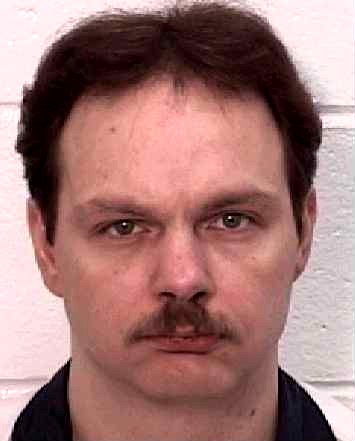
James Randall Rogers
Murderer Ervil LeBaron
Murderer · USA · 1972
Ervil Morrell LeBaron (1925 to August 16, 1981) was the leader of a polygamous…
35 victims
Ervil LeBaron
Murderer · USA · 1972
Ervil Morrell LeBaron (1925 to August 16, 1981) was the leader of a polygamous…
35 victims
 Brian Kevin Rosenfeld
Murderer · USA · 1985
Brian Kevin Rosenfeld Brian Kevin Rosenfeld was sentenced to three concurrent l…
23 victims
Brian Kevin Rosenfeld
Murderer · USA · 1985
Brian Kevin Rosenfeld Brian Kevin Rosenfeld was sentenced to three concurrent l…
23 victims
 Marvin Gray
Murderer · USA · 1975
Marvin Gray was convicted killer who claimed responsibility for 23 slayings and…
23 victims
Marvin Gray
Murderer · USA · 1975
Marvin Gray was convicted killer who claimed responsibility for 23 slayings and…
23 victims
 Yahweh ben Yahweh
Murderer · USA · 1980
Yahweh ben Yahweh was born and legally named Hulon Mitchell Jr. (October 27, 19…
23 victims
Yahweh ben Yahweh
Murderer · USA · 1980
Yahweh ben Yahweh was born and legally named Hulon Mitchell Jr. (October 27, 19…
23 victims
 Dean Corll
Serial killer · USA · 1970
Dean Corll was shot dead by his accomplice Elmer Henley on August 8, 1973. Dean…
27 victims
Dean Corll
Serial killer · USA · 1970
Dean Corll was shot dead by his accomplice Elmer Henley on August 8, 1973. Dean…
27 victims
 Michele Kalina
Murderer · USA · 1996
Michele Kalina pleaded guilty to murder for one of five infants she initially w…
5 victims
Michele Kalina
Murderer · USA · 1996
Michele Kalina pleaded guilty to murder for one of five infants she initially w…
5 victims
 Gabriel Gonzales
Murderer · USA · 1994
Defendant: Gabriel Gonzales (DoB 03/22/1974) Date of crime: 07/20/1994 Gang aff…
1 victim
Gabriel Gonzales
Murderer · USA · 1994
Defendant: Gabriel Gonzales (DoB 03/22/1974) Date of crime: 07/20/1994 Gang aff…
1 victim
 Hans Thomas Reiser
Murderer · USA · 2006
Hans Thomas Reiser (born 19 December 1963) was an American computer programmer…
1 victim
Hans Thomas Reiser
Murderer · USA · 2006
Hans Thomas Reiser (born 19 December 1963) was an American computer programmer…
1 victim
 Joel Dale Wright
Murderer · USA · 1983
Joel Dale Wright was sentenced to death on September 23, 1983 after a jury conv…
1 victim
Joel Dale Wright
Murderer · USA · 1983
Joel Dale Wright was sentenced to death on September 23, 1983 after a jury conv…
1 victim
- Gender
- male
- Country
- USA
- Location
- Floyd County, Georgia, USA
- Date of birth
- 1961
- Age at first offence
- 19
- Characteristics
- torture, revenge
- Victim profile
- Grace Perry, 75 (his neighbor)
- Method of murder
- D ied when a rake handle was forced up her vagina so hard it punctured a lung, causing massive hemorrhaging
- Date(s) of murder
- May 21, 1980
- Years active
- 1980
- Date of arrest
- Same day
- Status
-
Sentenced to death
Sentenced to death in May 1982
Case identification
James Randall Rogers was convicted in Floyd County of murder and aggravated assault and was sentenced to death.
Timeline
- May 21, 1980 — Grace Perry was killed when a rake handle was forced up her vagina so hard it punctured a lung, causing massive hemorrhaging; Edith Polston returned from work to the home she shared with the murder victim, Grace Perry, and found a rake on the front steps with a liquid substance on the handle and Ms. Perry lying on a bedroom floor.
- Night of May 21, 1980 (approximately 11:45 p.m.) — Edith Polston, the assault victim, was seized from behind, forced to remove her clothing, made to lie down beside Ms. Perry, and was taken outside and struck in the face; she managed to escape and the police were called.
- May 22, 1980 (approximately 11 minutes after midnight) — The first investigating officer arrived and found Rogers attempting to climb a fence at the rear of the victim's property; Rogers was subdued, handcuffed to the railing of the front porch, and transported to police headquarters.
- Midmorning of the following day — Rogers insisted on talking with the police, signed a waiver of rights form, and appeared to understand his Miranda rights; a tape-recorded statement was obtained later that morning before Rogers had been under arrest for twelve hours and after less than half a morning of police questioning.
- 1994 — Rogers' case was pending in the trial court on the issue of mental retardation.
- May 2005 — After a jury in Rogers’ retardation hearing returned a “not retarded” verdict, one of Polston’s daughters told the Rome News-Tribune about Rogers.
- May 2007 — Rogers filed an appeal with the Georgia Supreme Court.
- Sept. 10, 2007 — Oral argument was scheduled.
Background
James Randall Rogers was 36 when he was sentenced to death in May 1982 in Floyd County. At the time of the killing, Mr. Rogers was on parole for burglary.
Rogers' case was pending in the trial court since 1994 on the issue of mental retardation.
Rogers' death sentence was imposed for the 1980 rape and murder of his 75-year-old neighbor, Grace Perry of Rome, and the assault of Perry’s 63-year-old cousin, Edith Polston. The jury in Rogers’ retardation hearing returned a “not retarded” verdict in 2005. Polston’s daughter, now in her 60s, told the Rome News-Tribune regarding Rogers: “He’s going to outlive all of us.” Polston was described as now deceased.
The offence
Edith Polston returned from work to the home she shared with Grace Perry at approximately 11:45 p.m. on May 21, 1980. Polston found a rake on the front steps with a liquid substance on the handle and Ms.
Before Polston could summon the police, she was seized from behind, forced to remove her clothing and to lie down beside Ms. Perry. Polston was then taken outside and struck in the face. She escaped and the police were called.
Grace Perry died from massive hemorrhaging caused by Rogers’ use of a rake in the attack. The autopsy described traumatic infliction of wounds on the lower portion of the body, including a laceration to the back exterior portion of the vagina of approximately an inch and a half long, and a total perforation of the wall of the vagina. The perforation extended through the liver, the diaphragm and into the right lung. The perforation caused a sudden and massive hemorrhaging into the right chest cavity, which in turn caused Perry’s death.
Testimony indicated that the trauma was consistent with the use by the assailant of a blunt instrument in the shape of a pole which was at least two feet long and no more than two inches in diameter, requiring considerable, purposeful force. The officer who recovered the rake from the front porch testified that two to four feet of the rake's handle was covered with what appeared to be blood and other fluid.
The jury also found that shortly after burglarizing the home of Faye Bolt, Rogers forcibly entered the nearby home shared by Grace Perry and Edith Polston. Checks taken from the Bolt residence were subsequently discovered in the Perry home. The jury further found that Rogers attacked Ms. Perry upon discovering her at home alone, ripped off her clothes, and rammed a rake handle into her vagina at least twice—one thrust causing an inch-and-a-half tear in the vaginal wall near the rectum and the other penetrating the vaginal wall a full two feet into the body, passing through the liver, the diaphragm and into the right lung.
The jury found statutory aggravating circumstances, including that the offense of murder was committed while the defendant was engaged in the commission of a burglary and that the defendant committed “an outrageously vile, horrible, and inhuman murder involving (a) depravity of mind, (b) torture to the victim prior to the death of the victim, and (c) aggravated battery to the victim prior to the death of the victim.”
Investigation
A fingerprint was taken from the handle of the rake and was identified as Rogers’.
Human blood found on the handle of the rake, and hairs found on Rogers’ body, were consistent with Ms. Perry’s. Bite marks on one of Rogers’ arms were consistent with the dentures worn by the elderly victim.
The sufficiency of the evidence was not raised on appeal. The evidence was reviewed under Rule IV (B) (2) of the Unified Appeal Procedure and found sufficient to sustain the convictions under Jackson v. Virginia, 443 U. S. 307 (99 SC 2781, 61 LE2d 560) (1979).
Arrest and custody
Approximately 11 minutes after midnight on May 22, 1980, an investigating officer found Rogers attempting to climb a fence at the rear of the victim's property. The officer employed moderate force to subdue Rogers and handcuffed Rogers to the railing of the front porch while searching the house.
The officer found Ms. Perry lying naked on the floor of a bedroom with a large puddle of blood between her legs.
Rogers was given Miranda warnings and placed in a patrol car for transportation to police headquarters. Rogers' mother came to the crime scene. Ms. Polston overheard Rogers tell his mother, “Ma -- Mama, I'm gone this time; I'm gone.”
En route to the police station, Rogers volunteered that he had killed Ms. Perry but “there's not anything you can do about it, I'm crazy and I've got papers to prove it.”
Officer Brock testified that at about midnight he discovered Rogers attempting to climb a fence behind the victim's house and took him into custody; Rogers was “a little nervous” but “he wasn't really out of the ordinary.” Brock testified that no promises or threats were made to Rogers, and that Rogers appeared to understand his Miranda rights, which were read to him twice before he was transported to the police station. Officer Clark confirmed Brock’s testimony.
Detective Kinney testified that after he arrived at the scene, he heard Rogers say that he had killed someone and that the statement was not in response to questioning by police officers. Ms. Polston testified that Rogers’ statement to his mother as he was being placed into the patrol car was in response to a question asked by Rogers’ mother and that police were not questioning Rogers at the time. Officer Brock testified that while riding in the patrol car on the way to the police station, Rogers stated, “I killed her, I killed her,” and then laughed “real loud” saying, “there's not anything you can do about it” because “I'm crazy and I've got papers to prove it.” Officer Brock testified Rogers had not been questioned at the scene or on the way to the station.
Admissions and statements
Officer Brock testified that Rogers was read Miranda warnings soon after his arrest and again in the patrol car before driving to police headquarters.
During the Jackson-Denno hearing, the trial court heard testimony that Officer Lang struck Rogers in the side of his face with his flashlight while escorting him to the patrol car. The court excluded a statement made by Rogers to Officer Lang but allowed the jury to hear testimony concerning the circumstances under which Officer Lang struck Rogers.
When Rogers arrived at the police station, he refused to sign a waiver of rights form. Rogers appeared to be under the influence of something. Detective Kinney testified that he was concerned whether Rogers was capable of waiving his rights. Rogers was transported to a hospital to determine his physical condition.
During midmorning of the following day, Rogers insisted on talking with the police, signed a waiver of rights form, and appeared to understand his Miranda rights. Detective Bishop encouraged Rogers to obtain an attorney, but Rogers said he had not done anything and did not need an attorney.
A tape-recorded statement was obtained later that morning before Rogers had been under arrest for twelve hours and after less than half a morning of police questioning. The trial court heard testimony that the tape-recorded statement was given in an atmosphere free of threats or promises. Officer Pruitt, a friend of the Rogers family who had known Rogers since he was a young child, encouraged Rogers to talk with the officers but did not participate in the questioning. Officer Pruitt testified that as he walked by, he saw Rogers being questioned and asked how he was doing; Rogers responded, “I really messed up this time, hadn't I?” He also said, “Well, just talk to detective Bishop,” and Pruitt walked on.
The court heard evidence that Rogers was nineteen years of age at the time of the offense and had an I.Q. of 85, placing him in the category of average intelligence of a low level, and that Rogers had some brain dysfunction that could cause him to be confused in certain situations.
Evidence collected
Rogers’ motion to suppress blood, hair and fingernail samples taken at the hospital was denied. Rogers told the investigating officers, after his rights had been read to him and he had signed a written waiver form: “Go ahead, get them all that you want.”
Trial
James Randall Rogers was convicted in Floyd County of murder and aggravated assault. He was sentenced to death for the murder and a term of ten years for the aggravated assault.
Jury selection and voir dire
Rogers contended that one prospective juror, Mr. Compton, should have been excused for bias in favor of the death penalty. Mr. Compton raised his hand and responded, “Yes, sir, I believe in it,” to defense counsel’s question: “Let me ask you, ladies and gentlemen, with regard to the death penalty Mr. Weaver asked you were there any of you who are conscientiously opposed to the death penalty -- what I'd like to ask you is, do any of you do any of you have strong feelings about the death penalty, about the imposition of the death penalty, that it ought to be imposed more often or that it is the proper punishment for any particular crime? If you have those kinds of feelings, could I see your hand?” Mr. Compton also responded, “Yes, sir,” to defense counsel’s question: “Let me ask you, is what you're stating to me that you feel that if a murder -- if a murder conviction is had by the jury -- in other words, if the jury decides that -- that the defendant is guilty, then it is -- is it your feeling that death is the only proper punishment?”
In response to questioning by the court and the defense, Mr. Compton indicated three times that he could set aside his feelings about the death penalty and be governed by the court's instructions as to sentencing options, including any limitations imposed by the court; his feelings would not affect his ability to be a fair and impartial juror. The opinion noted: “The voir dire of . . . [Mr. Compton] presents the reverse of the Witherspoon question.”
Rogers contended that the trial court should have excused the entire panel when one prospective juror responded to a defense voir dire question by saying he had heard that Rogers had been convicted by a previous jury. The trial court took corrective action, including a determination that each panel member would follow his instructions. No error was found.
Rogers also contended that two prospective jurors were erroneously excluded for cause under Witherspoon v. Illinois. In response to questions of the trial court, each indicated that her beliefs would prevent her from following the court's instructions and her oath as a juror. The court properly struck them for cause.
The opinion stated that not all who oppose the death penalty are subject to removal for cause in capital cases and quoted Lockhart: “It is important to remember that not all who oppose the death penalty are subject to removal for cause in capital cases; those who firmly believe that the death penalty is unjust may nevertheless serve as jurors in capital cases so long as they state clearly that they are willing to temporarily set aside their own beliefs in deference to the rule of law . . . [T]he group of 'Witherspoon excludables' includes only those who cannot and will not conscientiously obey the law with respect to one of the issues in a capital case . . . .”
Jackson-Denno and Miranda issues
Rogers contended that the court should have excluded his statements because he was nineteen years of age, mentally impaired, on drugs, beaten, did not understand his Miranda rights, and his statements resulted from an illegal arrest, coercion, promises, and extended questioning while he had no access to his mother or counsel. He also contended that certain of his statements were given before Miranda warnings were administered.
The trial court’s factual determinations during the Jackson-Denno hearing were accepted unless clearly erroneous. The court found no error, relying on testimony that Rogers appeared to understand his Miranda rights and that many statements were volunteered and not the result of police questioning.
The opinion quoted Miranda v. Arizona: “Volunteered statements of any kind are not barred by the Fifth Amendment and their admissibility is not affected by our holding today.”
Evidence admissibility and juror communication
Rogers argued the denial of a motion to suppress samples taken at the hospital. The court found no violation of self-incrimination provisions.
Rogers argued for a mistrial based on a communication between a bailiff and a juror. During dinner at a restaurant with all the jurors and all the bailiffs present, one juror asked one of the bailiffs the whereabouts of Devier, a criminal defendant who had recently been tried for murder in Floyd County. The juror said the deputy replied that Devier soon was going to be “fried.” The bailiff testified: “I think he's at Jackson, but I can't discuss the case.” The court held that on the narrow facts of the case, the state overcame the presumption that the defendant was harmed by the communication.
Constitutional challenges and procedural motions
Rogers contended Georgia's death penalty statute was unconstitutional because it vested unfettered discretion in the district attorney, jury, and the Governor and Board of Pardons and Paroles regarding which defendants receive the death penalty; the ground lacked merit. Rogers also argued that Georgia’s death qualification of jurors violated the federal constitution; there was no merit.
Rogers contended that denial of his motion for appointment of a criminal investigator was error; the court found no abuse of discretion. The opinion noted Rogers was represented by two attorneys for over two years prior to trial and that the file of the district attorney and the transcript from his first prosecution were made available to him.
Rogers contended closing arguments improperly commented on his failure to testify. The court found the prosecutor’s first comment was a permissible comment on flight and the second and third instances were not improper comments on Rogers’ failure to testify.
Rogers contended the trial court erred by introducing a taped statement; the opinion stated that a proper foundation was laid for introduction.
Rogers contended the court erred by denying a motion for sequestered individual voir dire examination; the court found no abuse of discretion.
Rogers contended the Unified Appeal Procedure violated his Fifth and Sixth Amendment rights by giving him opportunities to state objections regarding counsel’s conduct; the court found those opportunities extended for the benefit, not detriment, of the accused.
Sentencing
At sentencing review, the jury found statutory aggravating circumstances: (1) the offense of murder was committed while the defendant was engaged in commission of burglary; and (2) the defendant committed “an outrageously vile, horrible, and inhuman murder involving (a) depravity of mind, (b) torture to the victim prior to the death of the victim, and (c) aggravated battery to the victim prior to the death of the victim.” The opinion referenced OCGA 17-10-30 (b) (2) and (b) (7).
The opinion discussed that the jury was authorized to find that Rogers forcibly entered the Perry/Polston home shortly after burglarizing Faye Bolt’s home and that checks taken from the Bolt residence were found in the Perry home.
The opinion also discussed that the jury was authorized to find Rogers attacked Ms. Perry, ripped off her clothes, and rammed the rake handle into her vagina at least twice, describing the injuries in detail including penetration through liver, diaphragm, and into the right lung.
The opinion held that the evidence supported the jury’s findings that the murder was outrageously vile, horrible, and inhuman and involved torture and depravity of mind and that it involved burglary for the (b) (2) aggravating circumstance. The sentencing verdict was supported, referencing OCGA 17-10-35 (c) (2).
The opinion stated it did not find the sentence of death imposed under the influence of passion, prejudice, or other arbitrary factor, referencing OCGA 17-10-35 (c) (1).
The opinion stated Rogers was still serving a probationary sentence on burglary and theft charges in the evening of May 21, 1980, when he burglarized the Bolt home, burglarized the home shared by Ms. Perry and Ms. Polston, murdered Ms. Perry, and attacked Ms. Polston in a manner closely resembling the onset of his attack on Ms. Perry. The opinion also stated the death sentence was neither excessive nor disproportionate to sentences in similar cases, referencing OCGA 17-10-35 (c) (3).
Appeals
The case was a death penalty case on direct appeal under the Unified Appeal Procedure and for sentence review required by OCGA 17-10-35.
The opinion was issued by WELTNER, Justice. The case citation shown was ROGERS v. THE STATE. 42826. (256 Ga. 139) (344 SE2d 644) (1986). The case was “DECIDED JUNE 25, 1986 — RECONSIDERATION DENIED JULY 15, 1986.”
The opinion noted that in a previous appearance of the case, Rogers’ conviction and sentence were overturned on the ground of disparity of women in the grand jury pool, citing Rogers v. State, 250 Ga. 652 (300 SE2d 490) (1983).
Appendix timing details
The jury returned its verdict as to sentence on June 22, 1985. A motion for new trial was filed July 18, 1985; heard September 13, 1985, and denied September 13, 1985. A notice of appeal was filed October 11, 1985, and the record docketed in this court October 22, 1985. The case was orally argued January 13, 1986.
The opinion also noted that months before trial, Rogers filed a written request for sequestered voir dire, which was denied.
David Smith, Jr. and Kenneth C. Fuller were listed “for appellant.”
Other details
Edith Polston was the assault victim, described as 63 years old. Grace Perry was the murder victim, described as 75 years old.
Rogers was described as being on parole for burglary at the time of the killing and as having been nineteen years of age at the time of the offense. The opinion referred to Rogers’ IQ of 85 and some brain dysfunction.
The opinion stated that the evidence was consistent with an assailant using a blunt instrument shaped like a pole at least two feet long and no more than two inches in diameter and that considerable, purposeful force would have been required.
A portion of the text referenced “Faye Bolt” as the home that was burglarized.
A bailiff exchange included “Devier,” a criminal defendant recently tried for murder in Floyd County; the juror testified about a statement that Devier soon was going to be “fried,” and the bailiff testified: “I think he's at Jackson, but I can't discuss the case.”


Spotted an error, or have more information about this case?