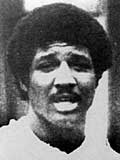
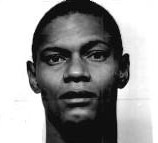
Pernell Ford
Murderer Brian Kevin Rosenfeld
Murderer · USA · 1985
Brian Kevin Rosenfeld Brian Kevin Rosenfeld was sentenced to three concurrent l…
23 victims
Brian Kevin Rosenfeld
Murderer · USA · 1985
Brian Kevin Rosenfeld Brian Kevin Rosenfeld was sentenced to three concurrent l…
23 victims
 Marvin Gray
Murderer · USA · 1975
Marvin Gray was convicted killer who claimed responsibility for 23 slayings and…
23 victims
Marvin Gray
Murderer · USA · 1975
Marvin Gray was convicted killer who claimed responsibility for 23 slayings and…
23 victims
 Yahweh ben Yahweh
Murderer · USA · 1980
Yahweh ben Yahweh was born and legally named Hulon Mitchell Jr. (October 27, 19…
23 victims
Yahweh ben Yahweh
Murderer · USA · 1980
Yahweh ben Yahweh was born and legally named Hulon Mitchell Jr. (October 27, 19…
23 victims
 Russell Ellwood
Murderer · USA · 1991
Russell Ellwood was a former taxi driver. Authorities suspected him of killing…
20 victims
Russell Ellwood
Murderer · USA · 1991
Russell Ellwood was a former taxi driver. Authorities suspected him of killing…
20 victims
 Harry Maurice Roberts
Murderer · United Kingdom · 1966
Name: Harry Maurice Roberts Birth year: 1936 Birthplace: Kennington, London, En…
3 victims
Harry Maurice Roberts
Murderer · United Kingdom · 1966
Name: Harry Maurice Roberts Birth year: 1936 Birthplace: Kennington, London, En…
3 victims
 Janice Carter
Murderer · United Kingdom · 2011
Janice Carter was a Margate woman. She was 29 at the time of being jailed for a…
1 victim
Janice Carter
Murderer · United Kingdom · 2011
Janice Carter was a Margate woman. She was 29 at the time of being jailed for a…
1 victim
 Guinevere Garcia
Murderer · USA · 1977
Guinevere Garcia was also known as Guinevere Falakassa Garcia. She was convicte…
2 victims
Guinevere Garcia
Murderer · USA · 1977
Guinevere Garcia was also known as Guinevere Falakassa Garcia. She was convicte…
2 victims
 Norman Evans Green
Murderer · USA · 1985
Norman Evans Green was executed by lethal injection in Texas on February 24, 19…
1 victim
Norman Evans Green
Murderer · USA · 1985
Norman Evans Green was executed by lethal injection in Texas on February 24, 19…
1 victim
 Luvenia Spates
Murderer · Alabama · 2011
Luvenia Spates Luvenia Spates was sentenced to 30 years in prison on September…
1 victim
Luvenia Spates
Murderer · Alabama · 2011
Luvenia Spates Luvenia Spates was sentenced to 30 years in prison on September…
1 victim
- Gender
- male
- Country
- USA
- Location
- Calhoun County, Alabama, USA
- Date of birth
- 1965
- Age at first offence
- 18
- Characteristics
- robbery, drugs, history of mental illness
- Victim profile
- Willie C. Griffith, 74, and her daughter, Linda Gail Griffith, 42
- Method of murder
- St abbing with knife
- Date(s) of murder
- December 2, 1983
- Years active
- 1983
- Date of arrest
- Next day
- Status
-
Executed
Executed by electrocution in Alabama on June 2, 2000
Parties
- Defendant: Pernell Ford, also described as 18 during the 1983 murders and as 35 at execution.
- Victims:
- Willie C. Griffith, described as 74 years old and disabled.
- Linda Gail Griffith, described as 42 years old.
Timeline
- 2 December 1983 (approx. 7:15 p.m.) — The bodies of Willie C. Griffith and her daughter, Linda Gail Griffith, were found in their residence at 417 Goodlett Street, Jacksonville, Calhoun County, Alabama.
- 3 December 1983 (approx. 12:30 p.m.) — Illinois State Troopers Steve Gregurich and Loren Cowdrey encountered the 1978 Chevrolet Caprice automobile (tan in color) being operated by Pernell Ford on Interstate 55 at or near Springfield, Sangamon County, Illinois; the vehicle was stopped for speeding.
- 10 December 1983 — After a voluntary waiver of constitutional rights, Pernell Ford gave to Chief Paul Locke and Officer Kyle Sanders an inculpatory statement.
- 1984 — Pernell Ford was indicted and convicted for capital murders of Linda Gail Griffith and Willie C. Griffith committed during the course of a burglary; he was sentenced to death by electrocution.
- 1984 trial — Pernell Ford waived counsel and conducted his own defense; during the penalty phase he wore a sheet and asked that the victims’ bodies be brought into the courtroom so God could resurrect them.
- July 1997 — Davis won a stay of execution for Ford after raising questions about his sanity.
- 1997 — Ford fired defense attorney LaJuana Davis and dropped his court appeals amid questions about his mental stability.
- March 31, 1999 — The United States District Court independently found Ford mentally competent to dismiss his 2254 habeas petition and his counsel.
- 14 April 1999 — Davis, signing as Ford’s attorney, filed in Ford’s name a Motion to Alter and Amend the Judgment, a Notice of Appeal, and a Motion for Stay of Execution.
- 1 July 1999 — The district court denied the Motion to Alter and Amend and the Motion for Stay of Execution.
- 6 July 1999 — Davis filed a Notice of Appeal and a Motion for Certificate of Probable Cause to Authorize Appeal; the district court granted the certificate.
- 7 July 1999 — The Eleventh Circuit held Davis appeared to have standing to appeal the limited issue of Ford’s competence to discharge counsel and dismiss his habeas petition; the court also granted a stay of execution.
- 8 August 1999 — Oral argument was held in the Eleventh Circuit case.
- 8 November 1999 — Eleventh Circuit proceedings are shown with a listed appeal date.
- 2 June 2000 — Pernell Ford was executed by electrocution in Alabama.
Background
On 2 December 1983, at approximately 7:15 p.m., the bodies of 74-year-old Willie C. Griffith and 42-year-old Linda Gail Griffith were found in their residence at 417 Goodlett Street, Jacksonville, Calhoun County, Alabama. Each victim suffered multiple stab wounds to the head, neck and trunk, and the house showed signs of a physical struggle.
Personal property and an automobile belonging to the victims were missing.
Willie Griffith was retired from the Jacksonville city school system, where she was an elementary school dietician for many years. Linda Gail Griffith worked as one of several secretaries to German rocket scientist Wernher Von Braun, who led the Saturn team at Redstone Arsenal. Both women were amateur athletes who followed Jacksonville State University and local high school football and basketball.
Pernell Ford was described as having a history of serious mental health problems and suicidal tendencies since childhood, including extended periods in mental health institutions beginning at the age of six, and by 13 being prescribed powerful anti-psychotic and anti-depressant drugs. During adolescence he attempted suicide several times, including by overdose, hanging and poisoning. He also attempted suicide on death row, and a last attempt was described as occurring in March 1998. Following a psychotic episode, he was removed to a “strip” (isolation) cell, where he reportedly found a knife, giving himself a deep neck wound and cutting his wrists.
Pernell Ford was described as Black and was tried in 1984 by an all-white jury, while the Griffiths were white. Shortly before the trial, he dismissed his lawyers. He was found competent to act as his own lawyer despite youth, limited formal education, an IQ measured at 80, and history of mental problems. The only defense he offered was that God would intervene and bring the victims back to life.
During the guilt phase he remained silent and withdrawn for most proceedings, with no opening statement on his behalf, no objections, and no cross-examination of any witnesses. During the penalty phase he dressed in a white bed sheet, worn toga-style with a belt and shoulder strap made from a white towel. In a long speech, he asked the judge to have the coffins of the Griffiths brought into the courtroom so that God could raise them from the dead in front of the jurors.
On death row, he periodically gave up his appeals but resumed them when his mental health stabilized. He was diagnosed as suffering from schizophrenia and depression and treated with a range of drugs. Ford claimed that he could transport himself anywhere on earth by a method called “translation,” which he described as involving travel around the world. He claimed to have a number of wives and to have millions of dollars in a Swiss bank account to support his children and wives after his execution, and he stated that when he died he would become the Holy Spirit and sit on the left hand of God and that he had already visited heaven in an earlier “translation.” He also acknowledged that others believed he was mentally ill but stated they misinterpreted spiritual conflict, and he stated: “I had a lot of problems when I was little, but nothing that can classify me as insane”.
The offence
On 2 December 1983, the bodies of Willie C. Griffith and Linda Gail Griffith were found in their residence at 417 Goodlett Street, Jacksonville, Calhoun County, Alabama. The bodies had multiple stab wounds to the head, neck and trunk. The house showed signs of a physical struggle, and certain items of personal property belonging to the victims were missing.
The missing personal property included a 1978 Chevrolet Caprice automobile, tan in color, bearing Alabama license plate 11B-9461 and vehicle identification number 1N69V83273152.
During trial proceedings, the court found that Ford intentionally caused the death of Willie C. Griffith and Linda Gail Griffith during a burglary in the first degree or burglary in the second degree or an attempt thereof, as defined in § 13A-5-40(a)(4). The indictment charged Ford with a violation of § 13A-5-40(a)(4) in four separate counts, and the court found the charges in each count (Counts III, IV, V and VI) were not mutually exclusive and that the jury properly found Ford guilty on the charge in each count.
Ford’s inculpatory statement described entering the victims’ residence without consent for the purpose of committing theft, being discovered, Linda Gail Griffith attempting to prevent his escape and being stabbed, Willie C. Griffith being killed, numerous items of personal property being stolen within the house including the pistol found in the automobile, and Ford fleeing the scene in the 1978 Caprice Chevrolet automobile he was stopped in in Springfield, Illinois.
Investigation
The discovery of the victims’ bodies was reported to the Jacksonville Police Department and an investigation was immediately commenced by the Jacksonville Police Department, the Office of the District Attorney of the Seventh Judicial Circuit, the Alabama Bureau of Investigation, the Department of Forensic Sciences of the State of Alabama, and the Office of the Coroner of Calhoun County, Alabama.
Investigators determined that each victim apparently died from multiple stab wounds to the head, neck and trunk, the house showed signs of a physical struggle, and certain items of personal property belonging to the victims were missing.
On 3 December 1983 (approx. 12:30 p.m.), Illinois State Troopers Steve Gregurich and Loren Cowdrey stopped the 1978 Chevrolet Caprice being operated by Ford on Interstate 55 at or near Springfield, Sangamon County, Illinois for speeding. Upon investigation, Ford was unable to produce a valid driver’s or operator’s license. Troopers determined Ford gave a false name: “Jessie Willie Griffith.” Troopers found him in possession of numerous credit cards belonging to Linda Gail Griffith, one of the victims. A loaded 38 caliber pistol was found being transported in the automobile, leading to custodial arrest. Further investigation produced credit cards and other identification documents issued to Linda Gail Griffith and Willie C. Griffith found in Ford’s possession. A telephone call made at the request of investigating officers to the victims’ residence in Jacksonville disclosed the victims had been found apparently murdered the night before, prompting a full felony investigation by the Illinois State Police.
The Illinois State Police determined Ford was in possession of numerous items of personal property belonging to the victims. The automobile contained numerous items of personal property belonging to the victims. A cardboard box in the automobile bore what appeared to be a sharp instrument cut or stab type hole around which a reddish brown substance appeared. A glove with a reddish brown stain was found. Articles of clothing that appeared recently purchased and in new condition were also found.
A fugitive charge was placed against Ford, a major felony case investigation was commenced, and Ford’s clothing was seized and secured, fingernail scrapings were taken, Ford was fingerprinted, and the automobile was fully processed by a crime scene technician, with items contained within seized and secured.
Ford waived extradition to the state of Alabama. Chief Paul Locke of the Jacksonville Police Department and Investigator Charles Winfrey of the Office of the District Attorney of the Seventh Judicial Circuit accepted custody of Ford, the victim’s automobile and all items of evidence found in Ford’s possession at arrest. Ford and evidence were returned to Alabama.
Laboratory tests found that both victims had blood types of a similar nature. Ford’s blood type was not consistent with the blood groupings of the victims. The court found Ford’s blood sample was obtained by consent, properly handled and analyzed by laboratory experts of the Department of Forensic Sciences.
A fingerprint of Ford was found on the glove box of the automobile. The glove box contained a 38 caliber pistol later identified as the property of Linda Gail Griffith. Numerous items of personal property discovered in the automobile, including credit cards, identification cards, purses, photographs, a gold necklace, a coupon file, a key ring containing keys and other items, were identified as belonging to the victims and missing from their home.
The cardboard box found in the automobile had tracings of blood compatible with the blood types and subgroupings of the victims and not compatible with Ford’s blood type and subgroupings. Examination of Ford’s clothing produced blood stains or residue on shoes, socks, pants and shirt. Laboratory tests disclosed traces of blood on Ford’s shoes, socks and shirt were human blood of indeterminable type, and blood stains on the pants were human blood of a type and subgrouping consistent with the victims’ blood and inconsistent with Ford’s blood.
The court also found the glove found in the automobile bore a stain determined by laboratory experts to be human blood consistent with the victims’ blood and not consistent with Ford’s blood. A human hair consistent with Linda Gail Griffith’s hair was found on the glove, along with fibers consistent with fibers comprising the clothing worn by Linda Gail Griffith at her death.
Arrest
On 3 December 1983, Illinois State Troopers Steve Gregurich and Loren Cowdrey stopped the victims’ 1978 Chevrolet Caprice being operated by Ford on Interstate 55 at or near Springfield, Sangamon County, Illinois for speeding. Troopers determined Ford could not produce a valid driver’s or operator’s license, and Ford gave a false name: “Jessie Willie Griffith.” The troopers found numerous credit cards belonging to Linda Gail Griffith and a loaded 38 caliber pistol being transported in the automobile, resulting in Ford’s custodial arrest.
Trial
Representation and competency findings
Ford waived counsel and conducted his own defense during the guilt phase, with standby attorneys available.
During the trial court’s extensive colloquy with Ford regarding waiving counsel, the court explained the rights Ford would relinquish by representing himself and addressed dangers and disadvantages. Three mental health professionals testified regarding Ford’s competence to waive counsel:
- Dr. Robert G. Summerlin, a psychologist hired at the request of the defense team, testified Ford had an IQ of 80 and was competent to stand trial, while also expressing concern that Ford may have made up his mind to proceed pro se and may not have been listening. Dr. Summerlin stated Ford had a personality disorder with some indication of an “emerging psychosis” and acknowledged concerns could be affected by “malingering” or “faking bad.”
- Dr. Wallace W. Wilkerson, a psychiatrist selected by the trial court, testified Ford was “far more intelligent” than an IQ of 80 would indicate, estimated IQ closer to 110, found no evidence of “emerging psychosis,” and stated Ford was a sociopath who believes the law does not apply to him. Dr. Wilkerson said Ford “knows the system” and is “perfectly capable of knowing what to do to beat the system or confuse the system,” and concluded Ford had a preplanned idea to disrupt proceedings by feigning mental illness. Dr. Wilkerson concluded Ford was competent to stand trial and competent to waive the right to an attorney.
- Dr. Harry A. McClaren, chief psychologist at the Taylor Hardin Secure Medical Facility, testified Ford had an anti-social personality disorder and was competent to stand trial and competent to make the choice to dismiss his legal counsel.
The state trial court found Ford competent to stand trial and waive counsel, and required standby counsel to be available in the courtroom.
During the guilt phase, Ford made no opening statement, pressed no objections or motions, presented no defense, tendered no requests to charge, and did not object to the trial court’s charge. He did make a closing argument during the guilt phase.
During the penalty phase, Ford allowed standby attorneys to represent him. Counsel introduced various medical and psychological records and made a closing argument during the penalty phase. The jury recommended death.
At the final sentencing, Ford proceeded pro se with standby counsel in the courtroom and was sentenced to death.
Charges and verdict
In 1984, Pernell Ford was indicted and convicted for the capital murders of Linda Gail Griffith and Willie C. Griffith, committed during the course of a burglary, described as a violation of § 13A-5-40(a)(4), Code of Alabama 1975. The trial court sentenced him to death by electrocution.
In Ford v. State, 515 So. 2d 34 (Ala. Crim. App. 1986) (Direct Appeal), and Ex parte Ford, 515 So. 2d 48 (Ala. 1987), the Alabama appellate courts upheld the trial court’s findings and affirmed the conviction and death sentence. The United States Supreme Court denied Ford’s petition for a writ of certiorari, Ford v. Alabama, 484 U.S. 1079 (1988).
Sentencing
Ford was sentenced to death by electrocution.
During the penalty phase and sentencing, Ford wore a white bed sheet toga-style with belt and shoulder strap made from a white towel and asked that the coffins of the Griffiths be brought into the courtroom so that God could raise them from the dead in front of the jurors.
The trial record described that at the final sentencing before the trial judge, Ford proceeded pro se with standby counsel in the courtroom thereafter the trial court sentenced him to death. After sentencing, the judge told Ford that by law he would receive an automatic appeal, and Ford responded that he did not want one. As he was led from the court, he reportedly waved to the prosecutor and said: “see you at the electric chair.”
Appeals
Direct appeal and certiorari
The Alabama Court of Criminal Appeals affirmed the conviction and death sentence and concluded the record left no doubt that Ford was free of a mental disorder impairing his waiver decision involuntary. The Alabama Supreme Court affirmed. The United States Supreme Court denied certiorari.
State habeas
On September 23, 1988, Ford’s counsel filed a state “Petition for Relief from Conviction or Sentence,” asserting fourteen errors, including issues related to Ford’s mental competency to waive trial counsel.
On March 1, 1991, the state habeas court found Ford competent to stand trial and to waive counsel at trial. The habeas court noted Ford filed on-again, off-again requests or motions to forego further appeals, but the court declined the requests and proceeded to address the merits. The state habeas court also held Ford was not entitled to appointment of a specifically named expert psychologist, but appointed Dr. Robert Summerlin.
The state habeas court denied the petition, finding Ford competent, and stated that two mental health professionals, Wallace Wilkerson, M.D. and Wilbern Rivenbark, Ph.D., testified Ford was competent to waive counsel and that Ford knew what he was doing and was not insane, incompetent, or suffering from any thought or mood disorder.
The state habeas court concluded competency decisions were unfavorably decided on direct appeal and procedural bars applied under Alabama rules.
Ford’s counsel appealed the state habeas decision, and the Alabama Court of Criminal Appeals affirmed in Ford v. State, 630 So. 2d 111 (Ala. Crim. App. 1991). The Alabama Supreme Court affirmed on October 29, 1993 in Ex parte Ford, 630 So. 2d 113 (Ala. 1993), with certiorari denied in 511 U.S. 1078 (1994).
Federal habeas and competency to dismiss
On November 21, 1995, Ford’s counsel filed his 2254 habeas petition in the United States District Court for the Northern District of Alabama.
In May 1997, Ford pro se requested the district court dismiss his appeal and set an execution date. Ford’s attorney responded that Ford was not mentally competent to dismiss his 2254 petition or counsel.
The magistrate judge held evidentiary hearings beginning September 5, 1997, and then on June 10, 1998, with further evaluation after June 16, 1998, and a report dated April 24, 1998 plus an addendum dated June 29, 1998.
The magistrate judge recommended that Ford be found mentally competent to dismiss his 2254 habeas petition and his counsel. The district court found Ford competent on March 31, 1999 and dismissed the petition with prejudice.
On April 14, 1999, Davis filed motion(s) and a notice of appeal on Ford’s behalf, followed by the district court denial on July 1, 1999. A notice of appeal and certificate of probable cause were granted on July 6, 1999.
The Eleventh Circuit addressed standing and granted a stay on July 7, 1999 and heard oral argument on August 18, 1999. The Eleventh Circuit affirmed and dismissed the appeal for lack of jurisdiction after determining Ford’s competence findings were not clearly erroneous and Davis lacked standing to pursue other issues.
Outcome
Pernell Ford was executed by electrocution in Alabama on June 2, 2000, pronounced dead at 12:12 a.m.
In his last statement, Ford told Warden Charlie Jones he wanted to apologize to the family of his victims for the pain and suffering he had caused, and asked Jones to tell them to “be safe.”
Awaiting execution, Ford recited biblical passages, took deep breaths, alternately stared at the ceiling and closed his eyes, and rested his head at times on the back of the electric chair. Alabama Department of Corrections Commissioner Mike Haley was quoted describing Ford’s anxiety to proceed.
Ford spent the day Thursday with his mother and a prison chaplain. He ate a last meal described as barbecued ribs, ham, English peas, turnip greens, potato salad, cornbread and cheesecake.
Aftermath
After watching Ford die, Wayne Griffith said he found peace and forgiveness nearly 17 years after the slayings and stated: “It’s finished.” Wayne Griffith held pictures of Willie C. Griffith and Linda Gail Griffith. Wayne Griffith said: “I do forgive him. I hope he’s gone to heaven.”
Wayne Griffith had previously described a vow to be present, stating he wanted to see the execution and said: “You have to forgive me -- I want to see him suffer a little. I made myself a promise that if I was on this earth I would see it.” Wayne Griffith also said he believed Ford knew what he was doing and described Ford as “crazy like a fox.”
Wayne Griffith was described as traveling from his Gadsden home to witness the execution with his wife Margaret and along with former Calhoun County Sheriff Roy Snead. Snead was quoted: “You always hear the bleeding-heart liberals say the death penalty's not a deterrent,” and continued: “It may not be, but it sure as hell cuts down on the repeaters.”
Willie Griffith was described as suffering from arthritis and using a walker and as a former school dietitian who often prepared large meals and invited neighbors to eat. Her son was quoted: “There was never a stranger in the house.” On Ford’s apology, Wayne Griffith said: “I'm going to give him the benefit of the doubt,” and continued: “I believe it was sincere. I really believe he meant it . . . I feel good about it.”
Other details
Items at arrest
The arrest involved Ford’s possession of numerous credit cards belonging to Linda Gail Griffith, false identification in the name “Jessie Willie Griffith,” and a loaded 38 caliber pistol in the victims’ automobile. Investigators also found a cardboard box with a sharp instrument cut or stab type hole and a glove with a reddish brown stain.
Inculpatory statement
The trial court found that on December 10, 1983, Ford gave an inculpatory statement after a full and complete explanation of constitutional rights and voluntary waiver. The court’s description of the statement included that Ford entered the victims’ residence without consent for theft, was discovered, Linda Gail Griffith attempted to prevent escape and was stabbed, Willie C. Griffith was killed, numerous stolen items included the pistol found in the automobile, and Ford fled in the 1978 Caprice Chevrolet automobile.
Pen pal letter excerpt
A pen pal request was included describing Ford writing hopes the recipient was well and requesting female pen pals because he was lonely and wanted to understand if others cared. It stated: “I would like female pen pals because I am very lonely and will be grateful for your concern.” It also stated: “I like to write and never get any mail to understand if others care. Want to find ladies who can stand by me.” It requested women “over the age 30 to 55” and named him as: “- Pernell La'sha Ford - Amnesty International Pernell Ford Alabama.”
Competency and related psychiatric evaluation language (verbatim excerpts)
Dr. Robert Rollins’s written report dated April 24, 1998 included:
“My diagnoses are depressive disorder NOS (not otherwise specified); personality disorder with dependent traits; polysubstance abuse by history, antisocial behavior by history, attention deficit hyperactivity disorder by history, learning disorder by history, and relational problem (conflicts with family). At the time of my interview Mr. Ford did not manifest symptoms of schizophrenia or major depression. I do not think anti-psychotic medication is indicated. . . . Mr. Ford does have a mental disorder (depression and personality disorder), but this disorder does not prevent Mr. Ford from understanding his legal position and the options available to him or making a rational choice among his options. He has sufficient present ability to consult with his lawyer with a reasonable degree of rational understanding and has a rational as well as factual understandings of the proceedings against him.”
In Dr. Rollins’s Addendum Psychiatric Evaluation dated June 29, 1998, the report included:
“Translating may represent malingering, fantasy, or impaired reality testing. Mr. Ford explains that he did not mention translating in the first interview, as he was concerned that I would consider him mentally ill. I exclude malingering because I cannot identify a goal to be accomplished in this situation by simulation of mental disorder and Mr. Ford concealed information about translation rather than putting it forward, as is the case in malingering. If translation represents impaired reality testing (i.e. - psychoses), it is an isolated delusional disorder and does not impair Mr. Ford 's daily functioning. Mr. Ford was unable or unwilling to provide specific detail about translation activities. It is my assessment that the translation represents fantasy or wish fulfillment. In any event, Mr. Ford 's ability to make decisions is not impaired by translation.”
In the record, Ford’s statements during hearings included the petitioner’s answers to the magistrate judge:
“Well, I don't think if I got a new trial that there would still be the possibility of me going free.” “Yeah, that's what I believe.” “No I don't wanting [sic] to go through that.”
The record also included Ford’s statement:
“time is punishment. I don't want to subject myself to it any longer just sitting and waiting on how things going to play out with the legal system.”
Spotted an error, or have more information about this case?