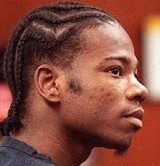
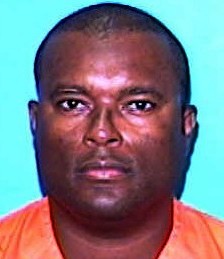
Donte Johnson
Mass murderer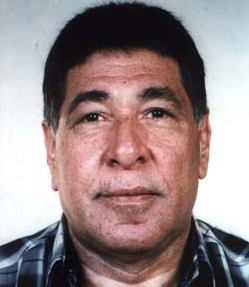 Gameel Al-Batouti
Mass murderer · USA · 1999
Gameel Al-Batouti (also rendered “Gamil ElBatouty” or “El Batouty” in U.S. offi…
216 victims
Gameel Al-Batouti
Mass murderer · USA · 1999
Gameel Al-Batouti (also rendered “Gamil ElBatouty” or “El Batouty” in U.S. offi…
216 victims
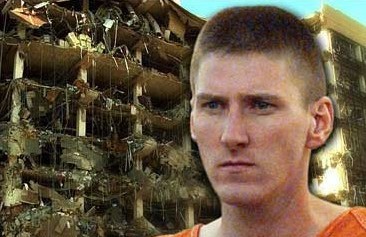 Timothy McVeigh
Mass murderer · USA · 1995
Timothy James McVeigh (April 23, 1968 – June 11, 2001) was a United States Army…
168 victims
Timothy McVeigh
Mass murderer · USA · 1995
Timothy James McVeigh (April 23, 1968 – June 11, 2001) was a United States Army…
168 victims
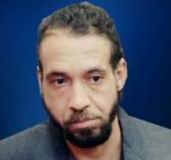 Julio Gonzalez
Mass murderer · USA · 1990
Julio Gonzalez was sentenced to 174 twenty-five-year sentences (a total of 4,35…
87 victims
Julio Gonzalez
Mass murderer · USA · 1990
Julio Gonzalez was sentenced to 174 twenty-five-year sentences (a total of 4,35…
87 victims
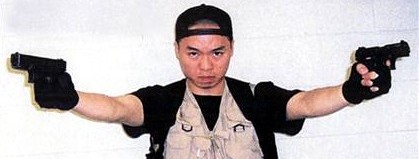 Seung-Hui Cho
Mass murderer · USA · 2007
Seung-Hui Cho was a mass murderer who shot and killed 32 people and wounded man…
32 victims
Seung-Hui Cho
Mass murderer · USA · 2007
Seung-Hui Cho was a mass murderer who shot and killed 32 people and wounded man…
32 victims
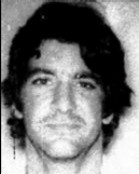 George Jo Hennard
Mass murderer · USA · 1991
George Jo Hennard carried out a mass killing at a Luby’s Cafeteria in Killeen,…
23 victims
George Jo Hennard
Mass murderer · USA · 1991
George Jo Hennard carried out a mass killing at a Luby’s Cafeteria in Killeen,…
23 victims
 Eric Harris
Mass murderer · USA · 1999
Eric Harris committed suicide by gunshot to the roof of the mouth on April 20,…
13 victims
Eric Harris
Mass murderer · USA · 1999
Eric Harris committed suicide by gunshot to the roof of the mouth on April 20,…
13 victims
 Michael Briere
Murderer · Canada · 2003
Michael Briere was a Canadian software developer in Toronto. He abducted Holly…
1 victim
Michael Briere
Murderer · Canada · 2003
Michael Briere was a Canadian software developer in Toronto. He abducted Holly…
1 victim
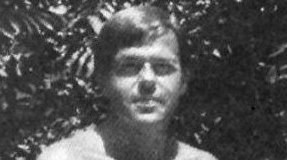 Kenneth Halliwell
Murderer · United Kingdom · 1967
Kenneth Halliwell (born in 1926, died August 9, 1967) was a British actor and w…
1 victim
Kenneth Halliwell
Murderer · United Kingdom · 1967
Kenneth Halliwell (born in 1926, died August 9, 1967) was a British actor and w…
1 victim
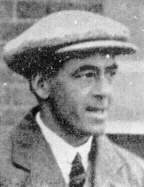 Thomas Henry Allaway
Murderer · United Kingdom · 1921
On 22 December 1921, an advertisement appeared in the “Morning Post” from Miss…
1 victim
Thomas Henry Allaway
Murderer · United Kingdom · 1921
On 22 December 1921, an advertisement appeared in the “Morning Post” from Miss…
1 victim
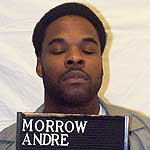 Andre Morrow
Murderer · USA · 1994
State of Missouri v. Andre D. Morrow (968 S.W. 2d 100; Mo. banc 1998) involved…
2 victims
Andre Morrow
Murderer · USA · 1994
State of Missouri v. Andre D. Morrow (968 S.W. 2d 100; Mo. banc 1998) involved…
2 victims
 Nehemiah Griego
Mass murderer · USA · 2013
Nehemiah Griego was a 15-year-old male. · January 19, 2013 — Police found five…
1 victim
Nehemiah Griego
Mass murderer · USA · 2013
Nehemiah Griego was a 15-year-old male. · January 19, 2013 — Police found five…
1 victim
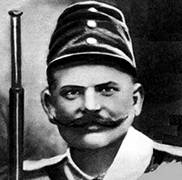 Bela Kiss
Serial killer · Hungary · 1900
Béla Kiss (1877 – ?) was a Hungarian serial killer. He murdered at least 24 you…
24 victims
Bela Kiss
Serial killer · Hungary · 1900
Béla Kiss (1877 – ?) was a Hungarian serial killer. He murdered at least 24 you…
24 victims
- Gender
- male
- Country
- USA
- Location
- Las Vegas, Nevada, USA
- Date of birth
- 1978
- Age at first offence
- 20
- Characteristics
- robbery, rape, drug dealer, drugs, gang, crack addict
- Victim profile
- Matthew Mowen, 19; Tracey Gorringe, 20; Jeffrey Biddle, 19; and Peter Talamantez, 17
- Method of murder
- Shooting
- Date(s) of murder
- August 14, 1998
- Years active
- 1998
- Date of arrest
- 4 days after
- Status
-
Sentenced to death
Sentenced to death on May 3, 2005; affirmed on appeal (Nevada Supreme Court, decided December 28, 2006)
Case record: Donte Johnson
STATUS and procedural posture
Donte Johnson was sentenced to death on May 3, 2005 after a jury returned a death verdict for each of the four murders at a new penalty hearing that began in April 2005. The Nevada Supreme Court affirmed the death sentence, deciding the appeal on December 28, 2006.
Timeline
- 1998 — Donte Johnson shot and killed four young men at their Las Vegas home during a robbery.
- 2000 — A jury convicted Donte Johnson of four counts of first-degree murder with the use of a deadly weapon, among other charges; a three-judge panel later sentenced him to death for each of the four murders.
- 2002 — The Nevada Supreme Court vacated Johnson’s death sentence and remanded for a new penalty hearing because the three-judge sentencing procedure violated the United States Supreme Court’s holding in Ring v. Arizona.
- April 2005 — Johnson’s new (third) penalty hearing began before a jury; the district court bifurcated it into death-eligibility and selection phases.
- May 3, 2005 — A jury sentenced Johnson to death at the new penalty hearing.
- May 5, 2005 — “Jury Decides Death for Convicted Murderer.”
- December 28, 2006 — The Nevada Supreme Court decided that the death sentence was affirmed; it held that the Confrontation Clause and Crawford v. Washington did not apply to the selection phase of a bifurcated capital penalty hearing, and it rejected other claims of reversible error.
The offence
On the night of August 13 or early morning of August 14, 1998, Donte Johnson (whose real name was John White) and two other men entered a Las Vegas home intending to commit robbery. Inside, Johnson murdered:
- Tracey Gorringe, 20,
- Matthew Mowen, 19,
- Jeffery Biddle, 19, and
- Peter Talamantez, 17.
The victims were bound with duct tape. Johnson shot each of them execution-style in the head. Stolen during the robbery were a VCR, a video game, a personal beeper, a set of keys, and about $200 in cash.
Victims and impacts
Victims (ages)
- Matthew Mowen (19)
- Tracey Gorringe (20)
- Jeffery Biddle (19)
- Peter Talamantez (17)
Victims’ families (impact testimony)
The Nevada Supreme Court summarized testimony from family members offered during the selection phase impact evidence:
- Juanita Aguilar, mother of Peter Talamantez, testified that Peter “was very smart, very caring. He could have done just about anything he wanted to, but at 17, you don't really think too much about what you want to be in the future because you're still out having fun.” She testified that Peter’s murder caused her severe depression and that “There's not one day I don't think about my baby.”
- Marie Biddle, mother of Jeffery Biddle, testified that Jeffery liked to play sports, he was a “wonderful artist,” and that he someday either wanted to go into law enforcement or the Air Force. She told the jury that Jeffery’s murder had “been very devastating.”
- Sandy Viau, mother of Tracey Gorringe, testified that Tracey wanted to become an electrical engineer. She said: “He was a great athlete. He played baseball, he snowboarded, he skied, he water-skied, he roller-bladed, he rode motorcycles.” She stated that after his murder, “I don't have any goals now. You know, it's one day at a time.”
- David Mowen, father of Matthew Mowen, testified that Matthew was his only son and wanted to study medicine. The court recorded: “He was quite a young man. . . . He was one of those special individuals that, for whatever reason, he had that ability to connect with many, many different types of people.” On the impact, he testified: “It's the same pain, the same misery, the same angriness that you have every single day. It doesn't get better.”
- Jennifer Mowen, Matthew’s younger sister, testified that she looked up to her brother, who always gave her comfort and strength.
Additional family statements recorded in the narrative
The narrative also included the following statements:
- Jennifer Mowen said: “I've just had to show Donte what he has done and what he has ruined.”
- Jennifer Mowen said: “If I had the chance to see Donte face to face I would want to know if he has any remorse,” and the account stated Johnson “didn't show any remorse” as the verdict was read.
- David Mowen said: “Six and a half years; 2,456 days,” and: “I feel good for the people of Southern Nevada.”
- Juanita Aguilar said: “Finally we got justice,” and: “Now our boys can rest in peace.”
- The narrative further recorded: “Limiting the family members, that probably hurt the worst,” said Sandy Viau, mother of Gorringe.
Investigation and evidence
Forensic and medical findings
Clark County Forensic Pathologist, Medical Examiner Dr. Gary Telgenhoff, testified that each victim died from a single gunshot wound to the back of the head at “very close” range—“about an inch or so away from skin.” The wrists and ankles of each victim were bound with duct tape, and none had any “defensive wounds.” The court also recorded that, unlike the other victims, Talamantez had “a laceration and abrasion on his nose 'due to blunt force' consistent with being 'pistol whipped.'”
DNA evidence
LVMPD Forensic Crime Lab Manager Berch Henry testified about DNA analysis linking Johnson to the murders.
Investigation testimony
LVMPD Detective Thomas Thowsen investigated the four murders since they were first reported in August 1998 and provided bulk testimony. He recounted the criminal investigation and summarized evidence presented through various State witnesses during the guilt phase. He also read portions of the original trial testimony of these witnesses.
Victim discovery
A witness identified as Justin Perkins, a friend of the victims, testified about how he discovered their lifeless bodies.
Narrative details included in the account
Authorities described additional facts about the crime and evidence, including that Johnson left behind “a cigar pack with his fingerprint on it,” that “Blood from one of the victims also was found on Johnson's pants,” and that Johnson bragged to others, including that “blood spurted out of the victims' heads 'like Niagara Falls.'” The narrative also stated that Johnson mocked the victims’ grunting noises as they were killed.
Charges and conviction history
At Johnson’s arrest, he was charged with:
- four counts of first-degree murder with the use of a deadly weapon,
- four counts of first-degree kidnapping,
- four counts of robbery with the use of a deadly weapon, and
- one count of burglary while in possession of a firearm.
In 2000, a jury convicted him of all charges.
Arrest and related events
Johnson was arrested four days after the August 1998 murders.
The narrative recorded that Sergeant Robert Honea testified in Johnson’s 1998 trial and that an August traffic stop occurred three days after the murders: LVMPD Detective James Buczek testified that Sergeant Honea conducted a traffic stop involving Johnson on August 17, 1998. Johnson was the driver and identified himself as “Donte Fleck,” and a passenger was one of his accomplices in the robbery and murders. The narrative stated that Johnson and his passenger abandoned the car and fled on foot and that a rifle loaded with 20 rounds of ammunition, along with a clip of ammunition, was located in the car.
Trial and penalty proceedings
Guilt phase (2000)
The Nevada Supreme Court recorded that, in 2000, a jury convicted Johnson of all charges.
Penalty hearing history
First death sentence (by three-judge panel)
The Nevada Supreme Court recorded that Johnson was sentenced to death by a three-judge panel for each of the four murders. It also recorded that, on direct appeal, the Nevada Supreme Court affirmed his conviction but vacated his death sentence and remanded for a new penalty hearing because the three-judge sentencing procedure violated Ring v. Arizona.
Second death sentence (new penalty hearing, 2005)
Johnson’s new penalty hearing (his third) began in April 2005 before a jury. The district court granted a pretrial motion to bifurcate the hearing into two phases:
- death-eligibility phase, and
- selection phase.
The jury sentenced Johnson to death.
Death-eligibility phase (2005)
The death-eligibility phase lasted four days. Both parties made opening statements to the jury.
State’s aggravating circumstance and witnesses
The State presented evidence of a single aggravating circumstance for each of the four murders—that Johnson had been convicted of more than one offense of murder in the immediate proceeding pursuant to NRS 200.033(12). Certified copies of the jury verdict forms and transcripts from the original guilt phase were admitted.
The State called:
- Justin Perkins,
- LVMPD Detective Thomas Thowsen,
- Berch Henry (DNA analysis),
- Dr. Gary Telgenhoff (autopsy findings).
Defense evidence in death-eligibility phase
In this phase, Johnson called only members of his family to testify. Family testimony included claims that Johnson’s mother abused alcohol and illegal drugs when Johnson was a child, including crack cocaine and PCP, and that she did so in his presence. The account also stated she would sometimes leave Johnson and his sisters alone or lock them in a closet. It further recorded that Johnson’s father abused his mother in front of Johnson and his sisters, once knocking her teeth out and attempting to throw her out of a hotel window, and that Johnson was also beaten. At one point, Johnson, his two sisters, and several of his cousins were forced to live in a one-room shed for about a month without running water, carpet, or furniture; the children used a bucket for the bathroom, slept on the floor with no covers, sometimes did not comb their hair or eat, and because they had no shower they often had to go to school with body odor and were hungry at times. The police were eventually contacted and the children, including Johnson, were taken into foster care.
Afterward, Johnson and his sisters were sent to live with their grandmother, who also cared for about ten other children. Johnson’s grandfather was described by Johnson’s sister Johnnisha Zamora; Zamora testified she could not recall any time she ever spent with Johnson. Johnson’s grandmother’s house was in the Compton area of Los Angeles, and Johnson’s sister Johnnisha explained there was “a lot of violence.” The court recorded Eunisha White testified that Johnson was short and that they were “picked on a lot by different people for no reason.” Family members also testified to the positive aspects of Johnson’s personality and love for him. A video and several family pictures were admitted into evidence.
Johnson’s eight-year-old son Allen White, in the third grade, read to the jury a letter he wrote to his father stating in part: “I will love you in my heart, and you will love me in mine.”
Jury findings in death-eligibility phase
The jury returned four special verdicts finding the single aggravating circumstance. The jury found seven mitigating circumstances:
- Johnson’s youth at the time of the murders (he was 19 years old),
- he was taken as a child from his mother due to her neglect and placed in foster care,
- he had “no positive or meaningful contact” with either parent,
- he had no positive male role models,
- he grew up in violent neighborhoods,
- he witnessed many violent acts as a child, and
- while a teenager he attended schools where violence was common.
The jury found the aggravating circumstance outweighed the mitigating circumstances and that Johnson was eligible for death.
Selection phase (2005)
The selection phase lasted five days and included new opening statements.
State evidence supporting death sentence
Evidence regarding Johnson’s prior bad acts was admitted during the selection phase. A Los Angeles Police Department lieutenant and a bank manager testified about Johnson’s participation in an armed bank robbery in 1993 when he was about 15 years old. An LVMPD officer testified that in 1998 Johnson was implicated in the shooting of a man in Las Vegas; that man later died.
The district court admitted documents charging Johnson with attempted murder and battery with the use of a deadly weapon relating to the incident, and Johnson’s guilty plea and judgment of conviction for the battery charge. A California Department of Corrections Parole Division officer testified about Johnson’s juvenile record in California.
The district court admitted Johnson’s judgment of conviction for the 1993 armed bank robbery into evidence showing he was sentenced to four years in the California Youth Authority (CYA) program. It was stated Johnson was paroled from the CYA program before his four-year sentence expired, but he later absconded from parole.
LVMPD Officer Alexander Gonzalez testified that he worked at the Clark County Detention Center in February 2001 in the unit housing high-risk inmates. He described a fight between Johnson and inmate Oscar Irias; Johnson threw Irias over a second-tier railing with help from a third inmate. Irias survived.
LVMPD Detective James Buczek testified on behalf of Nevada Highway Patrolman Sergeant Robert Honea (who had testified in Johnson’s 1998 trial). Buczek testified about the August 17, 1998 traffic stop and that Johnson abandoned the car and fled, with the rifle and ammunition located in the car.
Impact testimony in selection phase
The State also presented impact testimony from the families of Johnson’s four victims (recorded in detail above).
Defense evidence and witnesses in selection phase
The defense called family members again, including Johnson’s young son, to testify about positive aspects of Johnson’s character and their love for him.
The defense presented testimony about Johnson’s involvement with street gangs beginning when he was about 13 or 14 years old. Johnson joined the Six Duece Brims gang, affiliated with the larger Bloods gang, to stop harassment of his family. The court recorded that a professor of sociology at the University of California at Berkeley testified about gangs and provided extensive sociological data.
Several specialists who had worked with Johnson also testified:
- Johnson’s former parole agent for the CYA testified Johnson was “a small, quiet young man that seemed to be pleasant and workable.”
- A therapist who worked with Johnson in 2000 at the Clark County Detention Center testified Johnson “was a fairly consistent, decent person in that setting.”
- A psychologist and clinical neuropsychologist profiled Johnson’s personality and summarized his life.
Two inmates testified that they saw inmate Irias fall over the second-tier balcony.
The defense also presented testimony from Johnson’s alleged accomplice in the incident: Reginald Johnson (no relation to the appellant). Reginald testified that he alone, without Johnson’s participation, “assaulted [Irias] and helped him over the tier” because Irias was a child molester. Reginald’s former counsel confirmed Reginald admitted this to her.
A retired California Department of Corrections officer testified about life expected for an inmate sentenced to a term of life without the possibility of parole in Nevada’s Ely State Prison. To rebut, the State called the warden of the Southern Desert Correctional Facility.
Johnson made no statement in allocution.
Closing argument and jury verdict (selection phase)
The State made a closing argument and Johnson’s two counsel made closing arguments; the State argued in rebuttal. New written instructions were given to the jury. The jury returned four separate verdicts imposing a sentence of death for each of the murders.
Appeals
Claims and rulings (Nevada Supreme Court, decided December 28, 2006)
The Nevada Supreme Court recorded that Johnson raised multiple issues. The court addressed them as follows:
Confrontation Clause and Crawford
Johnson contended that the admission of copies of his inmate disciplinary reports during the selection phase violated the Sixth Amendment Confrontation Clause and Crawford v. Washington because the reports contained testimonial hearsay from witnesses not shown to be unavailable and whom he had no opportunity to cross-examine. The court concluded, applying Summers v. State, that the right to confrontation did not apply to evidence admitted in a capital penalty hearing, and it further held the holding applied to the entirety of the capital penalty hearing regardless of bifurcation into phases. It concluded reversal was not warranted.
Admission of juvenile records
Johnson contended the district court abused its discretion by admitting juvenile records during the selection phase, relying on Roper v. Simmons. The court stated Roper held it was “cruel and unusual” to execute offenders under 18 at the time of the crimes, but Roper did not prohibit admission of juvenile records during a death penalty hearing. The court concluded that because Johnson was not a juvenile when he committed the murders, his reliance on Roper was misplaced. It further reiterated that the decision to admit evidence during the penalty phase was within the district court’s sound discretion. The court concluded the juvenile history evidence was relevant and not unfairly prejudicial and that its admission during selection phase did not create improper influence regarding weighing of aggravating and mitigating circumstances.
“Stake-out” questions in voir dire
Johnson contended the State asked sixteen potential jurors improper “stake-out” questions that caused them to pledge themselves to a future course of action and indoctrinate them regarding potential issues before evidence was presented. The Nevada Supreme Court disagreed, concluding voir dire questions about jurors’ ability to carry out responsibilities in accordance with NRS 175.554 were within the district court’s discretion and that Johnson’s contention lacked merit.
Prosecutorial misconduct
Johnson contended prosecutorial misconduct deprived him of a fair hearing. The court stated that some remarks by the prosecutor were improper but that any resulting prejudice was minimal and did not deprive him of a fair hearing.
Alleged misconduct during death-eligibility phase
- Johnson challenged remarks during closing arguments comparing his upbringing to others. The court quoted the prosecutor’s remarks, including Johnson’s counsel objection:
I would submit to you that if you find that his upbringing outweighs this quadruple homicide, that is disrespectful to members of South Central L.A. who didn't commit a quadruple homicide. Common sense tells us that many, many, many people in a similar upbringing haven't done what Donte Johnson has done. If you were to find that his childhood is entitled to a greater weight of this quadruple homicide, it's like telling people—
Johnson's counsel objected. The court concluded the remarks contained improper elements but resulted in minimal prejudice, citing Collier v. State and Jury Instruction 14, which instructed: “A verdict may never be influenced by prejudice or public opinion.”
Johnson contended the prosecutor violated a pretrial order by referring to victims as “boys” or “kids” during rebuttal argument. The court agreed a violation occurred but concluded the references did not prejudice Johnson, noting victim ages included 17, 19, and two 20-year-olds.
Johnson contended the prosecutor improperly told the jury that before the crimes Johnson had overheard victim Matthew Mowen saying that he had made money touring with a rock band “selling pizzas and drugs.” Johnson objected. The Nevada Supreme Court agreed the remark was improper and that the prosecutor’s reference to it as a fact was error because the evidence did not support “selling pizzas and drugs” as stated in the court’s discussion. It concluded the misstatement was immaterial and did not result in prejudice.
Alleged misconduct during selection phase
Johnson raised one claim that the prosecutor made remarks in opening statement referring to inadmissible evidence. The prosecutor’s opening statement included:
You will hear about a phone call [Johnson] made, threatening to kill a young woman, a civilian. You will hear about a letter he wrote where he put a hit out on Scale. You heard that name in the trial, Mr. Anderson, named Scale.
Johnson’s counsel objected on notice grounds. The district court found inadequate notice and held the evidence inadmissible. The Nevada Supreme Court concluded any prejudice from these brief remarks was minimal, given the district court’s admonition that opening statements are not evidence and should not be given evidentiary value.
Unfairness due to courtroom incident
Johnson contended his penalty hearing was unfair because during the State’s closing argument in the death-eligibility phase, Nick Gorringe, brother of Tracey Gorringe, passed out or fell over when a picture of the crime scene was displayed. The Nevada Supreme Court disagreed, concluding the incident did not involve a device under the State’s control, did not involve Johnson, and that the district court promptly excused jurors and admonished them. It concluded any prejudice was minimal.
Mandatory review and court findings
The Nevada Supreme Court recorded mandatory review under NRS 177.055(2)(c)-(e), including:
- whether evidence supported the aggravating circumstance under NRS 200.033(12),
- whether the death sentence was imposed under passion, prejudice, or any arbitrary factor, and
- whether the sentence was excessive considering the crime and the defendant.
The court found overwhelming evidence supported the single aggravator because Johnson was convicted of four first-degree murders during the guilt phase of his 2000 trial and the convictions were affirmed. The court also concluded none of the unusual episodes influenced the jury’s verdict, noting:
- the victim’s brother passed out when a photo of the crime scene was displayed, and
- a juror found what appeared to be a crack pipe in the jury box.
On excessiveness, the court recorded that Johnson bound and shot four young men execution-style in the head during a late-night robbery of a Las Vegas home and that he obtained about $200 in cash, a VCR, a PlayStation, and a beeper. The court also recorded Johnson bragged about the victims’ deaths and described laughter and callous comments, and it summarized the unprovoked, vicious, senseless nature of the murders. It stated Johnson was 19 at the time and had an impoverished childhood, and it concluded the death sentence was not excessive.
Outcome
The Nevada Supreme Court affirmed Johnson’s death sentence. The court recorded concurrence by Becker, Gibbons, and Parraguirre, JJ.
Spotted an error, or have more information about this case?