
Hadden Clark
Murderer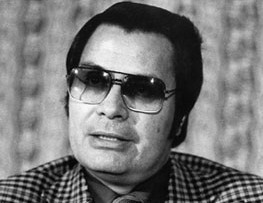 Jim Jones
Murderer · Guyana · 1978
James Warren "Jim" Jones (May 13, 1931 – November 18, 1978) was the American fo…
900 victims
Jim Jones
Murderer · Guyana · 1978
James Warren "Jim" Jones (May 13, 1931 – November 18, 1978) was the American fo…
900 victims
 Dr. Wouter Basson
Murderer · 1992
Wouter Basson (born July 6, 1950) was a South African cardiologist and the form…
230 victims
Dr. Wouter Basson
Murderer · 1992
Wouter Basson (born July 6, 1950) was a South African cardiologist and the form…
230 victims
 Ershad Sikder
Murderer · Bangladesh · 1990
Ershad Sikder was an influential political figure in the south-western city of…
30 victims
Ershad Sikder
Murderer · Bangladesh · 1990
Ershad Sikder was an influential political figure in the south-western city of…
30 victims
 Brian Kevin Rosenfeld
Murderer · USA · 1985
Brian Kevin Rosenfeld Brian Kevin Rosenfeld was sentenced to three concurrent l…
23 victims
Brian Kevin Rosenfeld
Murderer · USA · 1985
Brian Kevin Rosenfeld Brian Kevin Rosenfeld was sentenced to three concurrent l…
23 victims
 Yahweh ben Yahweh
Murderer · USA · 1980
Yahweh ben Yahweh was born and legally named Hulon Mitchell Jr. (October 27, 19…
23 victims
Yahweh ben Yahweh
Murderer · USA · 1980
Yahweh ben Yahweh was born and legally named Hulon Mitchell Jr. (October 27, 19…
23 victims
 Daniel Greene
Murderer · USA · 1991
Daniel Greene was sentenced to death on December 14, 1992. He committed a viole…
1 victim
Daniel Greene
Murderer · USA · 1991
Daniel Greene was sentenced to death on December 14, 1992. He committed a viole…
1 victim
 Gary Sinegal
Murderer · USA · 2005
Gary Sinegal was sentenced to life in prison on April 9, 2007. He pleaded guilt…
2 victims
Gary Sinegal
Murderer · USA · 2005
Gary Sinegal was sentenced to life in prison on April 9, 2007. He pleaded guilt…
2 victims
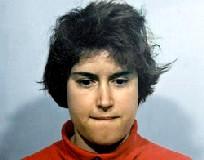 Laurie Dann
Murderer · USA · 1988
Laurie Dann (also referred to as Laurie Wasserman; née Wasserman; born c. 1958;…
1 victim
Laurie Dann
Murderer · USA · 1988
Laurie Dann (also referred to as Laurie Wasserman; née Wasserman; born c. 1958;…
1 victim
 James Ruppert
Mass murderer · USA · 1975
James Ruppert killed his mother, brother, sister-in-law, and eight nieces and n…
11 victims
James Ruppert
Mass murderer · USA · 1975
James Ruppert killed his mother, brother, sister-in-law, and eight nieces and n…
11 victims
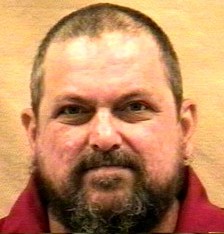 Allen Holman
Murderer · USA · 1997
Allen R. Holman, Sr. (born March 29, 1959) was sentenced to death for the first…
1 victim
Allen Holman
Murderer · USA · 1997
Allen R. Holman, Sr. (born March 29, 1959) was sentenced to death for the first…
1 victim
 Kirk Lankford
Murderer · USA · 2007
Kirk Matthew Lankford (born 1985) was an American from Kalihi, Hawaii. He was c…
1 victim
Kirk Lankford
Murderer · USA · 2007
Kirk Matthew Lankford (born 1985) was an American from Kalihi, Hawaii. He was c…
1 victim
- Gender
- male
- Country
- —
- Location
- —
- Date of birth
- April 1951
- Age at first offence
- 35
- Characteristics
- cannibalism
- Victim profile
- Michelle Dorr, 6 / Laura Houghteling, 23
- Method of murder
- St abbing with knife Loca tion : Maryland, USA
- Date(s) of murder
- 1986 / 1992
- Years active
- 1986–1992
- Date of arrest
- November 6, 1992
- Status
-
Imprisoned
Pleaded guilty in June 1993 to second-degree murder and was sentenced to 30 years in prison; in 1999 he was convicted of murdering Michelle Dorr; another 30 years were added to his sentence, plus 10 more for a past robbery charge
Summary
Hadden Clark was a cross-dressing cannibal killer convicted in Maryland of two murders. He pleaded guilty in June 1993 to second-degree murder and received a sentence of 30 years in prison. In 1999, he was convicted of murdering Michelle Dorr, and another 30 years were added onto his sentence, plus 10 more for a past robbery charge.
Clark told other inmates that he killed women and girls in the Eastern Seaboard between the mid-70s and 1993, and he led searches related to claimed burial sites. Investigators attempted to separate his statements from fact.
Timeline
- April 9, 2000 — Clark, a 47-year-old handcuffed man, walked through woods in Wellfleet wearing a woman's wig while looking for graves of two women he claimed to have buried nearly two decades earlier.
- May 31, 1986 — Michele Dorr was last seen leaving her father's kitchen in a pink ruffled bathing suit heading to a turtle-shaped plastic pool in their back yard.
- October 1992 — Laura Houghteling disappeared from her home in Bethesda.
- 1986 — Clark led authorities to the body of 6-year-old Michele Dorr in connection with the 1986 disappearance.
- December 1999 — A search of the Wellfleet property found a bucket containing 230 pieces of women's jewelry buried on the Cape Cod property, including Laura Houghteling's high school ring.
- January 14, 2000 — Clark traveled from his Maryland prison to lead authorities on a search of property his family once owned on Cape Cod.
- January 19, 2000 — Investigators described Clark as having led them to the body of Michele Dorr and attempting searches tied to his claims of other burial sites.
- January 17, 2000 — Snow and single-digit temperatures halted the search for more victims on Cape Cod.
- October 20, 1999 — Clark was sentenced to 30 years in prison for the murder of Michele Dorr, with the body previously not found.
- June 1993 — Clark pleaded guilty to second-degree murder and was sentenced to 30 years in prison.
Background
Hadden Clark was described as a cross-dressing cannibal killer serving a long prison term in Maryland. He was 47 years old in April 2000 and 35 at the time of the May 31, 1986 killing described in the material.
Clark met with authorities in Meriden, Connecticut, where he claimed he had buried another body around 1980 in a family property owned by his maternal grandfather Maynard Scranton. Clark told a fellow inmate whom he believes is Jesus Christ that he killed as many as a dozen women and girls along the Eastern Seaboard between the mid-70s and 1993. Investigators from Massachusetts, Connecticut, Rhode Island, and Pennsylvania worked to determine whether his claims were true.
Clark grew up in Pennsylvania and spent his summers in Wellfleet, where he worked in restaurants. The woods in Wellfleet were part of a 7.3-acre property once owned by his grandfather, Silas Clark. Clark had also met with authorities connected to other states based on his claims.
Clark suffered from paranoid schizophrenia, diagnosed in 1985 when he was discharged from the Navy, where he had served as a cook. Authorities described him as having frequent psychotic breakdowns and being difficult to manage.
The offence
Murder of Laura Houghteling
Laura Houghteling was 23 years old and a Harvard graduate. She disappeared from her home in Bethesda in 1992. Clark was convicted in Maryland for her slaying and pleaded guilty to second-degree murder in June 1993.
During the material, the events describe that Clark broke into Laura Houghteling’s apartment while wearing a woman’s wig and abduction and killing occurred, followed by burial. Authorities also described Clark leaving a bloody fingerprint in one of Laura’s pillowcases.
Police found Laura Houghteling’s body buried in Maryland, following a series of leads and searches.
Murder of Michele Dorr
Michele Dorr was 6 years old at the time she was last seen on May 31, 1986. She was described as leaving her father’s kitchen in a pink ruffled bathing suit heading to a turtle-shaped plastic pool in their back yard.
The material states that Clark was arrested a month after Laura Houghteling’s disappearance after police found his bloody fingerprint in one of Laura’s pillowcases, and that Clark then became the prime suspect in Michele Dorr’s disappearance.
Authorities later pinned Michele’s death on Clark by using a mitochondrial DNA test. The material states that Clark had been living in the basement of his brother’s house, two doors from Michele’s father.
Clark later told an inmate that he stabbed Michele to death when he found her in his niece’s bedroom waiting for her little playmate, threw her in a duffel bag, took her to his new home, ate some of her remains before burying her, and confessed to eating and torturing other women and girls.
Michele’s remains were later found in a shallow grave covered by an abandoned mattress five minutes away from her home in Silver Spring. Her body was identified using dental records after removal by the medical examiner.
Investigation
Authorities opened multiple case files based on Clark’s claims and statements in custody. The FBI opened several case files on unsolved child murders in Connecticut. Investigators tried to determine if Clark’s claims of other victims in Connecticut and Massachusetts were connected to actual unsolved cases.
Wellfleet property searches
Clark led investigators to the graves of two women he claimed to have buried nearly two decades earlier. The woods were located in Wellfleet on property associated with his grandfather, Silas Clark.
Earlier on the same Cape Cod trip, he stopped at West Mountain area in Connecticut where he refused to cooperate until women's clothing was obtained. Agents complied and bought a skirt, panties, and a bra at a nearby K-Mart. Clark kept the panties and bra. Clark was accompanied by an unidentified bearded prisoner who he thought was Jesus. Authorities justified the inmate accompanying him because the inmate was allegedly the only person who could calm Clark during frequent psychotic breakdowns.
In both January and April trips Clark was accompanied by the unidentified bearded prisoner. During the January trip, investigators were looking for evidence at the Wellfleet property his family once owned.
A search December 1999 found a bucket with 230 pieces of women’s jewelry buried in the Cape Cod property; one piece was Laura Houghteling’s high school ring. Police said they probably would have dismissed Clark’s confession if he had not led them to Michele Dorr’s remains, who had been missing since 1986. The material indicates that police used this information to justify continuing searches.
Searches related to Connecticut claims
On Sunday, Connecticut State Police spent about five hours with Clark in an unsuccessful effort to find a woman he said he had buried there more than two decades earlier. Clark had drawn on alleged grave sites but investigators said they found no evidence linked to specific unsolved crimes in Connecticut.
Vermont investigators found no connection between his claims and unsolved crimes in Vermont. Rhode Island State Police explored possible links to Block Island and Warwick areas, but said there was no indication he had committed any crime in Rhode Island.
Arrest and custody
The material states that Clark was arrested a month after Laura Houghteling’s disappearance after police found his bloody fingerprint in one of Laura’s pillowcases. The material also describes Clark’s behavior during questioning as involving blackouts and partial statements.
Clark pleaded guilty in June 1993 to second-degree murder in the death of Laura Houghteling and led police to her body in a shallow grave not far from where he abducted her.
Authorities also pursued the disappearance of Michele Dorr based on statements Clark made while in custody for Laura’s murder. The material states that prosecutors and family members expressed little hope Michele’s burial location would be disclosed prior to the eventual discovery of her remains.
Trial
Plea and conviction for Laura Houghteling
In June 1993, Clark pleaded guilty to second-degree murder in the death of Laura Houghteling. He was sentenced to 30 years in prison. The material states that he later led police to Laura Houghteling’s body in a shallow grave.
In the material, a Maryland District Court Judge, Michael D. Mason, later cited “the denial of the ability of the parents to bury the child” as a factor in imposing a sentence that would not begin until Clark completed other sentences totaling 40 years for a theft charge and for the 1992 murder of Laura Houghteling.
Conviction for Michele Dorr
In 1999, Clark was convicted of murdering Michelle Dorr after other prisoners testified that he had bragged about committing the crime. The conviction resulted in another 30 years added to his sentence.
At sentencing in Maryland for Michele’s murder, prosecutors said Clark buried Michele Dorr’s body in a Cape Cod, Mass., cemetery and then dug it up on Halloween in 1992, though they were unable to find it despite years of questioning and searching.
Defense attorneys cited their unsuccessful effort to suppress a videotape of the police interview with Clark as a possible ground for appeal. Clark did not testify during the trial and made no statement at sentencing.
Michele Dorr’s father, Carl Dorr, was quoted as saying, “He went through great pains to cover it up, and has no remorse,” and also as being quoted earlier in the material about the case.
The prosecutors said Clark stabbed Michele to death, cleaned up as much of the blood as he could and disposed of her body.
Sentencing
- Clark pleaded guilty in June 1993 to second-degree murder and was sentenced to 30 years in prison.
- In 1999, he was convicted of murdering Michelle Dorr.
- Another 30 years were added onto his sentence for the Michele Dorr conviction.
- Plus 10 more years were added for a past robbery charge.
- The material also describes Clark as effectively serving life in prison and states that he was serving a 60-year sentence in Montgomery County, Maryland, for the slayings of 6-year-old Michele Dorr and 23-year-old Laura Houghteling.
- Another portion of the material states that Clark was serving 70 years for the murders of Michele Dorr and Laura Houghteling.
Appeals
No appeal outcome was described in the provided material.
Outcome
Clark’s later cooperation and admissions led to the discovery of Michele Dorr’s remains in a shallow grave in Silver Spring. Police and investigators used Clark’s statements and leads, including leads about burial sites on Cape Cod and in other states, to guide searches. The material describes that searches for other claimed victims did not produce evidence linking him to specific unsolved crimes in those states, and that weather and time affected searches on Cape Cod.
Other details
Victims and related people
- Michele Dorr was 6 years old. Her father was Carl Dorr.
- Laura Houghteling was 23 years old. Her mother was Penny Houghteling.
- Laura Houghteling was described as a Harvard graduate.
- Michele Dorr’s remains were found about five miles from her home in Silver Spring, in North Paint Branch Stream Valley Park, and were later brought to Baltimore for positive identification based on dental records.
Missing details and prior theories
- The material states that prosecutors said Clark initially buried Michele Dorr in Wellfleet and then returned in 1992 and removed the remains, while stating the body was not found for years.
- The material describes that Carl Dorr snapped under police pressure and confessed to the killing but later recanted. Despite the recantation, he remained a prime suspect until Clark was charged with Laura Houghteling’s murder.
Jewelry and “trophies”
Clark led police to a bucket with 230 pieces of women’s jewelry buried in the Cape Cod property, including Laura Houghteling’s high school ring. The material states that Clark told his inmate friend the discovered jewelry was a collection of “trophies” from a two-decade long killing spree.
Quotes
Massachusetts State Police Sgt. James Plath said:
“It was rather frustrating -- the day he arrived in New England, weather arrived with him -- snow, subfreezing temperatures, howling winds,” Massachusetts police chief Richard Rosenthal said: “Nothing is going on in Wellfleet today,” “Based on the fact that he provided information about the Maryland homicides and brought police to the grave sites and the December search in Wellfleet, it would be the only responsible thing to do,” Police Chief Richard Rosenthal said: “The fact is, he was a transient and moved around. How much is truth and how much of it's not? He was a very active guy for quite a long period of time. They have to see exactly what he's been up to.” Montgomery County Police Chief Charles Moose told reporters at the scene that investigators had: “a lot of strong indicators” Montgomery County Police Chief Charles Moose said: “It is a situation that for us brings some closure,” Maryland assistant district attorney Michael O'Keefe said: “It has not been easy,” Carl Dorr, Michele’s father, said: “He went through great pains to cover it up, and has no remorse,” Vermont State Police Lt. Bruce Lang said: “All we have is a thing about his claiming he killed a couple of people. We have nothing to match him to any bodies he said he killed,” Rhode Island State Police Maj. Steven Pare said: “There is no indication he has committed any crime in the state of Rhode Island,” Connecticut State Police Lt. Ralph Carpenter said: “The information he offered us was not fruitful or relevant to any crime,” Connecticut State Police Lt. Ralph Carpenter said: “Nothing turned up related to any specific unsolved crimes. As of now, we haven't linked him to any case here.” Barnstable County District Attorney Philip Rollins said investigators were looking for: “any evidence that a crime had been committed.” Barnstable County District Attorney’s Office declined to say if the search turned up any clues or if the search would continue.

Spotted an error, or have more information about this case?