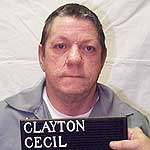
Cecil Clayton
Murderer Russell Ellwood
Murderer · USA · 1991
Russell Ellwood was a former taxi driver. Authorities suspected him of killing…
20 victims
Russell Ellwood
Murderer · USA · 1991
Russell Ellwood was a former taxi driver. Authorities suspected him of killing…
20 victims
 Robert Martines Perez
Murderer · USA · 1994
Name: Robert Martines Perez · Other name used in proceedings: Robert Martinez P…
15 victims
Robert Martines Perez
Murderer · USA · 1994
Name: Robert Martines Perez · Other name used in proceedings: Robert Martinez P…
15 victims
 Billy Frank Vickers
Murderer · USA · 1993
Billy Frank Vickers Vickers was executed by lethal injection in Texas on Januar…
14 victims
Billy Frank Vickers
Murderer · USA · 1993
Billy Frank Vickers Vickers was executed by lethal injection in Texas on Januar…
14 victims
 David Attias
Homicide · USA · 2001
David Attias was described as an 18-year-old student at the University of Calif…
4 victims
David Attias
Homicide · USA · 2001
David Attias was described as an 18-year-old student at the University of Calif…
4 victims
 Angelo Buono
Serial killer · USA · 1977
Angelo Buono, Jr. (October 5, 1934 – September 21, 2002) was an American serial…
10 victims
Angelo Buono
Serial killer · USA · 1977
Angelo Buono, Jr. (October 5, 1934 – September 21, 2002) was an American serial…
10 victims
 John Henry George Lee
Murderer · United Kingdom · 1884
John Henry George Lee, better known as John “Babbacombe” Lee (1864 – c. 1945),…
1 victim
John Henry George Lee
Murderer · United Kingdom · 1884
John Henry George Lee, better known as John “Babbacombe” Lee (1864 – c. 1945),…
1 victim
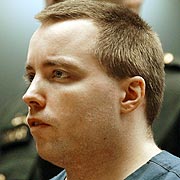 Jeffrey Mailhot
Serial killer · USA · 2003
Jeffrey Mailhot lived in Woonsocket and was described by neighbours as a “nice…
3 victims
Jeffrey Mailhot
Serial killer · USA · 2003
Jeffrey Mailhot lived in Woonsocket and was described by neighbours as a “nice…
3 victims
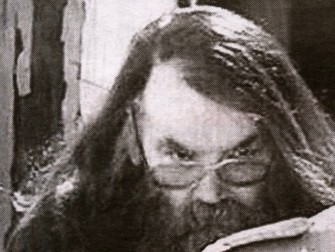 Michael Anthony Guider
— · Australia · 1986
Michael Anthony Guider was born on 20 October 1950 in the city of Melbourne, Vi…
1 victim
Michael Anthony Guider
— · Australia · 1986
Michael Anthony Guider was born on 20 October 1950 in the city of Melbourne, Vi…
1 victim
- Gender
- male
- Country
- USA
- Location
- Jasper County, Missouri, USA
- Date of birth
- April 16, 1940
- Age at first offence
- 56
- Characteristics
- attempt to collect insurance money, rape, to avoid arrest
- Victim profile
- Christopher Castetter (Barry County sheriff’s deputy)
- Method of murder
- Shooting
- Date(s) of murder
- November 27, 1996
- Years active
- 1996
- Date of arrest
- Same day
- Status
-
Sentenced to death
Sentenced to death on December 8, 1997
Case overview
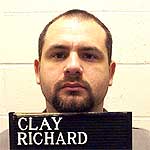
Cecil L. Clayton was convicted of murder in the first degree and was sentenced to death for Christopher Castetter’s murder.
Timeline
- November 27, 1996 — Martha Ball asked Cecil Clayton to meet her at the Country Corner store in Purdy, Missouri, and requested that Clayton bring important papers she had left at his home.
- November 27, 1996 — Clayton arrived at the store without the papers, left to obtain them, returned, and asked Martha Ball to go out to eat; after she refused, Clayton pushed her and they began to argue in the store.
- November 27, 1996 — Clayton left the store, later met his friend Martin Cole, and asked Martin to accompany him; Martin declined.
- November 27, 1996 — Martha Ball called her mother, Dixie Seal, at around 9:50 p.m. and advised her sister, Carolyn Leonard.
- November 27, 1996 — Carolyn Leonard observed Clayton’s truck in the driveway of the Seal residence and telephoned law enforcement to report Clayton was on their property and not welcome.
- November 27, 1996 — Deputy Christopher Castetter was dispatched to the Seal residence; at about 10:03 p.m. he made contact after arriving.
- November 27, 1996 — At approximately 10:06 p.m., Deputy Castetter’s patrol car was found angled against a tree in the driveway; the engine was running fast and the wheels were spinning and smoking.
- November 27, 1996 — Deputy Manning turned off the engine and attempted to assist Deputy Castetter, who was bleeding heavily from his head and having trouble breathing.
- November 27, 1996 — At 10:07 p.m., Deputy Bowman contacted the dispatcher to request an ambulance; Deputy Castetter was transported to the hospital by helicopter and died after suffering a gunshot wound to the head in the middle of his forehead.
- November 27, 1996 — At about 10:10 to 10:15 p.m., Clayton returned to Martin Cole’s house, asked Martin to accompany him, and the two left in Clayton’s truck.
- November 27, 1996 — In the truck, Clayton asked Martin if he would believe that he shot a policeman and described shooting Deputy Castetter in the head, accelerating into a tree, and then threatened to shoot Martin if Martin would not act as an alibi.
- November 27, 1996 — At about 10:15 p.m., Chief McCracken heard a dispatch to be on the lookout for a blue Toyota truck with wooden sides driven by Clayton; he met Chief Clint Clark, confirmed Clayton’s address, and went to Clayton’s residence.
- November 27, 1996 — Clayton was arrested after refusing police instructions, placing something in a stack of concrete blocks, and being approached while Martin complied with officers’ request and was apprehended first.
- November 27, 1996 — Officers located a gun in the stack of concrete blocks next to Clayton’s house; Clayton was interviewed by Mike Rogers of the Missouri highway patrol.
- December 8, 1997 — Clayton was sentenced to death.
- 1999 — The Missouri Supreme Court affirmed Clayton’s conviction and death sentence on direct appeal in State v. Clayton, 995 S.W.2d 468 (Mo. banc 1999).
- 2001 — The Missouri Supreme Court affirmed Clayton’s conviction and death sentence again in 2001 on his motion for post-conviction relief.
- 12/04/2001 — The Missouri Supreme Court handdown date for the en banc opinion in SC83355 (Cecil Clayton, Appellant v. State of Missouri, Respondent).
- February 1, 2008 — The U.S. Court of Appeals for the Eighth Circuit upheld the conviction and death sentence.
Background
Cecil Clayton and Martha Ball had been involved in a romantic relationship and had, at times, lived together. By November 1996, their relationship was coming to an end. On November 27, 1996, Martha asked Clayton to meet her at the Country Corner store in Purdy, Missouri. She requested that Clayton bring important papers she had left at his home.
The offence
After Clayton became angry and pushed Martha Ball, they argued in the store. Later that evening, Deputy Christopher Castetter was summoned to investigate at the Seal residence and was shot in the head at point-blank range by Clayton as Castetter began to roll down his driver’s side window. Deputy Castetter later died from the gunshot wound at a local hospital.
Investigation
A Barry County sheriff’s department call was made after Barbara Starkey noticed the argument in the store. Jim McCracken, Purdy chief of police, responded and spoke with Clayton and lingered in the store until after Clayton left. Martha asked Chief McCracken if he would escort her to Cassville where she was staying with her mother, Dixie Seal; before the escort could be arranged, Martha left the store saying she was going to a friend’s home and went to Vicky Deeter’s home in Monett.
Vicky testified that Martha was very scared, pale, and shaking when Martha arrived. After leaving the Country Corner store, Clayton went to see Martin Cole around 9:40 p.m. and asked Martin to go with him; Martin declined because he had to drive a friend to work.
After Carolyn Leonard heard the truck and observed it stop, back into the driveway, and turn its lights off, she telephoned the Barry County sheriff’s department and reported Clayton was on their property and was not welcome. Deputy Christopher Castetter was dispatched and, upon arrival, was later found mortally wounded.
When Deputy Manning approached the driver’s side window, it was rolled down about an inch but was not broken. The car was placed in park and the engine turned off. Deputy Manning found Deputy Castetter leaned over in the seat; the seatbelt was not on; Castetter’s weapon was still snapped in its holster; and Castetter’s flashlight was no longer secured in its cradle. Deputy Bowman contacted the dispatcher and requested an ambulance. Deputy Castetter was transported to the hospital by helicopter.
Arrest and search
At about 10:10 to 10:15 p.m., Clayton returned to Martin Cole’s house, asked Martin to accompany him, and they left in Clayton’s truck. At about 10:15 p.m., Chief McCracken heard the dispatch to be on the lookout for the blue Toyota truck with wooden sides driven by Clayton. He recognized the truck as Clayton’s and met Chief Clint Clark, confirmed Clayton’s home address, and went to Clayton’s residence.
Clayton was driving toward his home when he saw two police cars approaching; he parked in the driveway, asked Martin “should I shoot them?”, and received Martin’s answer “no.” The officers activated spotlights and Clayton eventually got out of his truck. Clayton began walking toward the side of his house, advising the officers that he could not hear them, kept his right hand in his pocket, refused to remove his hand or approach the officers, placed something in a stack of concrete blocks, and then returned to his truck.
Martin complied with the officers’ request to get out of the truck and was apprehended. Martin advised the officers that Clayton had a gun. Officers then located the gun in the stack of concrete blocks next to Clayton’s house. Clayton was apprehended and transported to the sheriff’s department. Mike Rogers of the Missouri highway patrol interviewed Clayton.
Statements by Cecil Clayton
During questioning, Clayton’s version of events varied from complete denial to stating that Deputy Castetter “probably should have just stayed home” and that “he shouldn’t have smarted off to me.” Clayton also stated “but I don’t know because I wasn’t out there.”
In the truck, Clayton asked Martin if he would believe him if he told him he shot a policeman and then described how he shot the “cop” in the head and how Deputy Castetter then hit the accelerator and hit a tree. Clayton then took the weapon out of his overalls, pointed it at Martin’s head, and threatened to shoot him. Clayton asked Martin if he thought it was loaded. Clayton told Martin that he wanted him to act as an alibi and tell the police that the two had been together all afternoon and evening watching television.
Charges and venue
Following an investigation, Clayton was charged by information in the Circuit Court of Barry County with one count of murder in the first degree and one count of armed criminal action. Venue was transferred from Barry County to Jasper County.
Trial
A jury found Clayton guilty of murder in the first degree. After finding three aggravating circumstances, the jury recommended that Clayton be sentenced to death for Christopher Castetter’s murder. The trial court imposed the death sentence.
At trial, the evidence leading to conviction was described as compelling but largely circumstantial. A blue Toyota pickup truck with wooden sides was observed in the driveway of the Dixie Seals’ residence in Barry County, Missouri. The truck was like one Clayton had been driving earlier that day during a violent argument with his former girlfriend, the daughter of Mrs. Seals.
Deputy Christopher Castetter was summoned to investigate. After the truck left, Castetter’s vehicle was found angled in the Seals driveway against a tree, with the engine running fast and the wheels spinning. Castetter was mortally wounded by a single gunshot in the middle of his forehead.
Later Clayton arrived at Martin Cole’s home, told Cole that he had shot a “cop” in the head and displayed a weapon, and wanted Cole to act as an alibi. Clayton and Cole proceeded to Clayton’s house in the pickup truck where they were arrested. It was described that Clayton managed to step to the side of his house where a pile of cement blocks were located, and later a gun was located in the pile of blocks. The gun was determined to be the likely source of the bullet that killed Castetter. Paint chips similar to the paint on the pickup were found on the Castetter vehicle.
The record described that Clayton denied involvement in the murder when interrogated, but did say at one point that “he shouldn’t have smarted off to me.” The record also described that Clayton later admitted his involvement in the killing to a jailhouse snitch, Robert Compton.
The trial evidence included weaknesses explored by the defense. It was described that no gunpowder residue was found on Clayton’s hands or clothing, though Cole had residue on his left hand and Cole was left-handed. Defense counsel also probed uncertainty about whether officers observed Clayton deposit the gun in the pile of cement blocks, whether the bullet recovered from the victim was positively fired by the gun found in the pile of blocks, and whether the paint found on the victim’s vehicle was conclusively determined to be from Clayton’s truck.
A second defense line involved a claim of diminished capacity due to a brain injury from a sawmill accident in 1972. Clayton’s brother, Marvin, testified that after the injury, Clayton was changed, broke up with his wife, began drinking alcohol, became impatient, was unable to work, and became more prone to violent outbursts. A defense expert testified that, due to a brain injury involving a loss of 7.7 percent of the brain, Clayton was incapable of deliberating, planning, or coolly reflecting on a murder when agitated. Another expert explained that due to the brain injury, Clayton was susceptible to suggestion, explaining the equivocal statements to police.
During the penalty phase, Clayton’s brother Jerry testified about Clayton’s childhood and life as a part-time pastor and evangelist prior to the sawmill accident, and about Clayton’s marital breakup, drinking alcohol, and his antisocial personality. A jail administrator and a jail chaplain testified regarding Clayton’s good behavior and care for others in the jail while awaiting trial. Clayton received a death sentence.
Sentencing
The trial court imposed the death sentence after the jury recommended death based on finding three aggravating circumstances.
Appeals and post-conviction
Clayton appealed and the conviction and sentence were affirmed in State v. Clayton, 995 S.W.2d 468 (Mo. banc 1999).
Clayton filed a timely Rule 29.15 motion. On appeal from the denial of the Rule 29.15 motion, he raised four claims alleging ineffective assistance of trial counsel. The court reviewed findings under Rule 29.15(k) and the Strickland framework, and stated that it would only overturn the trial court’s ruling if the findings and conclusions were clearly erroneous.
Claims on appeal
Clayton argued:
- His trial attorney was ineffective for pursuing simultaneously both a “reasonable doubt” defense and a diminished capacity defense.
- His attorney was ineffective in failing to thoroughly investigate and present the diminished capacity defense alone.
- His attorney was ineffective for failing to have Clayton’s competency to stand trial adjudicated, and that Clayton was so incompetent during the trial that he was not able to assist his attorney in conducting the defense.
- His attorney was ineffective for not presenting certain mitigating evidence during the penalty phase.
The court concluded all four claims failed to establish that the motion court clearly erred in finding that counsel’s conduct was not objectively unreasonable.
Presentation of two theories of defense
The court held trial counsel was not ineffective in arguing reasonable doubt and diminished capacity. It stated that criminal defendants could present multiple defenses and that asserting a reasonable doubt of guilt and diminished capacity was not logically inconsistent. The court characterized counsel’s decision as a reasonable strategic choice.
Failure to investigate and present diminished capacity
The court held counsel was not ineffective. It ruled it was reasonable as part of the overall strategy to present reasonable doubt even if a diminished capacity defense alone might also have been reasonable. It also ruled that the decision not to introduce specific items of evidence and not to call certain witnesses was a strategic decision.
Clayton claimed school records, Nevada State Hospital records, and a Social Security Disability file should have been introduced. The court described that counsel knew Clayton’s head injury history, and that introducing records could risk a “paper war,” complicate the defense narrative, and show a violent man with a criminal record even before the accident. The court also held counsel was not ineffective for not calling Les Paul, because Paul told counsel he “couldn’t help him.” The court held counsel was also not ineffective for not calling Carolyn Dorsey, reasoning that other witnesses testified about similar personality change and that additional testimony would be cumulative, while Dorsey might give the prosecution an opportunity on cross-examination to show a violent temper before the accident.
Failure to adjudicate competency
The court held counsel was not ineffective for failing to adjudicate competence. It stated counsel had prior involvement with Clayton and that Clayton could intelligently discuss legal options and correspond with counsel. The court also held Clayton failed to demonstrate actual incompetence during trial and that the trial court did not find Dr. Daniel Foster’s testimony credible.
Failure to present specific mitigating witnesses
Clayton argued counsel should have called Carolyn Dorsey, Arnold Evans, Les Paul, Norma Mitchell, and Delores Williams during the penalty phase. The court held selection of witnesses was trial strategy and that none would have added significant value because much would have been cumulative. The court further stated there was no requirement under Missouri law that an attorney present background information during a capital trial’s penalty phase.
Outcome of Rule 29.15 proceeding
The judgment was affirmed. The opinion also stated that all concur. It included “Separate Opinion: None.”
Missouri Supreme Court affirmance details
The case was identified as Cecil Clayton, Appellant v. State of Missouri, Respondent, with a case number SC83355. The handdown date was 12/04/2001. The opinion author was John C. Holstein, Judge, and the vote was AFFIRMED. The court held Clayton’s attorney was not ineffective and that alleged failures were reasonable strategic choices that could not serve as ineffective assistance.
Federal appellate status
A February 1, 2008 statement described that the U.S. It stated that the U.S. Department of Justice represented the state in defending Clayton’s conviction and sentence and included background about the store dispute, the response at the mother’s house, and the shooting of Deputy Castetter at point-blank range.
The statement included a quote from Attorney General Jay Nixon:
“Deputy Castetter was protecting the law-abiding citizens of Barry County when he was shot and killed without warning by Cecil Clayton,” Nixon said. “The jury appropriately determined Clayton should face the ultimate punishment. My office will continue to fight to have this sentence carried out.”
Other details
Clayton was also said to have been charged and tried after a venue transfer from Barry County to Jasper County. The description of evidence at trial included references to a brain injury in 1972, tests of diminished capacity, and testimony from multiple witnesses during the penalty phase and post-conviction proceeding.
Spotted an error, or have more information about this case?