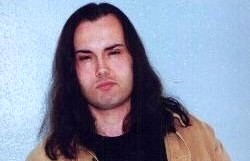
Nicolas Claux
Murderer Dr. Wouter Basson
Murderer · 1992
Wouter Basson (born July 6, 1950) was a South African cardiologist and the form…
230 victims
Dr. Wouter Basson
Murderer · 1992
Wouter Basson (born July 6, 1950) was a South African cardiologist and the form…
230 victims
 Ershad Sikder
Murderer · Bangladesh · 1990
Ershad Sikder was an influential political figure in the south-western city of…
30 victims
Ershad Sikder
Murderer · Bangladesh · 1990
Ershad Sikder was an influential political figure in the south-western city of…
30 victims
 Brian Kevin Rosenfeld
Murderer · USA · 1985
Brian Kevin Rosenfeld Brian Kevin Rosenfeld was sentenced to three concurrent l…
23 victims
Brian Kevin Rosenfeld
Murderer · USA · 1985
Brian Kevin Rosenfeld Brian Kevin Rosenfeld was sentenced to three concurrent l…
23 victims
 Russell Ellwood
Murderer · USA · 1991
Russell Ellwood was a former taxi driver. Authorities suspected him of killing…
20 victims
Russell Ellwood
Murderer · USA · 1991
Russell Ellwood was a former taxi driver. Authorities suspected him of killing…
20 victims
 Anisio Ferreira de Sousa
Murderer · Brazil · 1989
September 4, 2003 — Anísio Ferreira de Sousa was sentenced to 77 years in priso…
19 victims
Anisio Ferreira de Sousa
Murderer · Brazil · 1989
September 4, 2003 — Anísio Ferreira de Sousa was sentenced to 77 years in priso…
19 victims
 Paul Ezra Rhoades
Serial killer · USA · 1985
Paul Ezra Rhoades was a male Idaho inmate who was born on January 18, 1957, in…
6 victims
Paul Ezra Rhoades
Serial killer · USA · 1985
Paul Ezra Rhoades was a male Idaho inmate who was born on January 18, 1957, in…
6 victims
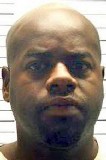 Andre Bland
Murderer · USA · 1992
Andre S. Bland was convicted in the shooting death of Ontrain Sanders in the pa…
1 victim
Andre Bland
Murderer · USA · 1992
Andre S. Bland was convicted in the shooting death of Ontrain Sanders in the pa…
1 victim
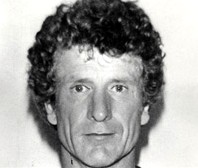 Arthur Hutchinson
Murderer · United Kingdom · 1983
Arthur Hutchinson was an English murderer and rapist who committed three murder…
3 victims
Arthur Hutchinson
Murderer · United Kingdom · 1983
Arthur Hutchinson was an English murderer and rapist who committed three murder…
3 victims
 Lila Gladys Young
Murderer · Canada · 1928
Lila Gladys Young was also named Lila Gladys Lila Coolen. Lila Gladys Young was…
100 victims
Lila Gladys Young
Murderer · Canada · 1928
Lila Gladys Young was also named Lila Gladys Lila Coolen. Lila Gladys Young was…
100 victims
- Gender
- male
- Country
- —
- Location
- —
- Date of birth
- March 22, 1972
- Age at first offence
- 22
- Characteristics
- necrophilia, cannibalism
- Victim profile
- Thierry Bissonnier, 34
- Method of murder
- Shooting Loca tion : Par i s, Franc e
- Date(s) of murder
- October 4, 1994
- Years active
- 1994
- Date of arrest
- November 15, 1994
- Status
-
Imprisoned
Sentenced to 12 years in prison in May 1997
Case record: Nicolas Claux
Legal outcome
Nicolas Claux was found guilty of premeditated murder and sentenced to 12 years in prison in May 1997. He was eligible for parole in late 2000. After serving seven years and four months of a 12-year sentence, Nicolas Claux was released from prison on March 22, 2002.
Timeline
- March 22, 1972 — Nicolas Claux was born in the African nation of Cameroon.
- May 9, 1997 — Claux’s trial began at the Cour d’Assises de Paris.
- May 1997 — Claux was found guilty of premeditated murder and sentenced to 12 years in prison.
- February 1999 — Claux was transferred to Maison Centrale Poissy.
- March 22, 2002 — Claux was released from prison.
- September, 2004 — Claux returned to Paris and lived with his girlfriend in an apartment there.
Other details
Personal details and aliases
Nicolas Claux was also referred to as “Nico” and “Vampire of Paris”. The material also presented “Vampire of Paris” as a nickname.
Arrest and identification
On Nov. 15, 1994, officers of the Parisian “Brigade Criminelle” arrested 22-year-old Nicolas Claux outside the world famous cabaret Moulin Rouge on suspicion of the murder of Thierry Bissonnier, 34. The arrest occurred after an altercation with a woman, and the police recognized Claux from the photograph on Bissonnier’s forged driving license. While under custody, Claux confessed to the murder when he was shown ballistic evidence.
Confession and search of his apartment
Claux reported that he was taken back to the Parisian Crime Department for questioning after his arrest. He stated that crime scene investigators were already searching his apartment at 9 Rue Coustou under a search warrant at 9 Rue Coustou. Inside, investigators found:
- A .22-caliber handgun under his bed, sent off for ballistics tests.
- Bone fragments and human teeth scattered throughout the apartment, with vertebrae and leg bones hanging from the ceiling.
- Hundreds of videocassettes, mostly slasher and hardcore S&M flicks.
- A bullet-riddled target on one wall.
- Jars of human ashes resting on top of a TV set.
- Several bondage magazines in a far corner.
- A backpack containing handcuffs, surgical instruments, and duct tape.
- Several stolen blood bags inside his refrigerator.
Claux stated that after ballistic test results came back positive, he confessed to Bissonnier’s murder.
Additional admissions about grave robbing and cannibalism
Claux stated that he informed investigators that he had been:
- Robbing the graves of several Parisian gothic graveyards
- Stealing bones
- Mutilating mummified remains
When asked about storing stolen blood bags in his refrigerator, he stated:
- “I simply answered that I drank the blood on a regular basis.”
He stated that he worked as a mortuary assistant for 10 months and used his position to fulfill a lifelong fantasy revolving around cannibalism. He stated that when left alone to stitch the bodies after the autopsies, he would cut strips of meat from the ribs and eat them, and that on some occasions he would bring pieces of flesh back to his place to cook and eat.
Claux described the questions investigators asked after hearing his confessions:
- “WHY? Why did you kill? Why did you eat flesh and drink blood? And why did you dig up corpses?”
Confession about a specific grave-robbery incident at Passy Cemetery
Claux stated he woke up one day feeling a “sinister urge” to dig up a corpse and mutilate it. He said he gathered items including “a small crowbar, a pair of pliers, a screwdriver, black candles and a pair of surgical gloves” in a backpack, then took the subway until the Trocadero station. He said it was nearly noon and the gates of the Passy Cemetery were wide open.
He stated that undertakers were out for lunch and that he entered. He described the cemetery as “a small Gothic graveyard with plenty of huge mausoleums” built during the 19th century, located between two large avenues, and stated that it was “impossible to climb inside at night”. He stated he had a special grave in mind: “the burial site of a family of Russian immigrants from the 1917 revolution”. He stated he had pried open the iron door a few days earlier and had closed it afterward so it would seem nobody had touched it.
He stated the crypt was small with damp walls and buried deep inside the cemetery ground, and described using candles as the only light source. He stated that for more than an hour he removed a heavy coffin from its stone casing and laid it down slowly without making too much noise. He said one edge of the coffin scratched his lower leg.
He described the casket as solid oak sealed with big screws and said it looked brand new, so he expected a recently deceased corpse. He stated he unscrewed the coffin in less than 10 minutes and pried it open with the crowbar. He stated that “a horrible stench of putrefaction came out of the box” and that it smelled like “Thanatyl, the product embalmers use on a corpse in order to delay the process of decay.”
He stated he saw a half-rotten old woman shrouded in a white sheet, covered with brown stains. He described the face as smeared with oil, which he said was death fluids oozing from her skin. He stated teeth protruded from the mouth, eyes were gone, and he stared into empty eye sockets until “something broke into my mind” and he felt like he was falling into a whirlwind.
He stated:
- “That's when I picked up a screwdriver.”
- “So I began to stab the belly, the rib area and the shoulders.”
- “I stabbed her at least 50 times.”
- “I really can't remember.”
He said that when he woke up, his forearms were covered with “corpse slime.”
The offence
Murder of Thierry Bissonnier
Nicolas Claux confessed to the murder of Thierry Bissonnier, 34. Claux said that on the morning of Oct. 4, 1994, he decided to turn another fantasy into reality and spent his morning searching for a victim. He described seeking death and not caring about age, race, or sex.
He said that by early afternoon he used Minitel and chatted with a man named Thierry about bondage and S&M, and that after some time the two decided to get together and Thierry gave Claux the address to his home.
Claux described the encounter in his own words:
- “Back then it was a common practice in the gay community to meet on Minitel. They would establish contact through this means since it was quick and easy for them. I found out that it was an easy way for me to kill them without any witnesses, plus I had the guarantee of remaining anonymous, since there was no possibility of tracing back the discussions on Minitel.”
- “So I agreed on meeting Thierry around noon. With me I carried a single shot 22-caliber handgun, which I hid under my jacket. When I arrived at his place, a one-room apartment under the roof of an old building, I knocked on the door and gave him the fake first name that I had given him on Minitel. He opened the door, I stepped inside, quickly turned around while he was closing the door and pulled out the gun.”
- “I looked at his face just as he turned his head towards me and saw the gun pointed at his eye. After a few awkward moments passed, I pulled the trigger. He instantly fell face down without a word. It was really eerie. It all happened like in slow motion. Then I watched him bleed on the carpet.”
- “Soon I decided to see what the apartment was like and wandered around a bit. When I returned to where he was lying I observed that he was still moving and making horrible breathing noises on the floor, like if he was breathing through a straw.”
- “I reloaded the gun and shot again, this time striking him in the back of the head. I reloaded and fired a few more times, but he was still alive and making noise. I was surprised that he was still holding on, I had expected the first shot to kill him.”
- “After a few minutes, I went into his kitchen and found some cookies to eat and then sat in a corner of the room and watched him as I ate.”
- “When I was finished, I decided to get out of there quickly, so I shot him one last time in the back.”
- “I also lifted a huge plant container and smashed it on his head, crushing it some.”
- “I then wiped down my fingerprints; picked up his checkbook; a credit card and a wallet (with ID papers); his driving license; an alarm clock, and an answering machine, and finally left the scene.”
Medical findings from autopsy
According to Thierry Bissonnier’s autopsy report:
- “The first bullet had entered the eyeball and stopped just short of the brain.”
- “The following rounds crushed against the skull, except one, which slightly penetrated the brain.”
- “The final shot entered through Bissonnier's back and pierced his heart, causing almost immediate death.”
Investigation circumstances after discovery
Claux stated that Thierry Bissonnier’s body remained on the floor of his apartment for three days. He stated that Bissonnier’s parents discovered the scene after not being able to get in touch with him.
The material described that the murder had occurred as part of a string of homosexual murders in Paris, and it stated that seven of them occurred in October alone. It also described that Brigade Criminelle Investigator Gilbert Thiel believed that a single killer was responsible and sought to question Claux.
Attempted forgery and flight
In mid-October, Claux attempted to forge one of Bissonnier’s bank checks to buy a VCR. When asked for identification, Claux presented Bissonnier’s driver’s license and attempted to forge it by inserting his own picture. The shop clerk noticed the scam by comparing signatures, and Claux took off before police arrived.
Arrest
Nicolas Claux was arrested on Nov. 15, 1994 outside the Moulin Rouge cabaret after an altercation with a woman. The police recognized him from the photograph on Bissonnier’s forged driving license. During custody he confessed to the murder after being shown ballistic evidence.
Claux stated that he was sent to Fleury-Merogis, described as a jail south of Paris, where convicts were locked up before trial and where a person could wait up to three or four years in France before going to court.
Trial
Court and jury selection
Claux’s trial began on May 9, 1997, at the Cour d’Assises de Paris. The nine-member jury had been chosen by presiding Judge W. Waechter. Claux’s defense lawyer was Irène Terrel, who entered a plea of not guilty.
Prosecution arguments and exhibits
The prosecution’s opening move involved grisly photographs of the crime scene and Claux’s apartment. Claux said: “The purpose of the photos was to make a parallel between the murder, and the environment where I lived -- the old 'Does fiction influence reality' debate?”
The prosecution charged that Claux had voluntarily killed Bissonnier and felt that he acknowledged premeditation. The prosecution also presented a list of crimes Claux had committed during the act, including theft of:
- a check book
- a credit card
- a wallet
- a driving license
- an alarm clock
- an answering machine
The prosecution implied these items were stolen prior to the murder. The prosecution pointed out the use of the forged license and the forged check, including falsifying Bissonnier’s signature.
The material stated that the prosecution attempted to establish that Bissonnier’s murder was part of a series in Paris during 1994, and it described a “serial murders” theory that included a reference to “Rémy R. ('Le tueur du Minitel Rose')”. It reported Claux’s statement about the prosecution calling him “a 'death addict' and a 'real-life vampire'.” Claux stated: “The prosecution called me a 'death addict' and a 'real-life vampire'.”
It reported that the main testimony in the serial murder theory came from Inspector Garcin, who testified that even though there was no solid evidence against Claux, Claux fit the psychological profile of a serial murderer and that witnesses in bars where other murder victims hung out had previously spotted him there. Claux stated: “Regardless of the prosecution's "serial killer theory," there was simply not enough physical evidence to back it up.”
Psychiatry, diminished responsibility, and expert testimony
The material described a long debate in which experts presented diagnoses. Claux stated that psychosis was established, mostly because of acts of cannibalism in the morgue where he worked and acts of mutilation of dead bodies during grave robberies. He stated psychiatrists viewed these acts as “proof of a total loss of reality” and that Rorschach tests showed an “inner void” typical of schizophrenia. He said: “For them, I could benefit from Rule 242, concerning diminished responsibility, because my medical condition reduced my capacity to control my impulses.”
The material stated that multiple diagnoses were presented during trial, and it described that jurors deliberated for three hours.
Sentencing
Claux was found guilty of premeditated murder and also found guilty of:
- armed robbery
- fraudulent use of a bank check
- falsification of his drivers license photo
- an attempt to defraud the retailer of the video camera
He was sentenced to 12 years in prison. The material stated that he was eligible for parole in late 2000.
The material also stated that court psychiatrists described him as being a “nearly psychotic sadist”.
Appeals
No appeal outcome was provided.
Aftermath
Prison transfers and time served
Claux’s early prison years were spent in Fleury-Merogis for four years and two months until February 1999, when he was transferred to Maison Centrale Poissy about 15 miles northwest of Paris. The material described Maison Centrale Poissy as maximum security and stated it had a reputation among inmates for serial killers and terrorists.
The material stated that during his stay at Poissy he shared his block with at least six serial killers. It stated he studied computer programming for two years at the state’s expense, but it also stated that in reality he spent more time in the gym, paint room, and recreation yard. It stated he started painting in 1997 and learned that he had a natural talent. It stated that he was part of the prison’s video team where he learned filming and editing with DV camcorders, and that they filmed concerts, football games, and boxing fights.
Interview statement attributed to Claux about eating human flesh
The material recorded a quote attributed to Claux about the emotional experience of eating human flesh:
- “It feels like touching the face of God. It makes you feel like you don't belong to the human race anymore.”
Additional quoted statements (verbatim Q&A and messages)
The material reproduced questions and answers attributed to Nicolas Claux, including the following verbatim items:
- Claux: “I worship the devil.”
- Claux: “Blood is my life.”
- Claux: “I prefer the word "Ghoul"”
- Claux: “Tastes pretty good. It depends on what part you eat.”
- Claux: “The big muscles of the thighs and back are good. There's no meat in the breasts, only fats.”
- Claux: “Wow! Now I'm a cannibal...Cool!”
- Claux: “I opened this coffin inside a crypt in a Parisian Graveyard. I found embalmed remains inside, oozing with death fluids. It was a woman, and she was wrapped in a white shroud. The shroud sticked to her skin like fly paper. I stabbed her with a screwdriver. I tried to sever her head, but I did not have the right tools. I took polaroid snapshots.”
- Claux: “My mom said in the courtroom that I never cried or laughed. They thought at first that I was autistic. I don't have brothers or sisters so I was a lonely child. I don't remember much about my childhood. I don't like kids. They are dumb and they have no sense of humour.”
- Claux: “I think they hate me. I'm indifferent to them.”
- Claux: “When you're engaged in a S&M relationship, your mate is more or less willing I'm not interested in those mind games anymore. Last time I did it, I nearly killed her. I need the real thing.”
- Claux: “Some are good. Some are bad. I like girls who kill. There should be more of them.”
- Claux: “I live in a zionist government. Tel-aviv pulls the strings of this country. I've heard it's the same in the U.S...Oh well.”
- Claux: “I never killed anybody. What were you charged with? I was charged with 1 count of premeditated murder and 6 counts of grave robbery.”
- Claux: “Did you ever have sex with a corpse? Yeah. So what?”
- Claux: “I'm no psycho!”
- Claux: “If there were only bones left, i brought them to my apartment and i built totems with them. If i found decomposed or embalmed remains, i stabbed them and I took polaroid snapshots. i stabbed them in the chest or eyes. then blackout.”
- Claux: “Yeah, I have a message for people who smoke, do drugs, eat junk food, and drink alcohol. You are slowly poisoning your blood. You draw the vileness into your lungs. Cancer ravages your veins. You have no respect for your own body and flesh. I saw many of you lying on the slab. You make me feel sick. Your body is a walking trash can. Your meat disgusts me. This is specially aimed at girls: Do some sports, quit smoking, go on a protein diet, take care of your arterys. You will feel a lot sexier.”
Living arrangements after release
After his release from prison on March 22, 2002, the material stated that he lived in Sweden and England for a period of time. It also stated that he returned to Paris in September, 2004 and lived with his girlfriend in an apartment there.
Website and public promotion
The material stated that shortly after release Claux used his prison training in computer programming to create a web site to promote his drawings and painting of famous killers. It stated that he was booked on talk shows based on his stories of grave robbing, cannibalism, and other claims.
It also reproduced verbatim a statement attributed to Claux about his website:
- “This website is my only official website. The other unnofficial sites you might find online focus on a past that I am now a long way away from. I have worked hard to improve myself through the development of artistic abilities. I cannot erase the past, but my goal is to channel the negativity that I have caused into pure creativity. I do not endorse any other sites than this one. I do not profit from my past, and I do not encourage other people into doing the things that I have done. The spiritual and social prices to pay are far too high.”
It further stated that he claimed he would not practice cannibalism again. It described his later life as including artwork and photography about serial killers and the occult, his attendance at fetish, Goth and tattoo conventions, and his extensive tattoos.
Merchandise and calendar marketing
The material stated that in 2006 a company in the USA began marketing a 2007 calendar showcasing Claux’s paintings. It stated that demand was so high that the company was considering a 2008 calendar and a line of posters.
Background
Birth and early life
Nicolas Claux was born on March 22, 1972 in Cameroon. His father was described as a French citizen who worked in a bank and was often sent with his family to foreign countries for long periods of time. The material stated that Claux moved to London around the age of five, then to the southern part of Paris when he was seven, and that they remained until he was 12.
Claux described his childhood as withdrawn, with a lack of brothers or sisters and feeling lonely. He described his parents as kind but said they let him be on his own most of the time and that he grew emotionally cold, with difficulty feeling empathy for others.
Occult fascination and family death
The material stated that when Claux was 10, his grandfather died as a result of a cerebral embolism and that Claux described that the two had been arguing and that he felt his family blamed him for the death. Claux stated this moment made him “literally obsessed with physical death”. It stated he became fascinated with burial rites, wakes, and the atmosphere of morgues.
It stated that Claux developed an interest in reading books on vampires and werewolves and became fascinated by a photo of the statue of the Sumerian demon Pazuzu found in a book his parents bought in England, and that he saw the same statue used in the movie Exorcist, which he said strengthened his interest in the occult.
Moves to Lisbon and back to Paris
The material stated that at the age of 12, Claux and his parents moved to Lisbon, Portugal, where they remained for four years. It stated that he felt loneliness more intensely there and developed hatred for everyone around him.
Claux stated: “When I was 16, we moved back to Paris, where I lived alone with my father.” He stated he had been obsessed with graveyards and knew every single cemetery in Paris like the back of his hand.
Graveyard activities and lock-picking tools
The material stated that between 1990 and 1993 Claux spent the majority of his free time in graveyards and examined rusty locks and cement lids. It stated that his favorite things were mausoleums, naming Pere-Lachaise, Montmartre, or Passy cemeteries. It said he peeked through their windows and worked on a plan to get a closer view.
Claux stated that he crafted lock-picking tools and that his favorite was an L-shaped key. He said if a lock was too rusty to pick, he used a crowbar or entered through a window. He said he felt like “an emperor reigning in Hell” and described entering mausoleums during the day and resurfacing at night when gates were closed.
Military and work as a mortuary attendant
The material stated that at 20, Claux joined the military and was trained as a gunsmith, cleaning and repaired weapons, but that he found this lifestyle boring. It said that after serving just a year he moved on and considered a career as a mortician.
It stated that in 1993 an embalming school declined his application. He then worked at Saint Vincent-de-Paul Hospital in Paris, described as a hospital for children. He said he was a morgue attendant and his first contact with a corpse there involved assisting the autopsy of a 10-year-old girl and that an attendant showed him how to stitch up her belly. The material stated he did not stay long and that in December 1993 he took a position as a morgue attendant and stretcher-bearer at Saint Joseph Hospital, also in Paris.
At Saint Joseph Hospital, the material stated his duties involved helping with autopsies, cleaning up morgue slabs, and prepping bodies for wakes. It said a small chapel was located upstairs where bereaved relatives could view bodies later.
Claux described autopsy work:
- “Most of the autopsies were done by us, the morgue attendants.”
- “We would do the Y-shaped incision, cut the ribs at the joints, and open the skull with an electric saw.”
- “The pathologist only dissected the organs and put them in a box.”
He stated he would be left alone with the body after autopsy to do stitches and described the start of eating strips of muscles from bodies.
Stolen blood bags scheme and drinking
The material stated that one of his duties in digestive surgery unit work involved delivering blood bags from the hospital blood bank to the surgery room. He said he devised a scheme in which he would rip the sticker off an unused bag, making it appear to have been opened, and hide it in his locker. He said at the end of his shift he transferred the bag to his backpack and took it home and cooled it in his fridge. He said he then mixed the blood with powder proteins or human ashes and then drank it. He stated that there was no plasma within the bags and that the blood was extremely thin, which was why he chose to thicken it up.
Victim information
Thierry Bissonnier
Thierry Bissonnier was 34. He was described as a restaurateur and part-time classical musician and said to be involved in a steady relationship with an older man. The material described the murder as one of a string of homosexual murders, with seven occurring in October alone.
Dispositions and charges as found in trial verdict
At trial, Nicolas Claux was found guilty of:
- premeditated murder
- armed robbery
The material also stated that due to lack of evidence connecting him to other crimes, he was only charged with one count of premeditated murder and six counts of grave robberies, while later stating that he was never convicted of grave robbery or theft of bags containing blood.
Spotted an error, or have more information about this case?