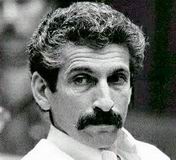
Angelo Buono
Serial killer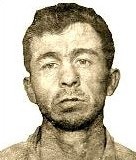 Donald Henry Gaskins
Serial killer · USA · 1969
Donald Henry Gaskins, also known as Donald “Pee Wee” Gaskins, was a serial kill…
200 victims
Donald Henry Gaskins
Serial killer · USA · 1969
Donald Henry Gaskins, also known as Donald “Pee Wee” Gaskins, was a serial kill…
200 victims
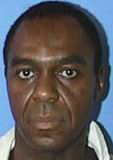 Carl Eugene Watts
Serial killer · USA · 1974
Carl Eugene Watts (born November 7, 1953; died September 21, 2007), also known…
100 victims
Carl Eugene Watts
Serial killer · USA · 1974
Carl Eugene Watts (born November 7, 1953; died September 21, 2007), also known…
100 victims
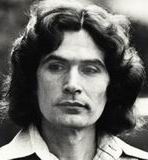 Rodney Alcala
Serial killer · USA · 1977
Rodney James Alcala (born August 23, 1943) was also known as Rodrigo Jacques Al…
100 victims
Rodney Alcala
Serial killer · USA · 1977
Rodney James Alcala (born August 23, 1943) was also known as Rodrigo Jacques Al…
100 victims
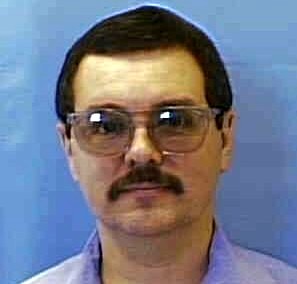 Donald Harvey
Serial killer · USA · 1970
Donald Harvey was known as an American serial killer and a self-professed “Ange…
87 victims
Donald Harvey
Serial killer · USA · 1970
Donald Harvey was known as an American serial killer and a self-professed “Ange…
87 victims
 Donald Leroy Evans
Serial killer · USA · 1975
Donald Leroy Evans (born July 5, 1957) was an American serial killer who murder…
60 victims
Donald Leroy Evans
Serial killer · USA · 1975
Donald Leroy Evans (born July 5, 1957) was an American serial killer who murder…
60 victims
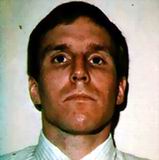 Michael Swango
Serial killer · USA · 1981
Michael Swango (Joseph Michael Swango) was a physician and American serial kill…
60 victims
Michael Swango
Serial killer · USA · 1981
Michael Swango (Joseph Michael Swango) was a physician and American serial kill…
60 victims
 Dmitry Voronenko
Serial killer · Russia · 2006
Dmitry Voronenko was a Ukrainian man who was convicted of murder and rape. He r…
4 victims
Dmitry Voronenko
Serial killer · Russia · 2006
Dmitry Voronenko was a Ukrainian man who was convicted of murder and rape. He r…
4 victims
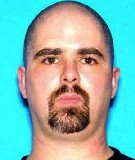 Wade Michael Page
Mass murderer · USA · 2012
Wade Michael Page was an American white supremacist and a United States Army ve…
6 victims
Wade Michael Page
Mass murderer · USA · 2012
Wade Michael Page was an American white supremacist and a United States Army ve…
6 victims
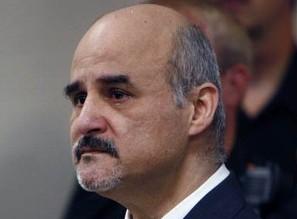 Altemio Sanchez
Serial killer · USA · 1990
Altemio Sanchez was an American serial killer who murdered at least three women…
3 victims
Altemio Sanchez
Serial killer · USA · 1990
Altemio Sanchez was an American serial killer who murdered at least three women…
3 victims
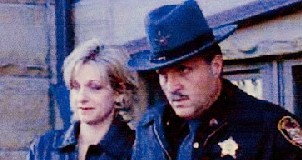 Kimberly Anderson
Homicide · USA · 2001
Kimberly Anderson was acquitted in criminal trial on October 17, 2002. In a civ…
1 victim
Kimberly Anderson
Homicide · USA · 2001
Kimberly Anderson was acquitted in criminal trial on October 17, 2002. In a civ…
1 victim
 Eric Walter Running
Murderer · USA · 1998
Eric Walter Running was convicted of two counts of aggravated murder involving…
2 victims
Eric Walter Running
Murderer · USA · 1998
Eric Walter Running was convicted of two counts of aggravated murder involving…
2 victims
- Gender
- male
- Country
- USA
- Location
- Los Angeles County, California, USA
- Date of birth
- October 5, 1934
- Age at first offence
- 43
- Characteristics
- kidnapping, rape, torture
- Victim profile
- Yolanda Washington , 19 / Judith Ann Miller , 15 / Lissa Kastin , 21 / Jane King , 28 / Delores Cepeda , 12 / Sonja Johnson , 14 / Kristin Weckler , 20 / Lauren Wagner , 18 / Kimberely Martin , 17 / Cindy Lee Hudspeth , 20
- Method of murder
- Strangulation (Bianchi and Buono experimented with other methods of killing, such as lethal injection, electric shock, and carbon monoxide poisoning)
- Date(s) of murder
- October 16, 1977 - February 16, 1978
- Years active
- 1977–1978
- Date of arrest
- October 22, 1979
- Status
-
Died in custody
Sentenced to life in prison without parole in November 1983; died in prison on September 21, 2002
Case identification
Angelo Buono, Jr. (October 5, 1934 – September 21, 2002) was an American serial killer. Buono and his cousin Kenneth Bianchi together were known as the Hillside Stranglers.
Background
Angelo Buono was born in Rochester, New York to first generation Italian-American emigrants from San Buono, Italy. He was raised Catholic and remained uneducated throughout his life, spiritually, morally and academically. He remained emotionally tied to his mother until her death in 1978.
Buono remained involved in a long criminal history that ranged from failure to pay child support and grand theft auto to assault and rape. He was sent to the Paso Robles School for Boys after he was convicted for grand theft auto.
The offence
Buono persuaded his younger cousin Kenneth Bianchi to join him in prostituting 2 women, holding them as virtual prisoners. In late 1977, the pair began killing other women as well. They were described as having kidnapping, raping, torturing, and killing girls and women ranging in age from 12 to 28 years old during a four-month period from late 1977 to early 1978. The crimes were committed in the hills above Los Angeles, California.
Buono was also said to have made women refer to him as "The Italian Stallion".
Victims and murders
Yolanda Washington
Yolanda Washington was a Hollywood prostitute. Her body was found near the Forest Lawn Cemetery on October 18, 1977. The corpse was cleaned and faint marks were visible around the neck, wrists, and ankles where a rope had been used. It was discovered that the victim had been raped. In another account, on October 17, 1977, a tall, leggy prostitute of African-American descent called Yolanda Washington was raped and strangled, and her nude body was dumped near the Forest Lawn Cemetery.
Judith Lynn Miller
A teenage girl was found naked, face up on a parkway in a residential area. The then homeowner covered her with a tarp to protect the neighborhood children from viewing her on their way to school. Bruises on her neck indicated strangulation. The body had been dumped, indicating she was killed elsewhere. The girl was eventually identified as Judith Lynn Miller, a runaway prostitute who was barely 15 years old. She was said to have been bound much like the first victim, Yolanda Washington.
Lissa Teresa Kastin
On November 6, 1977, the nude body of another woman was discovered near the Chevy Chase Country Club. She had been strangled with a ligature. The woman was identified as 21-year-old Lissa Teresa Kastin, a waitress, and was last seen leaving work the night before she was discovered.
She had also worked part time for her father's real estate and construction business. She was described as a characteristically "good girl" who was saving money to continue her training and hoped to become a professional dancer. In another account, Lissa Kastin had made a comment to her mother that she was thinking of turning to prostitution to earn some extra money, and she had been last seen leaving the Healthfaire Restaurant just after nine o'clock on the night she was murdered.
Dolores Cepeda and Sonja Johnson
Two girls, Dolores Cepeda, 12, and Sonja Johnson,14, boarded a school bus and headed home on November 13, 1977. The last time they were seen was getting off this bus and approaching a car. Inside the car were reportedly two men. A young boy found two bodies on November 20, six days later. Both girls had been strangled and raped, and were identified as Cepeda and Johnson.
Kristina Weckler
On November 20, 1977, hikers found the nude, sexually assaulted body of Kristina Weckler, 20, on a hillside near Glendale. Unlike previous victims, there were signs of torture, indicated by oozing injection marks. In a separate account, there were also two puncture marks on her arm, but no signs of the needle tracks that indicate a drug addict.
Jane King
On November 23, 1977, the badly decomposed body of Jane King, 28, an actress, was found near an off ramp of the Golden State freeway. She had gone missing around November 9.
Lauren Wagner
On November 29, 1977, police found the body of Lauren Wagner, 18. There were also burn marks on her hands indicating she was tortured. In another account, she lived with her parents in the San Fernando Valley and her car was found parked across the street with the door ajar after her parents went to bed expecting her to come home before midnight.
Kimberly Martin
On December 13, 1977, police found the body of 17-year-old prostitute Kimberly Martin on a hillside.
In one account, she had been working as a call-girl who had been working for the Climax "modeling agency." Police were called to a vacant lot on a steep hillside on Alvarado Street in mid-December, where they found her body. Her last client beckoned her to Apartment 114 at 1950 Tamarind, which turned out to be a vacant apartment. The murderer had called from a pay phone in the lobby of the Hollywood Public Library on Ivar Street.
Cindy Hudspeth
The final victim in Los Angeles was discovered on February 16, 1978, when a helicopter spotted an orange Datsun abandoned off a cliff in the Angeles Crest area. Police responded to the scene and found the body of the car's owner, 20-year-old Cindy Hudspeth, in the trunk. In another account, she was strangled and her violated body was put into the trunk of her Datsun and pushed off a cliff on Angeles Crest.
Cindy Hudspeth was described as a twenty-year-old clerk. She was last seen in her apartment building at 800 East Garfield Avenue. She had probably been headed toward Glendale Community College, where she worked nights answering the phone. Between her apartment building and the community college, Cindy had been kidnapped in the late afternoon. Cindy had lived across the street from another victim, Kristina Weckler, even though the two women did not know each other.
Investigation
A task force was formed to catch the predator, dubbed the "Hillside Strangler." The law enforcement task force included the Los Angeles Police Department, Los Angeles County Sheriff's Department and Glendale Police Department.
The investigation was described as involving coordination and difficulty between agencies. The relationship between the LAPD and the LA Sheriff's Department had been notoriously bad for many years, but in this case detectives Frank Salerno and Bob Grogan worked together and ensured information sharing between agencies.
A task force was formed initially composed of thirty officers from LAPD, the Sheriff's Department and the Glendale Police Department. The officers were overwhelmed with worthless tips and suggestions from well-meaning citizens.
In the investigation, detectives noted ligature marks on victims’ wrists, ankles and neck, and other signs including bruises, injection marks and burn marks on hands. Tests on semen found in earlier victims had revealed nothing. Semen tests on another victim were part of the investigation.
There was also a plan to determine whether the killers’ blood type could be determined if sticky substance could be semen or saliva. The investigation included tracking matches between fibers and locations tied to the defendants, including fibers from Lauren Wagner’s hands and the rabbits associated with Buono.
The media created and popularized the term "Hillside Strangler," even though police were convinced more than one person was involved.
Trial
Charges and prosecutors
After intensive investigation, police charged cousins Kenneth Bianchi and Angelo Buono, Jr. with the crimes.
The presiding judge was Ronald M. George (future Chief Justice of California). Katherine Mader and Gerald Chaleff were appointed by the court to defend Angelo.
A key decision involved severing the nonmurder counts (sodomy, pimping, rape, etc) from the murder counts. Judge George severed the murder counts from the nonmurder counts to avoid reversal on appeal.
Prosecutors’ motion to dismiss and judge’s ruling
On July 21, 1981, Judge George ruled on the motion to dismiss. Prosecutor Roger Kelly had moved to dismiss all of the ten counts of murder against Angelo and to drop any prosecution of him as the Hillside Strangler.
Judge George denied the motion to dismiss and refused to release Buono. In the ruling, Judge George said:
"We believe there is more than sufficient evidence to show presumption of guilt by Mr. Buono...and I think the evidence the People put on at the preliminary is sufficient to withstand any conviction, the jury believing Mr. Bianchi, and could convict Mr. Buono."
Judge George also concluded:
"...dismissal would not be 'in the furtherance of justice'...nor is it the function of the court automatically to 'rubber-stamp the prosecutor's decision to abandon the People's case...Applicable standards indicate that a prosecutor must under ordinary circumstances pursue the prosecution of serious charges where there is sufficient evidence for a jury to convict, without concern for the consequences to his reputation should he be unsuccessful in obtaining a conviction. Kelly's motion to dismiss the charges as denied. Not only that, but the judge expected that if the District Attorney's Office could not get its act together to effectively prosecute Angelo Buono, a special prosecutor would be appointed."
Following the judge’s decision, the DA’s Office withdrew from the case. Attorney General George Deukmejian brought in two prosecutors, Michael Nash and Roger Boren, and a special investigator, Paul Tulleners, to evaluate the evidence. All four prosecutors advised Deukmejian to prosecute Angelo Buono.
Trial duration and jury deliberation
The trial lasted from November 1981 until November 1983 and became the longest in American legal history at the time described.
Jurors began deliberating on October 21, 1983. The jury came to agreement on October 31, 1983, at least on the murder of Lauren Wagner. The jury’s final votes described included:
- On November 3, 1983, they voted that Angelo was not guilty of the murder of Yolanda Washington.
- A few days later, Angelo was found guilty of Judy Miller's murder.
The jury was sequestered during deliberations. After more than a thousand exhibits and 250 witnesses, the prosecution completed its case and the defense presented its efforts.
Evidence and witness testimony
The legal case against Buono was based largely upon Bianchi's testimony. During the trial, Bianchi testified in exchange for a lighter sentence.
The prosecutor’s case included corroborating physical evidence:
- Fibers found on Judy Miller's eyelid and Lauren Wagner's hands were said to have come from Angelo’s house and upholstery shop.
- Animal hairs stuck to Lauren’s hands were said to have been from rabbits Angelo raised.
- The imprint of a police badge was said to have been on Angelo's wallet, along with puncture marks from where the badge had been pinned.
- Beulah Stofer and Markust Camden positively identified Angelo from a photo lineup.
During testimony, the defense tried to impugn Markust Camden’s testimony based on mental instability. The defense also argued about a sticky substance found on Lauren Wagner’s breast. The substance was proven to be secretions from the mouths of ants feasting on Lauren’s flesh.
The defense put Veronica Compton on the stand and Veronica Compton described a conspiracy to frame Angelo.
The trial included "jury-views" transported to the hillsides where victims were found. Helicopters illuminated where Dolores Cepeda and Sonja Johnson were found.
Prosecutors included testimony from the woman Angelo terrorized in the Hollywood library while he was waiting for Kenny to make calls to the Climax modeling agency on the night Kimberly Martin was killed. This testimony was described as tying Angelo to a pay phone used to summon Kimberly Martin.
Closing arguments and quoted statement
Roger Boren delivered closing arguments, which took him eleven full days.
Boren concluded with:
"The defense at the end of their argument said to you that you could be fooled by Kenneth Bianchi. I will say to you that in the face of all this evidence...both in corroboration of Kenneth Bianchi and independent of Kenneth Bianchi, -- if in the face of reason Angelo Buono is not convicted of murder of these ten women, then you will have been fooled by Kenneth Bianchi. You will have been fooled by him and you will also have been fooled by Angelo Buono over there and by his two attorneys. The evidence supports his guilt and a finding of guilty beyond a reasonable doubt."
Quotations attributed to Buono and the judge
Angelo Buono took the stand briefly and said:
"My morals and constitutional rights has been broken."
The judge was quoted in connection with sentencing remarks:
"Angelo Buono and Kenneth Bianchi subjected various of their murder victims to the administration of lethal gas, electrocution, strangulation by rope, and lethal hypodermic injection. Yet the two defendant are destined to spend their lives in prison, housed, fed and clothed at taxpayer expense, better cared for than some of the destitute law-abiding members of our community."
Sentencing
Under California law at that time, as a "multiple murderer," Angelo Buono faced either the death penalty or life in prison without possibility of parole.
The jury deliberated for only an hour before sparing him the death penalty. The judge and jury decision resulted in:
- A death penalty alternative of life in prison without parole.
Angelo Buono was sentenced to life imprisonment, with George commenting that he felt a death sentence would have been the appropriate punishment.
He was sentenced to life in prison without parole in November 1983.
Angelo Buono was sent to Folsom Prison, where he stayed in his cell, fearing injury from other inmates.
Timeline
- October 18, 1977 — Yolanda Washington’s body was found near the Forest Lawn Cemetery.
- November 1, 1977 — Police were called to a La Crescenta, Los Angeles, California neighborhood where a teenage girl’s body was found naked on a parkway.
- November 6, 1977 — The nude body of Lissa Teresa Kastin was discovered near the Chevy Chase Country Club.
- November 13, 1977 — Dolores Cepeda (12) and Sonja Johnson (14) boarded a school bus and headed home.
- November 20, 1977 — Dolores Cepeda and Sonja Johnson’s bodies were found.
- November 20, 1977 — Hikers found the nude, sexually assaulted body of Kristina Weckler.
- November 23, 1977 — Jane King’s badly decomposed body was found near an off ramp of the Golden State freeway.
- November 29, 1977 — Police found Lauren Wagner’s body.
- December 13, 1977 — Police found Kimberly Martin’s body on a hillside.
- February 16, 1978 — Cindy Hudspeth’s body was found in the trunk of an orange Datsun spotted off a cliff in the Angeles Crest area.
- July 6, 1981 — Kenneth Bianchi gave a performance in court intended to affect the use of his testimony.
- July 21, 1981 — Judge Ronald M. George denied the motion to dismiss the charges against Angelo Buono.
- November 1981 — Trial began for real after continuances, appeals, and jury selection.
- October 21, 1983 — Jury deliberations began.
- October 31, 1983 — Jury came to agreement on the murder of Lauren Wagner.
- November 3, 1983 — Jury voted that Angelo Buono was not guilty of the murder of Yolanda Washington.
- November 1983 — Angelo Buono was sentenced to life in prison without parole.
- September 21, 2002 — Angelo Buono died in prison at Calipatria State Prison.
Outcome
Angelo Buono was found guilty of murder counts including:
- Lauren Wagner
- Judy Miller’s murder
- Dolores Cepeda
- Sonja Johnson
- Kimberly Martin
- Kristina Weckler
- Lissa Kastin
- Jane King
- Cindy Hudspeth
Angelo Buono was found not guilty of the murder of Yolanda Washington.
The jury spared Buono the death penalty and he received life in prison without parole.
Aftermath
Angelo Buono died of a heart attack on September 21, 2002 at Calipatria State Prison, where he was serving a life sentence. He was alone in his cell at the time of his death.
In 2007, Buono’s grandson Christopher Buono committed suicide shortly after shooting his grandmother Mary Castillo in the head. Mary Castillo was at one time married to Angelo Buono and had five children with him, including Chris’ father.
In the 1989 film The Case of the Hillside Stranglers, Buono was portrayed by actor Dennis Farina. In the 2004 film The Hillside Strangler, Buono was portrayed by actor Nicholas Turturro.
Other details
Angelo Buono was described as calling himself the "Italian Stallion". He was described as having been an auto upholsterer and having bought a place at 703 East Colorado Street for residence and upholstery shop.
The narrative also included a description of Buono’s life and relationships, including marriages and children named:
- Michael Lee Buono (born in 1956) to Geraldine Vinal
- Angelo Anthony Buono III (sired at the end of 1956)
- Peter Buono in 1957
- Danny Buono in 1958
- Louis Buono in 1960
- Grace Buono in 1962
The narrative included names of other people connected to events:
- David Wood (lawyer who arranged escape for Becky Spears)
- Becky Spears
- Sabra Hannan
- Catherine Lorre (daughter of Hungarian actor Peter Lorre)
- Peter Lorre
- Deborah Noble
- Yolanda Washington
- Beulah Stofer (neighbor who reported seeing Lauren Wagner’s abduction)
- Markust Camden (bounty hunter)
- Veronica Compton
- Douglas Clark
- Dr. Martin Orne
- Dr. Ralph B. Allison
- Dr. Saul Faerstein
- Judge Ronald M. George
- Prosecutors Roger Kelly, Michael Nash, Roger Boren
- Special investigator Paul Tulleners
- Attorneys Katherine Mader and Gerald Chaleff
- Detective Sergeant Bob Grogan
- Detective Frank Salerno
- Dudley Varney
- Peter Finnigan
- Deputy district attorney Roger Kelly (listed among investigators)
- L.A. County deputy district attorney Roger Kelly (appeared in interviews context)
Spotted an error, or have more information about this case?