Gail Trait
Mass murderer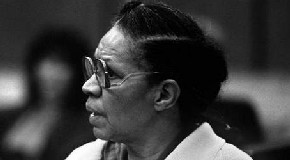 Priscilla Ford
Mass murderer · USA · 1980
Priscilla Ford was sentenced to death for killing six people and injuring 23 mo…
6 victims
Priscilla Ford
Mass murderer · USA · 1980
Priscilla Ford was sentenced to death for killing six people and injuring 23 mo…
6 victims
 LaFonda Fay Foster
Mass murderer · USA · 1986
LaFonda Fay Foster and Tina Hickey Powell were convicted by a Fayette County ju…
5 victims
LaFonda Fay Foster
Mass murderer · USA · 1986
LaFonda Fay Foster and Tina Hickey Powell were convicted by a Fayette County ju…
5 victims
 David Burke
Mass murderer · USA · 1987
David Augustus Burke (May 18, 1952–December 7, 1987) was an employee of USAir,…
43 victims
David Burke
Mass murderer · USA · 1987
David Augustus Burke (May 18, 1952–December 7, 1987) was an employee of USAir,…
43 victims
 James Huberty
Mass murderer · USA · 1984
James Oliver Huberty was a 41-year-old unemployed security guard. He was born i…
21 victims
James Huberty
Mass murderer · USA · 1984
James Oliver Huberty was a 41-year-old unemployed security guard. He was born i…
21 victims
 Susan Eubanks
Murderer · USA · 1996
Susan Dianne Eubanks, also referred to as Susan Eubanks, was convicted by a jur…
4 victims
Susan Eubanks
Murderer · USA · 1996
Susan Dianne Eubanks, also referred to as Susan Eubanks, was convicted by a jur…
4 victims
 Wang Zhijian
Murderer · Singapore · 2008
Wang Zhijian was a Chinese national. Wang’s relationship with Zhang Meng ended…
3 victims
Wang Zhijian
Murderer · Singapore · 2008
Wang Zhijian was a Chinese national. Wang’s relationship with Zhang Meng ended…
3 victims
 Christopher Churchill
Mass murderer · USA · 1998
February 1998 — Christopher Churchill, 16, was arrested on charges he killed De…
5 victims
Christopher Churchill
Mass murderer · USA · 1998
February 1998 — Christopher Churchill, 16, was arrested on charges he killed De…
5 victims
 Marlon Howell
Murderer · USA · 2000
Name: Marlon Howell Status: Sentenced to death on March 30, 2001 · May 15, 2000…
1 victim
Marlon Howell
Murderer · USA · 2000
Name: Marlon Howell Status: Sentenced to death on March 30, 2001 · May 15, 2000…
1 victim
- Gender
- female
- Country
- USA
- Location
- Buffalo, Erie County, New York, USA
- Date of birth
- 1952
- Age at first offence
- 26
- Characteristics
- parricide, mutilation, child killer
- Victim profile
- Her son Demario, 2, and her three daughters, Kylia, 8, Amina, 6, and Inez, 4
- Method of murder
- Stabbing with knife
- Date(s) of murder
- July 17, 1978
- Years active
- 1978
- Date of arrest
- Same day
- Status
-
Released in 1998; Sentenced to twenty-five years to life in prison on February 25, 1980; Conviction overturned on June 15, 1988; Declared legally insane in 1989
Case record: Gail Trait
Background
Gail Trait was a 26-year-old woman in Buffalo, N.Y., who killed her four children on July 17, 1978. She was a single mother separated from their father for about two years. She studied liberal arts at Erie Community College, with a major specializing in social sciences. She had recently moved with her children into her mother’s East Side apartment after the children were returned to her from child protective services two weeks before they were killed. Relatives said she spoke of a voodoo curse.
Gail Trait told police she was trying to save her soul after she stabbed her four children to death. The case materials also described “voodoo rites of passage and possession by Satan,” and that belief was not deemed adequate grounds for an insanity plea for an East Side woman who killed her four children in the summer of 1978. At least not right away.
The offence
On July 17, 1978, Gail Trait stabbed her four children to death. Her children were Kylia (8), Amina (6), and Inez (4), and her two-year-old boy was named Demario.
Investigation
The police said the voodoo rite mentioned in connection with her arrest was “unfounded”. Gail Trait told police she was trying to save her soul.
Relatives said Gail Trait spoke of a voodoo curse.
Trial
Gail Trait pleaded insanity. Defense psychiatrists for the defense said she was a paranoid schizophrenic. Psychiatrists for the prosecution said she killed in anger and knew what she was doing. The jury believed the prosecution psychiatrists. Gail Trait was convicted in December 1979 on four counts of second-degree murder in the deaths of her children.
Verdict and judgment
SUPREME COURT OF NEW YORK, APPELLATE DIVISION, FOURTH DEPARTMENT April 8, 1988 THE PEOPLE OF THE STATE OF NEW YORK, RESPONDENT, v. GAIL TRAIT, APPELLANT Appeal from judgment of Supreme Court, Erie County, Mintz, J. — murder, second degree. Denman, J. P., Boomer, Green, Lawton and Davis, JJ. Judgment unanimously reversed on the law and new trial granted.
Sentencing
Gail Trait was sentenced to twenty-five years to life in prison on February 25, 1980.
Appeals
On June 15, 1988, New York State’s high court refused to block an April 8, 1988, ruling granting her a new trial.
On April 8, 1988, the Appellate Division unanimously reversed the judgment and granted a new trial. The memorandum stated that the right to the effective assistance of counsel was guaranteed by both the Federal and State Constitutions (US Const 6th Amend; NY Const, art I, ? 6). It stated:
“The constitutional requirement is met so long as the evidence, the law, and the circumstances of a particular case, viewed in totality and as of the time of the representation, reveal that the attorney provided meaningful representation (People v Baldi, 54 N.Y.2d 137, 147).”
It stated that, in reviewing claims of ineffective counsel, the concern was to avoid confusing true ineffectiveness with mere losing tactics and according undue significance to retrospective analysis (People v Baldi, supra, at 146). It stated there was no requirement that counsel be free from any errors and that conduct must be considered in its entirety (People v Dietz, 79 A.D.2d 476, 480). It stated that what constitutes effective assistance could not be precisely defined but varied according to the particular circumstances (see, People v Baldi, supra, at 146; People v Droz, 39 N.Y.2d 457, 462). It stated:
“However it is elementary that the right to effective representation includes the right to assistance by an attorney who has taken the time to review and prepare both the law and the facts relevant to the defense * * * and who is familiar with, and able to employ at trial basic principles of criminal law and procedure” (People v Droz, supra, at 462).
The Appellate Division held that the record established that defense counsel failed to provide meaningful representation to defendant. It stated that counsel’s opening statement was ill-conceived and ineptly developed, and was rambling and disconnected, eliciting 21 sustained objections largely because counsel engaged in argument that was appropriate only for summation. It stated that pretrial preparation was inadequate, and that the decision to forbear making pretrial motions was unwise, including that counsel did not appear in opposition to the People’s motion for an order precluding pretrial motions. It stated that trial preparation was inadequate in that direct and cross-examination of witnesses was rendered largely ineffective. It stated the lack of preparation was particularly evident in the examination of defense psychiatrists and thus provided minimal support for the insanity defense, leaving witnesses unnecessarily vulnerable to skillful cross-examination which proper preparation could have avoided. It stated the trial court observed that counsel alienated the jurors to such an extent that it may have had an adverse effect on their verdict. It stated counsel’s decorum and deportment were characterized by the court at times as inexcusable and reprehensible, and may have contributed to the alienation. It stated counsel engaged in excessive and purposeless cross-examination of prosecution witnesses, including experienced police officers about whether they had ever witnessed a more gruesome crime, and that the effect of answers elicited during that cross-examination was undoubtedly damaging to the defense. It stated that counsel declined to cross-examine a jail matron who gave testimony extremely unfavorable to the defense and instead told the jury on summation to dismiss this testimony as fabricated and incredible. It stated:
“We perceive no benefit in further enumerating the numerous examples of errors and misconduct on the part of defense counsel as reflected in this record. They were pervasive.”
It concluded:
“In sum, the totality of the omissions, misconduct and the errors forces the conclusion that counsel’s performance deprived defendant of her right to effective assistance of counsel as commanded by the Sixth Amendment of the US Constitution.”
It stated that, in view of the holding, the court did not address the issue of whether the prosecutor intentionally used peremptory challenges to exclude blacks from the jury in violation of defendant’s rights under the United States and New York Constitutions.
Outcome
Gail Trait served 10 years in prison before an appeals court overturned her conviction and ruled her insane. She spent the next 10 years in a psychiatric hospital. She was declared legally insane in 1989. She was released in 1998.
Other details
Gail Trait was described as a single mother. The Appellate Division case materials included her appeal from a Supreme Court judgment from Erie County with the trial judge identified as Mintz, J. The memorandum’s panel included Denman, J.


Spotted an error, or have more information about this case?