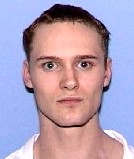
Richard Aaron Cobb
Murderer Robert Martines Perez
Murderer · USA · 1994
Name: Robert Martines Perez · Other name used in proceedings: Robert Martinez P…
15 victims
Robert Martines Perez
Murderer · USA · 1994
Name: Robert Martines Perez · Other name used in proceedings: Robert Martinez P…
15 victims
 Billy Frank Vickers
Murderer · USA · 1993
Billy Frank Vickers Vickers was executed by lethal injection in Texas on Januar…
14 victims
Billy Frank Vickers
Murderer · USA · 1993
Billy Frank Vickers Vickers was executed by lethal injection in Texas on Januar…
14 victims
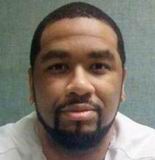 Johnnie Baston
Murderer · USA · 1994
Johnnie R. Baston was the defendant. He was born February 8, 1974. He was 20 ye…
1 victim
Johnnie Baston
Murderer · USA · 1994
Johnnie R. Baston was the defendant. He was born February 8, 1974. He was 20 ye…
1 victim
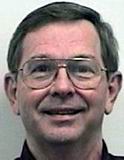 William Phillips
Murderer · USA · 2007
William Phillips was identified as the gunman in the Johnson Space Center (JSC)…
1 victim
William Phillips
Murderer · USA · 2007
William Phillips was identified as the gunman in the Johnson Space Center (JSC)…
1 victim
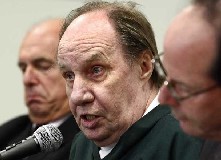 Norman Porter
Murderer · USA · 1960
Norman Porter was also known as J. J. Jameson and Norman A. Porter, Jr. He pres…
2 victims
Norman Porter
Murderer · USA · 1960
Norman Porter was also known as J. J. Jameson and Norman A. Porter, Jr. He pres…
2 victims
 Gwenda Sloane
Murderer · New Zealand · 2012
Gwenda Leigh Sloane, also known as Pluss, was a Rotorua process worker aged 44…
1 victim
Gwenda Sloane
Murderer · New Zealand · 2012
Gwenda Leigh Sloane, also known as Pluss, was a Rotorua process worker aged 44…
1 victim
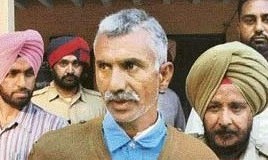 Darbara Singh
Serial killer · India · 2004
Darbara Singh was sentenced to death on January 7, 2008. His death sentence was…
17 victims
Darbara Singh
Serial killer · India · 2004
Darbara Singh was sentenced to death on January 7, 2008. His death sentence was…
17 victims
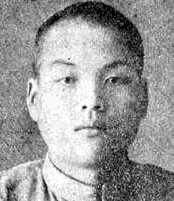 Mutsuo Toy
Spree killer · Japan · 1938
Mutsuo Toi (都井 睦雄; Toi Mutsuo) was a Japanese spree killer. Mutsuo Toi was born…
30 victims
Mutsuo Toy
Spree killer · Japan · 1938
Mutsuo Toi (都井 睦雄; Toi Mutsuo) was a Japanese spree killer. Mutsuo Toi was born…
30 victims
- Gender
- male
- Country
- USA
- Location
- Cherokee County, Texas, USA
- Date of birth
- April 2, 1984
- Age at first offence
- 18
- Characteristics
- robbery, kidnapping, rape
- Victim profile
- Kenneth Wayne Vandever, 24 (convenience store customer)
- Method of murder
- Shooting
- Date(s) of murder
- September 2, 2002
- Years active
- 2002
- Date of arrest
- —
- Status
-
Executed
Sentenced to death on January 23, 2004; executed by lethal injection in Texas on April 25, 2013
Case overview
Richard Aaron Cobb was convicted of capital murder and sentenced to death in Texas for a convenience store robbery and subsequent kidnappings and shootings in Cherokee County, Texas. Cobb and his co-defendant, Beunka Adams, abducted three victims, including a male customer and two female clerks, and fatally shot the male victim after sexually assaulting one of the female victims. The two female victims survived.
Timeline
- September 2, 2002 — Cobb and co-defendant Beunka Adams robbed a convenience store in Rusk, Texas, kidnapped three victims to a remote pasture known as the “pea patch,” and shot the male victim and the two female victims after forcing the three hostages to kneel by a vehicle; one female victim was raped and both surviving female victims later identified perpetrators.
- September 3, 2002 — Cobb and Adams were arrested at Adams’s cousin’s home; Adams surrendered and Cobb resisted arrest and had to be subdued.
- September 23, 2002 — Cobb was indicted for capital murder.
- January 5, 2004 — Cobb’s trial began.
- January 16, 2004 — The jury returned a verdict in response to special issues, answering “yes” to the future dangerousness special issue and “no” to the mitigating circumstances special issue.
- January 23, 2004 — Cobb was sentenced to death.
- April 19, 2013 — The Texas Court of Criminal Appeals dismissed Cobb’s successive application for writ of habeas corpus.
- April 25, 2013 — The U.S. Supreme Court denied Cobb’s petition for a writ of certiorari; Cobb was executed by lethal injection in Texas.
- April 25, 2013 — Cobb was pronounced dead at 6:27 p.m. CDT at a state prison in Huntsville, the Texas Department of Criminal Justice said in a statement.
- May 25, 2012 — The U.S. Court of Appeals for the Fifth Circuit affirmed.
- January 31, 2007 — Cobb’s conviction and sentence were affirmed by the Texas Court of Criminal Appeals.
- December 5, 2007 — Cobb’s first application for state writ of habeas corpus was denied.
- February 15, 2011 — The district court denied Cobb’s federal petition for writ of habeas corpus.
- March 23, 2011 — The district court granted a certificate of appealability (COA) on one claim.
- May 13, 2011 — Cobb sought a certificate of appealability on three additional claims.
- January 14, 2013 — The Supreme Court denied certiorari review of the Fifth Circuit’s decision.
- March 9, 2013 — An interview described Cobb’s status while he was scheduled to be executed on April 25.
- April 17, 2013 — Cobb filed in the trial court a second subsequent writ for habeas corpus.
- April 24, 2013 — Cobb filed in the U.S. Supreme Court a petition for a writ of certiorari.
- December 26, 2002 — William Thomsen wrote a letter referencing a meeting with Elmer C. Beckworth and investigator Randy Hatch about clearing a charge and lifting a parole hold.
- January 10, 2003 — A letter from Elmer C. Beckworth, Jr. stated that the office would not seek prosecution on William Thomsen for unlawful possession of a firearm by a felon.
- 12-19-02 — William Thomsen referenced a meeting in Mr. Hatch’s office at which paperwork clearing was discussed and information about the robbery and kidnapping was recalled.
Background
Cobb had an upbringing described in sentencing and habeas proceedings involving foster care and adoption, and testimony that his biological mother had alcohol and drug addiction issues and that Cobb’s children suffered abuse and extreme neglect. Cobb testified that he started using drugs at age twelve and that he escalated from burglary to armed robbery because he was in debt to a drug dealer and needed money quickly. Cobb also testified that Adams suggested armed robberies were an easier and better way to make money.
During the penalty phase, the State presented evidence of Cobb’s other criminal conduct prior to the capital murder, including testimony of victims of two previous armed robberies, and testimony from law enforcement officials that Cobb had a bad reputation for obeying the law. The jury also heard testimony about the severity of Ansley’s physical and emotional injuries, testimony about the possibility of escape from prison, and testimony from a psychologist, Dr. Tynus McNeel, who opined that Cobb fit the profile of a sociopath, a person who did not care about the welfare of other people and whose condition would be incurable. The State also presented testimony from Cobb’s juvenile probation officer that Cobb assaulted a boot camp supervisor, that he was not afraid of people in authority, that his mother had difficulty controlling him, and that his reputation as a law-abiding citizen was bad. The State also recalled William Thomsen in sentencing and described testimony that Cobb did not express remorse and discussed potential escape.
In addition, during the penalty phase, the State presented testimony from the chief of the Rusk Police Department regarding a judgment against Cobb for unauthorized use of a motor vehicle and attested to Cobb’s “bad” reputation as a law-abiding citizen. The Rusk County assistant police chief echoed the chief’s evaluation of Cobb’s reputation and described Cobb’s burglary-of-a-building offense occurring one year prior to the Vandever murder.
The offence
Convenience store robbery and hostage-taking
On the night of September 2, 2002, Cobb and Beunka Adams robbed a convenience store known as BDJ’s in Rusk, Texas. Nikki Ansley (also referred to as Dement) and Candace Driver were working as clerks that night. Kenneth Vandever was present as a frequent customer.
Ansley and Driver were made to stand together behind the cash register. Cobb and Adams demanded money. Driver opened the cash register drawer, and while Cobb held the shotgun, Adams grabbed the drawer and took all of the money. Vandever began to walk out the front door but was ordered to join Ansley and Driver behind the register.
Cobb and Adams decided to take Ansley, Driver, and Vandever as hostages. Driver was ordered to surrender the keys to her Cadillac, which was parked outside, and the three hostages were forced into the vehicle.
Kidnapping to the “pea patch” and sexual assault
Adams drove to a remote, open pasture known as the “pea patch.” Everyone got out of the car. Adams forced Driver and Vandever into the trunk while Cobb held the gun. Adams took Ansley into a wooded area and raped her.
Cobb and Adams told the hostages they could wait a little while and then leave, but they soon changed their minds. They tied up the women hostages with their shirts and forced them to kneel by the vehicle.
Shooting and leaving the victims
Cobb and Adams began to walk away with Vandever, intending to allow him to come back later to untie Ansley and Driver. Soon they returned and forced Vandever to sit by the other two victims. After Vandever began to protest, Cobb shot him. Vandever fell forward, screaming that he had been shot.
Either Cobb or Adams then shot Ansley and Driver. Ansley and Driver both fell forward and pretended to be dead. Adams started kicking Ansley and Cobb joined in. Cobb lifted Ansley up by her ponytail, and Cobb and Adams put their lighters up to her face. After satisfying themselves that the three victims were dead, Adams and Cobb left the scene and went to the residence of Adams’s cousin.
Vandever died, but Ansley and Driver survived and later managed to get to safety after regaining consciousness.
Injuries and identification
Ansley sustained a shotgun wound to her left shoulder, numerous broken ribs, and a collapsed lung, which required her to spend almost two weeks in the hospital. After undergoing emergency surgery, she identified Cobb and Adams from a photo lineup.
Driver suffered a gunshot wound to her lower lip and was able to identify Adams, but not Cobb, from a photo lineup while in the hospital.
Adams’s cousin contacted the police and disclosed Cobb’s and Adams’s whereabouts. Cobb and Adams were arrested at Adams’s cousin’s home on September 3, the day after Vandever’s murder. Adams surrendered, but Cobb resisted arrest and had to be subdued.
Death-related uncertainty
The appellate materials stated that it was unclear which perpetrator shot which victim.
Investigation and arrest
After regaining consciousness, the surviving victims made it possible for the investigation to proceed. Adams’s cousin disclosed Cobb’s and Adams’s whereabouts to police.
Cobb and Adams were arrested at Adams’s cousin’s home on September 3, 2002.
Under questioning, Cobb confessed to shooting Vandever and to participating in the robbery and kidnaping.
Trial
Charges and conviction
Cobb was convicted of capital murder and sentenced to death. He was indicted for capital murder on September 23, 2002.
Cobb’s trial began on January 5, 2004, and the jury answered special issues on January 16, 2004.
The jury answered “yes” to the special issue regarding the probability that Cobb would commit future criminal acts of violence constituting a continuing threat to society. The jury answered “no” to the special issue regarding whether mitigating circumstances warranted a sentence of life imprisonment instead of death. On January 23, 2004, the trial court sentenced Cobb to death.
Guilt-determination admissions and duress testimony
During the guilt-determination phase, Cobb admitted participating in the robbery and kidnaping and in shooting Vandever. He testified that Adams pressured him into committing the murder by threatening to kill Cobb if he refused to take part in killing the three hostages. The State cast doubt on Cobb’s duress testimony by eliciting on cross-examination that he did not mention any coercion by Adams when he first confessed.
Cobb’s testimony about threats was not corroborated by other surviving witnesses. The State rebutted Cobb’s duress defense by calling William Elmer Thomsen to testify.
Thomsen testimony and quotations
Thomsen testified about multiple jailhouse conversations with Cobb during which Cobb discussed Vandever’s murder and the robberies committed by Cobb and Adams. Thomsen testified that Cobb “thought armed robberies were the way to go. It’s fast, quick, easy money.”
Thomsen testified that Cobb also told him that he and Adams planned to rob a Whataburger in the near future if they had not been caught and arrested.
Thomsen further testified that Cobb confided that Cobb planned at trial to blame the murder on Adams by testifying that Adams had threatened to kill him if he did not take part in shooting the hostages.
On cross-examination, defense counsel asked Thomsen whether he had received a deal from the State in exchange for his testimony. Thomsen avowed that he had not. Thomsen testified that when he contacted the district attorney to offer his testimony against Cobb, the charge he was facing for being a felon in possession of a firearm had already been dismissed.
Thomsen was still in jail, however, for violating the terms of probation for a prior offense. Although Thomsen insisted that he did not receive any benefit from the State for his testimony, he conceded that the district attorney’s office contacted his parole officer on his behalf.
Additional penalty-phase courtroom quote
During sentencing testimony, after Thomsen testified to further statements attributed to Cobb, Cobb stood up and said:
“You lying son of a bitch, I never said no such thing,”
The trial judge excused the jury and warned Cobb:
“If you expect to remain in this courtroom for the remainder of this trial you will stay in your seat and keep your mouth shut.”
After the jury returned, Thomsen again testified that Cobb discussed escaping from jail “Numerous times. He said if he ever had the chance and could figure out how to do it he would.”
Sentencing
Cobb was sentenced to death on January 23, 2004.
During the sentencing phase, evidence described to the jury included Cobb’s other criminal conduct prior to the capital murder; testimony from law enforcement officials regarding Cobb’s reputation for obeying the law; testimony about the injuries suffered by Ansley; testimony about the possibility of escape from prison; testimony from Dr. Tynus McNeel that Cobb fit the profile of a sociopath and that the condition would be incurable; and testimony from Cobb’s juvenile probation officer that Cobb assaulted a boot camp supervisor and had a bad reputation as a law-abiding citizen.
The State also presented recalled Thomsen testimony in sentencing, including testimony that Cobb said he was mad when he learned the two girls survived, because if they had died he probably would not have been in jail, and testimony that Cobb never expressed remorse, which is why Thomsen was testifying.
Appeals and post-conviction proceedings
State procedural history
- Cobb’s conviction and sentence were affirmed by the Texas Court of Criminal Appeals on Jan. 31, 2007.
- Cobb’s first application for state writ of habeas corpus was denied on Dec. 5, 2007.
- On April 17, 2013, Cobb filed in the trial court a second subsequent writ for habeas corpus.
- On April 19, 2013, the Texas Court of Criminal Appeals dismissed Cobb’s successive application.
- The Supreme Court denied certiorari review of the Fifth Circuit’s decision on January 14, 2013.
Federal procedural history
- The district court denied Cobb’s federal petition for writ of habeas corpus on Feb. 15, 2011.
- The district court granted a certificate of appealability (COA) on one claim on March 23, 2011.
- Cobb sought a COA on three additional claims on May 13, 2011.
- On May 25, 2012, the United States Court of Appeals for the Fifth Circuit affirmed.
- On April 24, 2013, Cobb filed in the U.S.
- On April 25, 2013, the U.S. Supreme Court denied Cobb’s petition for a writ of certiorari.
Federal habeas holding on Brady impeachment evidence
In federal habeas proceedings, the court addressed a certificate of appealability granted on the issue of whether the State withheld impeachment evidence from Cobb in violation of Brady v. Maryland. The United States Court of Appeals for the Fifth Circuit affirmed the district court’s denial of habeas relief and denied Cobb’s request for a COA on three additional issues.
Other details
Victims and their details as described
- Kenneth Vandever (also spelled Kenneth Wayne Vandever in one portion of the material), age 24 in some portions and 37 in others, was the male customer and kidnapping victim who was later shot and killed.
- Nikki Ansley (also referred to as Dement), a convenience store clerk.
- Candace Driver, a convenience store clerk.
Arrest and resistance
Cobb resisted arrest and had to be subdued when he was arrested at Adams’s cousin’s home on September 3, 2002. Adams surrendered.
Confidential or disputed details in trial narrative
The materials stated that it was unclear which perpetrator shot which victim.
Cobb’s final statement and execution events
Cobb’s execution proceeded after the U.S. Supreme Court denied his petition for a writ of certiorari on April 25, 2013. He was given a lethal injection and pronounced dead at 6:27 p.m. CDT (7:27 p.m. EDT) at a state prison in Huntsville, the Texas Department of Criminal Justice said in a statement.
Cobb’s final statement included:
“Life is too short to harbor feelings of hatred and anger. That's it.”
During the lethal injection process, Cobb made additional statements attributed in the accounts, including:
“I hope that anyone that has negative energy toward me will resolve that,”
“Life is too short to harbor feelings of hatred and anger.”
“Wow, that is great. That is awesome!”
“Thank you, warden! Thank you (expletive) warden!”
In one account, the description included:
“Life is death, and death is life. I hope that someday this absurdity that humanity has come to will come to an end.”
Co-defendant
Beunka Adams was executed in 2012 for his role in the crime involving the September 2, 2002 attacks.
Prior prison record and work
The case materials described Cobb as having prior prison record: none. Cobb had been working as a temp for a local firm performing labor tasks in the area at the time described in one portion of the materials.
Adoption and family contact statements
Cobb said he was adopted and indicated he was communicating with his birth mother, whom he had never met. Cobb said he grew up in Jacksonville and attended high school there for a short time before moving to Rusk and attending high school there, and he dropped out halfway through his senior year. He also said he did not join the military due to felony convictions and that he had regrets while on death row. He said he had received letters since his execution date was set and that there was an intention to decide whether his family would attend his execution.
Quotations about victims’ sentiments
Some accounts included quotations from surviving victims and victims’ family members about remorse, forgiveness, and feelings toward Cobb, including: and statements including:
“They took me as a victim that night, but I came out a survivor,”
“And I think I am more of a survivor today.”
and: “All he did was go to sleep, that is it,”
“I think justice was served, but it didn’t change anything to speak of.”
and: “I’m glad that I was probably the last person he saw as he died. I’m glad he knew I was there,”
“But he had to pay the consequences,”
“It’s not going to fix the hole in her back,”
“I’m glad I don’t have to come back,”
“Kenneth is gone, and he has been. I think justice was served, but it didn’t change anything to speak of.”
Statutory and appellate-law citations (as quoted in material)
The appellate material included judicial opinion text affirming the judgment and addressing issues raised by Cobb on direct appeal, including the following:
“Consequently, we affirm the trial court's judgment and sentence of death.” and a quoted question Cobb asserted about the jury instruction and mitigation issue: “implicitly put the burden of proving the mitigation special issue on appellant rather than requiring a jury finding against appellant on that issue under the beyond a reasonable doubt standard.” and procedural and legal standards discussed in the opinion, including references to Apprendi v. New Jersey and Ring v. Arizona.
Thomsen letter text reproduced
The material reproduced the contents of a letter from William Thomsen to Mr. Beckworth dated December 26, 2002, including:
“Mr. Beckworth— Greetings, Sir. I hope your holidays were enjoyable— I'm sorry to bother you. Last check—Mon., 12–21–02 that Felony Possession of a firearm by a Felon and the parole hold were still on the computer holding me in jail. I have written my attorney Mr. Phifer 3 times this month reminding him that he needs to process the paperwork for the dismissal that occurred in Nov. on this gun charge. It was supposedly dismissed in Nov., however, I never received the paperwork stating it— At our meeting in Mr. Hatch's office on 12–19–02 you agreed to completely clear this charge as well as to try to have the parole hold lifted so I could get released. Mr. Hatch tried to phone my parole officer—Roy Shamblin—directly after our meeting but was unable to locate him. As you know the parole hold cannot be lifted until the gun charge is paperwork clear— The only reason I bother you with this is because all efforts by myself and my girlfriend to contact Mr. Phifer by letter and phone have gone astray—Could you please take steps to get Mr. Phifer in gear and have Mr. Hatch (remind him) to try contacting Roy Shamblin again—I realize the holidays have caused a slow process. I'm only asking for reminders for I'm sure everyone's mind is still in holiday mode—I would dearly love to at least spend New Years with my family. Also—you asked a question at our meeting if Richard Cobb told me why they decided to take the girls and Kenneth after robbing that store? I now recall his answer was: They wanted the keys to a car—I believe [Adams] had removed his mask at this time and spoke Rich's name so they told the girls to come with them”! The girls said: “Please just take my car, here the keys, leave us here—we won't tell anything”! It's on my notes I gave Mr. Phifer. I just forgot it—you're welcome to those notes if you would like to bring them in as evidence—Thank you for your time Sir— Sincerely, William Thomsen”
The material also reproduced the text of a letter dated January 10, 2003 from Elmer C. Beckworth, Jr. addressed “TO WHOM IT MAY CONCERN” stating:
“Re: Wiliam Thomsen Please be advised that this office will not seek prosecution of the above individual for the offense of Unlawful Possession of Firearm by Felon. If anything further is needed please contact this office. Sincerely, Elmer C. Beckworth, Jr.”
Montel Williams Show appearance and related testimony
The materials included testimony and arguments regarding Nickie Dement’s contact with the Montel Williams Show, including that she contacted the show and appeared about a week or two after trial began, and statements attributed to prosecutors and defense counsel about knowledge of the timing.
Spotted an error, or have more information about this case?