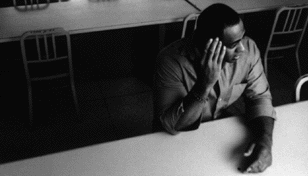
Daniel Webb
Homicide Jack Kevorkian
Homicide · USA · 1990
Jack Kevorkian (born May 26, 1928) was a controversial American pathologist. He…
130 victims
Jack Kevorkian
Homicide · USA · 1990
Jack Kevorkian (born May 26, 1928) was a controversial American pathologist. He…
130 victims
 David Koresh
Homicide · USA · 1993
David Koresh (born Vernon Wayne Howell; August 17, 1959 – April 19, 1993) led t…
79 victims
David Koresh
Homicide · USA · 1993
David Koresh (born Vernon Wayne Howell; August 17, 1959 – April 19, 1993) led t…
79 victims
 Todd Hall
Homicide · USA · 1996
Todd Hall was described by neighbors as "mentally slow" and was said to have su…
9 victims
Todd Hall
Homicide · USA · 1996
Todd Hall was described by neighbors as "mentally slow" and was said to have su…
9 victims
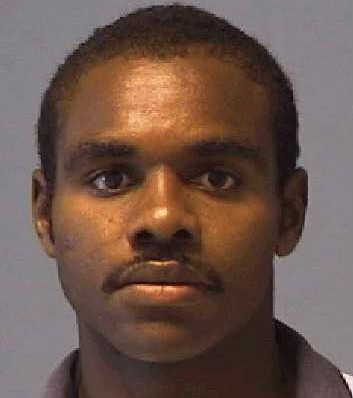 Clinton Bankston
Homicide · USA · 1987
15 August 1987 — Ann Morris (63), her sister Sally Nicholson (59), and Sally’s…
5 victims
Clinton Bankston
Homicide · USA · 1987
15 August 1987 — Ann Morris (63), her sister Sally Nicholson (59), and Sally’s…
5 victims
 Joshua Jenkins
Homicide · USA · 1996
Joshua Jenkins was a 15-year-old American killer who killed five members of his…
5 victims
Joshua Jenkins
Homicide · USA · 1996
Joshua Jenkins was a 15-year-old American killer who killed five members of his…
5 victims
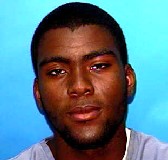 Tronneal Mangum
Homicide · USA · 1997
Tronneal Mangum was a 14-year-old male. He was a student and became the younges…
1 victim
Tronneal Mangum
Homicide · USA · 1997
Tronneal Mangum was a 14-year-old male. He was a student and became the younges…
1 victim
 Tonya Ford
Murderer · USA · 2009
Tonya Ford was a Taylor County woman convicted of killing her police officer hu…
1 victim
Tonya Ford
Murderer · USA · 2009
Tonya Ford was a Taylor County woman convicted of killing her police officer hu…
1 victim
 Jesse Timmendequas
Murderer · USA · 1994
Jesse Timmendequas (born April 15, 1961) raped and murdered his neighbor, seven…
1 victim
Jesse Timmendequas
Murderer · USA · 1994
Jesse Timmendequas (born April 15, 1961) raped and murdered his neighbor, seven…
1 victim
 Suzane von Richthofen
Murderer · Brazil · 2002
Suzane Louise Freiin von Richthofen was born on November 3, 1983. She was descr…
2 victims
Suzane von Richthofen
Murderer · Brazil · 2002
Suzane Louise Freiin von Richthofen was born on November 3, 1983. She was descr…
2 victims
 Igor Suprunyuck
Serial killer · Ukraine · 2007
Name: Igor Suprunyuck · Also known as (Ukr): Ігор Супрунюк · Also known as (Rus…
21 victims
Igor Suprunyuck
Serial killer · Ukraine · 2007
Name: Igor Suprunyuck · Also known as (Ukr): Ігор Супрунюк · Also known as (Rus…
21 victims
 Lonnie Craft
Murderer · USA · 1957
Defendant: Lonnie Craft Victim: Virginia C. Craft (ex-wife) County Attorney: Ch…
1 victim
Lonnie Craft
Murderer · USA · 1957
Defendant: Lonnie Craft Victim: Virginia C. Craft (ex-wife) County Attorney: Ch…
1 victim
- Gender
- male
- Country
- USA
- Location
- Hartford, Connecticut, USA
- Date of birth
- 1961
- Age at first offence
- 28
- Characteristics
- juvenile (17), kidnapping, rape
- Victim profile
- Diane Gellenbeck, 37 ( Connecticut National Bank vice president )
- Method of murder
- Shooting
- Date(s) of murder
- August 24, 1989
- Years active
- 1989
- Date of arrest
- —
- Status
-
Sentenced to death
Sentenced to death on July 26, 1991
Case identification
Daniel Webb (No 124596) was held at Sommers Correctional Institution in Somers, Connecticut.
The offence
Daniel Webb kidnapped Diane Gellenbeck from a Hartford parking garage in 1989. Webb took her to a nearby park and raped her. When Gellenbeck attempted to escape, Webb shot her five times.
Diane Gellenbeck was a 37-year-old Connecticut National Bank vice president. Webb shot her five times when she attempted to escape, and witnesses testified that the last shots were fired at close range as Gellenbeck crawled across the grass. Webb fired the final shot point-blank into her face.
Webb drove a car he had borrowed from his girlfriend. The kidnapping took place in Hartford during the midday period while Gellenbeck was en route to a meeting. Webb drove Gellenbeck to Keney Park in the city's North End.
Investigation
Witnesses testified about the shooting as Gellenbeck crawled across the grass and the final shot into her face.
Trial
At trial, Webb was generally uncooperative with defense attorneys. He refused to express remorse for his crimes. He did not attend court on the day the jury's verdict was announced.
Webb claimed he was forced by an incompetent defense attorney and an inept judge to defend himself in the court.
Sentencing
Webb was sentenced to death in 1991. He was sentenced to death on July 26, 1991.
Appeals
The defendant's conviction and death sentence were affirmed by this Court in August of 1996. State v. Webb, 238 Conn. 389, 680 A.2d 147 (1996).
On direct appeal, the defendant mounted a non-evidentiary based challenge to electrocution as the method of execution. While the appeal was pending, the legislature changed the method to lethal injection. The matter was remanded “for a hearing limited to the defendant's claim concerning the state constitutionality of lethal injection as a means of execution.” Id. at 489. This Court retained jurisdiction to review any findings of the trial court.
A motion by the State led the trial court, Espinosa, J., to schedule a hearing on April 2, 1997 to comply with the remand order. After this hearing, both parties filed briefs seeking to resolve issues concerning the scope of the remand hearing.
On May 6, 1997, the State informed the defendant of the lethal drugs and quantity thereof that would cause his death.
The issue of the scope of the remand was argued before the court, Espinosa, J., on June 4, 1997. Judge Espinosa indicated she would resolve the issue of the scope of the remand before holding an evidentiary hearing. She also permitted the parties to file simultaneous briefs to present additional arguments regarding any issues discussed during the June 4 hearing, and responsive briefs to address issues raised in the original briefs.
Before Judge Espinosa was able to decide it, she was transferred from the Hartford Judicial District. The case was then assigned to the Honorable Roland Fasano. After re-argument on the scope of the remand hearing, Judge Fasano ruled that Webb ordered him to determine whether the mechanism of death employed in an execution by lethal injection amounts to cruel and unusual punishment under the State constitution.
At the conclusion of an extensive evidentiary hearing, the trial court noted that:
“the defense abandoned any claim that proper implementation of Administrative Directive 6.15 would constitute cruel and unusual punishment under the state constitution or result in anything other than a virtually painless death.”
“Instead the defense ‘shifted its focus to several new due process claims seemingly unrelated to the purpose of the hearing held pursuant to the order of remand.’”
“the evidence showed that procedures adopted for executing prisoners were designed ‘to impose death upon the inmate in as humane a manner as possible.’”
This Court reviewed the matter pursuant to State v. Webb, 238 Conn. at 489.
While the matter was pending in this Court, defense counsel Norman Pattis filed a motion to withdraw due to a potential conflict of interest. At a hearing before the trial court, Clifford, J., the defendant was informed of the nature of the conflict and agreed to accept the Public Defender's office as counsel for this appeal. Pattis was allowed to withdraw and the Public Defender's office was appointed to represent the defendant.
On a motion from the State, this Court struck Pattis's brief and permitted the Public Defender to file a substitute brief.
Issues presented in proceedings
The proceedings included two counterstatement issues: I. WHETHER THIS COURT LACKS STATE CONSTITUTIONAL AUTHORITY TO INVALIDATE A LEGISLATIVELY CREATED PUNISHMENT? II. WHETHER LETHAL INJECTION IS THE MOST HUMANE METHOD OF IMPOSING THE DEATH PENALTY?
Other details
Lethal injection protocol and related evidence
Administrative Directive 6.15 prepared by the Commissioner of Correction pursuant to General Statutes section 54-100 described a continuous intravenous injection of the following substances:
- Step One: administration of 2,500 milligrams of Thiopental Sodium (a lethal dose) in 50 ml of clear (without visible precipitate) Sodium Chloride 0.9% solution of an approximate concentration of 50 mg/ml or 5%.
- Step Two: administration of 100 milligrams (mg) of Pancuronium Bromide (contents of ten (10) 5 ml vials of 2 mg/ml concentration) in 50 ml.
- Step Three: administration of 120 milliequivalent (mEg) of Potassium Chloride (contents of two (2) 30 ml vials of 2mEq/ml concentration) in 60 ml.
The drugs were selected by Thomas J. Macura, a pharmacist for the state Department of Correction (DOC), who consulted with officials in other states that used lethal injection and with Dr. Edward Blanchette, a physician employed by the DOC.
The person selected as the executioner was to be trained to the satisfaction of a licensed physician to ensure qualification to establish the intravenous line and administer the drugs in a professional manner. Dr. Blanchette indicated he would be willing to train executioners to carry out the execution in a professional and humane manner.
Three witnesses offered expert opinions about whether lethal injection carried out pursuant to the Directive was a painful way to execute a death sentenced inmate:
- Dr. Edward Brunner, a Board certified anesthesiologist and Chairman of the Department of Anesthesiology at Northwestern University Medical School in Chicago.
- Dr. Jeffrey Gross, a professor of Anesthesiology and Pharmacology at the University of Connecticut School of Medicine.
- Dr. Blanchette, of the Department of Correction.
Key testimony included:
- Dr. Brunner described thiopental sodium as a fast but short-acting barbiturate used “to induce the state of anesthesia, that is the state of non-feeling, unconsciousness.” He testified about how thiopental sodium, pancuronium bromide, and potassium chloride work in the execution context.
- Dr. Gross testified that when thiopental sodium was injected into the veins it “makes the brain go to sleep” in about thirty seconds. He testified about dosages, pancuronium bromide as a paralytic, and potassium chloride as stopping the heart.
- Dr. Blanchette testified he felt obligated to review the protocol to ensure the execution process was completed as humane as possible, and agreed that if executed according to the protocol, the only physical pain would be the actual needle used to insert the IV catheter.
A report introduced during Dr. Brunner’s testimony in Breton was presented through Dr. Brunner. Through the report, the proceedings referenced an English Royal Commission between 1949 and 1953. The admitted portions included statements that an intravenous lethal drug makes “certain that death will be both quick and painless.” The report also noted that even the British Medical Association agreed that execution by intravenous lethal injection “would be a speedy and merciful procedure.” The Commission recognized expertise needs to ensure injection into the vein rather than muscle, and stated:
“that it is not only within the medical profession that the necessary skill is to be found. There are many outside it who are fully competent either to give injections themselves or train others to do it.”
On competent executioners, the Commission concluded:
“[o]ur evidence does not justify a conclusion that the difficulty of getting executioners, if it were the only obstacle in the way of a desirable reform (to employ lethal injection), would prove insuperable.”
Administrative Directive 6.15: execution mechanism described
A system for delivering lethal drugs in the proper order and with safeguards was described:
- The system included a chemical delivery manifold with several ports.
- Each drug was contained in its own syringe.
- A syringe port for thiopental sodium used a syringe locked into place with a “clave connector,” described as minimizing potential problems and avoiding delaying the execution.
- Saline solution was included among the sequential steps.
- Pancuronium bromide was locked next in line.
- Potassium chloride was described as the final syringe port, and a colored stopcock ensured drugs were not infused into the intravenous line until proper time.
- A particular “J-loop” was selected to fit into the angiocatheter inserted into the inmate’s arm, described as used in other states to avoid complications from rapid delivery of high volume fluids.
- Dr. Blanchette testified the manifold would ensure delivery in appropriate fashion and in the right sequence.
Executioner selection
Deputy Commissioner Peter Matos indicated DOC intended to employ Emergency Medical Technicians (EMTs) or paramedics as executioners, but did not rule out using a nurse.
“Flocculence” discussion
Flocculence was described as occurring when thiopental sodium and pancuronium bromide were incompatible, forming a precipitate that could clog the intravenous line and stop drug flow. The protocol was described as including mechanisms to avoid this problem, including flushing between infusions and using two intravenous lines, one in each arm.
Dr. Gross disputed that flocculence caused pain.
Meals
Dr. Brunner testified six to eight hours should lapse between the inmate’s last meal and execution to avoid complications. Directive 6.15 provided for feeding at the normal time. The execution was scheduled for after 2:00 p.m. Dr. Blanchette testified he was concerned about timing of meals and approved Directive 6.15. The directive indicated a warden would make “reasonable efforts” to serve the last meal of an inmate’s choosing.
Ethical and standards arguments, and conclusion in proceedings
The proceedings addressed the standards for determining cruel and unusual punishment and the role of presumptions about public officials acting properly. The proceedings also discussed that Delaware courts and other jurisdictions had addressed similar claims.
In conclusion, the proceedings stated that:
“Delay in the execution of judgments imposing the death penalty frustrates the public interest in deterrence and eviscerates the only rational justification for that type of punishment.”
The proceedings included quotations from Gomez v. Fierro and from Callins v. Collins:
“There are powerful reasons for concluding capital cases as promptly as possible. Delay in the execution of judgments imposing the death penalty frustrates the public interest in deterrence and eviscerates the only rational justification for that type of punishment.”
“The death- by- injection. . . . looks pretty good next to that.”
The proceedings also quoted:
“The suffering due to. . . fear, the law, does not seek to spare.”
It additionally described that Webb’s victim, Diane Gellenbeck, was subjected to an extended abduction and an attempted sexual assault, and that Webb inflicted gunshot wounds and shot her three times from point blank range with hollow point bullets.
The proceedings ended with an expressed request to affirm the trial court’s finding that lethal injection was humane and constitutional, and described an execution process involving a needle and a period of unconsciousness followed by death.
Spotted an error, or have more information about this case?