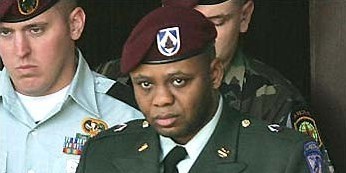
Hasan Akbar
Murderer Umesh Reddy
Murderer · India · 1998
Umesh Reddy was sentenced to death on October 27, 2006. The Karnataka High Cour…
18 victims
Umesh Reddy
Murderer · India · 1998
Umesh Reddy was sentenced to death on October 27, 2006. The Karnataka High Cour…
18 victims
 Mohammed Adam Omar
Murderer · Yemen · 1995
Mohammed Adam Omar was a morgue assistant at Sanaa University’s medical faculty…
16 victims
Mohammed Adam Omar
Murderer · Yemen · 1995
Mohammed Adam Omar was a morgue assistant at Sanaa University’s medical faculty…
16 victims
 Robert Martines Perez
Murderer · USA · 1994
Name: Robert Martines Perez · Other name used in proceedings: Robert Martinez P…
15 victims
Robert Martines Perez
Murderer · USA · 1994
Name: Robert Martines Perez · Other name used in proceedings: Robert Martinez P…
15 victims
 Billy Frank Vickers
Murderer · USA · 1993
Billy Frank Vickers Vickers was executed by lethal injection in Texas on Januar…
14 victims
Billy Frank Vickers
Murderer · USA · 1993
Billy Frank Vickers Vickers was executed by lethal injection in Texas on Januar…
14 victims
 Farda Gadirov
Murderer · Azerbaijan · 2009
Farda Gadirov (also given as Farda Asad oglu Gadirov; Azeri: Fərda Qədirov; Geo…
12 victims
Farda Gadirov
Murderer · Azerbaijan · 2009
Farda Gadirov (also given as Farda Asad oglu Gadirov; Azeri: Fərda Qədirov; Geo…
12 victims
 Shoko Asahara
Murderer · Japan · 1995
Shoko Asahara was the founder of Japan's controversial Buddhist religious group…
12 victims
Shoko Asahara
Murderer · Japan · 1995
Shoko Asahara was the founder of Japan's controversial Buddhist religious group…
12 victims
 Larry Romine
Murderer · USA · 1981
Larry Romine, 45, was convicted for the shotgun slayings of his parents, Roy Le…
2 victims
Larry Romine
Murderer · USA · 1981
Larry Romine, 45, was convicted for the shotgun slayings of his parents, Roy Le…
2 victims
 Troy Anthony Davis
Murderer · USA · 1989
Name: Troy Anthony Davis · Gender: Male · Race: Black · Eye color: Brown · Hair…
1 victim
Troy Anthony Davis
Murderer · USA · 1989
Name: Troy Anthony Davis · Gender: Male · Race: Black · Eye color: Brown · Hair…
1 victim
 Donnie Andrews
Murderer · USA · 1986
Larry Donnell Andrews (April 29, 1954 – December 13, 2012) was an American crim…
2 victims
Donnie Andrews
Murderer · USA · 1986
Larry Donnell Andrews (April 29, 1954 – December 13, 2012) was an American crim…
2 victims
 Edward Paul Morris
Mass murderer · USA · 2002
Edward Paul Morris killed his wife and three children and dumped their bodies i…
4 victims
Edward Paul Morris
Mass murderer · USA · 2002
Edward Paul Morris killed his wife and three children and dumped their bodies i…
4 victims
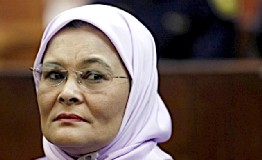 Najwa Petersen
Murderer · South Africa · 2006
Najwa Petersen was the wife of South African singer, composer and theatre direc…
1 victim
Najwa Petersen
Murderer · South Africa · 2006
Najwa Petersen was the wife of South African singer, composer and theatre direc…
1 victim
- Gender
- male
- Country
- Kuwait
- Location
- Camp Pennsylvania, Kuwait
- Date of birth
- 1971
- Age at first offence
- 32
- Characteristics
- —
- Victim profile
- Army Capt. Christopher Seifert, 27, and Air Force Maj. Gregory Stone, 40
- Method of murder
- Shooting - Hand grenade
- Date(s) of murder
- March 23, 2003
- Years active
- 2003
- Date of arrest
- —
- Status
-
Sentenced to death
Sentenced to death April 28, 2005; death sentence affirmed on November 20, 2006 and subject to automatic appeal by the Army Court of Criminal Appeals
Background
Sergeant Hasan Akbar was a U.S. Army soldier convicted for the murder of two fellow soldiers during the 2003 U.S. invasion of Iraq. He was born in the United States and studied at the University of California, Davis, taking a double major in aeronautical and mechanical engineering and graduating with a bachelor's degree. After joining the United States Army, he was assigned to the 326th Engineer Battalion of the 101st Airborne and was eventually deployed to Kuwait.
Akbar was born Mark Fidel Kools in Watts, Los Angeles. At some point in his childhood, his mother remarried and converted to Islam. He was admitted in 1988 under the name of Mark Fidel Kools to the University of California, Davis, graduating 9 years later with bachelor's degrees in both aeronautical and mechanical engineering. After joining the United States Army, he was assigned to Alpha Company, 326th Engineer Battalion of the 101st Airborne, and served as a Sapper.
Akbar was described as a Muslim convert from Los Angeles, California. His mother was Quran Bilal. His father said that his son was the only African American and only Muslim in his company, and that the other members subjected him to constant harassment.
The offence
On March 23, 2003, Akbar was charged in a hand grenade and shooting attack that killed two U.S. officers and wounded 14 soldiers. The attack took place at Camp Pennsylvania, Kuwait, a rear base camp for the invasion. Early morning troops were sleeping when Akbar threw hand grenades into a tent and fired his rifle into the ensuing chaos.
The victims were Army Captain Christopher Seifert and Air Force Maj. Gregory Stone. Seifert was shot in the back and was 27. Stone was struck by shrapnel and was 40. Prosecutors alleged that his diary entries and his actions showed that the attack was premeditated. Prosecutors also alleged that the premeditation was supported by stealing hand grenades and turning off the generator that lit the camp.
During his trial Akbar smuggled a pair of scissors out of a conference room, then asked the Military Police Officer guarding him to remove his hand cuffs so that he might use the restroom. When the officer removed Akbar’s restraints he then stabbed the officer in the shoulder and neck with the scissors before being wrestled to the ground by another officer. This attack was not allowed to be admitted as evidence by the army judge during sentencing.
Investigation
News reports at the time claimed that Akbar had been recently reprimanded for insubordination and was told he would not join his unit’s push into Iraq.
In a diary entry dated February 4, 2003, Akbar referred to mistreatment by his fellow soldiers:
I suppose they want to punk me or just humiliate me. Perhaps they feel that I will not do anything about that. They are right about that. I am not going to do anything about it as long as I stay here. But as soon as I am in Iraq, I am going to try and kill as many of them as possible.
Akbar wrote prior to the attack:
I may not have killed any Muslims, but being in the Army is the same thing. I may have to make a choice very soon on who to kill.
As early as 1992 he had made threatening statements:
I made a promise that if I am not able to achieve success because of some Caucasians, I will kill as many of them as possible.
In 1996 he made another threatening statement:
destroying America was my plan as a child, and as a juvenile and in college. Destroying America is my greatest goal.
One diary entry dated 1997 said:
My life will not be complete unless America is destroyed.
Akbar himself reportedly said, just moments after his arrest:
You guys are coming into our countries, and you're going to rape our women and kill our children.
Trial
Akbar was tried in Fort Bragg, North Carolina in front of a military jury of nine officers with ranks from major to colonel, and six senior sergeants. There were 13 men and two women on the jury.
During jury selection, defense lawyers were said to favor jurors who had experience dealing with mental illness. Akbar’s lawyers claimed that he had a history of mental illness which was known to the military. Akbar also suffered from sleep apnea and fell asleep several times during court proceedings.
Verdict
On April 21, 2005 Akbar was found guilty of two counts of premeditated murder:
- Army Capt. Christopher Seifert, 27, who was shot in the back
- Air Force Maj. Gregory Stone, 40, struck by shrapnel
Akbar was also found guilty of three counts of attempted premeditated murder.
Sentencing
On April 28, 2005, after about seven hours of deliberation, Akbar was sentenced to death.
The sentence was scheduled for review by a commanding officer and it automatically appealed. If the appeal failed, the execution would take place by lethal injection.
Appeals
On November 20, 2006 Lieutenant General John Vines, commander of the 18th Airborne Corps, affirmed the death sentence against Akbar. The case went to the Army Court of Criminal Appeals under an automatic appeal.
Outcome
Akbar’s death sentence was affirmed on November 20, 2006 and remained subject to automatic appeal by the Army Court of Criminal Appeals.
Aftermath
Military officials for the most part did not believe Akbar’s religious beliefs had anything to do with the attack and attributed the motive to resentment.
Akbar’s mother, Quran Bilal, told reporters that she believed intolerance for his race and his Muslim faith created tensions within his unit as it prepared to invade a Muslim country.
University of California Davis Chancellor Larry Vanderhoef said:
The circumstance is so very sad — devastating heartbreak for the families and friends of the soldiers, certainly, but a confusing, hurtful time for those who knew Mr. Kools/Akbar, as well. I hope and pray for the recovery of the wounded, and for healing comfort for the families of those killed.
Other details
Since the Vietnam War, Akbar was described as the first U.S. soldier to be charged with the murder of another soldier during wartime. He was also described as the second soldier since the Vietnam War to be sentenced to death for killing a fellow soldier, though William Kreutzer Jr.'s sentence was commuted to life.
The last U.S. military execution was that of John A. Bennett in 1961.
Akbar was eventually deployed to Kuwait. The two dead victims were members of the 101st Airborne Division. The case covered an event during the 2003 U.S. invasion of Iraq and involved the “fragging” of two fellow soldiers in the 101st Airborne, 327th Infantry Regiment.

Spotted an error, or have more information about this case?