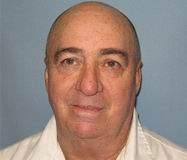
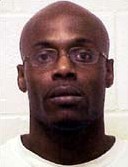
Phillip Hallford
Murderer Brian Kevin Rosenfeld
Murderer · USA · 1985
Brian Kevin Rosenfeld Brian Kevin Rosenfeld was sentenced to three concurrent l…
23 victims
Brian Kevin Rosenfeld
Murderer · USA · 1985
Brian Kevin Rosenfeld Brian Kevin Rosenfeld was sentenced to three concurrent l…
23 victims
 Yahweh ben Yahweh
Murderer · USA · 1980
Yahweh ben Yahweh was born and legally named Hulon Mitchell Jr. (October 27, 19…
23 victims
Yahweh ben Yahweh
Murderer · USA · 1980
Yahweh ben Yahweh was born and legally named Hulon Mitchell Jr. (October 27, 19…
23 victims
 Russell Ellwood
Murderer · USA · 1991
Russell Ellwood was a former taxi driver. Authorities suspected him of killing…
20 victims
Russell Ellwood
Murderer · USA · 1991
Russell Ellwood was a former taxi driver. Authorities suspected him of killing…
20 victims
 Adolfo de Jesús Constanzo
Serial killer · Mexico · 1986
Adolfo de Jesús Constanzo, nicknamed “The Godfather of Matamoros,” was a serial…
16 victims
Adolfo de Jesús Constanzo
Serial killer · Mexico · 1986
Adolfo de Jesús Constanzo, nicknamed “The Godfather of Matamoros,” was a serial…
16 victims
 Albert Patrick
Murderer · USA · 1900
Albert Patrick was convicted in New York, New York for the murder of William M.…
1 victim
Albert Patrick
Murderer · USA · 1900
Albert Patrick was convicted in New York, New York for the murder of William M.…
1 victim
 Richard Durn
Mass murderer · France · 2002
Richard Durn Richard Durn was a 33-year-old gunman who opened fire at the end o…
8 victims
Richard Durn
Mass murderer · France · 2002
Richard Durn Richard Durn was a 33-year-old gunman who opened fire at the end o…
8 victims
 William Clifford Bryson
Murderer · USA · 1988
William Clifford Bryson was convicted in Oklahoma of first-degree murder for th…
1 victim
William Clifford Bryson
Murderer · USA · 1988
William Clifford Bryson was convicted in Oklahoma of first-degree murder for th…
1 victim
 Philip Carl Jablonski
Spree killer · USA · 1978
Philip Carl Jablonski was born in 1946. His correspondence biography stated tha…
5 victims
Philip Carl Jablonski
Spree killer · USA · 1978
Philip Carl Jablonski was born in 1946. His correspondence biography stated tha…
5 victims
- Gender
- male
- Country
- USA
- Location
- Dale County, Alabama, USA
- Date of birth
- March 22, 1947
- Age at first offence
- 39
- Characteristics
- incest
- Victim profile
- Charles Eddie Shannon, 16 (his daughter's boyfriend)
- Method of murder
- Shooting (.22 caliber handgun)
- Date(s) of murder
- April 13, 1986
- Years active
- 1986
- Date of arrest
- May 23, 1986
- Status
-
Executed
Executed by lethal injection in Alabama on November 4, 2010
Case record: Phillip Hallford
Background
Phillip D. Hallford was convicted of capital murder arising from a murder committed during a robbery. He was sentenced to death by electrocution, and his conviction and sentence were affirmed on direct appeal and on post-conviction review.
Hallford instructed his daughter, Melinda Hallford, to lure Charles Eddie Shannon, her boyfriend, to a secluded area near a bridge in Dale County.
Hallford’s daughter, Melinda Hallford Powell, said Hallford sexually abused her and had never admitted it, and she said he was “relieved” to hear that Hallford was dead.
The offence
Hallford sexually abused his daughter since she was 7 years old, and became angry that she was dating 16-year-old Eddie Shannon.
Hallford used his daughter to lure Shannon to a secluded bridge. Evidence showed Hallford used his daughter to lure Shannon to an isolated area near an abandoned bridge over the Choctawahatchee River in Dale County.
Luring and killing (early morning of April 13, 1986)
During the night of April 12 or the early morning hours of April 13, 1986, Hallford used his 15-year-old daughter, Melinda Hallford, to lure the 16-year-old victim, Charles Eddie Shannon, to an isolated area near an abandoned bridge over the Choctawahatchee River in Dale County.
Melinda arranged to meet Shannon at about midnight on April 12, 1986.
Hallford, Melinda, and Hallford’s 15-year-old stepson, Sammy Joe Robbins, went to the bridge in Hallford’s vehicle. Hallford and his stepson hid nearby while Melinda remained in the vehicle.
Around 1:00 a.m. on April 13, 1986, Shannon came to the vehicle and began talking with Melinda. Hallford approached, turned Shannon around, and after a brief struggle shot Shannon through the roof of his mouth with a .22 caliber pistol.
After the shot, Shannon stated, “What did you shoot me for?” and Hallford said, “For fucking around with somebody else’s pussy.”
Hallford grabbed the victim by the feet and dragged him toward the bridge. As he was being dragged, Shannon was crying and saying, “Oh my God, you shot me,” and “Oh, Jesus Christ, you shot me.”
At some point Shannon regained his balance. Hallford marched Shannon toward the river holding him by the hair of his head. Two more shots were heard. After the two additional shots, Hallford returned to the vehicle.
The sentencing hearing findings described that, according to the autopsy, these two shots would have been to the forehead and above the left ear.
After the killing, Hallford took Shannon’s wallet and then rolled or shoved him into the river. Evidence showed that Hallford returned to the scene to remove blood from the bridge, and that the next day Hallford burned Shannon’s wallet and its contents.
While burning the wallet, Hallford commented that Eddie was a “cheapskate” because he said he found no money in the wallet.
During the confrontation, Hallford made a statement “in substance as follows”: “This will teach you to f ... with someone else’s ass.”
Hallford attempted to destroy the .22 caliber pistol by melting it down in an old tire rim with an acetylene torch. During this, he had his 13-year-old son, Jack Hallford, act as a lookout and told him, “They won’t know what this was,” and “They won’t find no evidence.”
The remains of the pistol were recovered and identified at trial by a firearms expert as a .22 caliber pistol. Hallford bored holes in the empty shell casings from the pistol and made them into a necklace. He made Melinda wear the necklace so that she would “remember.”
Hallford told his 18-year-old stepson, Cecil Wayne Robbins, shortly after the killing that “I wouldn’t have to worry about him [referring to the victim] no more,” and that “he had got rid of him.”
The badly decomposed body was discovered in the river by two fishermen on April 26, 1986. An autopsy disclosed three wounds made by .22 caliber bullets: one bullet entered the roof of the mouth, one in front of the left ear, and one in the forehead. The official cause of death was “[m]ultiple gunshot wounds to the head.”
There was testimony that Hallford threatened the victim about a week before the killing by telling him that if he rode his motorcycle by appellant’s house again, he would kill him.
Shannon’s wallet was not recovered with his body.
Evidence about the wallet and a second bridge
Appellant burned the victim’s wallet and its contents, which included a photograph and a military identification card. According to testimony, Hallford made Melinda wear a necklace made of shell casings from the bullets used in the shooting.
The sentencing order findings included that after cleaning up the blood on the bridge, Hallford and Sammy Joe Robbins returned to the bridge with a shotgun to see if the body was floating or visible and if so, they planned to sink it.
Sammy testified that Hallford brought out a wallet and burned its contents after the fire was lit, and Sammy testified he saw Hallford burn an orange and white military identification card.
Melinda was present when Hallford burned the wallet.
Eddie’s step-brother, David, testified that Eddie carried a wallet with an identification card. Eddie’s father, Olen Johns, testified that he never saw his son’s wallet after the murder.
Investigation
When the police investigation began to focus on Hallford after discovery of the victim’s body, Hallford fled with Melinda.
Arrest
Hallford was arrested in Escambia County, Florida, on May 23, 1986, and was extradited to Alabama.
Trial
Indictment and plea
At arraignment, Hallford pleaded not guilty.
Hallford was indicted on July 10, 1986, in Dale County for the capital offense of murder committed during a robbery in the first degree, in violation of § 2(a)(2), Act No. 81-178, Ala. Acts 1981, enacted March 31, 1981.
Omitting formal parts, the indictment read: “The Grand Jury of said County charges that before the finding of this indictment that Phillip D. Hallford did intentionally cause the death of Charles E. Shannon by shooting him with a pistol and Phillip D. Hallford caused said death during the time that Phillip D. Hallford was in the course of committing a theft of billfold, the property of Charles E. Shannon, by the use of force against the person of Charles E. Shannon with intent to overcome his physical resistance or physical power of resistance, while the said Phillip D. Hallford was armed with a deadly weapon, to-wit: a pistol, in violation of Section 2(a)(2) of Act No. 81-178....”
Guilt-phase verdict
On March 4, 1987, a jury found Hallford guilty of the capital offense charged in the indictment.
Sentencing and advisory verdict
A sentencing hearing was held before the jury, and the jury returned an advisory verdict recommending death.
Ten jurors recommended the death penalty and two recommended a sentence of life imprisonment without the possibility of parole.
Thereafter, the trial court held another sentencing hearing and sentenced Hallford to death.
The appellate decision described the jury’s advisory verdict as: “We the jury, recommend that the defendant, Phillip D. Hallford, should be punished by death....”
Jury instructions
The trial court instructed the jury that “during” meant in the course of or in connection with or immediate flight therefrom with the commission of robbery in the first degree, and it instructed that an accused was not guilty where intent to rob was formed only after the victim was killed.
The trial court also instructed about the continuous chain of events doctrine and that the fact the victim was dead at the time the property was taken did not prevent a finding of a capital murder robbery if the intervening time formed a continuous chain of events.
The trial court further instructed on the issue of intent and that “the question of the Defendant’s intent at the time of the commission of the crime is an issue for the jury to decide.”
The trial court described the burden on the jury to determine whether the defendant intended to dispose of the body and take the wallet so it could not be easily identified.
During its explanation, the trial court also instructed the jury: “To be a capital offense, the murder of the intentional killing type must have been committed during the robbery in the first degree. ‘During’ means in the course of or in connection with or immediate flight therefrom with the commission of robbery in the first degree. An accused is not guilty of a capital robbery murder where the intent to rob was formed only after the victim was killed.”
The appellate decision recited the trial court’s instructions in extended quoted form during its discussion of the robbery element.
Evidence disputes and evidentiary rulings
The appellate decision addressed multiple issues, including:
- Admission of a photograph of the victim taken approximately one month prior to the victim’s death for identification purposes.
- Denial of a mistrial after use of the word “murder” by a witness and the prosecutor, with prompt curative instructions.
- Admission of copies of search warrants and affidavits at a suppression hearing, finding them properly admitted as copies of government records.
- Admission of a sawed-off shotgun seized in a Florida motel room under search warrants; the appellate court found the warrants and seizure authorized and found no reversible error.
- Admission during the sentencing phase of testimony by Melinda Hallford about a sexual relationship with Hallford that involved incestuous relationship prior to the killing.
During the mistrial discussion involving the word “murder,” the following exchange occurred: “MR. EMERY [prosecuting attorney]: Do you remember the night of April the 12th of 1986? “A. Yes, sir. “Q. What do you remember about that night that brings it to your attention? “A. A murder. “Q. The murder of who? “A. Eddie- “MR. KOMINOS [defense counsel]: Your, Honor, I'm going to object and ask for a mistrial. That is the ultimate question and we feel that we're due for a mistrial in this matter and I would like to be heard. “THE COURT: Take the jury back. (Jury excused). “MR. KOMINOS: The ultimate question to be decided by this jury is whether or not my client is guilty of the matters charged in the indictment. They have the sole responsibility to make that determination. We feel that the jury has been so prejudiced by the District Attorney mentioning the word “murder,” and from the witness, that that cannot be erased from the jury's minds. Therefore, we respectfully ask for a mistrial at this time. “THE COURT: Motion for a mistrial denied. “MR. KOMINOS: Then we would ask that this court give instructions to the jury instructing them that they're not to consider the words spoken by the District Attorney or the words spoken by the witness and that they're not to consider that word at all in their deliberations. “THE COURT: Bring the jury back in. (Jury returned.) “THE COURT: Ladies and Gentlemen of the jury, this is what we classify as a homicide case. ... So, if the witness classifies something as a murder, you should just disregard it and look at the facts and not the conclusions of the witnesses that they have drawn.”
During a portion of sentencing testimony, the exchange included: “Q. Melinda, last spring was Eddie Shannon your boyfriend? “A. Yes, sir. “Q. Last spring-late in 1985, did you have a sexual relationship with your father? “MR. KOMINOS [defense counsel]: Your Honor, I'm going to object. That's leading and highly prejudicial and I ask for a mistrial. “THE COURT: I overrule. Motion for mistrial denied. “MR. EMERY [prosecuting attorney]: Did you? “A. Yes, sir. “Q. Did that relationship involve sexual intercourse? “MR. KOMINOS: Your Honor, I'm going to object. He's leading and this is not material to the sentencing phase of the trial. “THE COURT: I overrule your objection.”
Aggravating circumstances and sentencing findings
At sentencing, the trial court found two aggravating circumstances:
- that the capital offense was committed while Hallford was engaged in the commission of, or attempt to commit, or flight after committing or attempting to commit robbery (as aggravating circumstance under § 13A-5-49(4)); and
- that the capital offense was especially heinous, atrocious, or cruel compared to other capital offenses (as aggravating circumstance under § 13A-5-49(8)).
The trial court found no mitigating circumstances.
The sentencing order included findings that Hallford instructed his 15-year-old daughter to lure Eddie Shannon, age 16, to an abandoned road near a closed-out bridge over the Choctawahatchee River, and that Hallford shot Shannon through the roof of his mouth after a brief struggle, dragged him down to the old bridge, and Sammy and Melinda heard two more shots.
The sentencing order further found that Hallford stole Eddie’s wallet and then rolled him into the river.
The trial court found “This was an execution type slaying, evincing a cold blooded, calculated design to kill.” The trial court further stated that after the victim was virtually defenseless but still conscious, Hallford shot him in the head two more times and threw him into the river to avoid later identification.
The sentencing order stated that the conduct demonstrated senselessness and lack of regard for human life.
The sentencing order described mitigating evidence and enumerated that Hallford was convicted of Grand Larceny in 1966, violating U.S. Code, Title 18, Sec. 2313 in 1983; that the capital offense was not committed while under the influence of extreme mental or emotional distress; that the victim was not a participant and did not consent; that the defendant was not an accomplice but the actual killer; that he was not acting under extreme duress or under substantial domination of another; that he did appreciate the criminality of his conduct, was fully aware of what he was doing and it was wrong, and that his capacity to conform his conduct was not substantially impaired; and that he was 39 years old when the crime was committed. It found no additional mitigating circumstances.
Appeals
Direct appeal (Alabama Court of Criminal Appeals)
Hallford v. State, 548 So.2d 526 (Ala.Cr.App.1988) affirmed.
The appellate court held that the trial court did not commit reversible error, including on:
- admissibility of a photograph of the victim,
- refusal to grant a mistrial,
- admissibility of copies of search warrants during a motion to suppress,
- admissibility of a shotgun seized pursuant to search warrants,
- sufficiency of evidence for capital robbery-murder,
- admissibility during sentencing phase of testimony by Hallford’s daughter about sexual relationship with him,
- support for the trial court’s findings of fact,
- support for capital robbery-murder aggravating circumstance,
- sufficient evidence for “especially heinous, atrocious or cruel” killing,
- no abuse of discretion in not allowing individual voir dire of prospective jurors,
- independent weighing demonstrating the death sentence was not excessive.
The appellate decision described the holding as: “Affirmed.”
Denial or disposition of rehearing and modification of opinion
The application for rehearing filed by Hallford was overruled. Hallford raised an argument based on Maynard v. Cartwright.
The appellate court modified and extended its opinion and overruled applications for rehearing. It struck a portion stating incest evidence was relevant to negate the statutory mitigating circumstance of no significant history of prior criminal activity, while retaining that the incest evidence was admissible for negating Hallford’s testimony presented to portray himself as a good father and person of good character.
Post-conviction appeal (Rule 32, Alabama)
Hallford v. State, 629 So.2d 6 (Ala.Cr.App.1992) affirmed denial of post-conviction relief.
The appellate court held issues were procedurally barred and that trial counsel was not ineffective on the various grounds asserted.
Federal habeas corpus and appeal (11th Circuit)
Hallford v. Culliver, 459 F.3d 1193 (11th Cir. 2006) affirmed denial of federal habeas relief.
The federal appellate court held:
- Hallford could not demonstrate prejudice that would excuse procedural default of his Brady claim.
- Trial counsel’s penalty phase decisions regarding the incest testimony and mitigation were not ineffective.
- Evidence supported the “especially heinous, atrocious, or cruel” aggravating circumstance.
Sentencing
Hallford was sentenced to death by the trial court after jury recommendation.
The trial court issued a written sentencing order on April 21, 1987, stating written findings after a hearing held in accordance with § 13A-5-47.
The sentencing order included an execution method statement, originally ordering electrocuting convicts sentenced to death by electrocution, and it also provided that execution was suspended pending appeal.
Outcome
Hallford’s conviction and death sentence were affirmed on direct appeal and on post-conviction review, and federal habeas relief was denied.
The U.S. Supreme Court rejected Hallford’s final appeal shortly before the execution.
Aftermath
Execution and final statement
On November 4, 2010, Phillip Hallford was executed in Alabama by lethal injection.
He was pronounced dead at 6:26 p.m. at Holman Prison.
When asked if he had any final words, he replied “no.” He declined to say any final words otherwise.
He spoke softly to the chaplain and guards for a few minutes as the injection was administered and then declined clemency.
Final meal and items given
Hallford did not request a final meal. He ate cheese crackers, nacho cheese Bugles, a ham-and-cheese sandwich, and a Dr Pepper from vending machines.
Hallford gave his only possessions, including a watch and a Bible, to his mother, Mertie Boyett.
Family and witnesses
Melinda Hallford Powell did not attend the execution because she was at her home in North Carolina. She said she was “relieved” to hear that Hallford was dead.
Powell said she had been sexually abused by her father and had lived “a nightmare” for years.
Powell said her father made a necklace out of the casings from the bullets that were fired at Shannon and forced her to wear it.
Shannon’s stepmother, Angelita Johns, made a statement that Hallford’s execution “is long overdue.” Johns said: “What Phillip Hallford did to my stepson Eddie Shannon was unforgivable,” and said: “Eddie Shannon was an innocent 16-year-old just beginning to live his life.”
Shannon’s stepbrother, David Ferguson of Enterprise, witnessed the execution and said earlier: “It’s finally justice for my brother and we’re the ones here to stand up for him,” and “I think it’s been way too long. I think there may be some justice, but my biggest thing is why did it take so long?”
Officials at the Alabama prison system said they had an adequate stock of sodium thiopental, which was described as a drug used in lethal injections.
Hallford was the 24th inmate executed under Gov. Bob Riley, and the 63-year-old Hallford was described as having been on death row for 23 years.
Clemency and courts
Gov. Bob Riley refused to grant clemency.
The U.S. Supreme Court rejected Hallford’s final appeal just minutes before the injection.

Spotted an error, or have more information about this case?