
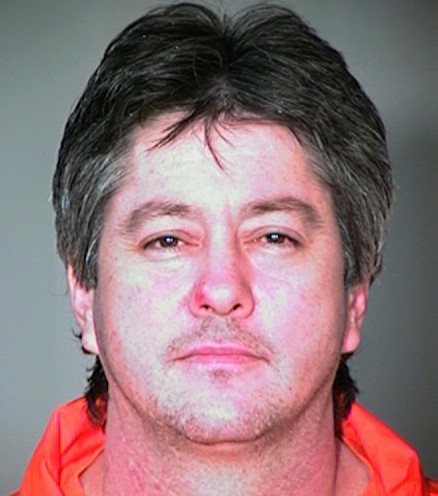
Joseph Danks
Spree killer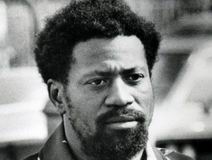 Bobby Joe Maxwell
Spree killer · USA · 1978
Name: Bobby Joe Maxwell Sex: M Race: B Type: T Motive: PC-nonspecific Method of…
11 victims
Bobby Joe Maxwell
Spree killer · USA · 1978
Name: Bobby Joe Maxwell Sex: M Race: B Type: T Motive: PC-nonspecific Method of…
11 victims
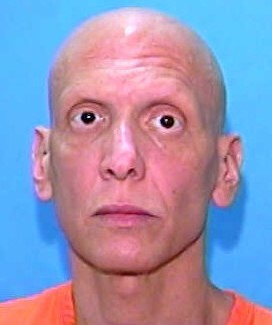 Manuel Pardo
Spree killer · USA · 1986
Manuel Pardo, Jr. was a former police officer who was convicted of nine counts…
9 victims
Manuel Pardo
Spree killer · USA · 1986
Manuel Pardo, Jr. was a former police officer who was convicted of nine counts…
9 victims
 Michael Alan Silka
Spree killer · USA · 1984
Michael Alan Silka was killed during a shoot-out with the police on May 19, 198…
9 victims
Michael Alan Silka
Spree killer · USA · 1984
Michael Alan Silka was killed during a shoot-out with the police on May 19, 198…
9 victims
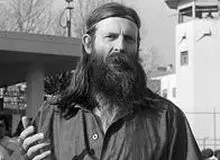 Theodore Streleski
Murderer · USA · 1978
Theodore Streleski was a Stanford mathematician. In 1978 he bludgeoned his advi…
1 victim
Theodore Streleski
Murderer · USA · 1978
Theodore Streleski was a Stanford mathematician. In 1978 he bludgeoned his advi…
1 victim
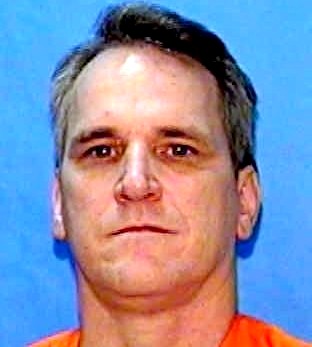 Scott Mansfield
Murderer · USA · 1995
Scott Mansfield was sentenced to death. · 10/14/95 — Jesus Alfonso and Sara Rob…
1 victim
Scott Mansfield
Murderer · USA · 1995
Scott Mansfield was sentenced to death. · 10/14/95 — Jesus Alfonso and Sara Rob…
1 victim
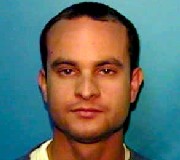 Jonathan Arce
Homicide · USA · 1998
Jonathan Arce was 14 when he fatally stabbed a neighbor, retired University of…
1 victim
Jonathan Arce
Homicide · USA · 1998
Jonathan Arce was 14 when he fatally stabbed a neighbor, retired University of…
1 victim
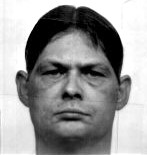 Johnny James
Murderer · USA · 1985
Johnny James was executed by lethal injection in Texas on September 3, 1993. He…
1 victim
Johnny James
Murderer · USA · 1985
Johnny James was executed by lethal injection in Texas on September 3, 1993. He…
1 victim
- Gender
- male
- Country
- USA
- Location
- Los Angeles/Tehachapi, California, USA
- Date of birth
- 1961
- Age at first offence
- 26
- Characteristics
- serial rapist, murder for hire, hate crime, torture, drugs, alcoholic, fugitive
- Victim profile
- Christopher Forsblade, 40 / Isaac Davis / John Coble, 55 / Three "John Doe" victims (homeless transients ) / Walter Holt, 67 (his cellmate)
- Method of murder
- Stabbing with knife / Strangulation with bed sheets
- Date(s) of murder
- January 6-20, 1987 / 1990
- Years active
- 1987–1990
- Date of arrest
- January 20, 1987
- Status
-
Sentenced to death
Sentenced to death in 1993; Supreme Court of California upheld the death sentence in February 2004
Case overview
Joseph Martin Danks was convicted in California. He was sentenced to death in 1993 for killing Walter Holt, his 67-year-old cellmate at the California Correctional Institution in Tehachapi. Danks was 30 at the time of his trial for the Holt murder.
The Supreme Court of California upheld the death sentence. In February 2004, the California Supreme Court upheld the death sentence despite misconduct by two jurors, who asked their Christian clerics for guidance in the middle of deliberations.
Timeline
- January 1987 — Transients in Los Angeles were targeted by a random slayer described as the fifth to prey on homeless men within a decade; police described a knife-favored approach with victims cut down from behind.
- January 6 — Christopher Forsblade, age 40, was found dead.
- January 14 — Isaac Davis was killed at high noon.
- Less than three hours later (January 14) — John Coble, age 55, was killed.
- January 16 — A “John Doe” victim in his early forties was slain.
- January 17 — The killer missed his mark, leaving Almond Lord alive.
- January 20 — James Lyons, age 58, was targeted in a near-miss.
- January 20 (afternoon) — The killer killed a second “John Doe” in a downtown alley after striking back; witnesses pursued the killer for five blocks and hailed a patrol car.
- After police cornered the suspect (late January 1987) — The suspect dropped his knife and was arrested without resistance.
- 1989 — Danks choked and stabbed another inmate.
- 1990 — Danks choked his 67-year-old cellmate, Walter Holt, to death.
- 1988 — Danks was sentenced to 156 years to life in prison for murdering six homeless people in Los Angeles.
- 1993 — Danks was sentenced to death for the murder of Walter Holt.
- 1991 — Danks was condemned.
- February 03, 2004 — The California Supreme Court upheld the death sentence despite two jurors’ misconduct.
The offence
Stabbings of homeless transients in Los Angeles (1987)
The killer targeted homeless men described as transients in Los Angeles, particularly in Koreatown and its immediate vicinity. Police described the attacks as occurring “with such force that it's almost instant death,” adding that the killer was “vicious and he's fast.” Victims were selected from among drifters and were cut down from behind.
Identified victims included:
- Christopher Forsblade, age 40, found dead on January 6.
- Isaac Davis, killed at high noon eight days later.
- John Coble, age 55, killed less than three hours after Isaac Davis.
Two “John Doe” victims were also mentioned:
- A “John Doe” victim in his early forties slain on January 16.
- A second “John Doe” in a downtown alley after an afternoon pursuit on January 20.
The record also described near-misses:
- Almond Lord was left alive after the killer missed his mark on January 17.
- James Lyons, age 58, was involved in a near-miss on January 20.
Murder of cellmate Walter Holt (1990)
Danks killed Walter Holt, his 67-year-old cellmate at the California Correctional Institution in Tehachapi. The court referred to Holt’s murder as occurring in 1990, and it stated that Danks choked Holt to death with bed sheets.
A dissenting justice described the motivation in terms of Danks believing killing old people was “the Lord's work.”
Investigation
Police described the offender as striking “with such force that it's almost instant death. He's vicious and he's fast.” After the downtown alley killing in late January 1987, witnesses pursued the killer for five blocks, then hailed a patrol car. Cornered by police, the suspect dropped his knife and submitted to arrest without resistance.
Danks confessed to the series of stabbings after his knife blade was matched to the wounds of his victims.
Arrest
The suspect dropped his knife and was arrested without resistance after police cornered him following a witness pursuit for five blocks.
Trial
Charges and verdicts (1993 penalty phase context)
The Supreme Court of California addressed the trial of Joseph Martin Danks in which he was charged with the 1990 murder of a fellow prison inmate in Kern County. At the time of the murder, Danks was serving 156 years to life for killing six transients in Los Angeles.
During deliberations in the 1993 murder trial:
- One juror passed around passages from the Bible during deliberations, including this verse:
"If a man strikes someone with an iron object so that he dies, he is a murderer; the murderer shall be put to death."
- Two jurors committed misconduct by discussing the case with their Christian pastors during deliberations.
Danks’ conduct during the 1993 murder trial
During his 1993 murder trial, Danks stabbed his lawyer in the face and then dove toward the jury before a bailiff restrained him.
During the penalty phase of his trial, Danks testified that he had stabbed the transients in Los Angeles while they slept. Addressing the jurors, he said:
"I would do it to you too."
The jurors heard testimony that Danks was paranoid and delusional, including the belief that celebrities excreted into his food. Witnesses said he scrubbed his cell with a toothbrush six to 10 times a day and that he had exhibited such behavior for years.
Sentencing
- Danks was sentenced to 156 years to life in prison in 1988 for murdering six homeless people in Los Angeles.
- Danks was sentenced to death in 1993 for killing Walter Holt, his 67-year-old cellmate at the California Correctional Institution in Tehachapi.
- The record stated that Danks was condemned in 1991.
Appeals
Juror misconduct and Supreme Court review
The California Supreme Court upheld the death sentence. The court’s ruling was 4-3.
The court addressed misconduct by two jurors who asked Christian clerics for guidance in the middle of deliberations. One pastor advised that execution was compatible with biblical teachings, and another told a Kern County juror that he would not hesitate to recommend death in the case.
In the majority ruling by Justice Janice Rogers Brown, the court observed that the evidence against Danks was so extensive that the jurors probably would have voted for the death penalty even without the misconduct. The majority characterized concerns about jurors receiving advice from Christian spiritual leaders or being exposed to Biblical passages, and the ruling recommended that jury instructions be clarified to state that warnings against discussing the case extend to spiritual advisors, spouses and therapists. The decision was expected to spur expanded juror warnings against discussing a case outside the courtroom, including discussions with spiritual advisors, spouses and therapists.
Justice Carlos R. Moreno agreed with the guilty verdict but dissented on the sentence. He described the misconduct as so “egregious” and “flagrant” that the death sentence should be overturned. Moreno also stated that Danks choked his 67-year-old cellmate to death because Danks believed killing old people was “the Lord's work.”
Moreno wrote:
"Against this backdrop, and in direct violation of the court's order not to discuss trial matters with nonjurors, two jurors took the extraordinary step of discussing their possible death verdict with their pastors," Moreno wrote.
"The majority fails to appreciate," Moreno added, "that this deplorable juror misconduct undermines the integrity of California's death penalty process."
Justice Joyce L. Kennard also took issue with the majority’s finding that the jury would have voted for death even without the misconduct. Kennard described Danks’ mental impairment as comparable to mental retardation and wrote that the jury could have determined that his deficiencies diminished his culpability. Kennard also wrote:
"Although mental illness does not warrant an exemption from criminal sanctions, California law recognizes it as a mitigating factor that weighs against capital punishment,"
Chief Justice Ronald M. George signed both dissents.
Deputy Atty. Gen. Lloyd G. Carter said the decision would probably lead to an expanded jury admonition about discussing the case within a year or so and stated:
"I think the court reached the right decision, and I don't think we have any quarrel with a revised jury instruction that makes it clear to jurors how they are supposed to behave,"
Musawwir Spiegel, who represented Danks, said he would ask the state high court to reconsider the decision and, if unsuccessful, would appeal to the U.S. Supreme Court. Spiegel said:

Spotted an error, or have more information about this case?