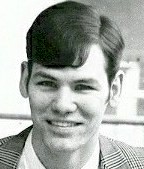
John Norman Collins
Serial killer? Jerry Frank Townsend
Serial killer? · USA · 1973
Jerry Frank Townsend was sentenced to seven concurrent life sentences in 1980.…
6 victims
Jerry Frank Townsend
Serial killer? · USA · 1973
Jerry Frank Townsend was sentenced to seven concurrent life sentences in 1980.…
6 victims
 Major Morris
Serial killer? · USA · 1972
Major Morris was a male with the motive listed as sex. He was described as a “l…
6 victims
Major Morris
Serial killer? · USA · 1972
Major Morris was a male with the motive listed as sex. He was described as a “l…
6 victims
 Warren Leslie Forrest
Serial killer? · USA · 1974
Warren Leslie Forrest was described as 25 years old, 5’9” tall, 155 lbs, with l…
6 victims
Warren Leslie Forrest
Serial killer? · USA · 1974
Warren Leslie Forrest was described as 25 years old, 5’9” tall, 155 lbs, with l…
6 victims
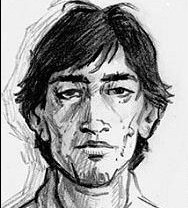 Erno Soto
Serial killer? · USA · 1972
Erno Soto was found incompetent for trial and was committed to a mental institu…
4 victims
Erno Soto
Serial killer? · USA · 1972
Erno Soto was found incompetent for trial and was committed to a mental institu…
4 victims
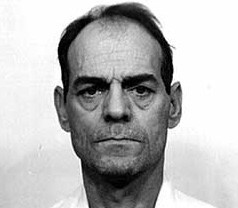 Johnny Meadows
Serial killer? · USA · 1968
Johnny J. E. Meadows was a convicted murderer. A later appellate decision descr…
4 victims
Johnny Meadows
Serial killer? · USA · 1968
Johnny J. E. Meadows was a convicted murderer. A later appellate decision descr…
4 victims
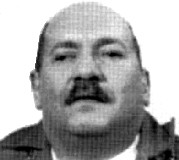 Reynaldo Rondon
Murderer · USA · 1984
Reynaldo Rondon was sentenced to death on May 10, 1985. On 08-02-00 a plea agre…
1 victim
Reynaldo Rondon
Murderer · USA · 1984
Reynaldo Rondon was sentenced to death on May 10, 1985. On 08-02-00 a plea agre…
1 victim
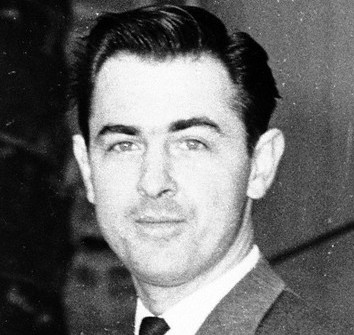 Melvin Rees
Serial killer · USA · 1957
Melvin David Rees, also known as the “Sex Beast”, was convicted and sentenced f…
9 victims
Melvin Rees
Serial killer · USA · 1957
Melvin David Rees, also known as the “Sex Beast”, was convicted and sentenced f…
9 victims
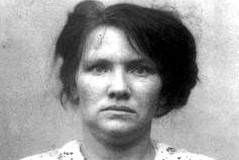 Dagmar Overbye
Serial killer · Denmark · 1913
Dagmar Johanne Amalie Overbye (April 23, 1887 – May 6, 1929) was a Danish seria…
25 victims
Dagmar Overbye
Serial killer · Denmark · 1913
Dagmar Johanne Amalie Overbye (April 23, 1887 – May 6, 1929) was a Danish seria…
25 victims
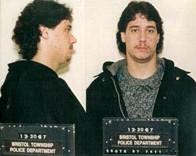 Frank Chester
Murderer · USA · 1987
Frank Chester · October 23, 1968 — Frank Chester was born. · December 14, 1987…
1 victim
Frank Chester
Murderer · USA · 1987
Frank Chester · October 23, 1968 — Frank Chester was born. · December 14, 1987…
1 victim
 Michael Lupo
Serial killer · United Kingdom · 1986
Michael Lupo was a former choir boy in his native Italy. He served in an Italia…
4 victims
Michael Lupo
Serial killer · United Kingdom · 1986
Michael Lupo was a former choir boy in his native Italy. He served in an Italia…
4 victims
- Gender
- male
- Country
- USA
- Location
- Washtenaw County, Michigan, USA
- Date of birth
- J une 17, 1947
- Age at first offence
- 20
- Characteristics
- rape, mutilation
- Victim profile
- Karen Sue Beineman , 18 / Mary Fleszar, 19 / Eileen Adams, 13 / Joan Schell, 20 / Maralynn Skelton, 16 / Dawn Basom, 13 / Alice Kalom, 23 / Roxie Phillips, 17
- Method of murder
- Beating - St abbing - Shooting - Strangulation
- Date(s) of murder
- 1967 - 1969
- Years active
- 1967–1969
- Date of arrest
- August 1969
- Status
-
Life imprisonment
Sentenced to life imprisonment (minimum 20 years) on August 19, 1970
Case record: John Norman Collins
Background
John Norman Collins was implicated in a series of killings targeting students associated with Eastern Michigan University (EMU) in the Ypsilanti/Ann Arbor area of Southeastern Michigan between 1967 and 1969. He was described as a serial killer associated with the “Michigan Murders,” and he was also referred to in connection with “The Michigan Murderer.”
In some accounts, Collins was alleged to be responsible for all but one of the other murders; Roxie Phillips was linked through separate allegations in California.
Collins was a resident of Ypsilanti, Michigan. He was also described as a 30-year-old resident of Ypsilanti, Michigan. Another account described him as a 22-year-old student at Eastern Michigan University, majoring in education when he was arrested for the murder of Karen Sue Beineman.
Collins had been born in Canada in 1947. One account described him as the son of Richard and Loretta Chapman, with an elder brother, Jerry, and a sister, Gail. His father deserted the family after his birth in Windsor, Ontario, on June 17, 1947. Collins’ mother remarried, and his stepfather was described as an abusive alcoholic. Another account stated that Loretta remarried William Collins, who formally adopted the three children. Collins took the man’s last name.
Collins was described as raised as Catholic and as having been an “all-American boy” by his peers. Teachers were described as impressed with his work progress, and he was described as having been bright and attentive, though his grades later slipped.
Collins was described as violent and alcoholic in his marriage, beating his wife and children, and that marriage ended in separation in 1956. Collins was described as having a sexual obsession, including being described as “into” bondage, and as having rages at minor things. He was described in connection with domestic violence: one account described him discovering his pregnant sister with another man, beating the man unconscious, and hitting his sister until she bled, calling her a tramp.
Collins was described as having been expelled from the Theta Chi Fraternity house after being suspected of petty thefts. Another account described him being in Theta Chi until he was asked to leave. He was described as keeping four motorcycles running with stolen parts and as committing burglaries for fun, including grand theft involving a bad check for a camper-trailer.
Collins was also described as having necrophiliac obsession and being linked to returning to crime scenes. He was described as potentially having ideologies about killing without guilt, including statements attributed to him:
“If a person wants something, he alone is the deciding factor of whether or not to take it-regardless of what society thinks may be right or wrong... If a person holds a gun on somebody-it's up to him to decide whether to take the other's life or not. The point is: It's not society's judgment that's important, but the individual's own choice of will and intellect.”
The offence
Collins was implicated in seven killings in the “Michigan Murders” series in the Ann Arbor/Ypsilanti area between 1967 and 1969. The victims were described as female students connected to EMU or the surrounding area.
The victims described in the case record included:
- Mary Fleszar, 19, from Willis, Michigan.
- Joan Schell, 20, from Plymouth, Michigan.
- Jane Mixer, 23, of Muskegon, Michigan (with discussion in the material about whether she was among Collins’ victims).
- Maralynn Skelton, 16, of Romulus, Michigan.
- Dawn Basom, 13, of Ypsilanti, Michigan.
- Alice Kalom, 23, of Portage, Michigan.
- Karen Sue Beineman, 18, of Grand Rapids, Michigan.
The final victim identified in the case record as leading directly to Collins’ conviction was Karen Sue Beineman.
The sexual violence and injuries described for the victims included rape, repeated stabbing, strangulation, shooting, severe beating, and mutilation elements. The case record also included additional details such as:
- Some bodies were described as having been mutilated, including missing hands and feet or mutilated breasts and stomach scalded with caustic liquid (as stated in the material).
- One account described evidence of caustic liquid scalding on Karen Beineman’s body, and that her panties were wadded up and stuffed into her vagina.
- Another account described multiple stab wounds and the cutting or severing of body parts for Mary Fleszar, with missing fingers and severed feet at the ankles.
Victims and methods described for the killings
Mary Fleszar
Mary Fleszar disappeared from outside her apartment block near EMU. She was last seen leaving her apartment to go for a walk on July 9, 1967. Two descriptions were included regarding her disappearance and last sightings, including that a bluish-grey Chevrolet approached her while she walked home and that she shook her head and walked on.
Her body was found on August 7, 1967 near the foundation of a former farmhouse in Superior Township. In one account the farm was near Geddes and LaForge Roads; another part of the material described the farm area as approximately two miles north of Ypsilanti.
The medical examiner described that she had been dead approximately one month. She was described as nude and as having been stabbed repeatedly in the chest, with about thirty stab wounds, with about twenty inflicted by a knife or other sharp object. Her body parts were described as missing, including missing hands and feet, with one hand’s fingers missing, and feet severed at the ankles. The record described bruising and brutal beating, evidence of animals bites, and evidence that the body had been moved at least three times.
A leather and plastic sandal was identified by her mother as belonging to her. Women’s clothing was later described as found beneath corrugated paneling, including an orange dress with white polka dots.
A young man later visited the Moore Funeral Home in Ypsilanti and asked permission to photograph Mary’s body, which was refused. He left without a camera.
Joan Schell
Joan Schell was described as an Eastern Michigan University student from Plymouth, Michigan. One account said she was 20 years old. She was hitchhiking in front of the EMU student union around 10:30 p.m. on July 1, 1968, and failed to return. Her body was found five days later on an Ann Arbor construction site (one account indicated it was found outside Ann Arbor near Glacier Way and Earhart Roads).
Joan Schell was described as having been raped and murdered in a frenzied attack with a knife. The material described multiple stab wounds and that her body appeared to have been in the discovery location less than 24 hours, with part of the body still fresh. Her clothing was described as bunched up around her neck and her throat was slashed. Some details also included her miniskirt being twisted around her neck. The record included that students believed she was seen with a young man, John Norman Collins, and that he was questioned and released based on denial and lack of positive identification.
The material included an allegation that she was last seen getting into a car with three young men, and that one of them was described as a tall clean-cut young man wearing a green EMU T-shirt. In the same material, it was stated that Collins claimed he was “with my mama” at her house in Center Line, Michigan—just north of the Detroit border—at the time, and police accepted his alibi at face value.
Jane Mixer
Jane Mixer was described as a co-ed connected to the University of Michigan and as 23 years old in one portion of the material. Another portion described her as discovered as a body in a boneyard outside Ypsilanti.
One account stated her body was found in Denton Township / a cemetery in Denton Township and described that she was found after being reported missing. The material included an arrival of a 13-year-old schoolboy with a gift-wrapped present near the Ypsilanti cemetery on a date provided in that account, with the discovery of the body of a girl covered with a yellow raincoat. That account stated the body was that of Jane Mixer, and that Ypsilanti police had received a missing persons report about her only a few hours earlier.
Another account stated that Jane Mixer’s corpse was discovered outside Ypsilanti about eight months after Joan Schell’s abduction, and gave March 21, 1969 as a body discovery date.
The material described that Jane Mixer was shot and strangled, and that a .22 caliber gun was involved in one account. It described that her shoes and a copy of Joseph Heller’s novel Catch-22 were placed by her side in one account. It also stated that there was discussion in the material about speculation whether she was among Collins’ victims, based on location and clothing details.
The material also added that in 2005, 62-year-old Gary Leiterman, a former nurse, was convicted of murder in the death of Jane Mixer.
Maralynn Skelton
Maralynn Skelton was described as 16 years old. Her body was discovered in late March 1969 on March 25, 1969 in one account, and she was described as found near Glacier Way and Earhart Roads in another section.
The material described her skull cracked in three places in one part. It also described evidence of flogging with a heavy strap or belt and a stick rammed into her vagina. The material described evidence of flogging before death, and brutal beating about the head and body.
The material also described that she was last seen hitchhiking and that she was known to run with a bad crowd. One account described her as a known drug abuser and described strained relations with her family. Another part described an apartment next door where Collins spent time and suggested a link, including that the apartment was occupied by a friend of Collins.
Dawn Basom
Dawn Basom was described as 13 years old and as from Ypsilanti, Michigan. One account stated she was leaving a house near the EMU campus on April 15, 1969 and found the next day near Gale and Vreeland Roads. Another account gave April 15, 1969 and described that local Sheriff Douglas Harvey ordered the search for Dawn’s clothes to be widened and that her sweater and blouse were found at a deserted farmhouse not far from her home. The record also included that a length of black electrical flex used to strangle her, as well as her blouse and an orange sweater known to have belonged to her, were found in the farmhouse basement.
The material described that Dawn was found half naked, strangled with a black electrical cord or black electrical wire, and that her breasts were nearly cut off in one description. It also described a handkerchief or piece of her blouse stuffed back in her mouth in one section.
A connection was described between Basom’s murder site and earlier body dump locations, including the Mary Fleszar site and the farmhouse.
The material described that investigators found gold-plated earrings at a site and that the killer was thought to have returned to taunt investigators. The barn at the site burned down, and five purple lilac blossoms were discovered nearby. An arsonist was arrested for setting the fire, but the material did not identify how the flowers were explained.
Alice Kalom
Alice Kalom was described as 23 years old and as a graduate in a design or fine arts context in different portions. Her body was found on June 9, 1969 in one account and on June 8 or June 7 in other parts of the material. The material described she was found in a field near Ypsilanti and that she had been shot once in the head and stabbed twice in the chest, as well as raped. One account described her throat slashed.
The material described torn clothes scattered around her body, shoes missing, and that there were details such as a sheer purple strip cut from her blouse tied around her forehead. It also described a purple pump with a bow lying nearby and another shoe missing. Another part described that her murder site was about five miles from the location of the body.
The material included a detail about a deputy discovering brown loafers and two red buttons missing from her raincoat and brownish stains that turned out to be blood matching her type. The record included that the loafers fit the victim’s feet, and that the purple shoes were explained as freshly purchased by her, and also included that her empty shoe box and purse were found in her apartment, suggesting the killer might have been there with her.
Karen Sue Beineman
Karen Sue Beineman was described as 18 years old and an EMU freshman attending summer classes. She lived in Grand Rapids, Michigan. She was described as having written to her parents assuring them she was being careful. She accepted a ride on a motorcycle from a man she did not know. The material described she was last seen on July 23, leaving a wig shop after a midday wig pickup, and missing from her dorm at EMU after curfew.
The body was discovered three days later. The discovery location was described as in a wooded gully in Ann Arbor and near Riverside Drive / Huron River Drive in the material. She was described as strangled, beaten, and sexually abused. The record described her breasts and stomach scalded with some caustic liquid and that her panties were wadded up and stuffed into her vagina. It described that human hair clippings stuck to the panties and that the hairs were from someone other than the victim.
The material described that a total news blackout was ordered and that a tailor’s dummy was put in place of the body to see if the killer returned. Later at about midnight, an officer saw a man running out of the gully and heavy rain and radio problems prevented effective identification.
The material included that a witness identified Collins as the man on the motorcycle after being shown a photograph, and that he was again questioned and released due to lack of evidence.
The hair evidence and stains in the Leik basement were described as leading directly to Collins’ arrest and conviction. The record described blood matching and hair clippings matching those found on the panties left with Beineman.
Investigation
The initial case began with the reporting of Mary Fleszar missing on July 10, 1967 in one account and on July 9, 1967 in another. Her body was discovered on August 7, 1967, after which there were no leads beyond the sighting of a bluish-grey Chevrolet and a young man requesting to photograph her body.
In the material, Joan Schell’s murder generated an investigation that included polygraph testing of her boyfriend, who was released to the MPs. Later in the fall semester, rumors circulated about psychic Jeanne Dixon predicting murders on four Michigan college campuses, and Dixon denied making any such prediction.
After Jane Mixer’s discovery, the material described that in 2005 Gary Leiterman was convicted for the killing of Jane Mixer, after lab reports indicated his DNA on pantyhose of the deceased.
The material described that public criticism increased and police were under intense public criticism after multiple murders in a short time period.
A task force and crime center were established after Alice Kalom’s murder, with case files stored in a building on Washtenaw Avenue that once had been a Catholic seminary.
A citizens group sought assistance from psychic Peter Hurkos. Hurkos arrived on July 21, 1969 and used pictures of the murder scenes in closed envelopes, reciting reconstructions. The material included that he predicted another strike and claimed knowledge about the case, including a predicted location for a body and remarks attributed to him:
“Her face was beat, beat, beat. It was wrinkled, like a monkey face.”
The material also described that Hurkos changed his description of the killer from a man described as blond and baby-faced to one described as six feet tall with dark brown hair. The material also described that Hurkos received a warning note and that a mind game situation developed involving taunting and predictions.
Arrest
After Karen Sue Beineman’s disappearance and discovery, Collins was identified from the motorcycle ride and was questioned. He was initially released due to lack of evidence.
State Police Corporal David Leik returned home after a family vacation and discovered black paint splashed across his basement floor. Leik surmised it was spilled by his wife’s nephew John Collins. Leik then scraped away paint, uncovering brownish stains and found tufts of hair under a washing machine. Lab analysis described the stains as varnish but confirmed hair clippings consistent with those recovered from Beineman’s panties.
The material described a lab confirmation and that Collins was arrested during the time his attorney was taking him away from interrogations.
A search of Collins’ room was described as proving negative for anything solid to link him to the murders, and his roommate Arnold Davis testified about a box containing women’s clothing and handbags being disposed of, as well as Collins being a habitual thief.
The material also described that blood matching Alice Kalom’s type was found near the front seat of Collins’ car, and that a red-and-white piece of cotton fabric matched a belt around the throat of a 17-year-old female murdered in June in California (Roxie Phillips). It described that Collins had traveled to California and had been linked to Roxie Phillips through allegations, and that the State of California declined to extradite him for trial for the murder of Roxie Phillips.
Trial
Collins was charged only with the murder of Karen Sue Beineman. The material stated it was impossible to collect enough evidence to charge him regarding the other cases.
The trial of John Norman Collins opened in Washtenaw County Court in Ann Arbor on June 2, 1970 in one portion, and on June 30, 1970 in another portion. The material also stated the prosecutor was William F. Delhey and the defense lawyer was Joseph Louisell from Detroit, with mention that Louisell had a partner Neil Fink. It also stated Collins’ mother originally hired a lawyer Richard Ryan, who refused to disclose what an off-the-record polygraph test revealed and had doubts about Collins. Collins’ mother fired Ryan and replaced him with Louisell and Fink.
The evidence described included hair comparisons: Walter Holz, a graduate chemist, testified about hairs found on the basement floor matching hairs found in Beineman’s panties. The record also described that Public Health employee Curtis Fluker matched type A blood found in the Leik basement to the same type blood taken from the victim, with failure to do further subtyping.
The record included challenges by the defense about hair identification being impossible and about certainty of hair analysis on minute samples. It also described debates about neutron activation analysis and chemical properties of hair.
The material also described defense witness testimony about Collins’ whereabouts on July 23, 1969 and that alibi witnesses did not offer a definitive time frame. It also described testimony including that Collins was identified by multiple witnesses as riding with Beineman between 12:30 and 1:00 and that the trace evidence confirmed Beineman’s presence in the basement of the Leik home.
Witness selection took nearly two weeks. In total, 57 witnesses were called for 17 days of testimony.
There was also mention of Collins being unable to stand up to Fink’s prosecutorial role-playing and his anger. The defense sought to confer with Collins and his mother in chambers, and Louisell said there were no further witnesses when both sides rested.
In sentencing, Collins denied ever knowing Karen Sue Beineman and claimed he was innocent of her murder.
Sentencing
On August 19, 1970, the jury returned a unanimous verdict of guilty of first degree murder.
On August 23, 1970, Collins was sentenced to life imprisonment with no possibility of parole, with a minimum of 20 years to be served, with hard labour in one account. Another portion summarized it as “Sentenced to life imprisonment (minimum 20 years) on August 19, 1970.”
The record described that Collins was consigned to prison for a term of twenty years in the context of the Beineman murder conviction.
Appeals
The material stated that Collins went through three appeals. It also stated that he changed his name to Chapman to get a transfer to Canada, where he would have been eligible for parole in 1985.
The material also included that Collins tried to escape by tunneling out of prison.
Outcome
Collins was found guilty and convicted of the murder of Karen Sue Beineman. He was sentenced to life imprisonment (minimum 20 years) on August 19, 1970.
A grand jury indictment against him was described for the murder of a young girl in Monterey, California named Roxie Phillips. The material stated that California declined to extradite Collins, and that at the time the case did not warrant priority attention, while the indictment had been delivered during the investigation.
The murders of the other six girls remained officially unsolved in the material.
Aftermath
The material described that Collins changed his last name to Chapman in the early 1980s to his mother’s maiden name. His mother died in 1988.
The record described that Collins was incarcerated in northern Michigan as of 1999, and also described that he was currently serving his life sentence in the Marquette Branch Prison in Marquette, Michigan, in the Upper Peninsula in the material. It also described that he applied numerous times to be transferred to a Canadian prison and that requests were denied.
The material described additional case developments:
- In 2005, 62-year-old Gary Leiterman, a former nurse, was tried and convicted of the killing of Jane Mixer.
- Leiterman came to the attention of authorities because a lab report showed his DNA was found on the pantyhose of the deceased.
- The record included criticism and discussion about the DNA evidence and mention of a possible match to convicted killer John Ruelas, who was only four years old at the time, plus commentary about transference concerns.
- The material included testimony involving handwriting comparison of two words on the cover of a phone book found in the basement of Michigan’s law dormitory, including a quote from Lt. Thomas Riley:
“It's my opinion that it is highly probable Gary Earl Leiterman wrote the 'Muskegeon,' 'Mixer' entries on the phone book.”
Other details from the Leiterman trial included mention of his work as a pharmaceutical salesman and his living about 20 miles from the University of Michigan at the time of the murder, and that the prosecution offered no explanation regarding Ruelas’ alleged DNA match given his age and distance at the time.
Timeline
- July 9, 1967 — Mary Fleszar was last seen leaving her apartment near the EMU campus to go for a walk.
- August 7, 1967 — Mary Fleszar’s badly decomposed body was found near the foundation of a farmhouse in Superior Township.
- July 1, 1968 — Joan Schell was last seen hitchhiking in front of the EMU student union around 10:30 p.m.
- Five days later (1968) — Joan Schell’s body was found on an Ann Arbor construction site.
- March 21, 1969 — Jane Mixer’s corpse was found (described as a body discovery date in one part of the material).
- March 25, 1969 — Maralynn Skelton’s body was found near the scene of Joan Schell’s murder.
- April 15, 1969 — Dawn Basom’s body was found by the roadway.
- Early April 1969 — Officers returned to search a farmhouse second time and discovered articles of female clothing.
- June 9, 1969 — Alice Kalom’s body was found in a vacant field near Ypsilanti.
- July 23, 1969 — Karen Sue Beineman went missing from her dorm after leaving a wig shop.
- Three days later (1969) — Karen Sue Beineman’s body was discovered in a wooded gully.
- August 19, 1970 — Collins was found guilty unanimously of first degree murder.
- August 23, 1970 — Collins was sentenced to life imprisonment with a minimum of 20 years (hard labour stated in one account).
Other details
- The material described a coed murderer nicknamed “the Co-ed Slayer,” including press references to “Ypsilanti coed slayer.”
- A person attempting to photograph a corpse in the Moore Funeral Home visit was described as visiting and leaving after being denied.
- The material described black spray paint and varnish stains in David Leik’s basement, hair clippings near a washing machine, and bloodstains discovered during the scraping process.
- The material described that Collins led detectives to evidence in apparent haste to cover what he thought were bloodstains.
- The material described an account of a wig shop manager warning a victim not to go with a stranger and recognizing her from a photograph.
- The material described a composite sketch after a police officer saw a man stop by a mannequin placed in the gully and then run out during heavy rain.
- The material described that State Police Corporal David Leik was related to Collins as uncle in some sections.
- The material included repeated narrative about psychic Peter Hurkos arriving on July 21, 1969 and making predictions and statements, including the quoted line about the victim’s face being “beat, beat, beat.”
Spotted an error, or have more information about this case?