
Jesse Caleb Compton
Murderer Russell Ellwood
Murderer · USA · 1991
Russell Ellwood was a former taxi driver. Authorities suspected him of killing…
20 victims
Russell Ellwood
Murderer · USA · 1991
Russell Ellwood was a former taxi driver. Authorities suspected him of killing…
20 victims
 Robert Martines Perez
Murderer · USA · 1994
Name: Robert Martines Perez · Other name used in proceedings: Robert Martinez P…
15 victims
Robert Martines Perez
Murderer · USA · 1994
Name: Robert Martines Perez · Other name used in proceedings: Robert Martinez P…
15 victims
 Billy Frank Vickers
Murderer · USA · 1993
Billy Frank Vickers Vickers was executed by lethal injection in Texas on Januar…
14 victims
Billy Frank Vickers
Murderer · USA · 1993
Billy Frank Vickers Vickers was executed by lethal injection in Texas on Januar…
14 victims
 David John Copeland
Murderer · United Kingdom · 1999
David John Copeland was born in Isleworth, in the London Borough of Hounslow, a…
3 victims
David John Copeland
Murderer · United Kingdom · 1999
David John Copeland was born in Isleworth, in the London Borough of Hounslow, a…
3 victims
 Omar Blanco
Murderer · 1982
Omar Blanco (also known as Omar Curro) was tried in the Seventeenth Judicial Ci…
1 victim
Omar Blanco
Murderer · 1982
Omar Blanco (also known as Omar Curro) was tried in the Seventeenth Judicial Ci…
1 victim
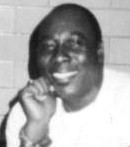 Willie Darden
Murderer · USA · 1973
Willie Jasper Darden (also identified as Willie Jasper Darden, Jr.) was convict…
1 victim
Willie Darden
Murderer · USA · 1973
Willie Jasper Darden (also identified as Willie Jasper Darden, Jr.) was convict…
1 victim
 Frederick Smallwood
Murderer · USA · 1995
Frederick B. Smallwood (also known as Frederick B. Smallwood, Sr.) was convicte…
1 victim
Frederick Smallwood
Murderer · USA · 1995
Frederick B. Smallwood (also known as Frederick B. Smallwood, Sr.) was convicte…
1 victim
 Sharon Flanagan
Murderer · USA · 2012
Name: Sharon Flanagan · Role: Mother of the victim · Legal outcome: Found guilt…
1 victim
Sharon Flanagan
Murderer · USA · 2012
Name: Sharon Flanagan · Role: Mother of the victim · Legal outcome: Found guilt…
1 victim
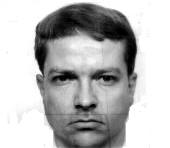 Daniel Lee Corwin
Serial killer · USA · 1987
Daniel Lee Corwin was a Texas death row inmate. Corwin was executed at lethal i…
3 victims
Daniel Lee Corwin
Serial killer · USA · 1987
Daniel Lee Corwin was a Texas death row inmate. Corwin was executed at lethal i…
3 victims
- Gender
- male
- Country
- USA
- Location
- Lane County, Oregon, USA
- Date of birth
- December 31, 1976
- Age at first offence
- 21
- Characteristics
- child abuse, torture, rape
- Victim profile
- Tesslynn O'Cull, 3 (the daughter of his live-in girlfriend)
- Method of murder
- Beating
- Date(s) of murder
- June 14, 1997
- Years active
- 1997
- Date of arrest
- 3 days after
- Status
-
Sentenced to death
Sentenced to death in 1998
Name
Jesse Caleb Compton
Status
Jesse Caleb Compton was sentenced to death in 1998.
Timeline
- June 14, 1997 — Tesslynn O'Cull was found dead in the bedroom of the apartment between midnight and 2:00 a.m. on June 14, 1997; Compton tried to revive her with CPR, struck her on the left side of the chest with his fist, applied a frayed, live electrical cord to her chest, and splashed her with cold water.
- June 14, 1997 (after death) — Compton and Stella Kiser agreed to leave the body in the bedroom while they thought about what to do, and they buried Tesslynn with the help of Compton's sister.
- June 16, 1997 — Compton's sister told the Springfield Police Department that she had helped Compton and Kiser bury Tesslynn's body in the Sweet Home, Oregon area two days earlier.
- June 17, 1997 (early morning) — Springfield police officers found the child's body buried in a shallow grave near a logging road in the area described by Compton's sister, unearthed the body, and arranged for an autopsy.
- April 30, 1999 — Stella Kiser was sentenced to life without possibility of parole on her aggravated murder conviction at her second trial.
- November 5, 2001 — The Oregon Supreme Court case was argued and submitted.
- 2002 (Filed) — The Oregon Supreme Court decision was filed February 7, 2002.
- Thursday (penalty phase) — A jury deliberated just 4 hours in the penalty phase of Compton's aggravated murder trial.
People involved
- Jesse Caleb Compton — Defendant; stepfather of Tesslynn O'Cull; convicted child killer; sentenced to death in 1998.
- Tesslynn O'Cull — Victim; child abuse victim; murdered; age three (3) years; also referred to as Tesslynn Elizabeth O'Cull.
- Stella Kiser (also named Stella Ann Kiser and Stella Ann Kiser) — Victim’s mother; lived with Tesslynn and Compton; convicted of aggravated murder; sentenced to life without possibility of parole.
- Stella Kiser — Described as Stella Kiser, 22 in connection with the trial portrayal and also as Stella Kiser, 23 in connection with the later trial scheduling.
- Compton's sister — Told the Springfield Police Department that she had helped bury Tesslynn's body.
- Ken O'Cull — Grandfather of Tesslynn O'Cull.
- Robert Gorham — Assistant District Attorney; accused Compton in Lane County Circuit Court.
- Lyle Velure — Lane County Circuit Judge; read the ruling by a jury.
- Rich Mullen — Defense attorney for Compton; argued that the girl's death resulted from "inappropriate, misguided medical care."
- Deputy District Attorney Bob Gorham — Called Compton "merciless" after the verdict.
- Mary M. Reese — Deputy Public Defender; argued the cause for appellant in the Oregon Supreme Court.
- David Groom — State Public Defender; on the briefs for appellant.
- Jennifer Scott Lloyd — Assistant Attorney General; argued the cause for respondent in the Oregon Supreme Court.
- Hardy Meyers — Attorney General; on the briefs for respondent.
- Michael D. Reynolds — Solicitor General; on the briefs for respondent.
- Kathleen Cegla, Stacey RJ Guise, Robert B. Rocklin — Assistant Attorneys General; on the briefs for respondent.
- LEESON, J. — Justice; authored the Oregon Supreme Court decision affirming the judgment of conviction and sentence of death.
- Burk — Prospective juror who stated beliefs during jury questionnaire and voir dire.
- Compton’s mother — Named only by role; described as a nurse.
- Detectives and prosecutors — Springfield police investigators described the murder case as the worst case of child abuse they had ever seen.
The offence
Charges and indictment language
Compton was indicted on six counts of aggravated murder, murder by abuse, first-degree sexual penetration, and second-degree abuse of a corpse.
Count 1 of the indictment charged aggravated murder as follows:
"The defendant, * * * on or about the 14 th day of June, 1997, in the county aforesaid, in the course of or as a result of intentional maiming or torture of Tesslynn O'Cull, age three (3) years, did unlawfully and recklessly, under circumstances manifesting extreme indifference to the value of human life, cause the death of Tesslynn O'Cull, another human being; and defendant * * * previously engaged in a pattern or practice of assault or torture of Tesslynn O'Cull or another child under 14 years of age; contrary to statute and against the peace and dignity of the State of Oregon[.]"
Conduct attributed to Compton
Compton began abusing Tesslynn after Stella Kiser moved in with him in early 1997. Compton frequently hosted "drug parties" at his apartment, some lasting for several days. He prepared methamphetamine for smoking by melting it with a small propane torch, and on at least one occasion held the lighted torch close to his hand to show his friends that he could withstand a great deal of pain.
The abuse included:
- hitting Tesslynn on her buttocks and back with a wooden spoon, a spatula, and a belt
- visitors observed Compton slap her in the face, drag her by her hair, force her to stand in the corner for long periods of time, and make her take long, cold baths or showers
- Compton called Tesslynn disparaging names and kept her in the bedroom during the drug parties
- visitors could hear the child cry for hours after Compton had been in the bedroom with her, and Compton would not permit others to go into the bedroom to help her
- around two months before Tesslynn’s death, Compton broke four vertebrae in her back
- after that, Compton forcefully penetrated her vagina with an object
- Compton inflicted burns on her back, buttocks, and genitals using an open flame; some burns became infected and Compton poured rubbing alcohol into them
- Compton inflicted smaller round burns on her legs
- during the two-week period before her death, Compton immobilized Tesslynn 10 to 15 times by placing her hands and feet over her head and tying them together with ropes, cords, or strips of cloth, leaving her tied up for eight to ten hours at a time
Within 24 hours preceding her death, Compton struck Tesslynn in the head several times, causing bruising to her brain, and either punched her in the abdomen or stomped on her with his foot, causing severe internal injuries. Compton scraped and bruised her abdomen with a fork.
Evidence described that Tesslynn suffered scores of injuries from head to foot over a period of up to 8 weeks before she died, including:
- shock caused by a combination of injuries
- fluid loss from 3rd-degree burns and from internal bleeding
- burns caused by a propane torch used to smoke methamphetamine
- internal bleeding from a heavy blow or from being stomped within a day of her death
On June 14, 1997, Compton found Tesslynn dead in the bedroom of the apartment between midnight and 2:00 a.m. He cut her loose from restraints and tried to revive her with CPR. He struck her in the left side of the chest a few times with his fist, applied a frayed, live electrical cord to her chest, and splashed her with cold water, and he was unable to revive her.
Compton and Kiser agreed to leave the body in the bedroom while they thought about what to do, and they eventually buried the body with help of Compton's sister.
Investigation
Burial and discovery
On the evening of June 16, 1997, Compton’s sister told the Springfield Police Department that she had helped Compton and Kiser bury Tesslynn’s body in the Sweet Home, Oregon area two days earlier.
Early on the morning of June 17, 1997, Springfield police officers found the child's body buried in a shallow grave near a logging road in the area described by Compton’s sister.
Autopsy and autopsy findings
The medical examiner who conducted the autopsy concluded that Tesslynn had died of shock and listed the cause of death as "battered child syndrome."
Evidence found in the grave
In the grave, police found:
- a piece of cloth that appeared to be torn from a curtain
- a strip of gray cloth
- a blue braided belt
- a woman's ring with a pink stone in it
Evidence found in and around Compton’s apartment
Police officers went to Compton’s apartment that afternoon. They advised Compton of his Miranda rights and obtained his permission to enter and to look around. Most of the apartment was dirty and smelled bad, with holes in the walls made by punching when angry or by throwing knives.
In subsequent searches, police found:
- drug paraphernalia
- drug residue
- a propane torch
- a lamp with a cut cord
- a pair of pliers with burn residue on it
- rubbing alcohol bottles
- white cloths with knots in them
In a search of a dumpster near Compton’s apartment, police found two trash bags that contained:
- a Mother’s Day card for Kiser
- child’s clothing
- an electrical cord that had been cut and had a frayed end
- a blue cloth
- a white cloth
- a shoestring with knots in them
- a rope
The cloth and shoestring had hair mixed in the knots, and some of the cloth police found was similar to cloth found in the child's grave.
Arrest
Compton was advised of his Miranda rights when Springfield police officers obtained his permission to enter his apartment and look around.
Trial
Proceedings and jury
Compton sat motionless in Lane County Circuit Court as Assistant District Attorney Robert Gorham accused him of a series of acts in the girl's death.
In opening statements:
- Assistant District Attorney Robert Gorham apologized to the 6-man, 6-woman jury for the grisly facts he said the testimony and exhibits would show, and he told the jury:
"I'm sorry that I have to tell you about these things,"
"You must face the reality of this case."
Gorham described that Compton and Kiser met and quickly moved into a Springfield apartment, where they used methamphetamine daily. Gorham said Compton assumed the role of disciplinarian for Tesslynn and abused the child for months. Gorham described injuries including a broken back, ruptured liver, rope burns around her wrists and ankles, sexual abuse, stab wounds, and bruises. He said:
"There are 64 different talking points I have written down on the autopsy report," he said.
"There are more injuries than that. She has an injury on every part of her body."
Compton reportedly identified round burns on Tesslynn’s lower back and buttocks and on her vagina and rectum as chemical burns, and he said an overzealous spanking had broken her skin. He also said that when he and Kiser determined sores had become infected, they poured a large amount of rubbing alcohol on the area. Gorham told jurors he would prove burns came instead from a hand-held propane torch Compton kept in the apartment to smoke methamphetamine.
In opening statements, defense attorney Rich Mullen argued Compton should have been charged only with murder by abuse instead of aggravated murder, and he said the girl's death was a result of "inappropriate, misguided medical care."
Jury verdict and sentencing phase
A jury convicted Compton of all counts.
During the penalty phase, the jury deliberated just 4 hours Thursday. Compton did not react as Lane County Circuit Judge Lyle Velure read the ruling.
Compton, 21, shook hands with defense lawyer Rich Mullen before being handcuffed by deputies and led from the courtroom. After the verdict, Deputy District Attorney Bob Gorham called Compton "merciless."
After the verdict, Gorham acknowledged the extreme brutality of the crime and the impact of testimony and graphic photographs on jurors:
"The injuries to this child were never completely described in the media. I'm happy the community was not subjected to what was done to her,"
One woman on the jury was excused during the final argument when she began to weep uncontrollably and to say repeatedly:
"God, that poor baby."
A man who was one of four alternates selected for the trial took her place.
Ken O'Cull thanked the 7-man, 5-woman jury, saying:
"They had the hardest job in the world. They just took somebody's life. But he deserved it."
Sentencing
Compton was sentenced to death.
Defense counsel argued that a murder by abuse conviction carries a minimum prison sentence of 25 years without parole.
Juror excusal during final argument (emotional reaction)
During the final argument, one juror wept uncontrollably and said repeatedly:
An alternate replaced her.
Appeals
Oregon Supreme Court review
The Oregon Supreme Court conducted an automatic and direct review of the judgment of convictions and sentence of death imposed by the Circuit Court of Lane County.
In the Oregon Supreme Court, Compton sought reversal of his convictions for aggravated murder, murder by abuse, two counts of sexual penetration in the first degree, and one count of abuse of a corpse in the second degree. In the alternative, he asked the court to vacate his sentence of death and to remand for resentencing.
The Oregon Supreme Court:
- affirmed the judgment of conviction and sentence of death
- held that the judgment of conviction and sentence of death were affirmed
In the decision, the court addressed pretrial issues including:
- denial of a demurrer to Count 1 based on vagueness arguments regarding ORS 163.095(1)(e)
- denial of a motion to prohibit the death penalty based on ORS 163.150(1)(a) (1995) jury-discretion arguments
- denial of a motion to excuse juror for cause related to prospective juror Burk’s statements and answers
- exclusion of nonregistered voters and felons from the jury panel based on Oregon Laws 1997, chapter 313, section 9b (E) and (F) (SB 936)
Trial-phase procedural issues addressed in the Oregon Supreme Court
Compton raised multiple assignments of error in the guilt phase, and the Oregon Supreme Court rejected them without further discussion.
Penalty-phase procedural issues addressed in the Oregon Supreme Court
Denial of motion for mistrial
At sentencing, Compton argued for a mistrial after the prosecutor’s closing argument.
The prosecutor argued, in part:
"Deliberately means a state of mind that examines and considers the contemplated act * * * [and] whether that act should or shouldn't be done. Deliberation is present if the thinking is done in a cool mental state under such circumstances and for such period of time as to permit a careful weighing of the proposed decision. "I want you to - unfortunately, I am going to draw you back a little bit to what was going on in that home the last few days of Tesslynn's life. "What we know pretty clearly is there was a violent blow at least to her back and perhaps a violent blow to her abdomen that caused internal bleeding. We know she was sexually abused as she was vaginally penetrated within the last couple days of her life. "We know the night she died she was tied up with her legs up over her head. We know she had vomited. By all accounts the abdominal bleed was apparently causing her some distress and we know, I think logically, that the defendant was well aware that the child was in some severe distress, and that alone might be enough for deliberation but I want you to think about the condition that this little girl was in when those terrible injuries in and of themselves were inflicted on her. "You can look at the pictures and see that the labia is essentially burned off, and whether or not it's burned off by boiling water poured over her anal area when she was tied up, or whether or not it's burned off by * * * a propane torch doesn't really matter. " When [defendant] is sexually abusing her he is looking at the full sight, sound[,] smell, package of that child. She must have begged for mercy. She must have expressed the terrible pain she felt, and he went on anyway . "I guess she was probably crying when he stomped on her back, and think about what he was stomping on, a little girl, 31 pounds, damaged almost beyond repair, beaten repeatedly, fed occasionally, tied up, sexually abused, burned with cigarettes, for weeks even months. "Did he deliberately do those acts? What other word would you put with it? He extremely deliberately did those acts. He knew exactly what he was doing. Was it reasonable for him to expect her to die? Could she survive another week in this household? Would she have lived another week? Ask yourself that. Probably not. Would she have lived another month? No. Was he going to kill her one day or another? " Think about what she must have felt in the bedroom, internally bleeding, tied up while her mother and [defendant] partied in the other room. What a terrible, torturous, brutal way to die. It would be terrible for all of us for adults, but for a little girl just turned three years old the week before, it must have been much more terrifying, much more hard to understand . "Were the acts deliberate? Absolutely." (Emphasis added.)"
The trial court denied Compton’s motion for a mistrial, and an alternate juror replaced the juror who had begun to cry. The Oregon Supreme Court rejected Compton’s arguments and affirmed.
Death sentence authority argument
Compton contended that deliberateness was not pleaded in the indictment and thus the trial court lacked authority to submit the issue to the jury and impose a death sentence. He also argued subject matter jurisdiction could be raised at any stage and requested review as error apparent on the face of the record.
The Oregon Supreme Court rejected the claim and affirmed the sentence of death.
Outcome
The judgment of conviction and sentence of death were affirmed.
Other details
Victim details
Tesslynn Elizabeth O'Cull’s dates were given as June 8, 1994–June 14, 1997.
Tesslynn’s body was found buried in a shallow grave in some woods near Sweet Home. It was 5 days after her 3rd birthday.
Her image was used in the Stop the Abuse poster for Oregon.
Tesslynn was beaten, burned, bound, sexually assaulted, starved, tortured, and brutalized by her stepfather Jesse Compton and mother Stella Kiser in the days leading to her death.
Her back was broken 2-3 weeks prior to her death, and rubbing alcohol had been poured into open wounds on her body.
Background around the couple and alleged knowledge
Early in 1997, Stella Kiser and her daughter (2 and-a-half year-old O'Cull) began living with Jesse Caleb Compton.
Compton hosted “drug parties” in his apartment, and they used methamphetamine daily.
Prosecutors said:
- Compton inflicted most injuries
- Kiser knew about the abuse and occasionally tied up the child
Both defendants acknowledged in statements to police that they sought no medical help for the child, even though Compton’s mother was a nurse and the couple’s apartment was near a fire station with medics on duty around-the-clock.
Statements attributed to attorneys and officials
Deputy District Attorney Bob Gorham called Compton “merciless.”
In response to the verdict, Gorham said:
Defense attorney Rich Mullen said the girl's death was a result of "inappropriate, misguided medical care."
Dates and additional trial scheduling detail for Stella Kiser
Kiser was scheduled for trial Nov. 17 on charges including aggravated murder in the narrative given.
Her first trial ended in a mistrial, and at her second trial she was sentenced on April 30, 1999 to life without possibility of parole.
Spotted an error, or have more information about this case?