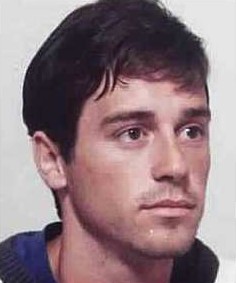
Robert Baltovich
Murderer?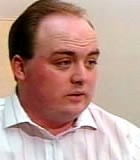 Richard Allen Williams
Murderer? · USA · 1992
Boone County Prosecutor Kevin Crane dismissed the charges in August 2003 after…
10 victims
Richard Allen Williams
Murderer? · USA · 1992
Boone County Prosecutor Kevin Crane dismissed the charges in August 2003 after…
10 victims
 Dr. Teet Härm
Murderer? · S weden · 1984
The District Court jury returned a guilty verdict, but the High Court overturne…
9 victims
Dr. Teet Härm
Murderer? · S weden · 1984
The District Court jury returned a guilty verdict, but the High Court overturne…
9 victims
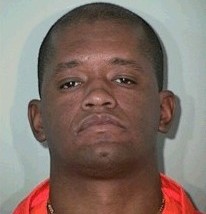 Andre Minnitt
Murderer? · USA · 1992
Andre Minnitt was convicted of crimes connected to the El Grande Market slaying…
3 victims
Andre Minnitt
Murderer? · USA · 1992
Andre Minnitt was convicted of crimes connected to the El Grande Market slaying…
3 victims
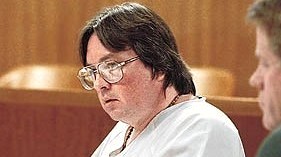 Floyd Tapson
Murderer? · USA · 1987
Floyd Tapson was convicted by a jury in the Thirteenth Judicial District Court,…
3 victims
Floyd Tapson
Murderer? · USA · 1987
Floyd Tapson was convicted by a jury in the Thirteenth Judicial District Court,…
3 victims
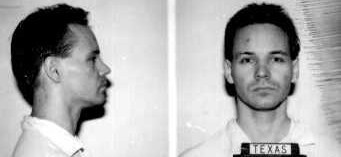 Michael Roy Toney
Murderer? · USA · 1985
Michael Roy Toney (December 29, 1965 – October 3, 2009) · Name as recorded: Mic…
3 victims
Michael Roy Toney
Murderer? · USA · 1985
Michael Roy Toney (December 29, 1965 – October 3, 2009) · Name as recorded: Mic…
3 victims
 Jake Fahri
Murderer · United Kingdom · 2008
Jake Fahri was convicted in March 2009 of the murder of Jimmy Mizen. Jimmy Mize…
1 victim
Jake Fahri
Murderer · United Kingdom · 2008
Jake Fahri was convicted in March 2009 of the murder of Jimmy Mizen. Jimmy Mize…
1 victim
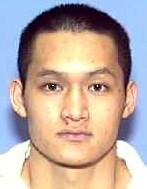 Chuong Duong Tong
Murderer · USA · 1997
Name: Chuong Duong Tong · TDCJ Number: 999260 · Date of Birth: 10/21/76 · Date…
1 victim
Chuong Duong Tong
Murderer · USA · 1997
Name: Chuong Duong Tong · TDCJ Number: 999260 · Date of Birth: 10/21/76 · Date…
1 victim
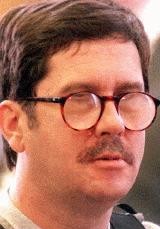 Lewis Lent
Murderer · USA · 1983
Lewis Lent was sentenced to life in prison without parole in Massachusetts in 1…
8 victims
Lewis Lent
Murderer · USA · 1983
Lewis Lent was sentenced to life in prison without parole in Massachusetts in 1…
8 victims
- Gender
- male
- Country
- Canada
- Location
- Scarborough, Ontario, Canada
- Date of birth
- J uly 17, 1965
- Age at first offence
- 25
- Characteristics
- the body was never found
- Victim profile
- Elizabeth Marie Bain, 22 (his girlfriend)
- Method of murder
- ???
- Date(s) of murder
- June 19, 1990
- Years active
- 1990
- Date of arrest
- November 19, 1990
- Status
-
Acquitted / overturned
Found not guilty in a retrial on April 22, 2008
Background
Robert Baltovich was a Canadian man born July 17 1965. He was educated at the University of Toronto at Scarborough and graduated with a degree in psychology and history. He met and developed a relationship with Elizabeth Bain at the university.
In June 1990, Baltovich was 24 years old and had majored in psychology. He was hoping to land a summer job and spend some time considering graduate school.
Elizabeth Bain was a 22-year-old student at the University of Toronto's Scarborough campus. Her parents were Ricardo Bain and Julita Bain.
The offence
Elizabeth Bain disappeared on June 19, 1990. She told her mother she was going to “check the tennis schedule” on campus. On June 22, her car was found with a large bloodstain in the back seat. Her body was never found.
Baltovich was arrested and charged with first-degree murder on November 19, 1990. He was convicted of second-degree murder on March 31, 1992. During his first trial, the Crown Attorney John McMahon portrayed Baltovich as a jealous and obsessed boyfriend who murdered Bain when she tried to break off their relationship. Baltovich’s lawyer William Gatward argued that the evidence suggested someone other than his client could have killed Elizabeth, including the “unidentified blond man” several witnesses had reportedly seen her with before she disappeared. Gatward also raised the possibility that the so-called “Scarborough rapist” could have been involved and argued that the rapist last struck in May 1990 and had not been known to have attacked anyone since Bain disappeared.
Investigation
After Bain’s disappearance, police, her family and volunteers conducted massive searches of ravines, wooded areas and creeks throughout the Toronto region. Elizabeth Bain’s body has never been found.
During the summer of 1990, homicide investigators employed a controversial method described as “hypnotically enhanced memory” with several witnesses who saw Bain or Baltovich before she disappeared. Witnesses were hypnotized and questioned about their recollections.
On July 25, 1990, police searched Baltovich’s house and impounded his car. They seized several letters between Bain and Baltovich, some of his personal writings, a magazine, and several items of his clothing. The Baltovichs' phone was bugged.
On June 24, 1990, Baltovich provided police with forensic samples. Detective Sergeants Steve Reesor and Brian Raybould interviewed him for several hours. Afterwards, Reesor created a list citing 10 discrepancies with Baltovich’s version of events.
On June 22, 1990, Bain’s silver 1981 Toyota Tercel was found parked outside an auto body shop just a kilometre from her home. There was a large bloodstain on the floor of the backseat. The Metro Toronto Police homicide squad took over the investigation, and Baltovich was put under surveillance.
On June 19, 1990, Elizabeth Bain, 22, vanishes sometime in the early evening. Her mother Julita Bain said she last saw her daughter at 4 p.m.
On June 20, 1990, Julita Bain reported her daughter missing to police at 6:45 a.m. Tuesday, June 19, 1990.
On July 11, 1990, on what would have been Elizabeth Bain’s 23rd birthday, her parents Ricardo and Julita Bain held a press conference in the backyard of their suburban Toronto home and begged her abductor to bring her home or reveal where her body may be found.
Arrest
On Nov ember 19, 1990, Robert Baltovich was arrested and charged with first-degree murder.
Trial
First trial (1992)
On Feb. 4, 1992, Baltovich's first trial began before Justice John O'Driscoll. The trial lasted six weeks and jurors heard testimony from more than 100 witnesses. The charge against Baltovich was dropped to second-degree murder. Baltovich pleaded not guilty.
On March 31, 1992, the jury found Robert Baltovich guilty of second-degree murder. Elizabeth’s parents, Ricardo and Julita Bain, told reporters they were relieved by the verdict and hoped Baltovich would tell authorities where they could find Elizabeth’s body. Baltovich was later sentenced to life in prison.
Timeline
- July 11, 1990 — Ricardo Bain and Julita Bain held a press conference in the backyard of their suburban Toronto home and begged Elizabeth Bain’s abductor to bring her home or reveal where her body may be found.
- July 25, 1990 — Police searched Baltovich’s house and impounded his car, seizing letters between Bain and Baltovich, personal writings, a magazine, items of clothing, and bugged the Baltovichs’ phone.
- November 19, 1990 — Baltovich was arrested and charged with first-degree murder.
- Feb. 4, 1992 — Baltovich’s first trial began before Justice John O'Driscoll.
- March 31, 1992 — The jury found Baltovich guilty of second-degree murder; Baltovich was later sentenced to life in prison.
- March 31, 2000 — Baltovich was released on bail pending an appeal of his March 31, 1992 conviction.
- April 19, 2004 — Baltovich’s appeal hearing was scheduled to begin, then was delayed until September.
- September 20, 2004 — The Ontario Court of Appeal began a hearing into Baltovich’s conviction in the death of Elizabeth Bain.
- December 2, 2004 — The Ontario Court of Appeal set aside the conviction and ordered a new trial.
- July 15, 2005 — Ontario’s Ministry of the Attorney General announced Baltovich would face a new trial on a charge of second-degree murder and remain free on bail.
- April 21, 2010 — A civil suit alleging malicious prosecution, negligent investigation and negligent representation was filed on behalf of Baltovich, naming John McMahon, Paul Amenta, Brian Raybould and Steve Reesor as defendants.
- January 2010 — The Attorney-General concluded that the payment of financial compensation was not appropriate.
- April 22, 2008 — Jury selection began for the second-degree murder trial on March 31, 2008, and on April 22, 2008 Justice David McCombs directed the jury to acquit after the Crown declined to call evidence; the jury returned a not guilty verdict.
Sentencing
On March 31, 1992, Baltovich was sentenced to life in prison following his conviction for second-degree murder.
Appeals
The appeal process resulted in multiple dated events.
On May 16, 1996, Baltovich’s lawyers filed materials with the Ontario Court of Appeal described as fat, sealed envelopes containing “fresh evidence” obtained between 1992 and 1996. A 113-page memorandum was submitted in late May. The memorandum stated that it did not make reference to Paul Bernardo by name, but stated the defence position that “another individual, other than the appellant, committed the offence.” It also stated that the new evidence related to the evidence adduced at trial concerning the “Scarborough rapist.”
In February 1997, Baltovich’s appeal was scheduled to begin but was postponed indefinitely.
In March 1992, Baltovich’s new lawyer Brian Greenspan filed an appeal of the case; the notice cited 22 grounds for why Baltovich’s conviction should be set aside, including problems with the judge's address to the jury and the use of “hypnotically enhanced memory” testimony of witnesses. Baltovich was denied bail pending his appeal.
On March 15, 2000, by that time James Lockyer, director of the Association in the Defence of the Wrongfully Convicted, had joined Baltovich’s defence team. On March 15, 2000, a 390-page defence brief was filed with the Ontario Court of Appeal. During the bail hearing, Baltovich’s lawyers argued there was new evidence suggesting he did not kill Elizabeth Bain, and they contended Paul Bernardo did it. They argued Baltovich must be released on bail while he waited for his appeal. Some details of the new evidence were described as unable to be revealed because of a publication ban. Brian King described it at the time as: “It’s based on an overwhelming amount of a lot of different things. Not just one thing like forensic evidence, but say a combination of interviews and information that has come forward since the trial.”
On March 31, 2000, exactly eight years after being convicted, Baltovich was released on bail pending an appeal of his March 31, 1992 conviction. Baltovich told reporters: “It’s a great feeling,” and “Jail isn't a pleasant place.” In Justice Marc Rosenberg’s written reasons, he said: “the case against the applicant was wholly circumstantial.” Rosenberg also wrote that Baltovich’s lawyer James Lockyer had “urged me to approach this case on the basis that there is a reasonable possibility that an innocent man has been convicted.”
On April 24, 2003, Justice Marc Rosenberg ruled that Baltovich’s lawyer James Lockyer could not participate in the portion of the Baltovich appeal in which Paul Bernardo was portrayed as the real killer of Elizabeth Bain. Bernardo was supported by the Ontario Crown and objected because Lockyer had represented Bernardo in 1996-1997. A compromise was struck: Brian Greenspan would pursue the Bernardo-related aspects of the case, while Lockyer represented Baltovich in all other aspects.
On April 19, 2004, Baltovich’s appeal hearing was scheduled to begin but was delayed until September.
In September 2004, the appeal was processed and national attention increased when Baltovich’s lawyers alleged he had been wrongfully convicted and that Bernardo was guilty of Bain’s murder. They alleged circumstantial evidence suggested links to Bernardo and that the evidence could not have been available during Baltovich’s original trial because the identity of the Scarborough rapist was then unknown.
On September 20, 2004, the Ontario Court of Appeal began a hearing into Baltovich’s conviction in the death of Elizabeth Bain.
On December 2, 2004, the Court of Appeal for Ontario set aside the conviction and ordered a new trial. The court delivered what news reports called “a scathing attack” on the conduct of the original trial judge. Baltovich’s lawyer asked for acquittal, but the Court said it was not persuaded an acquittal was appropriate given there is evidence on which a properly instructed jury could reasonably convict. The Court of Appeal ruled the trial judge’s charge to the jury was unfair and unbalanced and contained significant legal errors that were prejudicial to Baltovich.
Outcome
Second trial and acquittal
On July 15, 2005, Ontario’s Ministry of the Attorney-General announced Baltovich would face a new trial on charges of second-degree murder at an unspecified date and remain free on bail.
During that time, Baltovich worked as a librarian for the Government of Ontario.
On March 31, 2008, jury selection began in the second-degree murder trial. The trial was slated to begin in Toronto on April 14, 2008, but was delayed with the Crown giving no reason.
When the trial resumed, the Crown declined to call any of the more than 50 witnesses planned, citing “recent developments, including the cumulative effect of the pre-trial evidentiary rulings rendered to date in this case, other evidentiary issues, and changes to case law”.
On April 22, 2008, the judge directed the jury to make a finding of not guilty. In court, Crown attorney Philip Kotanen said:
“Recent developments, including the cumulative effect of the pre-trial evidentiary rulings rendered to date in this case, other evidentiary issues, and changes to case law, have obliged the Crown to seriously reconsider whether there remains a reasonable prospect of conviction. We carefully weighed the evidence that was once available to the prosecution, and what now remains as a result of the evidence that was excluded in the pre-trial evidentiary rulings, and the other factors listed above.
I wish to advise you that, now having completed that careful and detailed reassessment of the case, and having sought the advice of senior colleagues in the ministry, it has become apparent that there is no longer any reasonable prospect of conviction at this point. As such, I am duty bound to discontinue this prosecution.
Accordingly, the Crown will not call any evidence in this matter. The murder of Elizabeth Bain was a horrendous and tragic event that has had a devastating impact on the lives of her family and friends. I can assure the family and the public that this decision has only been taken following a careful and exhaustive review of the evidence as it currently exists. However, as I have stated, the Crown cannot proceed where there is no reasonable prospect of conviction. Thank you for the opportunity to place these comments on the record.”
Justice David McCombs then directed the jury to acquit, and the jury complied.
Baltovich’s acquittal was described as ending his second trial in the disappearance and presumed death of his girlfriend, whose body was never found.
Baltovich stated outside court:
“It’s an 18-year nightmare for me. It’s a never-ending nightmare for the Bains,” and “I just hope that one day they can come to accept the fact that I didn’t kill their daughter. “I loved her. I miss her. I know they do and maybe one of these days we can get together and grieve together.”
Bain’s parents at the Bain family home in Scarborough asked to be left alone as they grieved. Ricardo Bain told reporters:
“Please leave us alone for today,”
Julita Bain said:
“We believe that he did it. That doesn’t change.”
“We’re not vengeful people - all we wanted to have is justice for Elizabeth,” and “I’m sure she’ll get that sometime, if not here, then up there,”
When asked what would come next for the family, Julita Bain replied:
“Life’s got to go on, I guess - just like the past 18 years.”
During the appeal that overturned his conviction, Baltovich’s lawyers argued that convicted sex killer Paul Bernardo, who admitted to a series of sexual assaults in Scarborough around the time when Bain vanished, may have been her killer.
Baltovich’s lawyer James Lockyer said:
“I am absolutely certain they have no intention to appeal,” and “They would look utterly ridiculous if they did so and they know it.”
Lockyer added:
“If you look at any of the wrongful convictions that have happened in Canada, it always starts with something small and it gets bigger and bigger,” and “Ultimately, all of these cases seem to die the same way.”
A supporter said Baltovich waited too long for exoneration. Brian King, a private investigator hired by the defence team, said:
“When the original trial was held, we were told that it would be about two years for his appeal to be heard,” and “I believe that was in 1992. It's now 2008 and he finally got his day in court today."
Attorney General Chris Bentley at Queen’s Park said prosecutors did the right thing and said:
“The crown took the appropriate course, which was to quickly reassess the strength of the case, the prospects for it ... and reached the determination that resulted today in a finding of not guilty,”
“Mr. Baltovich needed and deserved the verdict of not guilty in light of the assessment, in light of the facts, the law and the evidence,”
“I hope that he will now be able to get on with the rest of his life with this matter behind him.”
Bentley also said:
“I will leave that issue to Mr. Baltovich, his counsel and others for another day.”
Bentley sent sympathies to the Bain relatives and said:
“This is a tragedy for the Bain family ... it does not end today for them.”
Other details
Relationship and university context
Baltovich met Elizabeth Bain at the University of Toronto at Scarborough and they developed a relationship there. Bain told her mother she was going to “check the tennis schedule” on campus on June 19, 1990.
Links to Paul Bernardo and related proceedings
During the first trial, Baltovich’s lawyers suggested the so-called “Scarborough Rapist”, described as Paul Bernardo, might be responsible for the murder.
In 1995, Paul Bernardo was found guilty on nine charges relating to the deaths of Leslie Mahaffy, Kristen French and Tammy Homolka. Bernardo was sentenced to a life term in prison and later declared a dangerous offender, described as meaning he would never be let out.
In February 1993, Paul Bernardo was charged in connection with the Scarborough rapes.
Baltovich’s lawyer asked private investigator Brian King to focus on evidence relating to Bernardo and any connection he may have had with Elizabeth Bain. In October 1993, King told the Toronto Star newspaper he had uncovered “startling” findings that could help free Baltovich.
In 1998, the book No Claim to Mercy was published, with author Derek Finkle presenting details of the connection between Bain and Bernardo.
Civil proceedings after acquittal
In January 2010, the Attorney-General concluded that the payment of financial compensation was not appropriate.
On April 21, 2010, a civil suit alleging malicious prosecution, negligent investigation and negligent representation was filed on behalf of Baltovich. The defendants named included John McMahon, now a judge with the Superior Court of Ontario, and Paul Amenta, a practicing Crown Attorney in Toronto. Brian Raybould and Steve Reesor, the lead detectives in the case, were also named as defendants.

Spotted an error, or have more information about this case?