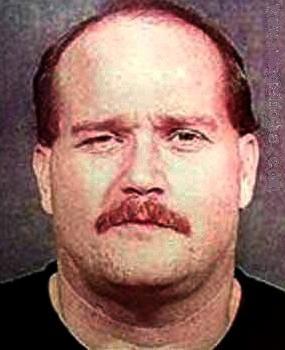
Buford Furrow
Murderer Russell Ellwood
Murderer · USA · 1991
Russell Ellwood was a former taxi driver. Authorities suspected him of killing…
20 victims
Russell Ellwood
Murderer · USA · 1991
Russell Ellwood was a former taxi driver. Authorities suspected him of killing…
20 victims
 Robert Martines Perez
Murderer · USA · 1994
Name: Robert Martines Perez · Other name used in proceedings: Robert Martinez P…
15 victims
Robert Martines Perez
Murderer · USA · 1994
Name: Robert Martines Perez · Other name used in proceedings: Robert Martinez P…
15 victims
 Billy Frank Vickers
Murderer · USA · 1993
Billy Frank Vickers Vickers was executed by lethal injection in Texas on Januar…
14 victims
Billy Frank Vickers
Murderer · USA · 1993
Billy Frank Vickers Vickers was executed by lethal injection in Texas on Januar…
14 victims
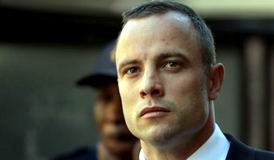 Oscar Pistorius
Homicide · South Africa · 2013
Oscar Leonard Carl Pistorius was a South African sprint runner. He was born on…
1 victim
Oscar Pistorius
Homicide · South Africa · 2013
Oscar Leonard Carl Pistorius was a South African sprint runner. He was born on…
1 victim
 Jose Noey Martinez
Murderer · USA · 1995
José Noey Martinez was an applicant in an application for writ of habeas corpus…
2 victims
Jose Noey Martinez
Murderer · USA · 1995
José Noey Martinez was an applicant in an application for writ of habeas corpus…
2 victims
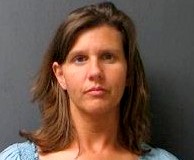 Teresa Stone
Murderer · USA · 2010
Teresa Stone conspired with her minister and lover to kill her husband, Randy S…
1 victim
Teresa Stone
Murderer · USA · 2010
Teresa Stone conspired with her minister and lover to kill her husband, Randy S…
1 victim
 Frederick Smallwood
Murderer · USA · 1995
Frederick B. Smallwood (also known as Frederick B. Smallwood, Sr.) was convicte…
1 victim
Frederick Smallwood
Murderer · USA · 1995
Frederick B. Smallwood (also known as Frederick B. Smallwood, Sr.) was convicte…
1 victim
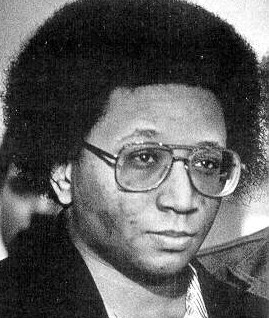 Wayne Williams
Serial killer? · USA · 1979
Wayne Bertram Williams was sentenced to two consecutive terms of life imprisonm…
24 victims
Wayne Williams
Serial killer? · USA · 1979
Wayne Bertram Williams was sentenced to two consecutive terms of life imprisonm…
24 victims
 Anthony Grandison
Murderer · USA · 1983
Anthony Grandison was an American drug dealer and murderer. He was convicted of…
2 victims
Anthony Grandison
Murderer · USA · 1983
Anthony Grandison was an American drug dealer and murderer. He was convicted of…
2 victims
- Gender
- male
- Country
- USA
- Location
- Los Angeles, California, USA
- Date of birth
- November 25, 1961
- Age at first offence
- 38
- Characteristics
- white supremacist, member of the "texas seven
- Victim profile
- US Postal Service carrier Joseph Santos Ileto ( Filipino American)
- Method of murder
- Shooting (Glock 9mm handgun)
- Date(s) of murder
- August 10, 1999
- Years active
- 1999
- Date of arrest
- Same day (surrenders)
- Status
-
Life imprisonment
Sentenced to life in prison without the possibility of parole on January 24, 2001
Case record: Buford O'Neal Furrow, Jr.
Background
Buford O'Neal Furrow, Jr. (born November 25, 1961) perpetrated the August 1999 Los Angeles Jewish Community Center shooting on August 10, 1999, at the North Valley Jewish Community Center in Los Angeles.
Furrow was a member of the white-supremacist group Aryan Nations in 1995. He also belonged to, or was associated with, hate groups reported to include the Aryan Nation, the Order, and Christian Identity.
Furrow was an engineer who worked for several years on the B-2 stealth bomber project for Northrop Grumman. His former girlfriend was Debbie Mathews, widow of Robert Jay Mathews.
Furrow grew up in Lacey, Washington, near the state capital of Olympia. His family still lived in Olympia. Neighbors said Furrow had recently been living with his parents.
The offence
On August 10, 1999, at around 10:50 a.m. local time, white supremacist Buford O. Furrow, Jr. walked into the lobby of the North Valley Jewish Community Center in Granada Hills and opened fire with a semiautomatic weapon, unloading 70 shots into the complex.
The gunfire wounded five people: three children, a teenage counselor, and an office worker. A receptionist, camp counselor, and three little boys were wounded, and five people were wounded at the community center. A 5-year-old boy was hit in the abdomen and leg and lost 30 percent of his blood. Two 6-year-old boys and a 16-year-old girl were wounded. The 68-year-old receptionist Isabelle Shalometh was grazed on the arm and back.
Shortly after the shooting, Furrow murdered US Postal Service carrier Joseph Ileto. Police reported the shootings ended with the death of USPS postal worker Joseph Santos Ileto in Chatsworth, a few miles away from the center. Ileto was found dead in a driveway. Furrow shot Ileto nine times, and Ileto died from multiple gunshot wounds to the chest and one to the back of the head.
Investigators followed a trail linking Furrow to the community center shooting, and later information linked Furrow to hate groups in the U.S. Northwest.
Furrow was described as having targeted the Jewish Community Center because of his hatred of Jews and having expressed that he would not have killed Ileto if the Filipino-American mail carrier had been white. After his arrest, authorities said he admitted shooting Ileto and wounding five people at the Jewish community center as a “wake up call” to anti-Semites and hate groups.
Furrow expressed additional statements about his intent and the intended message of the attack, including:
- “Killing Jews”
- “You're looking for me, I killed the kids in Los Angeles.”
- “a wakeup call to America to kill Jews.”
Furrow also stated he wanted his shooting to be “a wakeup call to America to kill Jews.”
Investigation and evidence
On August 7, Furrow bought a used red Chevrolet van in Tacoma, Washington, and loaded it with five assault rifles, two pistols, 6,000 rounds of ammunition and a flak jacket.
Police found Furrow's abandoned van, where they discovered a cache of ammunition, assault rifle magazines, bulletproof vests, a Ranger Handbook, and freeze-dried food.
Investigators also found books by Richard Kelly Hoskins, a Lynchburg, Virginia, leader of the Christian Identity movement, including:
- “War Cycles, Peace Cycles”
- “Vigilantes of Christendom: The Story of Phineas Priesthood” A copy of the book “War Cycles, Peace Cycles” and “Vigilantes of Christendom: The Story of Phineas Priesthood” was found, which was described as justifying anti-Semitic and racist acts of violence by the ADL.
Furrow later fled 275 miles in an $800 taxi ride from Los Angeles to Las Vegas, ending the manhunt by walking into an FBI office to confess.
Authorities reported that Furrow was alone when he surrendered at an FBI field office in Las Vegas, and “There were no negotiations.” Senior FBI officials said it was “just a walk-in.”
The Los Angeles police chief said authorities were “looking wherever the leads will take us.” Bernard Parks told CNN that “If it requires us to go nationally or internationally, we're certainly capable of doing that.” Parks also said authorities knew of no “specific motive” and that “The suspect did not make any comments before firing at the victims.”
Police said that after the shootings the gunman fled in a red van and, minutes later, stole a green car near the Van Nuys airport. Investigators followed his trail, from the shell casings that littered the community center's lobby to the abandoned red- and-white van.
The hunt led police to a green Toyota Corolla believed to have been stolen and then left in front of a hotel in Chatsworth. Police said they found weapons in the car, and officers surrounded the hotel but the search ended after four hours. Cmdr. David Kalish said: “We were so close but still he managed to get away.”
The abandoned van, which had a Washington state license plate, was purchased Saturday in Tacoma, Washington, according to the used-vehicle dealer who sold it. Kalish identified Furrow as the buyer.
Arrest and surrender
After the shooting spree and the murder of Joseph Ileto, Furrow fled and was later sought by authorities.
On August 11, 1999, CNN reported that Buford Furrow turned himself in to authorities in Las Vegas on Wednesday, sources told CNN. Senior FBI officials said Furrow was alone when he surrendered at an FBI field office, describing it as:
- “It was just a walk-in.”
- “There were no negotiations.”
Authorities said Furrow would be charged in the slaying of a postal worker who was shot near the community center. CNN reported that Furrow turned himself in after five people were wounded at the community center.
Trial
On January 24, 2001, Furrow entered a guilty plea to all of the counts against him, pleading guilty to “each charge” as Judge Nora Manilla asked if he were pleading guilty.
Judge Nora Manilla accepted a plea bargain under which Furrow would be sentenced in March to life in prison without opportunity for parole.
The mother of U.S. Postal carrier Joseph Santos Ileto and several members of Ileto’s family cried as charges were read and pleas were entered.
A 61-page indictment included charges that Furrow committed an act of terrorism and that he was motivated by religious and racial hatred and would do it again, according to court documents.
In exchange for pleading guilty, Furrow avoided a possible death sentence and was instead sentenced to life in prison without the possibility of parole.
According to the indictment, Furrow expressed no regrets over the August 1999 killing of Ileto and the wounding of five people at the North Valley Jewish Community Center.
Furrow had told authorities he would not have killed Ileto if the Filipino-American mail carrier had been white, and he targeted the Jewish Community Center because of his hatred of Jews.
Furrow also signed documents calling for him to spend the rest of his life in federal prison.
At sentencing in March 2001, Furrow blamed mental illness for his actions and said he had tried to have himself committed before the shootings.
Furrow read a statement in court, saying in part: “I want to try, although it is impossible, to convey my deep sorrow.”
Furrow pleaded guilty to murder and firearms charges to avoid a death sentence and received two consecutive life sentences and an additional 110 years running consecutively with the life sentences. He also signed documents calling for him to spend the rest of his life in federal prison.
Sentencing
On January 24, 2001, Judge Nora Manilla accepted Furrow’s guilty plea and the plea bargain.
The outcome of the plea was life in prison without the possibility of parole.
Furrow avoided the death penalty by agreeing to plead guilty and being sentenced to life in prison without the possibility of parole.
Appeals
No appeal information was included.
Victims and injuries
The injured included:
- a 5-year-old boy hit in the abdomen and leg who lost 30 percent of his blood
- two 6-year-old boys
- a 16-year-old girl
- Isabelle Shalometh, a 68-year-old receptionist, grazed on the arm and back
Joseph Santos Ileto died from multiple gunshot wounds to the chest and one to the back of the head.
Ismael Ileto, Joseph’s brother, commented: “We miss him very much ... and we cannot understand why someone would take the life of my brother. He was just doing his job when he was killed.”
Aftermath and reactions
In 2004, on the fifth anniversary of the shootings, families of the victims and local officials called for stricter gun control and hate crime legislation.
A victim’s relative described doubting the sincerity of Furrow’s public comments. Another relative said Furrow seemed sedated and that they had doubted the sincerity of the “change of heart” described.
In a letter dated Aug. 19 and addressed to a reporter, Furrow wrote from the federal penitentiary in Terre Haute, Ind., while serving a life sentence without the possibility of parole. Furrow wrote: “I feel a life based on hate is no life at all,” and: “(Victims) probably will never forgive me, but I am truely (sic) sorry and deeply regret the pain I caused,”
Furrow also wrote about renouncing bias: “About 5 years ago I threw away my racist books, literature, etc. and took up a new leaf,” “I now publicly renounce all bias toward anyone based on race, creed, color, sexual orientation, etc. and am a much happier person.”
A copy of the letter was described as having been composed after prison officials turned down a request to interview Furrow.
A Terre Haute prison administrator interviewed by telephone said she couldn’t confirm or dispute the authenticity of the 364-word letter, and the envelope bore official markings indicating it came from Furrow.
Furrow wrote about prison life and described himself as a “model” inmate: “My mind was filled with sickness and unfortunately I acted on it. But, I am now a `model' inmate who has shunned criminal activity and spend my day with exercise, art, and learning prison civil law. I can't change the past, but I can damn sure change the future, and my future will never include Neo-Nazi activity again. That is all I can do.”
Alan Stepakoff said: “One is, this doesn't change what he did. The second point is we are glad he has renounced his hateful beliefs. The third point is I'm not fully convinced of his sincerity.”
Amanda Susskind, regional director of the Anti-Defamation League, said: “This shouldn't be his moment,” and: “The Anti-Defamation League would always rather see a prisoner renounce hatred rather than choose the path of recruitment and incitement of more extremist behavior within the prison system,” and: “We have plenty of evidence of extremist cells and extremist groups within the prison system, so we're very aware of how this kind of rhetoric can fester and be fostered. ” and: “We can't judge the veracity of what is in Buford Furrow's heart. And whatever he says cannot change the history or the lessons to be learned - the history behind that he tried to kill a lot of Jewish children and did in fact kill a Filipino postal worker out of pure hatred, and the lesson being that we need to pay attention when there are signs of hatred emerging in our children and young adults.” and: “At the Anti-Defamation League, we don't think it's our place to forgive or accept an apology. It is the victims' right first to accept an apology, and then the community's.”
A relative of one victim said: “I can't go any further than that. We hope people, when they see this letter published, will consider also how much it still hurts us, and that can never be corrected. If he is asking for forgiveness, all we're saying is, `Ask God.' ” “You can't do something, and then write a remorseful letter now and everything's OK.”
Lewis Yablonsky said: “I would say he has changed. I don't think he's falsifying it. ... I still wouldn't want to let him out.”
In the same discussion, Yablonsky said:
Furrow had told investigators he targeted Ileto because the victim was a nonwhite federal employee, and attacked the Jewish facility as “a wakeup call to America to kill Jews.”
Other details
Furrow’s prior assault case included:
- Court records showed Furrow was charged with felony assault on November 2, 1998.
- He pleaded guilty to second-degree assault.
- He was sentenced to five months in the King County Jail.
- Sources told CNN he was on probation at the time of Tuesday’s attack.
In the psychiatric hospital context described, Furrow showed admission details and threats:
- The incident involved Furrow at a Kirkland psychiatric hospital and workers refusing to give him his truck keys.
- He pulled a switchblade and threatened a social worker and the hospital director.
- Furrow said: “Give me my f---ing keys (or) . . . I will cut you up,”
Furrow also had a history of involvement in hate groups prior to the shooting.
Debbie Mathews, widow of Robert J. Mathews, was described as living in Metaline Falls, and Furrow was described as having a job in Colville at LaDuke and Forge Equipment.
Court proceedings included Furrow’s public defender Leona Thomas assuring the court that Furrow had been stabilized and that “the medications made a very dramatic difference very quickly,” as quoted in the transcript.
At sentencing, Furrow’s statement to the court included the quote: “I would like to say I am sorry for what happened. I really feel a lot of remorse for the two women that I assaulted and I have a lot more respect now for the people in the mental-health profession, you know, what they have to go through in dealing with people like myself who are in real bad shape. And I also would like to thank you . . . for getting me up to Harborview and getting me on medications and kind of helping me out. I do feel quite a bit better than I was when I came into the jail system.”
Judge Nora Manilla told Furrow: “It's not within any of our power to make you take your medications,” and required him to stay away from his victims, from alcohol and from firearms.
Judge Nora Manilla was quoted as saying: “It's not illegal to be a white supremacist.”
Community corrections officer Powell wrote in abbreviated notes that Furrow described the assault as: “an act of desperation. . . . He was trying to get help. . . . He kept going to hospitals for treatment, but his medication wasn't doing the job. Current medications are working nicely.”
Powell argued Furrow had responded well to treatment and was “deserving of some measure of the court's leniency.”
Powell wrote that Furrow felt his mother’s illness would have a counterproductive influence: “He felt that his mother's illness would have counterproductive influence on his peace of mind.”
Furrow confided he planned to stay at his parents’ residence only as long as it took to find his own place: “Furrow confided that he plans to stay at his parents' residence only as long as it took to find his own place.”
Community corrections officer Gosney checked Furrow in on June 16 and noted Furrow was taking medications that helped with his fight against depression.
Gosney received a detailed letter from Fairfax Hospital describing the assault and urging him to make sure Furrow continued with treatment and stayed in weekly contact with his corrections officer.
A July 6 check-in described Furrow as being “in a good mood.” Gosney discussed counseling options and took a urine sample to see whether Furrow was staying away from drugs and alcohol.
The urine sample detected amphetamines or methamphetamine, and Furrow insisted he hadn’t been taking the drugs and agreed to have the sample retested at his own expense.
Gosney concluded psychiatric drugs might have caused a false positive after a new test detected nothing but prescribed psychiatric drugs.
Gosney wrote at a July 20 meeting: “I informed (Furrow) that this situation was probably a little tough to deal with, however, it shows positive progress regarding his moods, attitude and anger,”
On Aug. 3, Gosney again wrote: “was in good mood . . . no problems to note,”
Four days later, on Aug. 7, Furrow paid cash for a red GMC van at the Tacoma Kar Korner used-car lot, the same van found outside the North Valley Jewish Community Center after the shooting.
Cmdr. David Kalish was quoted: “We were so close but still he managed to get away.”
Date-related venue details included references to a FBI field office in Las Vegas, a federal penitentiary in Terre Haute, Ind., and earlier psychiatric and judicial proceedings in Washington state.
Furrow’s record listed him as “Olympia, Wash.” native.
Furrow’s wife and relationship details were included via reporting that Furrow met Debbie Mathews at an Aryan Nation gathering and that they took a honeymoon to Las Vegas and later relationship issues were reported.
Spotted an error, or have more information about this case?