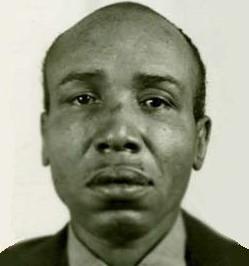
Jake Bird
Serial killer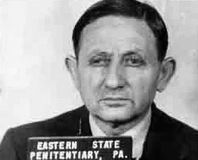 Morris Bolber
Serial killer · USA · 1932
Morris Bolber was prosecuted as part of a Philadelphia poison-murder ring invol…
50 victims
Morris Bolber
Serial killer · USA · 1932
Morris Bolber was prosecuted as part of a Philadelphia poison-murder ring invol…
50 victims
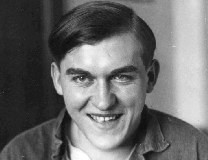 Gordon Northcott
Serial killer · USA · 1928
Gordon Stewart Northcott was a Canadian-born ranch owner who later murdered boy…
20 victims
Gordon Northcott
Serial killer · USA · 1928
Gordon Stewart Northcott was a Canadian-born ranch owner who later murdered boy…
20 victims
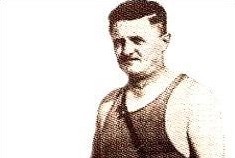 Joe Ball
Serial killer · USA · 1936
Joe Ball (January 6, 1896 – September 24, 1938) was an American serial killer.…
14 victims
Joe Ball
Serial killer · USA · 1936
Joe Ball (January 6, 1896 – September 24, 1938) was an American serial killer.…
14 victims
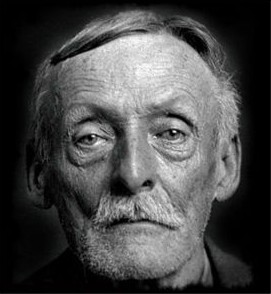 Albert Fish
Serial killer · USA · 1924
Albert Hamilton Fish (May 19, 1870 – January 16, 1936) was an American sado-mas…
10 victims
Albert Fish
Serial killer · USA · 1924
Albert Hamilton Fish (May 19, 1870 – January 16, 1936) was an American sado-mas…
10 victims
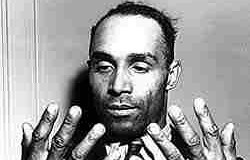 Jarvis Catoe
Serial killer · USA · 1935
Jarvis Theodore Roosevelt Catoe was convicted of killing a woman in Washington…
8 victims
Jarvis Catoe
Serial killer · USA · 1935
Jarvis Theodore Roosevelt Catoe was convicted of killing a woman in Washington…
8 victims
 Rebecca Emmanuel
Murderer · Nigeria · 2008
Rebecca Emmanuel Rebecca Emmanuel was a Nigerian woman who was sentenced to dea…
1 victim
Rebecca Emmanuel
Murderer · Nigeria · 2008
Rebecca Emmanuel Rebecca Emmanuel was a Nigerian woman who was sentenced to dea…
1 victim
 David Funches
Murderer · USA · 1974
David Livingston Funchess was the petitioner and appellant in federal habeas co…
2 victims
David Funches
Murderer · USA · 1974
David Livingston Funchess was the petitioner and appellant in federal habeas co…
2 victims
 Emma Wilson
Murderer · United Kingdom · 2011
Emma Wilson was 25 when she was sentenced to life in prison with a minimum of 1…
1 victim
Emma Wilson
Murderer · United Kingdom · 2011
Emma Wilson was 25 when she was sentenced to life in prison with a minimum of 1…
1 victim
 Stephen Nethery
Murderer · USA · 1981
Stephen Ray Nethery was convicted of capital murder and sentenced to death by t…
1 victim
Stephen Nethery
Murderer · USA · 1981
Stephen Ray Nethery was convicted of capital murder and sentenced to death by t…
1 victim
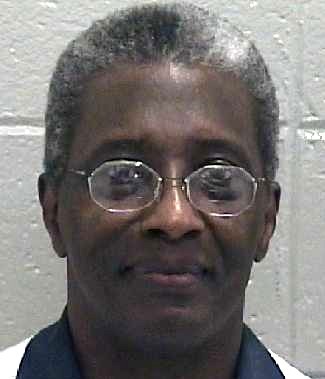 Brandon Astor Jones
Murderer · USA · 1979
Brandon Astor Jones, also known as Wilbur May, was convicted of murder and sent…
1 victim
Brandon Astor Jones
Murderer · USA · 1979
Brandon Astor Jones, also known as Wilbur May, was convicted of murder and sent…
1 victim
 Haji Mammadov
Murderer · Azerbaijan · 1995
Haji Mammadov was a former officer of the Crime Investigation Department of the…
11 victims
Haji Mammadov
Murderer · Azerbaijan · 1995
Haji Mammadov was a former officer of the Crime Investigation Department of the…
11 victims
- Gender
- male
- Country
- USA
- Location
- Several States, USA
- Date of birth
- December 14, 1901
- Age at first offence
- 29
- Characteristics
- rape, robbery, attempted rape, dismemberment
- Victim profile
- M ostly women
- Method of murder
- Beating with an ax - St abbing with knife
- Date(s) of murder
- 1930 ' s - 19 47
- Years active
- 1930
- Date of arrest
- October 30, 1947
- Status
-
Executed
Executed by hanging at the Washington State Penitentiary in Walla Walla on July 15, 1949
Timeline
- October 30, 1947 — Jake Bird broke into the home of Bertha Kludt and her daughter, Beverly June Kludt, in Tacoma; two women were bludgeoned to death with an ax after screams were reported.
- October 31, 1947 — Deputy Prosecutor Earl D. Mann charged Jake Bird in Pierce County Superior Court with first-degree murder, but only in the death of Bertha Kludt.
- November 14, 1957 — Defense Attorney James W. Selden requested a change of venue and requested to be relieved as Bird’s attorney; Judge Hodge denied both requests.
- November 24, 1947 — Trial began in Pierce County Superior Court before Judge Hodge.
- November 26, 1947 — After deliberating for 35 minutes, the jury found Jake Bird guilty of first-degree murder and voted to impose the death penalty.
- December 6, 1947 — Judge Edward D. Hodge sentenced Bird to be hanged at the Washington State Penitentiary; after a motion for a new trial was denied, Defense Attorney Selden said no further appeals would be made on Bird’s behalf.
- December 7, 1947 — Pierce County Under-sheriff Joseph E. Karpatch and Deputy Michael Waverek took Bird in a patrol wagon to the Washington State Penitentiary in Walla Walla to await his execution.
- January 6, 1948 — At the request of Governor Monrad Charles Wallgren, Pierce County Prosecutor Patrick Steele and Tacoma Police Detective Lieutenant Sherman Lyons visited the penitentiary to listen to Bird’s confessions.
- January 15, 1948 — Bird won a 60-day reprieve from Governor Wallgren.
- January 16, 1948 — Bird’s execution date had been set for this date at sentencing.
- November 30, 1948 — Bird’s final petition to the state for a retrial was denied.
- December 3, 1948 — Judge Hugh J. Rosellini signed another death warrant, ordering Bird to be hanged on January 14, 1949.
- July 14, 1949 — Bird ate his last meal on death row; he was moved to a holding cell near the gallows and walked to the gallows after midnight; the trapdoor was sprung shortly after midnight.
- July 15, 1949 — Jake Bird was hanged at 12:20 a.m.; prison physician Dr. Elmer Hill pronounced him dead; he was buried in an unmarked grave in the prison cemetery and identified only as convict No. 21520.
Background
Jake Bird (1901-1949) was 45 years old at the time of the October 30, 1947 murders. He was described as a transient and a black man who was born in Louisiana and left home when he was 19 years old. He estimated he had served about 15 years in various prisons for committing crimes. He often worked as a section-gang laborer with the railroad, which allowed him to earn money and keep moving from town to town. He preferred an itinerant worker lifestyle and was characterized by an avocation of stalking and murdering women in towns he visited. Bird had a lengthy criminal record including burglaries, assaults, attempted murder, and murder.
The offence
At about 2:30 a.m. on Thursday, October 30, 1947, Tacoma Police Officers were dispatched to 1007 S 21st Street to investigate reports of screams emanating from inside a residence. As the officers approached, a barefoot man ran out the back door into the back yard, crashed through a picket fence, and was chased by the officers.
After scaling several more backyard fences, the fugitive was stopped by a high fence and cornered in an alley behind 2122 S “J” Street. He pulled out a jackknife and attacked the officers, cutting Davies’ hand and stabbing Sabutis in the shoulder. Officer Sabutis subdued the assailant with a left hook to the jaw and a kick in the groin. The prisoner was taken to Tacoma General Hospital by Officer John Hickey in a patrol wagon for treatment of head and face lacerations. Sabutis was admitted to St. Joseph Hospital with a severe back wound and Davies had the cuts on his hand stitched and bandaged there.
When police officers entered the residence, they found Bertha Kludt dead in her bedroom adjacent to the kitchen and found the body of her daughter, Beverly June Kludt, on the kitchen floor. Both women had been bludgeoned to death with an ax left at the crime scene. Detective Lieutenant Earl Cornelison determined that an attempt had been made to sexually assault Bertha Kludt before she was intentionally slain. Beverly June, hearing her mother’s screams, apparently dashed from her upstairs bedroom into the kitchen and encountered the assailant before being murdered. Bird was identified as the man captured by Officers Sabutis and Davies.
A later account described the murder as occurring after Bird entered through an unlocked back door, removed his shoes, sneaked into Bertha Kludt’s bedroom, and stole $1.50 from her purse. When he returned to the kitchen, he turned and found Bertha standing behind him. Bird told her he only wanted her money and his shoes and that he would leave. Beverly June grabbed him from behind, and a fierce struggle ensued that resulted in the deaths of the two women. Bird also stated he thought policemen would shoot him when they had him cornered in the bushes, so he attacked them with his knife.
Investigation
Detective Lieutenant Earl Cornelison determined that there had been an attempt to sexually assault Bertha Kludt before she was intentionally slain. Bird’s interrogation was conducted by Detective Lieutenant Sherman W. Lyons at the Tacoma City Jail, where Bird dictated and signed a confession in the presence of four police officers.
A confession was described as stating that Bird entered the Kludt residence through the unlocked back door to commit “an easy burglary.” It described that he brought along an ax found in a nearby shed “to bluff off anyone who tried to bother me.” Bird’s confession described him removing his shoes before sneaking into Bertha Kludt’s bedroom.
Police investigators later examined evidence including blood and brain tissue from both victims on Bird’s clothing, Bird’s bloody fingerprints found in the house and on the ax, and Bird’s shoes found at the murder scene.
Arrest
On October 30, 1947, two Tacoma police officers pursued Bird after he fled out the back door and scaled fences. At the alley behind 2122 S “J” Street, Bird attacked the officers with a jackknife, cutting Davies’ hand and stabbing Sabutis in the shoulder. After the fight, the prisoner was taken in a patrol wagon to Tacoma General Hospital and then injured officers were admitted for treatment.
Trial
Deputy Prosecutor Earl D. Mann charged Jake Bird in Pierce County Superior Court with first-degree murder on October 31, 1947, but only in the death of Bertha Kludt. Judge Edward D. Hodge appointed James W. Selden, a former Pierce County prosecutor, as Bird’s defense counsel.
At arraignment, Bird pleaded not guilty and the trial was set for Monday, November 24, 1947. At a motion hearing on November 14, 1957, Defense Attorney Selden requested a change of venue and requested to be relieved as Bird’s attorney, stating Bird wanted to represent himself; Judge Hodge denied both requests.
Trial began in the Pierce County Courthouse before Judge Hodge but was slowed by jury selection. Questioning of prospective jurors involved impressions of the crime from news media and whether Bird could get a fair trial as a black man. Four jurors were excused after it was learned they had recently served on another first-degree murder trial in which the defendant was convicted and sentenced to hang. By the end of the day, a jury of nine men and three women was selected and the court recessed until 9:00 a.m. the next morning.
Prosecuting Attorney Patrick M. Steele’s strategy was to prove that the death of Bertha Kludt was premeditated to qualify Bird for the death penalty. Evidence included blood and brain tissue from both victims on Bird’s clothing, Bird’s bloody fingerprints found in the house and on the ax, and Bird’s shoes found at the murder scene.
The state introduced a surprise witness, Tacoma Police Officer John Hickey, who testified about Bird being beaten while in their custody. Hickey testified:
“I regret to say that I lost my temper after returning from the Kludt home and viewing the terribly hacked bodies of the two women. I had asked Bird as we sat in the patrol wagon why he murdered the two women. He said he didn’t do it. I asked him who did it then, and he said, ‘It was LeRoy.’ ‘Who’s LeRoy?’ I asked him. ‘Oh, another Negro around town,’ Bird replied. ‘You’re lying,’ I replied, and he looked at me with a smug and insolent look. I know I shouldn’t have done it, but I hit him in the jaw with my fist, knocking him to the front of the patrol wagon. Then I struck him a number of times with my night stick until he said, ‘Don’t kill me.’ That brought me to my senses and we took him to the hospital where a nurse said he wasn’t badly hurt” ( Seattle Post-Intelligencer ).
When Prosecutor Steele moved to enter Bird’s signed confession into evidence, Defense Attorney Selden objected, declaring it had been obtained under duress and therefore inadmissible. Judge Hodge disagreed, ruled there was no relationship between the beating and Bird’s voluntary confessions, and admitted it into evidence. The confession was read into the record and the prosecution rested its case.
Defense Attorney Selden rested the defense without calling Bird or any other witnesses to the stand. Closing arguments began on Wednesday morning, November 26, 1947, and the case went to the jury at noon. After deliberating for only 35 minutes, the jury returned its verdict and Bird was found guilty of first-degree murder. The jury voted to impose the death penalty. Bird sat unmoved as Judge Hodge read the verdict.
Sentencing
On Saturday, December 6, 1947, Judge Hodge sentenced Bird to be hanged on the gallows at the Washington State Penitentiary on January 16, 1948. After a motion for a new trial was denied, Defense Attorney Selden told the court he had done everything in his power to defend Bird and that no further appeals would be made on Bird’s behalf. Selden stated:
“I feel whenever any man 45-years-old gets an idea that no lives are safe to anyone, except his own, that man is a detriment to society and should be obliterated” ( The Tacoma News Tribune ).
When Judge Hodge asked Bird for comment, Bird declared:
“I was given no chance to defend myself. My own lawyers just asked you to hang me. They apologized for defending me. If they were so reluctant to defend me, why did they contest the prosecutor’s proof of murder, and now say that everything is proven?” ( The Tacoma News Tribune )
At the end of his 20-minute speech, Bird declared:
“All you guys who had anything to do with this case are going to die before I do” ( The Seattle Times )
Afterward, it became known as the “Jake Bird Hex.”
Appeals
Bird appealed his conviction to the Washington State Supreme Court and personally argued his case before the Supreme Court Justices, stating Judge Hodge had made several judicial errors and demanded a new trail. On November 30, 1948, his final petition to the state for a retrial was denied.
On December 3, 1948, Judge Hugh J. Bird’s attorney, Murray Taggart of Walla Walla, moved for a stay of execution to permit filing of an appeal to the U.S. Court of Appeals, and the motion was granted on the condition the court agreed to review the case. When the U.S. Court of Appeals refused to review the case, Judge Rosellini set Bird’s execution date for July 15, 1949.
Attorney Taggart requested another stay of execution to permit filing an appeal with the U.S. Supreme Court, but the motion was denied. Taggart filed three more petitions, but the U.S. Supreme Court refused to review the case; the last time was on July 14, 1949. Bird’s last hope was an act of executive clemency from Governor Arthur B. Langlie, but Langlie chose not to interfere with the execution.
Outcome
Jake Bird was hanged at the Washington State Penitentiary in Walla Walla on July 15, 1949. He was taken from his gallows-level cell to the noose at 12:20 a.m., witnessed by 125 spectators. He said nothing to the witnesses but muttered some comment to one of the guards.
A volunteer prison chaplain, Reverend Arvid C. Ohrnell, started to read a note from Bird:
“declaring he bore no malice toward anyone and sought forgiveness”
But before he finished, the trapdoor was sprung, dropping Bird five feet to his death. After 14 minutes, his body was taken down and prison physician Dr. Elmer Hill pronounced him dead. Bird was buried in an unmarked grave in the prison cemetery, identified only as convict No. 21520.
Aftermath
Within a year of the “Jake Bird Hex,” five men connected with Bird’s trial died. They were listed as Edward D. Hodge, Pierce County Superior Court Judge, age 69, who died January 1, 1948; Joseph E. Karpach, Pierce County Under-sheriff, age 46, who died April 5, 1948; George L. Harrigan, Pierce County court reporter, age 69, who died June 11, 1948; Sherman W. Lyons, Tacoma Police Detective Lieutenant, age 46, who died October 28, 1948; and James W. Selden, Bird’s defense attorney, age 76, who died on November 26, 1948.
A sixth man, a Washington State Penitentiary guard assigned to death-row, died of pneumonia two months before Bird’s execution. It was also stated that The Tacoma News Tribune said all of the men died from heart attacks.
Bird willed his personal fortune of $6.15 to his appeals attorney, Murray Taggart.
Bird’s case was described as failing to capture the attention of the national press, even though he confessed to committing or being involved in at least 44 murders. During his time on death row, he began confessing to committing or being involved in at least 44 murders during his travels across the country. Of these 44 confessed murders, only 11 were substantiated, but police in several states used his confessions to close unsolved murder cases.
Bird’s confession included that he murdered people, mostly women, in Illinois, Kentucky, Nebraska, Oklahoma, Kansas, South Dakota, Ohio, Florida, Wisconsin, Michigan, Iowa, and Washington. He also was described as having murdered people in other locations in separate accounts, including Evanston, Illinois; Louisville, Kentucky; Omaha, Nebraska; Kansas City, Kansas; Sioux Falls, South Dakota; Cleveland, Ohio; Orlando, Florida; and Portage, Wisconsin. Police also suspected Bird in Houston in connection with Mrs. Harry Richardson, and Chicago authorities were curious about a weighted body retrieved from Lake Michigan, five miles south of Kenosha. Los Angeles detectives were described as having their eyes on Jake for murdering a black youth and a Jewish grocer, while in New York City he was tentatively linked to the robbery and murder of a delicatessen owner.
Other details
People involved in the arrest and medical treatment
Tacoma Police Officers Andrew P. Sabutis and Evan “Skip” Davies responded to the screams and pursued Bird. Officer John Hickey transported the prisoner to Tacoma General Hospital in a patrol wagon. Sabutis was admitted to St. Joseph Hospital with a severe back wound. Davies had cuts on his hand stitched and bandaged there.
Confession and custody remarks
Bird was interrogated by Detective Lieutenant Sherman W. Lyons, and he dictated and signed a confession in the presence of four police officers. Bird confessed that he entered the Kludt residence through the unlocked back door to commit “an easy burglary,” and brought along an ax found in a nearby shed “to bluff off anyone who tried to bother me.”
Bird was taken to the Pierce County jail after his capture and confessed to the killings, claiming it was a burglary gone bad. On his way back to the Pierce County jail, Bird asked the five deputy sheriffs guarding him: “What’s all the excitement about?”
Location and evidence at the scene
The crime address was given as 1007 S 21st Street. The chase ended near an alley behind 2122 S “J” Street. The murder weapon, an ax, had been left at the crime scene and was described as being found on the kitchen floor.
Execution arrangements and witnesses
Bird was shaved and dressed in new clothes before being taken from his holding cell near the gallows. He walked 10 feet from the cell to the gallows, accompanied by Warden Tom Smith and two prison guards. He was hanged at 12:20 a.m. on July 15, 1949, witnessed by 125 witnesses.
Prison life portrayal and “jailhouse lawyer” claim
Bird gained a modicum of fame as a “jailhouse lawyer,” often arguing his own case before the court. His knowledge of the law, together with the help of people against the death penalty, enabled him to delay his execution a year and a half.
A narrative portion described prison accounts of Bird putting “Hexes” on fellow prisoners, with journalists reporting that some of them subsequently died, but the narrative also characterized this as not verified.
“Jake Bird Hex”
The narrative described that within a year, five men connected with Bird’s trial died, and it became known as the “Jake Bird Hex.”
Spotted an error, or have more information about this case?