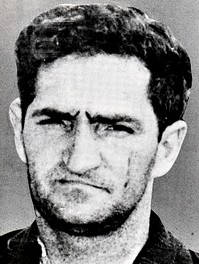
Eric Edgar Cooke
Serial killer William MacDonald
Serial killer · Australia · 1961
William MacDonald was an Australian serial murderer who was dubbed the “Sydney…
5 victims
William MacDonald
Serial killer · Australia · 1961
William MacDonald was an Australian serial murderer who was dubbed the “Sydney…
5 victims
 John Justin Bunting
Serial killer · Australia · 1992
John Justin Bunting (born 4 September 1966 in Inala, Queensland) was an Austral…
11 victims
John Justin Bunting
Serial killer · Australia · 1992
John Justin Bunting (born 4 September 1966 in Inala, Queensland) was an Austral…
11 victims
 John Lynch
Serial killer · Australia · 1835
John Lynch murdered multiple people in the Berrima district in New South Wales,…
10 victims
John Lynch
Serial killer · Australia · 1835
John Lynch murdered multiple people in the Berrima district in New South Wales,…
10 victims
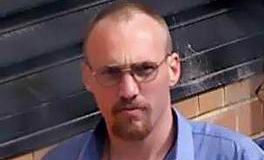 Robert Joe Wagner
Serial killer · Australia · 1992
Robert Joe Wagner (born 28 November 1971 in Parramatta, New South Wales) was an…
10 victims
Robert Joe Wagner
Serial killer · Australia · 1992
Robert Joe Wagner (born 28 November 1971 in Parramatta, New South Wales) was an…
10 victims
 Christopher Worrell
Serial killer · Australia · 1976
Christopher Worrell was described as a rapist and was later killed in a car acc…
7 victims
Christopher Worrell
Serial killer · Australia · 1976
Christopher Worrell was described as a rapist and was later killed in a car acc…
7 victims
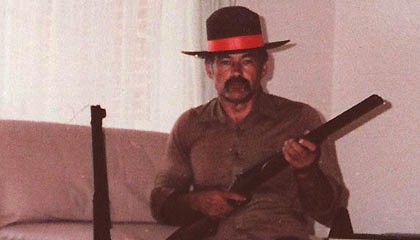 Ivan Milat
Serial killer · Australia · 1989
Ivan Milat was convicted of seven murders and received multiple life sentences.…
7 victims
Ivan Milat
Serial killer · Australia · 1989
Ivan Milat was convicted of seven murders and received multiple life sentences.…
7 victims
 Elizabeth Jones
Murderer · United Kingdom · 1944
Elizabeth Jones was born in Neath, Wales, in 1926. At the age of thirteen, she…
1 victim
Elizabeth Jones
Murderer · United Kingdom · 1944
Elizabeth Jones was born in Neath, Wales, in 1926. At the age of thirteen, she…
1 victim
 Shonda Walter
Murderer · USA · 2003
Name: Shonda Walter Victim: James Sementelli (83-year-old) Shonda Walter was se…
1 victim
Shonda Walter
Murderer · USA · 2003
Name: Shonda Walter Victim: James Sementelli (83-year-old) Shonda Walter was se…
1 victim
 Guen Aguilar
Murderer · Singapore · 2005
Guen Garlejo Aguilar was a Filipino domestic worker. She pleaded guilty and was…
1 victim
Guen Aguilar
Murderer · Singapore · 2005
Guen Garlejo Aguilar was a Filipino domestic worker. She pleaded guilty and was…
1 victim
 Anne Louise Gordon
Murderer · USA · 2002
Anne Louise Gordon was sentenced to life in prison without parole on July 17, 2…
2 victims
Anne Louise Gordon
Murderer · USA · 2002
Anne Louise Gordon was sentenced to life in prison without parole on July 17, 2…
2 victims
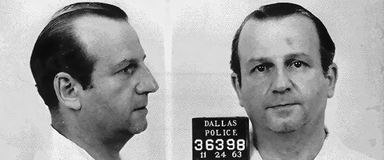 Jack Ruby
Murderer · USA · 1963
Jack Leon Ruby (born Jacob Rubenstein in 1911) was a Dallas nightclub owner who…
1 victim
Jack Ruby
Murderer · USA · 1963
Jack Leon Ruby (born Jacob Rubenstein in 1911) was a Dallas nightclub owner who…
1 victim
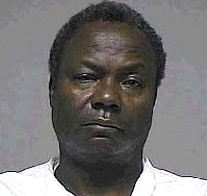 Said Ali Biyad
Mass murderer · USA · 2006
Said Ali Biyad — defendant. · Christie Foster — representing the Commonwealth's…
4 victims
Said Ali Biyad
Mass murderer · USA · 2006
Said Ali Biyad — defendant. · Christie Foster — representing the Commonwealth's…
4 victims
- Gender
- male
- Country
- Australia
- Location
- Perth, Western Australia, Australia
- Date of birth
- February 25, 1931
- Age at first offence
- 28
- Characteristics
- serial rapist, drug addict, alcohol, mentally ill
- Victim profile
- Jillian Macpherson Brewer / Brian Weir, 29 / John Sturkey, 19 / George Walmsley, 54 / Shirley Martha McLeod, 18 / Constance Lucy Madrill, 24 / Patricia Vinico Berkman, 33 / Rosemay Anderson
- Method of murder
- Shooting - Sttabing with knife - Strangulation
- Date(s) of murder
- 1959 / 1963
- Years active
- 1959–1963
- Date of arrest
- September 1, 1963
- Status
-
Executed
Executed by hanging at Fremantle Prison on October 26, 1964
Case identity
Eric Edgar Cooke (25 February 1931 – 26 October 1964) was an Australian serial killer nicknamed “The Night Caller”.
Background
Cooke was born on 25 February 1931 in Victoria Park, a suburb of Perth, and was the eldest of three children. His father, Vivian Thomas Cooke, showed no passion towards his oldest child and only son and was often a victim of his father’s alcoholic addiction resulting in beatings for no apparent reason. Cooke was beaten when he tried to protect his mother from his father’s violent outbursts. Cooke had been bullied at school for the impediments of a hare lip and a cleft palate. The operations left him with a slight facial deformity and he spoke in a mumble.
Cooke served 18 months in jail for burning down a church after he was rejected in a choir audition. At age 21, he joined the Permanent Military Forces but was discharged three months later after it was discovered that, before enlistment, he had a series of convictions for theft, breaking and entering, and arson.
Cooke married Sarah (Sally) Lavin, a 19-year-old waitress, on 14 October 1953 at the Methodist Church in Cannington. They were to have seven children.
Cooke had six convictions for minor crimes at the time of his arrest for murder. After his arrest, he claimed to have committed more than two hundred thefts and five hit-and-run offences against young women. He also claimed two murders for each of which Darryl Raymond Beamish and John Button were already imprisoned.
The offence
Cooke’s killing spree terrorised Perth, Western Australia from 1958 to 1963 by committing 22 violent crimes, eight of which resulted in deaths. His methods seemed unusual and his behaviour was inconsistent and bizarre.
The spree involved a series of seemingly unrelated hit and runs, stabbings, stranglings, and shootings. The various shootings had been carried out with several different rifles. Victims were stabbed with knives and scissors and hit with an axe.
One victim was shot dead after answering a knock on the door. Several victims were killed after waking while Cooke was robbing their homes, and two victims were killed after waking while Cooke was robbing their homes; two were shot while sleeping without their homes being disturbed. After stabbing one victim, Cooke got lemonade from the refrigerator and sat on the verandah drinking it. Another victim was strangled with the cord from her bedside lamp. Her dead body was raped, then dragged to a neighbour’s lawn, where she was violated with an empty whisky bottle which was left cradled in her arms.
In the 1960s, people often left keys in their cars’ ignition overnight. Cooke stole a car almost every night, returning it before the owner awoke. It was later discovered that the cars involved in several hit and runs had been returned without the owners realising they had been stolen. Cooke later claimed he just wanted to hurt people.
Cooke was acknowledged by the state to be responsible for murders of a South Perth beautician stabbed on 30 January 1959 and of a female social worker strangled in West Perth on 16 February 1963.
Cooke was convicted on the specimen charge of murdering John Lindsay Sturkey, one of Cooke’s five Australia Day (1963) shooting victims.
The victims named in the case included Shirley McLeod, Jillian Brewer, Rosemary Anderson, and John Lindsay Sturkey.
Investigation
During the police investigation, more than 30,000 males over the age of 12 were fingerprinted. More than 60,000 .22 rifles were located and test fired.
Cooke was caught after a rifle was found hidden in a bush in August 1963. Ballistic tests proved the gun had been used to murder Shirley McLeod. Police returned to the location and tied a similar inoperable rifle to the bush with fishing line, constructing a hide in which police waited for the owner to collect it. Cooke collected it 17 days later.
When captured, Cooke confessed to numerous crimes, including 22 violent crimes (8 murders) and 14 attempted murders. In his confessions, Cooke demonstrated an exceptionally good memory for the details of his crimes irrespective of how long ago he had committed the offences. He confessed to more than 250 burglaries and was able to detail exactly what he took, including the number and denominations of the coins he had stolen from each location.
Cooke’s confessions included those of Jillian Brewer and Rosemary Anderson, for which Darryl Beamish and John Button had already been convicted and imprisoned. Cooke’s confessions were referred to in appeals by Beamish and Button.
Arrest
Cooke was captured by police on 1 September when he attempted to retrieve the hidden weapon.
Trial
Cooke was brought to trial on 25 November 1963 for the murder of Sturkey. Through his counsel, Cooke sought a verdict of not guilty on the grounds of insanity.
At trial, the defence claimed Cooke suffered from schizophrenia. The director of the state mental health services, Dr A. S. Ellis, rejected the claim and testified that Cooke was sane. The state permitted no other psychiatric specialist to examine him.
The death sentence was pronounced on 27 November. Cooke was convicted of willful murder on 28 November 1963 after a three-day trial by jury in the Supreme Court of Western Australia before Justice Virtue.
Cooke pleaded not guilty on the grounds of insanity.
Cooke was sentenced to death and, despite having grounds to appeal, ordered his lawyers not to apply, claiming that he had killed and deserved to pay for what he had done. Ten minutes before the sentence was carried out, Cooke swore on the Bible renewing his rejected claim that he had been the killer of Jillian Brewer and Rosemary Anderson.
Sentencing
Cooke was sentenced to death following his conviction for willful murder on 28 November 1963.
Appeals
The appeals by Darryl Beamish and John Button referenced Cooke’s confessions.
In Button’s case, which was heard first, although Cooke had given details withheld by police that only the killer would have known, little credence was given to Cooke’s testimony as the vehicle Cooke claimed he had used had an external steel sunvisor. The appeal judges did not believe a body could be thrown “over the roof” as Cooke claimed without ripping the visor off. Beamish’s appeal was dismissed after the judges cross-referenced Cooke’s evidence with that of the Button appeal.
The West Australia Chief Justice, Sir Albert Wolff, called Cooke a “villainous unscrupulous liar”. The prosecution claimed that both confessions were an attempt to prolong his own trial.
Outcome
Cooke was executed by hanging at Fremantle Prison on 26 October 1964. He was the last person to be hanged in the state of Western Australia, for wilful murder, before the State abolished capital punishment in 1984.
Cooke was buried in Fremantle Cemetery in an unmarked grave. His wife, three daughters, and three of his four sons survived him. Cooke was buried above the remains of the child-killer, Martha Rendell, who was hanged in Fremantle Prison in 1909 and was the last woman to be hanged in Western Australia.
Only one woman kept vigil outside Fremantle Prison on the morning of his execution.
Aftermath
In the period when Cooke’s crimes had remained unsolved, Perth’s attitude to personal and household security changed. Police and politicians were widely criticized, gunsmiths, locksmiths, and the dogs’ refuge did a brisk trade, and the breezy habits of an informal town in a hot climate were no longer innocently enjoyed.
Media included a memoir, The Shark Net by Robert Drewe, later made into a movie, which provided one author’s impressions of the effect of the murders on Perth. “The Nedlands Monster” also featured in Tim Winton’s 1991 novel Cloudstreet.
The Walkley Award-winning journalist Estelle Blackburn spent six years writing the biographical story Broken Lives, focusing particularly on the devastation left on his victims and their families.
The wrong men
Darryl Beamish was convicted in 1961 for the 1959 murder of Jillian Macpherson Brewer. He served 15 years despite Cooke’s 1963 confession to the crime. Beamish’s conviction was quashed in 2005 after evidence pointed to Cooke being the killer.
John Button was jailed for five years for manslaughter in the death of his girlfriend Rosemary Anderson. Button’s conviction was quashed in 2002 after evidence proved Cooke was the killer. Button’s manslaughter conviction of 4th May 1963 was quashed by the Western Australian Court of Criminal Appeal on 25th February 2002. The Chief Justice of Western Australia David Malcolm, Justice Henry Wallwork, and Justice Neville Owen presided. The Chief Justice described it as a miscarriage of justice and said a re-trial was unnecessary. The appeal hearing was initially held in May 2001, based on fresh evidence from Estelle Blackburn’s book Broken Lives, published in November 1998 after six years of research.
After a right to appeal was granted: On August 17, 1999, John Button was granted the right to appeal his 1963 conviction of the manslaughter of Rosemary Anderson. The hearing in front of the Western Australian Court of Criminal Appeal was set down for May 28, 2001.
Car test evidence: In February 2000, United States pedestrian crash expert and university of Texas lecturer Rusty Haight was flown to Western Australia to conduct tests to see if it was possible that John Button’s 1962 Simca could have been the car that killed his girlfriend. The tests proved negative. “John Button’s Simca did not hit and kill Rosemary Anderson”, Mr Haight told The West Australian newspaper. “I could see nothing, not even the tiniest indication, that the Simca was the crash vehicle.” Mr Haight’s tests supported Cooke’s version of the crash, including Cooke’s use of a stolen FB Holden to carry out the killing, made during his repeated confessions to the crime.
Beamish right to appeal: In June 2000, as a direct result of the story in Broken Lives and author Estelle Blackburn’s efforts on his behalf, Daryl Raymond Beamish was granted the right to appeal his conviction.
Additional media and bibliography
Select Bibliography included: P. Brett, The Beamish Case (Melb, 1966); M. Hervey, Violent Australian Crimes (Melb, 1978); J. Coulter, With Malice Aforethought (Perth, 1982); West Australian, Jan, Feb, Aug, Sept, 26-28 Nov 1963, 16, 17 Jan, 27 Oct 1964; Daily News (Perth), Jan, Aug, Sept, Nov 1963, Oct 1964; Sydney Morning Herald, 25 Oct 1964; Living Today (Perth), June 1977; N. Mattingley, The Abolition of Capital Punishment in Western Australia, 1960-1984 (B.A. Hons thesis, Murdoch University, 1990); Supreme Court of Western Australia, R v Cooke, no 280, 25-27 Nov 1963 (unpublished transcript); Department of Corrective Services (formerly Prisons Department) files (State Records Office of Western Australia).
An entry included: “Cooke, Edgar Eric (1931 - 1964), murderer, was born on 25 February 1931 at Victoria Park, Perth, eldest of three children of Vivian Thomas Cooke, a native-born shop-assistant, and his wife Christian, née Edgar, from Scotland.” It added that Cooke was educated at five different schools, including Perth Junior Technical and Forrest High, from the age of 14. It also stated he took a succession of semi-skilled jobs, having served in the Citizen Military Forces before joining the Permanent Military Forces on 27 May 1952 and being discharged on 28 August. It described details of a series of random shootings with a .22 inch (.55 cm) rifle occurring in the suburbs of Perth in the early hours of 27 January 1963. It named victims: a couple wounded in a parked car at Cottesloe, a male accountant fatally wounded by a single shot to the head while asleep in a flat nearby, an 18-year-old student (John Sturkey) killed by a single bullet to the head while sleeping on the verandah of a boarding house at Nedlands, and a retired grocer murdered when answering the bell of his front door in the next street.
The entry described public anxiety being exacerbated by two murders a fortnight later, for which Brian William Robinson was charged with both, tried for one and hanged. It also stated that January’s pattern and fears returned in August when an 18-year-old female student was killed by a single shot to the head while babysitting at Dalkeith.
It stated that Cooke was captured by police on 1 September when he attempted to retrieve the hidden weapon. It also stated that, in addition to four who died by Cooke’s marksmanship, the state acknowledged him to be responsible for the murders of a South Perth beautician, stabbed on 30 January 1959, and of a female social worker, strangled in West Perth on 16 February 1963.
It described Cooke’s trial: “Life’s blows extended to the next generation: the eldest of his children was mentally retarded, while another was born with a deformed arm.” It also stated that Dr A. S. Ellis rejected the defence’s claim that Cooke suffered from schizophrenia and that the state permitted no other psychiatric specialist to examine him.
The entry stated: “The death sentence was pronounced on 27 November.” It said Cooke later claimed more than two hundred thefts, five hit-and-run offences against young women, and the two murders for each of which Darryl Raymond Beamish and John Button were already imprisoned. It described that these confessions led to unsuccessful appeals and that little credence was placed in Cooke’s testimony by the court: “the chief justice Sir Albert Wolff called him a ‘villainous unscrupulous liar’.”
The entry also stated that Cooke was buried in an unmarked grave at Fremantle cemetery and that his wife, three daughters, and three of his four sons survived him. It noted Cooke was the last person to be hanged in Western Australia for wilful murder before the State abolished capital punishment in 1984.
It also said: “The social impact of Cooke’s crimes and the atmosphere in which he was tried are imaginatively but faithfully reflected in Tim Winton’s novel, Cloudstreet (Melbourne, 1991).”
Timeline
- 14 October 1953 — Cooke married Sarah (Sally) Lavin, a 19-year-old waitress, at the Methodist Church in Cannington.
- 27 January 1963 — A series of random shootings with a .22 inch (.55 cm) rifle occurred in the suburbs of Perth.
- 30 January 1959 — A South Perth beautician was stabbed.
- 16 February 1963 — A female social worker was strangled in West Perth.
- 1 September 1963 — Cooke was captured by police when he attempted to retrieve the hidden weapon.
- August 1963 — A rifle was found hidden in a bush.
- 25 November 1963 — Cooke was brought to trial for the murder of Sturkey.
- 28 November 1963 — Cooke was convicted of willful murder for the specimen charge of murdering John Lindsay Sturkey.
- 26 October 1964 — Cooke was executed by hanging at Fremantle Prison.
Other details
Cooke tried to protect his mother from his father’s violent outbursts of rage. He had been hospitalized frequently for head injuries, suspected brain damage, and recurrent headaches. His appointed defence sought a finding of insanity based on schizophrenia.
Cooke’s confessions were reaffirmed in sworn statements and in confessions to his chaplain. There were inconsistencies in Cooke’s testimony, while he reaffirmed his guilt in each case.
In the appeal narrative, the circumstances in which confessions were originally obtained from Beamish and Button, together with arguable flaws in judicial procedure and judicial reasoning in their appeals, left open the possibility that each suffered a miscarriage of justice which Cooke sought to overturn.
An aftermath narrative described that the ordeal of John Button, who had been sentenced to 10 years imprisonment for manslaughter of Rosemary Anderson, continued while he could not get his case reviewed even though Eric Cooke confessed in intricate detail to committing the crime. It further stated that, in light of the case put forward on his behalf in Broken Lives, on August 17, 1999, John Button was granted the right to appeal his 1963 conviction. It also stated that the hearing was set down for May 28, 2001.
A June 2000 narrative stated that, as a direct result of Broken Lives and Estelle Blackburn’s efforts, Daryl Raymond Beamish was granted the right to appeal his conviction.
Spotted an error, or have more information about this case?