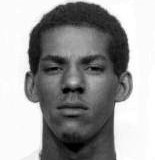
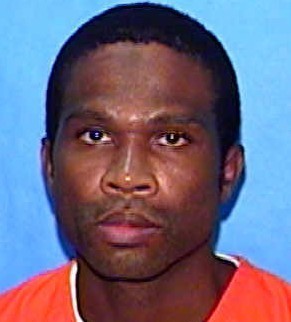
Delma Banks
Murderer Ervil LeBaron
Murderer · USA · 1972
Ervil Morrell LeBaron (1925 to August 16, 1981) was the leader of a polygamous…
35 victims
Ervil LeBaron
Murderer · USA · 1972
Ervil Morrell LeBaron (1925 to August 16, 1981) was the leader of a polygamous…
35 victims
 Brian Kevin Rosenfeld
Murderer · USA · 1985
Brian Kevin Rosenfeld Brian Kevin Rosenfeld was sentenced to three concurrent l…
23 victims
Brian Kevin Rosenfeld
Murderer · USA · 1985
Brian Kevin Rosenfeld Brian Kevin Rosenfeld was sentenced to three concurrent l…
23 victims
 Marvin Gray
Murderer · USA · 1975
Marvin Gray was convicted killer who claimed responsibility for 23 slayings and…
23 victims
Marvin Gray
Murderer · USA · 1975
Marvin Gray was convicted killer who claimed responsibility for 23 slayings and…
23 victims
 Yahweh ben Yahweh
Murderer · USA · 1980
Yahweh ben Yahweh was born and legally named Hulon Mitchell Jr. (October 27, 19…
23 victims
Yahweh ben Yahweh
Murderer · USA · 1980
Yahweh ben Yahweh was born and legally named Hulon Mitchell Jr. (October 27, 19…
23 victims
 Marilyn Plantz
Murderer · USA · 1988
Marilyn Kay Plantz was sentenced to death for the 1988 murder of her husband, J…
1 victim
Marilyn Plantz
Murderer · USA · 1988
Marilyn Kay Plantz was sentenced to death for the 1988 murder of her husband, J…
1 victim
 Kenneth Quince
Murderer · USA · 1979
Kenneth Darcell Quince (also known as Rasikh Abdul-Hakim) was the appellant in…
1 victim
Kenneth Quince
Murderer · USA · 1979
Kenneth Darcell Quince (also known as Rasikh Abdul-Hakim) was the appellant in…
1 victim
 Luis Aguilar Perez
Murderer · USA · 1984
Luis Aguilar Perez was convicted of sexually assaulting and attempting to murde…
2 victims
Luis Aguilar Perez
Murderer · USA · 1984
Luis Aguilar Perez was convicted of sexually assaulting and attempting to murde…
2 victims
 George Russell Henry
Murderer · USA · 1993
George Russell Henry was 28 years old when he was sentenced to death in Cobb Co…
1 victim
George Russell Henry
Murderer · USA · 1993
George Russell Henry was 28 years old when he was sentenced to death in Cobb Co…
1 victim
 Bruno Lüdke
Serial killer · Germany · 1928
Bruno Lüdke (3 April 1908 – 26 April 1944) was an alleged German serial killer.…
84 victims
Bruno Lüdke
Serial killer · Germany · 1928
Bruno Lüdke (3 April 1908 – 26 April 1944) was an alleged German serial killer.…
84 victims
- Gender
- male
- Country
- USA
- Location
- Bowie County, Texas, USA
- Date of birth
- October 30, 1958
- Age at first offence
- 22
- Characteristics
- robbery
- Victim profile
- Richard Whitehead, 16
- Method of murder
- Shooting
- Date(s) of murder
- April 14, 1980
- Years active
- 1980
- Date of arrest
- —
- Status
-
Sentenced to death on October 15, 1980; Supreme Court overturned the death sentence in 2004 and remanded for further proceedings
Case overview
Delma Banks was convicted in a Texas capital murder scheme and was sentenced to death. His death sentence was later overturned by the Supreme Court in 2004.
Timeline
- October 15, 1980 — Delma Banks was sentenced to die for the 1980 killing of 16-year-old Richard Whitehead at a fast food restaurant.
- February 24, 2004 — The Supreme Court lifted Delma Banks’s death sentence, reversed and remanded in Banks v. Dretke (02-8286), 540 U.S. 668 (2004).
- March 12, 2003 — Ten minutes before Delma Banks’s scheduled execution, the Supreme Court issued a writ of certiorari.
- 2004 — The Supreme Court ordered a new trial on the penalty phase of Delma Banks’s conviction.
- April 29, 2005 — A feature story discussed the Supreme Court’s ruling and its implications.
The offence
Delma Banks was sentenced to die for the 1980 killing of 16-year-old Richard Whitehead at a fast food restaurant.
Texas prosecutors said Banks lured Richard Whitehead to a quiet park and shot him three times to steal his car.
Trial
Delma Banks’s trial under the Texas capital murder scheme was divided into two phases:
- a guilt-innocence phase, which resulted in a verdict of guilty; and
- a penalty phase, at which the jury issued special verdicts on three supplemental issues, including the issue of whether there was a probability that Banks would commit other violent crimes in the future.
Based on the jury’s special verdicts, Banks was sentenced to death.
Two key trial witnesses against Banks were Charles Cook and Robert Farr.
Charles Cook
Charles Cook testified that Banks had asked him to dispose of Whitehead’s car and a gun later determined to have been the murder weapon. Cook also testified that Banks had boasted of "kill[ing] a white boy."
On cross-examination, Cook and Farr denied having discussed their testimony with anyone in advance, and specifically denied having reached a deal of any sort with prosecutors in exchange for their testimony.
Later events showed that Cook’s cross-examination testimony was false. Cook received extensive coaching in preparation for the trial from law enforcement officials and prosecutors. Cook later claimed that he had been threatened with prosecution if he did not cooperate against Banks.
Robert Farr
Robert Farr was called as a witness in the sentencing phase. Farr testified that Banks had later sought to retrieve the gun from Cook in order to commit robberies with Farr.
On cross-examination, both Cook and Farr denied having discussed their testimony with anyone in advance and specifically denied having reached a deal of any sort with prosecutors in exchange for their testimony.
Farr was a professional police informer who had been paid several hundred dollars for his role in the Banks prosecution. Farr later provided affidavits recanting parts of his earlier cross-examination testimony.
Investigation and suppression issues in post-conviction proceedings
Delma Banks sought to overturn both his conviction and his death sentence based on allegations that the state violated his due process rights under Brady v. Maryland by failing to disclose information that would have impeached the testimony of Cook and Farr.
Banks later argued that the prosecution violated his Brady rights by:
- failing to produce a 74-page transcript of Cook’s pre-trial interrogation (which would have revealed the extensive role played by law enforcement officials in preparing Cook’s testimony), even after the prosecution represented that it would abide by an "open file" policy and turn over all prosecution material to Banks without the need for discovery;
- failing to disclose Farr’s status as a paid informer;
- failing to correct the false testimony of Cook and Farr during cross-examination; and
- referring to the cross-examination testimony of Cook and Farr in its closing arguments, notwithstanding the fact that the prosecution knew this testimony to be false.
While his petition for post-conviction relief was pending, Banks uncovered new evidence to bolster his claims:
- Cook and Farr provided affidavits recanting their earlier cross-examination testimony.
- A discovery order resulted in the production of Cook’s interrogation transcript.
- At an evidentiary hearing before a federal magistrate, the investigating sheriff in the Whitehead case admitted that Farr had been paid $200 for his services as an informer against Banks.
Habeas proceedings
A district court granted the writ of habeas corpus with respect to Banks’s death sentence only. The district court reasoned that Farr’s undisclosed informant status tainted the punishment hearing. The district court denied the Cook Brady claim on procedural grounds, ruling that the specific issue of the interrogation transcript had not been properly alleged in Banks’s 1996 petition. The district court rejected Banks’s argument that the Cook claim could be heard under the "implied consent" exception of Federal Rule of Civil Procedure 15(b) because it had been litigated without objection before the Magistrate Judge.
On appeal, the United States Court of Appeals for the Fifth Circuit reversed the district court’s judgment on the Farr Brady claim and affirmed the ruling on the Cook Brady claim.
The Fifth Circuit held that the new evidence should have been developed by Banks during the state habeas proceedings. The Fifth Circuit found that because Banks failed to diligently investigate his Farr Brady theories in 1992, he was procedurally barred from doing so in 1996.
The Fifth Circuit alternatively found that the suppression of Farr’s informant status was not material because other witnesses corroborated Banks’s violent tendencies at the sentencing phase.
Finally, the Fifth Circuit affirmed the district court’s ruling on the Cook Brady claim on the grounds that Rule 15(b) was inapplicable to federal habeas corpus proceedings.
Supreme Court proceedings
Writ of certiorari
On March 12, 2003, just ten minutes before Banks’s scheduled execution, the Supreme Court issued a writ of certiorari on the issues of whether the Fifth Circuit had properly denied Banks’s claims regarding the Farr and Cook testimony.
The Supreme Court also granted certiorari on an ineffective-assistance-of-counsel claim, which was not addressed in the Court’s decision due to its disposition of the Farr and Cook Brady issues.
Majority
The Supreme Court ordered a new trial on the penalty phase of Banks’s conviction. With respect to the guilt phase, the Court remanded the case to the lower courts for further consideration of Banks’s claims with respect to the Cook testimony.
The Supreme Court considered three main issues in Banks:
- whether Banks was precluded from introducing evidence concerning Farr which was not discovered until the federal habeas corpus hearing;
- whether the failure to disclose Farr’s relationship with the police violated Banks’s rights under Brady v. Maryland; and
- whether the lower courts correctly denied a certificate of appealability on the grounds that Rule 15(b) does not apply in habeas corpus cases.
Justice Ruth Bader Ginsburg wrote for a 7-2 majority. The decision included the following statements attributed to Justice Ruth Bader Ginsburg:
"When police or prosecutors conceal significant exculpatory or impeaching material, we hold, it is ordinarily incumbent on the state to set the record straight,"
and:
"A rule declaring 'prosecutor may hide, defendant must seek,' is not tenable in a system constitutionally bound to accord defendants due process,"
and:
"Prosecutors conceal material evidence—"
Justice Ginsburg’s written opinion described the Court’s view that the overlapping factual issues implicated both procedural and substantive Brady elements.
Farr Brady issue (procedural and substantive)
The Court rejected the state’s argument that cause had not been established. The state had argued that Banks could not show he had been diligent in his efforts to uncover Farr’s perjury before 1996, emphasizing Banks’s failure to request discovery or investigative assistance on the Farr issue during state habeas proceedings and failure to interview Farr prior to the federal proceedings.
The state also argued that the circumstances of Banks’s arrest "undoubtedly suggest[ed]" that Farr was an informant, so Banks could not have reasonably relied on prosecution representations to the contrary.
The Court rejected that argument because the state had represented that it would follow an "open file" policy. The Court concluded Banks could not be faulted for relying on that representation and was entitled to presume that all material evidence had been disclosed.
The Court disagreed with the Fifth Circuit’s conclusion that Farr’s perjury was immaterial to Banks’s death sentence. The Court noted that Banks had no prior criminal record and concluded that Farr’s testimony was crucial to the jury’s finding that Banks was likely to commit violent acts in the future. The Court further concluded that because of the prosecution’s misconduct, the jury had been forced to consider the issue without the "customary, truth-promoting precau¬tions" that generally accompany informant testimony.
The Court held there was a reasonable probability that the prosecution’s misconduct affected the outcome of the penalty phase, and therefore Banks satisfied both procedural and substantive elements of his Farr Brady claim.
Cook Brady issue and Rule 15(b)
For the Cook Brady claim, the Court found no support for the Fifth Circuit’s conclusion that Rule 15(b) was inapplicable to pre-AEDPA habeas corpus proceedings. The Court found that the Cook Brady claim had been litigated before the magistrate judge without objection and that a certificate of appealability should have been issued on the Cook Brady claim.
Members in agreement and dissent
Chief Justice William H. Rehnquist and Justices John Paul Stevens, Sandra Day O’Connor, Anthony M. Kennedy, David H. Souter and Stephen Breyer fully agreed with Justice Ginsburg’s majority.
Justices Clarence Thomas and Antonin Scalia did not agree with the majority’s view that Banks got a raw deal from prosecutors, but they still would have sent the case back to a federal appeals court for further consideration.
Dissent
Justice Clarence Thomas dissented in part and agreed that a certificate of appealability should have been issued on the Cook Brady claim. Justice Thomas disagreed with the Court’s ruling that the Farr Brady violations were material.
Justice Thomas said the following:
"close call,"
and opined that, given the horrific facts of the murder for which Banks had been convicted as well as other evidence of Banks’s violent tendencies admitted at trial, the jury likely would have sentenced Banks to death even if Farr’s testimony had been excluded.
Justice Thomas still would have remanded Banks’s case for a full airing of the Cook Brady claim.
Other individuals and perspectives mentioned
Banks maintained he was innocent. He claimed he was framed by lying witnesses who were bought off by the state.
The parents of Richard Whitehead insisted on Banks’s guilt while Banks and his mother insisted on Banks’s innocence. They were waiting at a Texas prison the night Banks was to die.
Banks’s backers included former FBI Director William Sessions and a group of former judges who characterized Banks’s case as an example of the wrong way to run a capital trial.
Outcome
The Supreme Court lifted the death sentence and reversed and remanded in Banks v. Dretke (02-8286), 540 U.S. 668 (2004).
The Supreme Court’s action in 2004 meant Banks could continue to press his appeals in lower courts.
Aftermath and reactions
Texas officials publicly vowed to seek reimposition of Banks’s death sentence upon retrial.
Media coverage highlighted that Banks came within minutes of execution before the Supreme Court stayed the execution by agreeing to hear his case.
The feature story included references to media characterizations, including the Washington Post and Fort Worth Star-Telegram.
An editorial in the Austin American-Statesman asked:
"will Texas make a practice of disciplining dishonest prosecutors?"
The Dallas Morning News cited the Banks decision in a call for a moratorium on Texas executions.

Spotted an error, or have more information about this case?