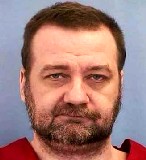
Charles Ray Crawford
Murderer Brian Kevin Rosenfeld
Murderer · USA · 1985
Brian Kevin Rosenfeld Brian Kevin Rosenfeld was sentenced to three concurrent l…
23 victims
Brian Kevin Rosenfeld
Murderer · USA · 1985
Brian Kevin Rosenfeld Brian Kevin Rosenfeld was sentenced to three concurrent l…
23 victims
 Russell Ellwood
Murderer · USA · 1991
Russell Ellwood was a former taxi driver. Authorities suspected him of killing…
20 victims
Russell Ellwood
Murderer · USA · 1991
Russell Ellwood was a former taxi driver. Authorities suspected him of killing…
20 victims
 Robert Martines Perez
Murderer · USA · 1994
Name: Robert Martines Perez · Other name used in proceedings: Robert Martinez P…
15 victims
Robert Martines Perez
Murderer · USA · 1994
Name: Robert Martines Perez · Other name used in proceedings: Robert Martinez P…
15 victims
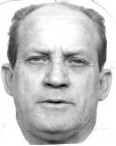 Billy Frank Vickers
Murderer · USA · 1993
Billy Frank Vickers Vickers was executed by lethal injection in Texas on Januar…
14 victims
Billy Frank Vickers
Murderer · USA · 1993
Billy Frank Vickers Vickers was executed by lethal injection in Texas on Januar…
14 victims
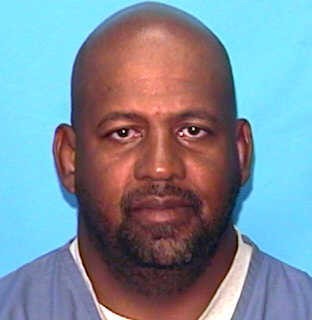 Michael Tyrone Crump
Murderer · USA · 1985
Defendant (Appellant): Michael Tyrone Crump · Plaintiff/Respondent (Appellee):…
2 victims
Michael Tyrone Crump
Murderer · USA · 1985
Defendant (Appellant): Michael Tyrone Crump · Plaintiff/Respondent (Appellee):…
2 victims
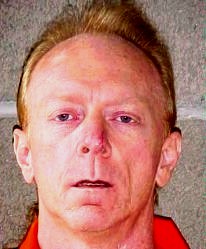 Michael Ray White
Murderer · USA · 1987
Michael Ray White was Caucasian. White and Susan Minter were lovers. Minter was…
1 victim
Michael Ray White
Murderer · USA · 1987
Michael Ray White was Caucasian. White and Susan Minter were lovers. Minter was…
1 victim
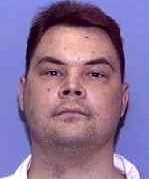 Robert Springsteen
Homicide ? · USA · 1991
Robert Springsteen IV (TDCJ number 999389) was the defendant. Springsteen was b…
4 victims
Robert Springsteen
Homicide ? · USA · 1991
Robert Springsteen IV (TDCJ number 999389) was the defendant. Springsteen was b…
4 victims
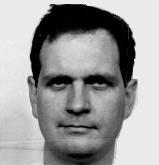 David Lee Herman
Murderer · USA · 1989
December 20, 1989 — David Herman killed Jennifer Burns during a robbery at the…
1 victim
David Lee Herman
Murderer · USA · 1989
December 20, 1989 — David Herman killed Jennifer Burns during a robbery at the…
1 victim
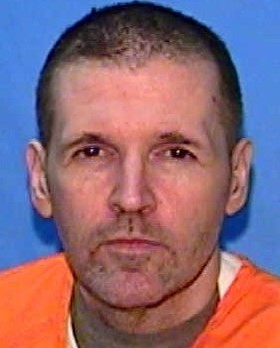 Sonny Ray Jeffries
Murderer · USA · 1993
Sonny Ray Jeffries was sentenced to death on January 22, 1999. Wilma Martin wor…
1 victim
Sonny Ray Jeffries
Murderer · USA · 1993
Sonny Ray Jeffries was sentenced to death on January 22, 1999. Wilma Martin wor…
1 victim
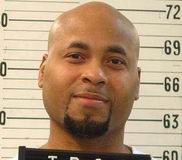 Gregory Robinson
Murderer · USA · 1997
Gregory Robinson was convicted by a Shelby County jury of premeditated first de…
1 victim
Gregory Robinson
Murderer · USA · 1997
Gregory Robinson was convicted by a Shelby County jury of premeditated first de…
1 victim
- Gender
- male
- Country
- USA
- Location
- Tippah County, Mississippi, USA
- Date of birth
- February 10, 1966
- Age at first offence
- 27
- Characteristics
- kidnapping, rape
- Victim profile
- Kristy Ray, 20
- Method of murder
- Stabbing with knife
- Date(s) of murder
- January 29, 1993
- Years active
- 1993
- Date of arrest
- Next day
- Status
-
Sentenced to death
Sentenced to death on April 23, 1994
Parties and identifiers
- Defendant: Charles Ray Crawford
- Victim: Kristy Ray (also identified as Kristy D. Ray)
- Appellant: Charles Crawford
- Appellee: Christopher B. Epps
- Court of Appeals: United States Court of Appeals for the Fifth Circuit
- Related proceedings referenced: Mississippi Supreme Court
- Mississippi Department of Corrections Offender Data Sheet referenced
Timeline
- January 29, 1993 (Friday), ~12:30 p.m. — Twenty year old Kristy Ray went to the bank where her mother worked; Kristy worked part-time at Sunburst Bank while also a student at Northeast Mississippi Community College.
- January 29, 1993 (Friday), ~5:15 p.m. — Kristy and her mother, Mary Ray, left the bank, with plans to see each other later that night at their house in Chalybeate, a community near Walnut, Mississippi.
- January 29, 1993 (Friday), ~6:45 p.m. — Mary tried to call Kristy but received no answer.
- January 29, 1993 (Friday), ~7:00 p.m. — Mary returned to the house; Kristy’s car was not there; Mary found a ransom note on a table.
- September 23, 1993 — Charles Ray Crawford was indicted in the Circuit Court of Tippah County, Mississippi.
- 1994 (change of venue) — Venue changed from Tippah County to the Circuit Court of Lafayette County, Mississippi.
- April 18, 1994 — A jury was seated.
- April 22, 1994 — Crawford was found guilty of all counts.
- April 23, 1994 — The jury returned a sentence of death for capital murder conviction; the death sentence was set with an execution date of June 10, 1994.
- June 10, 1994 — Execution date was set; the execution of Crawford’s death sentence was stayed pending resolution of appeal.
- March 12, 1998 — Mississippi Supreme Court decision date referenced: March 12, 1998 (En Banc).
Background
Charles Ray Crawford was sentenced to death in Lafayette County in 1994 after a change of venue case from Tippah County.
The offence
Victim and events leading to the capital murder
On Friday, January 29, 1993, approximately 12:30 p.m., twenty year old Kristy Ray went to the bank where her mother worked. Kristy worked part-time at the Sunburst Bank, while she was also a student at Northeast Mississippi Community College. At about 5:15 p.m., Kristy and her mother, Mary Ray, left the bank, with plans to see each other later that night at their house in Chalybeate, a community near Walnut, Mississippi.
Mary tried to call Kristy around 6:45 p.m. but received no answer and assumed Kristy was visiting her boyfriend. Mary finally got to her house at about 7:00 p.m. but Kristy’s car was not there. When Mary walked into her house, she found a ransom note on a table. The note also contained a crude map and read:
“There will be a red flag somewhere on this block Tuesday, 12:00 midnight, fifteen thousand dollars in gym bag or she dies. No police.”
Mary noticed that Kristy had left her purse, that Kristy’s room was in disarray, and that the phone was dead.
Mary drove to Walnut, first stopping at the home of Kristy’s boyfriend, Brian Mathis, and then going to the video rental store where Kristy worked on the weekends; no one there had seen Kristy. Mary called her husband, Tommy Ray, and then called 911 to report Kristy’s disappearance to the Tippah County Sheriff’s Department. After preliminary investigations, the Sheriff’s Department contacted the FBI.
Mary later returned home and found signs of forced entry, including a screen cut out over a window in Kristy’s room and a stacking pallet left leaning against the house under Kristy’s window. Mary also discovered that someone had been through one of the drawers in Mary’s and Tommy’s bedroom.
Ransom note discovered in Crawford’s family home
Also on the day of Kristy’s disappearance, Crawford’s family discovered a ransom note in their attic similar to the one found by Mary Ray. Fearing Crawford, who was due for trial the following Monday for assault and rape, might kidnap someone, Crawford’s mother, wife, and grandfather reported the note to William Fortier, the attorney representing Crawford on other pending criminal charges. Fortier alerted law enforcement investigating the facts surrounding Kristy’s disappearance. On the following day, Fortier’s law clerk, Shawn Akins, met with law enforcement officials and turned over medical records while officials tried to determine whether Crawford was capable of committing the crime against Kristy.
Search, arrest, and location of the body
A command post was established at the Chalybeate school on the Saturday following Kristy’s disappearance. Authorities stationed law enforcement officers at the residence of Mr. Miles, Crawford’s former father-in-law. Officers reported seeing Crawford approaching the residence.
Officers Jim Wall and Sammy Pickens of the Mississippi Highway Patrol proceeded to the place where Crawford was seen. At the scene were the sheriff of Tippah County, his deputies, and several FBI agents. When Crawford returned to the residence on Saturday, he was arrested carrying a double-barrel shotgun and a switchblade.
Crawford was transported by Wall and Pickens. Wall testified that in the car he asked Crawford if he recognized him, and Crawford replied yes. Wall advised Crawford of his Miranda rights. After Wall was done, Crawford asked something to the effect of “Why are you asking me this,” or “What is going on here.” Crawford said that he didn’t know Kristy personally but that he knew her when he saw her. Wall testified that Crawford said he thought his leg was broken but that he did not want to go to a hospital.
Wall and Pickens were originally directed to take Crawford to the Tippah County Jail in Ripley, but en route to the jail they were instructed to bring Crawford back to the command center in Chalybeate. They continued with Crawford to Chalybeate. Upon arrival, Wall and Pickens turned Crawford over to Joseph Jackson, the FBI agent in charge of FBI operations in Mississippi. Jackson re-Mirandized Crawford and proceeded to interview him with Agents Jim Maddock and Tom Bush.
Crawford did not sign a waiver of his rights but immediately responded saying he could not understand why the officers wanted to talk to him but that he would answer questions. Crawford complained that he had not been doing anything and that his back was injured as a result of falling into a well. During the interrogation, Crawford was allowed to lie prone on the floor to alleviate any back pain. Initially Crawford said that he had been hunting. Jackson asked whether Kristy was alive and Crawford began to cry, admitting Kristy was no longer alive. When asked, Crawford agreed to lead law enforcement to her body. Jackson testified that the questioning took about twenty minutes.
Crawford and law enforcement left the command center at about 8:00 p.m. that Saturday night. Crawford escorted the search team through rugged terrain and thick woods and actually led the search team. Crawford never complained about his back during the search. The team reached a heavily wooded area covered with leaves, and Crawford indicated Kristy was there. When Kristy’s body was found, Crawford asked investigators why they did not finish him off. Kristy was found at approximately 9:48 p.m., approximately four hundred yards from an abandoned barn (the Hopper Barn).
Officer Wall raked the leaves back to uncover Kristy’s body. Wall found her hands cuffed behind her back around a small cedar sapling. A sock had been stuffed into her mouth, and a gag was around her head to keep it in place. Kristy was not blindfolded. Her jeans had been pulled down below her hips.
Cause of death and injuries
Dr. Steven Hayne, a pathologist, testified that Kristy suffered a single stab wound to her chest. He testified that she had multiple abrasions over the right and left lower extremities and scrapes to the skin on her back and buttocks. She also had scrapes on her face and chest, along with contusions on her lips and abrasions on her wrist. Hayne testified the wrist injuries were consistent with Kristy being handcuffed.
Hayne testified that scrapes on Kristy’s buttocks and thigh occurred while Kristy was alive and were consistent with injuries a person would receive while engaged in a fight or flight response. He testified the injuries were consistent with Kristy being dragged along a hard surface, possibly branches or twigs. He further testified the injuries were consistent with those occurring on someone attempting to avoid or resist a rape. Hayne testified the abrasions on Kristy’s face and contusion on her lip were consistent with her face being pressed against a hard surface rather than being dragged.
Hayne testified that Kristy died from a large stab wound to the left mid-chest which punctured her heart and left lung, causing extensive internal and external hemorrhaging. Hayne testified it took Kristy between one and two minutes to die.
Hayne testified that the wound that caused Kristy’s death could have been made by a Marine Corps-style Ka-Bar knife. The wound measured one and one-quarter inches in width and four and one-half inches in depth, corresponding with that knife. Kristy also suffered “multiple contusions that measured up to approximately one centimeter which would be three-eighths of an inch about the anal orifice,” suggesting penetration of the anus.
Charges and convictions
Indictment counts and statutes
On September 23, 1993, Crawford was indicted in the Circuit Court of Tippah County, Mississippi, for:
- Murder of Kristy D. Ray while engaged in the commission of the crime of kidnaping in violation of Miss.Code Ann. § 97-3-19(2)(e).
- Burglary of an occupied dwelling in violation of Miss.Code Ann. 97-17-21.
- Rape in violation of Miss.Code Ann. 97-3-65(2).
- Sexual battery in violation of Miss.Code Ann. 97-3-95(1)(a).
The indictment also alleged Crawford committed the above crimes as an habitual offender, based on a prior conviction for assault and rape under Miss.Code Ann. § 97-3-19(2)(e).
Trial verdicts
Crawford was found guilty of all counts on April 22, 1994.
- The jury convicted him and later sentenced him as described below.
Investigation and evidence
Police and FBI involvement
After Kristy’s disappearance was reported to the Tippah County Sheriff’s Department, preliminary investigations were conducted, and the Sheriff’s Department contacted the FBI.
A command post was established at the Chalybeate school, and law enforcement was stationed at the residence of Mr. Miles. Officers Jim Wall and Sammy Pickens of the Mississippi Highway Patrol proceeded to the place where Crawford was seen and later transported him as described in the account of his arrest and interrogation.
Confession and interviews
On Saturday, following arrest and re-Mirandizing, Crawford was interviewed by Joseph Jackson with Agents Jim Maddock and Tom Bush. Jackson testified questioning took about twenty minutes. Crawford led investigators to Kristy’s body.
On the Monday following the arrest and the location of Kristy’s body, Crawford gave a more detailed account of the kidnaping and murder to the FBI. Agent Newsom Summerlin of the FBI interviewed Crawford at the Union County Sheriff's Office with Lieutenant Steve Williams of the Mississippi Highway Patrol. Summerlin testified Crawford read an interrogation advice or rights form and signed a waiver of those rights. Summerlin testified Crawford stated he did not know Kristy but had seen her around the Walnut, Mississippi area.
Crawford stated he was worried about “an upcoming event” and wanted to be alone. When he wanted to be alone, he went to the Hopper Barn. Crawford stated that early Friday, January 29, 1993, his mother, Johnny Ruth Smith, dropped him off along Providence Road near the Hopper Barn to go hunting; he had an over-and-under double barrel shotgun.
Crawford stated he had a knife similar to a Marine Corps Ka-Bar knife and a .22 caliber revolver. Crawford stated he was stockpiling food and drink at the Hopper Barn for about one month, so when he got to the barn he had cookies and a drink.
Crawford stated he was concerned about his upcoming event and considered running away but had no money. He also considered suicide but could not bring himself to do it. He stayed at the barn until midday, left to hunt and hike, reached an unfamiliar area, decided to build a fire, and put it out due to concern someone would see smoke. He stated he then had a blackout and the next thing he remembered was being inside the Ray residence.
Crawford stated that when he came out of the blackout he heard someone crying in one of the back bedrooms. He stated Kristy was on the floor with hands cuffed behind her back. Crawford stated he put on a ski mask so Kristy would not be able to identify him and asked Kristy where the keys to her car were. Crawford stated he took Kristy and put her in the car and drove away. He stated he took Kristy from the house because he did not know what he was going to do and figured it was better to take her with him.
Crawford denied writing or seeing the ransom note found by Mary Ray. He stated Kristy was very upset when they left her house that Friday night, but that as they drove around and began talking she began to calm down. Crawford claimed they drove for about forty-five minutes to an hour talking. He then abandoned the car and took Kristy out while she remained handcuffed and he still had the knife, revolver, and shotgun.
Crawford claimed he removed the handcuffs when she promised not to run away. He stated the two walked back and forth along Jonesburough Road, and since it was getting cold they should go to the Hopper Barn and spend the night there. Crawford claimed that as they approached the barn he fell into a sinkhole up to his neck, tossing his shotgun away. He claimed Kristy asked if he was all right, picked up the shotgun, and helped pull him out. Crawford claimed he and Kristy drank, ate cookies, and huddled together in the barn for warmth and talked throughout the night.
Crawford stated that next morning Saturday he heard a police siren and thought he saw a sheriff's office car coming away from his grandparents’ home near the Hopper Barn. He stated he told Kristy it was the law and she tried to talk him into turning himself in. Crawford then fled into the woods with his shotgun and knife. He claimed Kristy ran after him to convince him to turn himself in. Crawford claimed Kristy told him no one had been hurt and she would help him if he turned himself in. He stated he was concerned about explaining abducting her.
Crawford stated he felt low and that Kristy had convinced him to let her go. Summerlin testified that until that time Crawford said he kept the ski mask on at all times except when it was dark inside the barn. Crawford stated that when Kristy convinced him to let her go, he then took his mask off and Kristy allegedly recognized him as someone she had seen around town. Crawford then stated as they began walking back to Kristy’s car he gave her the shotgun. Crawford claimed another blackout.
Crawford stated the next thing he remembered was sitting on a stump in the woods wearing a T-shirt, blue jeans, and no shoes. He stated Kristy lay at his feet, handcuffed behind her back, dead. He claimed she was fully clothed with one of his socks in her mouth. He then decided to hide the body and dragged Kristy by her feet across the ground, which he explained as how her pants and underwear were pulled down and her shirt pulled up. Crawford covered her body with leaves. He stated he sat on the tree stump while thinking and then put boots back on, retrieved shotgun and knife, and headed back toward Providence Road area.
Crawford stated he knew people were looking for him but did not know why. When he neared Providence Road he saw a patrol car, sat on the hillside hidden from view, and when the patrol car left he crossed into another wooded area. He claimed he fell into an abandoned well about ten feet deep and had to use his knife to dig himself out.
Crawford continued toward his residence, a house belonging to his ex-father-in-law, and as he approached he was arrested. After discussing with Summerlin Crawford realized taking Kristy was wrong. Crawford later stated he initially denied knowledge of Kristy’s disappearance to buy time to think about what he would do. Crawford also stated he must have killed her but could not remember doing so. He told Summerlin he sometimes had blackouts and could not control himself.
Summerlin noted Crawford’s statements about ski mask use and the sequence of events as described above.
Physical evidence and forensic testimony
Stephen Thompson of the Mississippi Highway Patrol testified that clothing, bedding, handcuff keys, a padlock with keys, ammunition, food and soft drinks were found in the Hopper Barn.
Tim Wilbanks testified that on February 7, 1993 volunteer searchers found a pair of shoes, men’s briefs, long john bottoms, and a T-shirt near where Kristy’s body was found. Wilbanks stated the shoes looked like they had been thrown; the underwear and T-shirt were found under a brush pile.
Joe Foster testified that he later found a knife and a pistol in a nylon holster in his field located approximately one-quarter mile from the Hopper Barn.
Dick Koster of the Walnut Police testified he searched the area where the knife and gun were found and discovered a belt with a Harley Davidson buckle with the name “Chuck” stamped on the back. Koster testified this belt was similar to one worn by Crawford, whose nickname is “Chuck.” Crawford previously admitted investigators he owned a Marine Corps Ka-Bar knife and a Taurus .22 caliber revolver. The weapons and belt matched the descriptions Crawford gave investigators of the ones he had on the day of Kristy’s disappearance.
Joe Andrews, of the Mississippi Crime Lab, testified hairs collected from clothing found in the Hopper Barn were compared with known hair samples of Kristy Ray and exhibited the same characteristics. Andrews also testified hairs found on clothing recovered by Wilbanks exhibited the same microscopic characteristics as pubic hairs taken from Crawford.
Debbie Haller, a forensic serologist with the Mississippi Crime Lab, testified stains found on the briefs appeared to be a mixture of blood and seminal fluid; the long johns also contained blood stains. Haller testified the crime lab could not determine the blood group type from these stains. Haller forwarded samples from the briefs and long john bottoms to Cellmark Diagnostic Laboratories for DNA testing along with known blood samples from Kristy Ray. A vaginal swab taken from Kristy’s body determined the presence of seminal fluid. Heller determined that Crawford could be included as a possible source of the seminal fluid.
Julie Ann Cooper of Cellmark testified DNA evidence extracted from the vaginal swab matched known DNA samples of Crawford. Cooper testified the mix of blood and semen found on the briefs matched Kristy and Crawford. Cooper testified the bloodstain on the long johns also matched both Kristy and Crawford.
Defence and mental health evidence
Crawford presented an insanity defense through family member testimony and Dr. Stanley Russel, a psychiatrist with the Mississippi Department of Corrections. Russel treated Crawford during the time he was housed at Parchman, from June 1993. Russel testified Crawford suffered from depression and periods of time lapse about which he had no memory. Russel diagnosed Crawford as a psychogenic amnesiac and referred to prior medical history including medication prescribed by a psychiatrist when Crawford was ten, hospitalization in East Mississippi State Hospital in 1989, hospitalization at a psychiatric facility in Memphis in 1991, and two forensic evaluations at Whitfield. Russel testified Crawford had been diagnosed with bipolar disorder in 1989 and had been prescribed lithium. Russel testified regarding Crawford’s anger and resentment as a child and antisocial behavior as a teenager. Russel testified that in his opinion Crawford satisfied “the M'Naghten test for not being criminally responsible for his actions as a result of mental disorder that affected his reasoning to the point that he was not aware of the nature and consequence of his behavior.”
Rebuttal testimony was presented by Dr. Chris Lott, a clinical psychologist with the Mississippi State Hospital. Lott testified he saw no evidence Crawford ever suffered from bipolar illness based on review of diagnosis at East Mississippi State Hospital. Lott testified he did not think Crawford had a disease of the mind, an illness, or major mental disorder and that there was nothing in Crawford’s records showing delusion, irrational belief, or hearing voices. Lott testified that Russel improperly diagnosed Crawford as a psychogenic amnesiac because Crawford “appeared to be malingering his problems or memory deficits.” Lott testified Crawford showed premeditation and knew the nature and quality of his actions and could distinguish between right and wrong.
Dr. Reb McMichael, a forensic psychiatrist with the Mississippi State Hospital, testified Crawford did not meet requirements of M'Naghten at time of the crime. McMichael testified psychogenic amnesia was rare and in his opinion Crawford did not have it. McMichael believed Crawford planned an act and purposely concealed Kristy Ray’s body, showing he knew the nature and quality of his act—showing the act was wrong and that he did not want to get caught.
Trial
Voir dire and evidentiary issues raised on appeal
During trial, Crawford raised multiple points of error on appeal, including objections relating to:
- suppression of his confession,
- notice of aggravating circumstances,
- jury voir dire on automatic death voting and mitigation,
- prosecutor vouching for sufficiency of evidence at guilt and sentencing,
- prosecutor argument about mitigation and sympathy,
- jury instruction on kidnapping and asportation,
- testimony on DNA statistical calculations,
- victim impact testimony,
- sentencing instructions including “especially heinous, atrocious or cruel” and mitigation burden/limits,
- indictment language regarding habitual offender status,
- proportionality of death penalty due to mental health problems,
- cumulative error.
Sentencing
Judge-imposed sentences (habitual offender determinations)
Following conviction, the trial judge conducted a hearing and determined Crawford to be an habitual offender as to counts I through III.
The judge sentenced Crawford to:
- fifteen years without parole for burglary conviction,
- life imprisonment without parole for rape conviction,
- thirty years without parole for sexual battery conviction,
with all those sentences to be served consecutively without parole benefit.
Following the judge’s sentencing, the jury heard evidence and arguments in aggravation and mitigation of the sentence of death. The jury returned a death sentence for capital murder on April 23, 1994.
The judge set an execution date of June 10, 1994. The execution of Crawford’s death sentence was stayed pending resolution of his appeal of the four convictions, habitual offender status, and death sentence.
Jury sentences for non-capital counts (as stated in procedural history and outcome)
The record also states the jury sentenced Crawford to life imprisonment for the rape prior to sentencing by the judge for habitual offender determinations with the judge then sentencing for counts I through III as described.
Appeals
Mississippi Supreme Court
The Supreme Court of Mississippi affirmed Crawford’s convictions for capital murder, rape, burglary and sexual battery and their corresponding sentences, including the sentence of death by lethal injection.
The Mississippi Supreme Court stated it found no cause for reversal in any of Crawford’s assignments of error and affirmed his conviction and death sentence.
United States Court of Appeals for the Fifth Circuit reference
The case header included a reference to the United States Court of Appeals For the Fifth Circuit and Christopher B. Epps, but the substantive details included were those of the Mississippi Supreme Court decision.
Outcome of appellate issues
- The Mississippi Supreme Court affirmed the denial of Crawford’s motion to suppress his confession.
- The Mississippi Supreme Court held Crawford received adequate notice of aggravating circumstances.
- The Mississippi Supreme Court held no error occurred regarding voir dire of the venire as to automatic death imposition and consideration of mitigation; assignments III and IV were without merit.
- The Mississippi Supreme Court treated multiple prosecutorial-argument claims as procedurally barred due to lack of contemporaneous objection.
- The Mississippi Supreme Court found no merit in the kidnapping-asportation instruction challenge.
- The Mississippi Supreme Court found the DNA testimony and statistical evidence issues did not warrant reversal.
- The Mississippi Supreme Court found victim impact testimony was properly admitted during sentencing.
- The Mississippi Supreme Court found no error in sentencing instruction 2-A as to limitation of mitigation or burden shifting.
- The Mississippi Supreme Court rejected the claim that using kidnapping as both an element and an aggravating circumstance failed constitutional narrowing.
- The Mississippi Supreme Court rejected the habitual offender indictment defect claim as procedurally barred.
- The Mississippi Supreme Court held the death penalty was not excessive or disproportionate given the mental health issues presented, and found the aggregate error argument without merit.
Outcome
The Supreme Court of Mississippi affirmed:
- conviction and death sentence for capital murder,
- conviction and life imprisonment for rape,
- conviction and 15 years for burglary of an inhabited dwelling,
- conviction and 30 years for sexual battery,
and it affirmed the habitual offender determinations as described.
The execution of Crawford’s death sentence was stayed pending appeal resolution.
Other details
Execution method referenced
The outcome stated the death sentence was “death by lethal injection.”
Appellate procedural details and counsel
The decision included references to:
- David O. Bell, Oxford, for Appellant,
- Michael C. Moore, Attorney General, Marvin L. White, Jr., Asst. Atty. Gen., Leslie S. Lee, Special Asst. Atty. Gen., Jackson, for Appellee.
Victim impact testimony and separate writing
A separate writing reiterated that extreme caution should be taken when admitting victim impact evidence in the penalty phase of a capital murder case. It referenced:
- Payne v. Tennessee,
- Miss. R. Evid. 402,
- Miss. R. Evid. 401,
- Wilcher v. State,
- State v. Bernard.
The separate opinion discussed concerns about testimony approaching impermissible particularized narrations of emotional, psychological and economic sufferings, and it stated it concurred with the result on the victim impact issue while emphasizing that victim impact testimony should be limited to specific details about dependents, parents, or siblings and provide a “quick glimpse” into the victim’s life.
Addition of jury deliberation-related quoted procedural fragment
In footnote 3, the decision included voir dire remarks by Pannell and the trial judge’s responses. The record included this quoted fragment:
You [sic] each telling me that you would do that. That you would listen to that to apply those. Of course you would be give instruction of law that you follow those instructions and not go off on what you believe the law ought to be but follow the law as the Court gives it to you. In terms of everything in this case. Not only the guilty phase and the penalty phase, mitigation and aggravation.(emphasis added).
Other reference lists
The decision included an appendix listing “DEATH CASES AFFIRMED BY THIS COURT,” “DEATH CASES REVERSED AS TO GUILT PHASE AND SENTENCE PHASE,” “DEATH CASES REVERSED AS TO PUNISHMENT AND REMANDED FOR RESENTENCING TO LIFE IMPRISONMENT,” and other categories, including case names and citations. Those lists were included without case-specific additional details tied to Crawford’s case beyond the fact of the list.
Footnotes included in the record
- Footnote 1 stated Crawford claimed he must have lost his revolver when he fell in the sinkhole.
- Footnote 2 stated that all other pertinent facts would be discussed as they related to particular assignments of error asserted.
- Footnote 4 addressed an issue about whether the error concerned Julie Ann Cooper’s testimony and noted that within the brief, Crawford referred to Lisa Forman; the decision stated it would analyze Forman’s testimony.
- Footnote 5 referenced National Research Council reports and comments about population genetics assumptions and product rule reliability.
- Footnote 6 included a quoted excerpt from Frye:
Just when a scientific principle or discovery crosses the line between the experimental and demonstrable stages is difficult to define. Somewhere in this twilight zone the evidential force of the principle must be recognized, and while courts will go a long way in admitting expert testimony deduced from a well-recognized scientific principle or discovery, the thing from which the deduction is made must be sufficiently established to have gained general acceptance in the particular field in which it belongs.Frye, 293 F. at 1014.
Named persons appearing in the proceedings
- Kristy Ray (victim)
- Mary Ray (mother)
- Brian Mathis (Kristy’s boyfriend)
- Tommy Ray (Mary’s husband)
- Charles Crawford’s mother (named in one place as Johnny Ruth Smith in the confession narrative)
- Johnny Ruth Smith (Crawford’s mother, per Crawford’s statement)
- Joseph Jackson (FBI agent)
- Jim Maddock (agent)
- Tom Bush (agent)
- Agent Newsom Summerlin (FBI agent)
- Lieutenant Steve Williams (Mississippi Highway Patrol)
- Officers Jim Wall and Sammy Pickens (Mississippi Highway Patrol)
- Sheriff of Tippah County (name not provided)
- Shawn Akins (Fortier’s law clerk)
- William Fortier (attorney for Crawford on other pending charges)
- Dr. Steven Hayne (pathologist)
- Stephen Thompson (Mississippi Highway Patrol)
- Tim Wilbanks (witness to search findings)
- Joe Foster (found knife and pistol)
- Dick Koster (Walnut Police)
- Joe Andrews (Mississippi Crime Lab)
- Debbie Haller (forensic serologist; also spelled Heller in later portion of the record)
- Julie Ann Cooper (Cellmark)
- Lisa Forman (population geneticist referenced and quoted in analysis)
- Dr. Stanley Russel (psychiatrist)
- Dr. Chris Lott (clinical psychologist)
- Dr. Reb McMichael (forensic psychiatrist)
- Dr. Martin Webb (psychologist referenced in discussion of mental health issues)
- Dr. Chris Lott was quoted in relation to malingering and premeditation.
- Dr. Donald Guild (mentioned in proportionality comparison)
- District Attorney Little (referenced in closing argument vouching claim)
- Judge and jurors referenced generally; juror names were not established beyond the quoted fragment that included “Pannell” and “Little” in voir dire and objections.
Spotted an error, or have more information about this case?