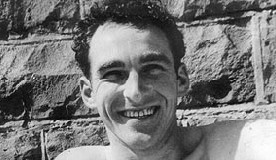
Elmer Crawford
Mass murderer Colin Richard Forman
Mass murderer · Australia · 1977
5 January 1977 — Colin Richard Forman carried out an aircraft suicide attack at…
4 victims
Colin Richard Forman
Mass murderer · Australia · 1977
5 January 1977 — Colin Richard Forman carried out an aircraft suicide attack at…
4 victims
 Robert Paul Long
Mass murderer · Australia · 2000
Robert Paul Long was an itinerant fruit-picker who lived in Australia and was d…
15 victims
Robert Paul Long
Mass murderer · Australia · 2000
Robert Paul Long was an itinerant fruit-picker who lived in Australia and was d…
15 victims
 Roger Dean
Mass murderer · Australia · 2011
Roger Kingsley Dean was an aged-care nurse and worked at Quakers Hill Nursing H…
11 victims
Roger Dean
Mass murderer · Australia · 2011
Roger Kingsley Dean was an aged-care nurse and worked at Quakers Hill Nursing H…
11 victims
 Julian Knight
Mass murderer · Australia · 1987
Julian Knight was a 19-year-old former Australian Army officer cadet who was ar…
7 victims
Julian Knight
Mass murderer · Australia · 1987
Julian Knight was a 19-year-old former Australian Army officer cadet who was ar…
7 victims
 Wade Frankum
Mass murderer · Australia · 1991
Wade Frankum Committed suicide by shooting himself the same day; in 1991 Wade F…
7 victims
Wade Frankum
Mass murderer · Australia · 1991
Wade Frankum Committed suicide by shooting himself the same day; in 1991 Wade F…
7 victims
 George David Silva
Mass murderer · Australia · 1911
George David Silva (1884–1912) was an Australian multiple murderer. Silva was o…
6 victims
George David Silva
Mass murderer · Australia · 1911
George David Silva (1884–1912) was an Australian multiple murderer. Silva was o…
6 victims
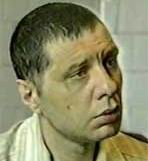 Ilshat Kuzikov
Homicide · Russia · 1992
Ilshat Kuzikov was a St Petersburg resident who was suspected of killing three…
3 victims
Ilshat Kuzikov
Homicide · Russia · 1992
Ilshat Kuzikov was a St Petersburg resident who was suspected of killing three…
3 victims
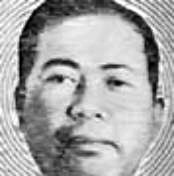 Kiyoshi Okubo
Serial killer · Japan · 1971
Kiyoshi Okubo was executed by hanging on January 22, 1976. Kiyoshi Okubo (大久保 清…
8 victims
Kiyoshi Okubo
Serial killer · Japan · 1971
Kiyoshi Okubo was executed by hanging on January 22, 1976. Kiyoshi Okubo (大久保 清…
8 victims
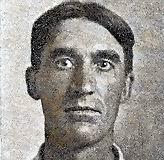 Henry Layer
Mass murderer · USA · 1920
Henry Layer Henry Layer was born Heinrich C. Layer on November 12, 1884 in Eige…
8 victims
Henry Layer
Mass murderer · USA · 1920
Henry Layer Henry Layer was born Heinrich C. Layer on November 12, 1884 in Eige…
8 victims
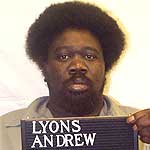 Andrew Lyons
Murderer · USA · 1992
Andrew Lyons (defendant) As of September 1992, Andrew Lyons and Bridgette Harri…
3 victims
Andrew Lyons
Murderer · USA · 1992
Andrew Lyons (defendant) As of September 1992, Andrew Lyons and Bridgette Harri…
3 victims
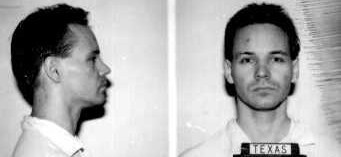 Michael Roy Toney
Murderer? · USA · 1985
Michael Roy Toney (December 29, 1965 – October 3, 2009) · Name as recorded: Mic…
3 victims
Michael Roy Toney
Murderer? · USA · 1985
Michael Roy Toney (December 29, 1965 – October 3, 2009) · Name as recorded: Mic…
3 victims
- Gender
- male
- Country
- Australia
- Location
- Glenroy, Victoria, Australia
- Date of birth
- 1930
- Age at first offence
- 40
- Characteristics
- murder-suicide, attempt to collect insurance money
- Victim profile
- His pregnant wife Theresa, 35, and their children Katherine, 12, James, 8, and Karen, 6
- Method of murder
- Electrocution - Hitting with a hammer
- Date(s) of murder
- July 1, 1970
- Years active
- 1970
- Date of arrest
- —
- Status
-
Imprisoned
Never arrested. On the run since 1970
Case overview
Elmer Crawford was accused of murdering pregnant mother Therese Crawford and her three children—Kathryn (13), James (8), and Karen (6)—at their Glenroy home. The bodies of Therese and her children were found inside the family FE Holden vehicle after it was located at the bottom of a cliff at Loch Ard Gorge in Port Campbell, Victoria, Australia.
Crawford murdered his wife and three children in their Glenroy home. An inquest in July 1971 found that Elmer Crawford murdered his wife and three children.
The offence
Crawford constructed an electrocution device using a 15 metre length of electrical lead and alligator clips. He attached the alligator clips to his wife's ears while she slept and electrocuted her.
He then beat his children to death, presumably using a hammer. He loaded the children's bodies into the family's FE Holden vehicle.
After driving the vehicle with the bodies about 200 km to Port Campbell, he pushed the car containing the bodies over the cliff edge in an effort to make the crime look like murder-suicide.
Crawford waited until his wife and children were asleep before murdering them. He used his electrocution device on his wife, eldest daughter Kathryn and James. He bashed Kathryn and James in the head, almost certainly with a hammer, fracturing their skulls. Little Karen was spared electrocution but was beaten to death with the hammer.
Crawford removed the back seat of his 1956 Holden sedan so he could stack the four pyjama-clad bodies inside. He wrapped each body in a blanket and then put a tarpaulin over them. As an extra precaution, in case the car and bodies were later found, he attached a hose to the exhaust and jammed it through the driver's side window to make it look as though his wife had committed suicide after beating her children to death.
Investigation
A July 1971 coroner's inquest found that Elmer Crawford murdered his wife and three children in their Glenroy home.
Cliff rescue volunteers searched the vehicle after it was discovered perched on a ledge. Cliff rescue volunteers George Cumming and Cecil Burgin were lowered down, secured the car to prevent it slipping into the sea, then started to search it. Cumming said: "We lifted the tarpaulin and Cec Burgin said 'I can see some feet' and as the tarpaulin was lifted further I saw three sets of feet," and when the tarpaulin was moved he said: "I saw four bodies wrapped in bed sheets."
Homicide squad detective Adrian Donehue, who went on to become head of the major crime squad, was at the top of the cliff that day. Donehue said: "I made an examination of each of the bodies as they were brought up," and he said: "He was the first to realise the savagery of a crime that has haunted several generations of Victorian police."
Detectives later broke into the home when the door was unanswered. They discovered blood-stained sheets and mattresses. Detectives found a still-foaming carpet cleaning detergent bottle on a table and liquid over blood trails in the hallway.
Timeline
- July 1, 1970 — Crawford bashed then electrocuted Therese Crawford and her children Kathryn, James, and Karen.
- July 1, 1970 (between sunset and early hours of July 2) — Police believe Crawford murdered his family and tried to dispose of the bodies.
- July 2, 1970 (1.30pm) — Sightseers noticed the FE Holden vehicle perched precariously on a ledge at the Blowhole.
- July 2, 1970 (5.50pm) — Crawford was seen in the driveway of his home.
- July 2, 1970 (6.20pm) — Broadmeadows police officer John McCarty was sent to the Crawford home after a registration number check revealed the car was owned by Crawford.
- July 2, 1970 (10pm) — McCarty returned after receiving information from Port Campbell that there was a rifle in the car and blood on the seats; he and another officer broke in when no-one answered the door.
- July 1971 — A coroner's inquest found that Elmer Crawford murdered his wife and three children.
Arrest
Elmer Crawford had never been arrested and had been on the run since 1970.
Trial
Sentencing
No sentencing information was included.
Appeals
No appeals information was included.
Outcome
Police believed that Elmer Crawford got away with murder of Katherine, his pregnant wife Therese, and their younger children James and Karen.
DNA comparison later ruled out any connection to a body in Texas.
In July 2010, Victorian Police announced that they were, in conjunction with the FBI, attempting to identify a man who died in 2005 in San Angelo, Texas (USA) that they believed to be Elmer Kyle Crawford. On 27 August 2010 it was announced that comparison of DNA from a Crawford blood relative ruled out any connection to the body in Texas.
Aftermath
A reward of A$100,000 was offered in 2008 for information leading to his arrest.
Greg Fogarty lived in the same street as the Crawfords. In 1996 he wrote the book Almost Perfect, which detailed his lifelong obsession with finding out the truth about the case. The case was featured in an episode of Sensing Murder titled Almost Perfect that aired on 30 May 2006.
Brenda Connor’s best friend Katherine Crawford was slain by her own father, Elmer Crawford. Each morning that winter, she pretended Katherine still walked beside her to school. Brenda Connor said: "I often wonder what she'd be doing now, how her life would have been, had she lived," and she said: "She never got to experience dating or getting married or going to dances. All the things that we've done through life."
Detective Mark Colbert of the homicide squad cold case unit said police had no information suggesting Elmer Crawford is dead. Police believed he should be brought to justice.
Other details
The family car was located at the bottom of a cliff at Loch Ard Gorge in Port Campbell, Victoria, Australia on 2 July 1970. The bodies of Therese and her children were still inside.
Two weeks before the murders, Elmer and his wife drafted new wills that would leave a considerable fortune to Elmer Crawford in the event of his family's death.
At 8.15am on the day of the killings, Brenda Connor walked the hundred metres from her Cardinal Road house to fetch Katherine for their walk to school. Connor said: "I said, 'I'm just here for Katherine,' and he said, 'She's not going to school today, she's got the flu.' I said, 'oh, OK.' So I left, didn't think anything of it." Connor said it was odd because Crawford usually was at work at that time.
Broadmeadows police officer John McCarty was sent to the Crawford home at 6.20pm after a registration number check revealed the car was owned by Crawford.
Constable McCarty went back to the station after the knock went unanswered. Police presume it was at this point Crawford abandoned his plan to pretend his wife and children had left him and fled himself.
When McCarty returned at 10pm after information from Port Campbell that there was a rifle in the car and blood on the seats, he and another officer broke in when no-one answered the door.
Crawford's earlier plan was that police would report his wife and children missing, but when he saw police were already on the case he decided to flee. Donehue said: "Where is Elmer Crawford?" (as a headline attribution in the material) and he said the sighting supports his theory that Mr Crawford was inside the house when McCarty knocked on the door.
Police found letter(s) and items supporting theories about motive. The material included that a letter from Mrs Crawford to her family indicated she wasn't happy about being pregnant again and included the quoted passages: "I have been so upset, but what's the use, I am two and a half months now," and "So looks like I have had it this time. "We were going to come up home this Christmas but won't be able to now as I'll be due the end of January." Police found the letter along with a newspaper article about abortion written by prominent Right to Life campaigner Margaret Tighe.
The material stated that Crawford worked in that capacity for the Victoria Racing Club at Flemington racecourse for 14 years, despite being not qualified as an electrician. The material stated workmates told police there was no indication he was capable of such an atrocity and there was no trouble at home that they knew of.
The material described theories about motive, including that police were unable to establish why Crawford murdered his wife Therese, 35, and children Kathryn (13), James (8) and Karen (6), and mentioned one possibility that the couple argued over whether or not to terminate Therese's fourth pregnancy. It also mentioned a theory that Mrs Crawford may have found out her husband was a thief and threatened to expose him.
The material stated Crawford had $3000 in the bank, owned the Glenroy house and blocks of land in Queensland, and had a lot to lose from a divorce.
The material also stated the car fell 15 metres and hit a ledge where it teetered. It included that the drainage ditch just before the edge of the cliff stopped him from pushing the car over the edge, and that he then spent an estimated two hours building a bridge of rocks so he could roll the car down the slight slope, across his makeshift bridge and over the cliff. It stated Crawford's intention was that it would plunge into the Blowhole and never be seen again.
The material stated police believe he murdered his family and tried to dispose of the bodies sometime between sunset on July 1 and the early hours of July 2.
The material stated police don't know how he returned to Glenroy, and mentioned possible hitchhiking or riding a small motor scooter he carried to Port Campbell in the boot with the bodies.
The material stated an unfinished letter from Mrs Crawford indicated disappointment at falling pregnant and described Theresa as suffering severe postnatal depression after her third child.
The material included cultural references, including that a man named Greg Fogarty wrote the book Almost Perfect in 1996 and that the episode of Sensing Murder titled Almost Perfect aired on 30 May 2006.
The material included a biography-like detail that Elmer Kyle Crawford was described in the July 1971 inquest as acting not in a fit of rage but after weeks of planning the murders.
A quoted passage from Greg Fogarty was included: "And I believe she's threatened to expose him to the police." It also included: "If the car had gone into the water, I believe he would have said, 'my wife had a breakdown, she's run off with the kids'," and: "Theresa didn't actually have a fractured skull. He hit her with an iron bar wrapped with a garden hose. So later if they found skeletal remains, the only ones with physical injuries would be the children."
Spotted an error, or have more information about this case?