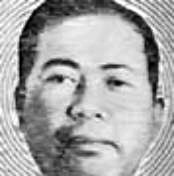
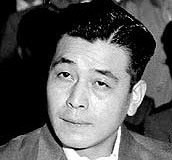
Kiyoshi Okubo
Serial killer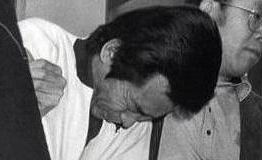 Kiyotaka Katsuta
Serial killer · Japan · 1972
Kiyotaka Katsuta (勝田 清孝; Katsuta Kiyotaka; August 29, 1948 - November 30, 2000)…
22 victims
Kiyotaka Katsuta
Serial killer · Japan · 1972
Kiyotaka Katsuta (勝田 清孝; Katsuta Kiyotaka; August 29, 1948 - November 30, 2000)…
22 victims
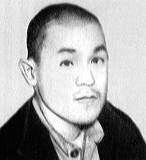 Yoshio Kodaira
Serial killer · Japan · 1932
Yoshio Kodaira ( 小平 義雄 , Kodaira Yoshio , January 28, 1905 - October 5, 1949) w…
10 victims
Yoshio Kodaira
Serial killer · Japan · 1932
Yoshio Kodaira ( 小平 義雄 , Kodaira Yoshio , January 28, 1905 - October 5, 1949) w…
10 victims
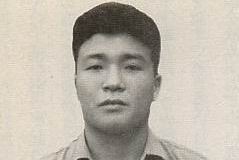 Genzo Kurita
Serial killer · Japan · 1948
Genzo Kurita ( 栗田 源蔵 , Genzo Kurita , 1926 - October 14, 1959) was a Japanese s…
8 victims
Genzo Kurita
Serial killer · Japan · 1948
Genzo Kurita ( 栗田 源蔵 , Genzo Kurita , 1926 - October 14, 1959) was a Japanese s…
8 victims
 Sataro Fukiage
Serial killer · Japan · 1906
Sataro Fukiage (吹上 佐太郎, Fukiage Satarō) was born in February 1889. He was born…
7 victims
Sataro Fukiage
Serial killer · Japan · 1906
Sataro Fukiage (吹上 佐太郎, Fukiage Satarō) was born in February 1889. He was born…
7 victims
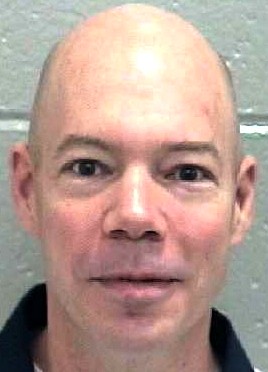 Robert Dale Conklin
Murderer · USA · 1984
Defendant: Robert Dale Conklin · Gender: Male · Race: White · Date of birth: 02…
1 victim
Robert Dale Conklin
Murderer · USA · 1984
Defendant: Robert Dale Conklin · Gender: Male · Race: White · Date of birth: 02…
1 victim
 Robert Wallace West
Murderer · USA · 1982
Robert Wallace West Jr. was convicted of capital murder in Texas and sentenced…
1 victim
Robert Wallace West
Murderer · USA · 1982
Robert Wallace West Jr. was convicted of capital murder in Texas and sentenced…
1 victim
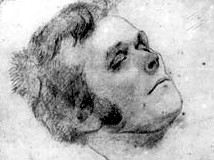 Alexander Pearce
Murderer · Australia · 1822
1819 — Alexander Pearce was sentenced at Armagh in 1819 to penal transportation…
6 victims
Alexander Pearce
Murderer · Australia · 1822
1819 — Alexander Pearce was sentenced at Armagh in 1819 to penal transportation…
6 victims
 Scott Allen Hain
Homicide · USA · 1987
Scott Allen Hain was executed by lethal injection in Oklahoma on April3, 2003.…
2 victims
Scott Allen Hain
Homicide · USA · 1987
Scott Allen Hain was executed by lethal injection in Oklahoma on April3, 2003.…
2 victims
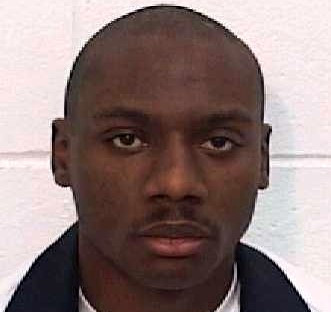 Warren King
Murderer · USA · 1994
Warren King was convicted of malice murder, armed robbery, burglary, aggravated…
1 victim
Warren King
Murderer · USA · 1994
Warren King was convicted of malice murder, armed robbery, burglary, aggravated…
1 victim
- Gender
- male
- Country
- Japan
- Location
- Gunma Prefecture, Japan
- Date of birth
- January 17, 1935
- Age at first offence
- 36
- Characteristics
- rape, serial rapist
- Victim profile
- Miyako Tsuda, 17 / Mieko Oikawa, 17 / Chieko Ida, 19 / Seiko Kawabata, 17 / Akemi Sato, 16 / Kazuyo Kawaho, 18 / Reiko Takemura, 21 / Naoko Takanohashi, 21
- Method of murder
- Strangulation
- Date(s) of murder
- March 31 - May 10, 1971
- Years active
- 1971
- Date of arrest
- May 14, 1971
- Status
-
Executed
Executed by hanging on January 22, 1976
Case record: Kiyoshi Okubo
Status
Kiyoshi Okubo was executed by hanging on January 22, 1976.
Background
Kiyoshi Okubo (大久保 清, Ōkubo Kiyoshi) was born on January 17, 1935, and died on January 22, 1976. He was described as the third and youngest son in a family of eight children. His parents lavished affection on him, and he was virtually immune to discipline. Okubo was quarter Russian, and his mother was half Russian and half Japanese. His mother doted on him even after he grew up.
After the war between U.S. and Japan began on December 8, 1941, Okubo was persecuted by his surroundings during childhood. He received poor grades and frequent warnings about his poor attitude, and he was teased unmercifully at school over his “Western” appearance. A sixth-grade evaluation noted that he “engages in unseemly acts toward his superiors” and “is showing signs of maturity too early for his age.”
Okubo was reported to have treated female classmates in a way that involved “words that shouldn't be said.” In the summer of 1946, at age 11, Okubo was caught attempting to molest a neighbor’s four-year-old daughter. People who knew his family compared him to Tokyo’s notorious rape-slayer and described him as “little Kodaira” or the “son of Kodaira.”
Okubo used a pen name, Tanigawa Ivan (谷川伊凡).
The offence
During a period of 41 days between March 31, 1971 and May 10, 1971, Okubo raped and murdered eight women. The victims were aged 16 to 21.
Okubo lured women, had sex with them, and killed eight of them. The first murder occurred on March 31, 1971. The second murder occurred on April 6. The third murder occurred on April 17. The fourth murder occurred on April 18. The fifth murder occurred on April 27. The sixth murder occurred on May 3. The seventh murder occurred on May 9. The eighth murder occurred on May 10.
Victims
Okubo murdered the following women:
- Miyako Tsuda (津田 美也子 Tsuda Miyako) — 17 years old
- Mieko Oikawa (老川 美枝子 Oikawa Mieko) — 17 years old
- Chieko Ida (伊田 千恵子 Ida Chieko) — 19 years old
- Seiko Kawabata (川端 成子 Kawabata Seiko) — 17 years old
- Akemi Sato (佐藤 明美 Sato Akemi) — 16 years old
- Kazuyo Kawaho (川保 和代 Kawaho Kazuyo) — 18 years old
- Reiko Takemura (竹村 礼子 Takemura Reiko) — 21 years old
- Naoko Takanohashi (鷹嘴 直子 Takanohashi Naoko) — 21 years old
Okubo’s name in the record was described with a pronunciation note: Her name may be pronounced not Takanohashi but Takahashi.
Prior sexual assaults and arrests
Okubo raped one woman on July 12, 1955. On December 26, 1955, he attempted to rape another woman but was unsuccessful. He was arrested, put in jail, and then released on December 15, 1959. On April 16, 1960, he attempted to rape another woman but was again unsuccessful; the victim withdrew the charge. On May 5, 1961, he married a woman and had a son and a daughter. He threatened a man on June 3, 1965. He raped two women on December 23, 1966 and February 24, 1967.
Okubo went into prison on June 7, 1967.
After his release on March 3, 1971, he raped and killed eight women.
Investigation and arrest
On March 13, a 21-year-old woman disappeared, and her brother traced her. Okubo was found and the police finally arrested Okubo on May 14.
Repeated sightings of Okubo’s Mazda in the Takasaki neighborhood led to his arrest on the evening of May 14. A girl was with him in the car when he was cornered by police. Okubo handed her some money and remarked:
“You'd better take a taxi home.”
Initially, Okubo was held on charges of abduction with intent to commit an immoral act. Okubo soon confessed his crimes and led police to the graves of several victims they had not yet discovered. Police were described as having descriptions of Okubo’s Mazda and its license number provided by surviving victims.
Trial
Okubo was tried on eight counts of abduction, murder, and abandonment of corpses.
Okubo told the court:
“I became the brute that I am because of the police. During their investigation of the previous two cases in which I was involved, they treated me very badly. Their punishment was dealt out in a way that completely destroyed my humanity. It made me rebel against authority.”
When asked for any final comments, Okubo said:
“If I could be reborn, I would like to come back as a weed. 1 was told by a woman I once knew that no matter how much weeds are tread upon, they snap back. That's the kind of existence 1 would like to have in the next life.”
Sentencing
The district court in maebashi sentenced Okubo to death by hanging on February 22, 1973. Okubo did not appeal. Okubo spent nearly three years at Tokyo’s Kosuge Detention Center, appealing his sentence.
Appeals
The appeals were rejected.
Outcome
Okubo was executed by hanging on January 22, 1976.
Aftermath and related media
It was reported that Okubo was scared of his death very much, and that he could not stand up on the day.
On August 29, 1983, Okubo’s crime became a TV drama, The crime of Kiyoshi Okubo (大久保清の犯罪, Ōkubo Kiyoshi no Hanzai). Takeshi Kitano performed the role as Okubo in the drama. The audience ratings reached 34.0%, and the bereaved were shaken, because Okubo was seen as even poor.
The drama performed an important role with Merry Christmas, Mr. Lawrence in the career of Kitano.
A claim in the narrative described police pursuit of another serial lust killer and stated that he accosted at least 127 women (some reports said 150 or more), raped more than a dozen, and murdered eight. It stated that his capture owed as much to personal negligence as to real detective work.
A quote about a neighbor complaint regarding Okubo knocking fruit from persimmon trees was included, with Okubo’s mother replying:
“You shouldn't have planted those trees there.”
The narrative described Okubo adopting a pseudonym of “Watanabe Kyoshi” and posing as a student while he preyed on college coeds. It also described that parole occurred at age 25 and that he paid Y210,000 for a cream-colored Mazda sedan ten days after provisional release on March 2, 1971. It stated that his final rampage began on March 21 and lasted 64 days, and it described burial of four victims in a vacant lot adjacent to an industrial park near Takasaki City, and disposal of others at rural dump sites.
The narrative also described the first murder victim as 17-year-old Tsuda Miyako on March 31, and then described:
- Okubo killed Oikawa Mieko, a 17-year-old waitress, ten days later.
- Ida Chieko, age 19, was murdered on April 17.
- Another student, 17-year-old Kawabata Shigeko, died the following day.
- Sato Akemi, a 17-year-old student, died on April 27.
- Kawabo Kazuyo, an 18-year-old telephone operator, was included on May 3.
- Okubo raped and murdered 21-year-old Takemura Reiko six days later.
- Okubo’s last murder victim was 21-year-old housemaid Takahashi Naoko slain the next day, May 10.
Spotted an error, or have more information about this case?