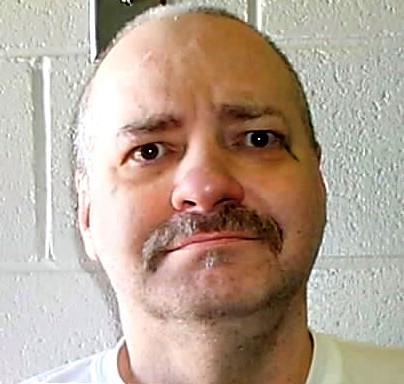
Thomas Creech
Serial killer Donald Henry Gaskins
Serial killer · USA · 1969
Donald Henry Gaskins, also known as Donald “Pee Wee” Gaskins, was a serial kill…
200 victims
Donald Henry Gaskins
Serial killer · USA · 1969
Donald Henry Gaskins, also known as Donald “Pee Wee” Gaskins, was a serial kill…
200 victims
 Carl Eugene Watts
Serial killer · USA · 1974
Carl Eugene Watts (born November 7, 1953; died September 21, 2007), also known…
100 victims
Carl Eugene Watts
Serial killer · USA · 1974
Carl Eugene Watts (born November 7, 1953; died September 21, 2007), also known…
100 victims
 Rodney Alcala
Serial killer · USA · 1977
Rodney James Alcala (born August 23, 1943) was also known as Rodrigo Jacques Al…
100 victims
Rodney Alcala
Serial killer · USA · 1977
Rodney James Alcala (born August 23, 1943) was also known as Rodrigo Jacques Al…
100 victims
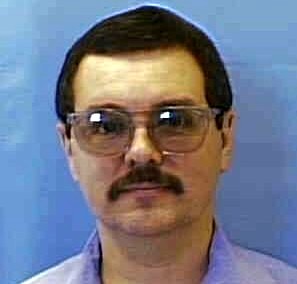 Donald Harvey
Serial killer · USA · 1970
Donald Harvey was known as an American serial killer and a self-professed “Ange…
87 victims
Donald Harvey
Serial killer · USA · 1970
Donald Harvey was known as an American serial killer and a self-professed “Ange…
87 victims
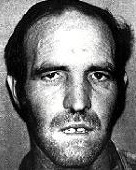 Ottis Toole
Serial killer · USA · 1961
Ottis Elwood Toole (sometimes misspelled as “Otis”) was an American serial kill…
65 victims
Ottis Toole
Serial killer · USA · 1961
Ottis Elwood Toole (sometimes misspelled as “Otis”) was an American serial kill…
65 victims
 Donald Leroy Evans
Serial killer · USA · 1975
Donald Leroy Evans (born July 5, 1957) was an American serial killer who murder…
60 victims
Donald Leroy Evans
Serial killer · USA · 1975
Donald Leroy Evans (born July 5, 1957) was an American serial killer who murder…
60 victims
 Melissa Huckaby
Murderer · USA · 2009
Melissa Huckaby was accused in the homicide of 8-year-old Sandra Cantu in Tracy…
1 victim
Melissa Huckaby
Murderer · USA · 2009
Melissa Huckaby was accused in the homicide of 8-year-old Sandra Cantu in Tracy…
1 victim
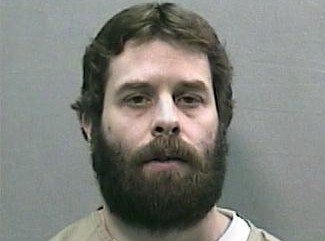 Hugh Miller
Murderer · USA · 1995
Hugh Miller was sentenced to three consecutive life terms in prison on June 12,…
3 victims
Hugh Miller
Murderer · USA · 1995
Hugh Miller was sentenced to three consecutive life terms in prison on June 12,…
3 victims
 Mohammed Merah
Spree killer · France · 2012
Mohammed Merah was a French-Algerian Islamist terrorist who had previously been…
7 victims
Mohammed Merah
Spree killer · France · 2012
Mohammed Merah was a French-Algerian Islamist terrorist who had previously been…
7 victims
 David F. Dawson
Murderer · USA · 1986
David F. Dawson was executed by lethal injection in Delaware on April 26, 2001.…
1 victim
David F. Dawson
Murderer · USA · 1986
David F. Dawson was executed by lethal injection in Delaware on April 26, 2001.…
1 victim
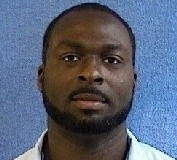 Clarence Gardner
Homicide · USA · 1993
October 28, 1993 — Joseph Waites was shot dead after a street scuffle involving…
1 victim
Clarence Gardner
Homicide · USA · 1993
October 28, 1993 — Joseph Waites was shot dead after a street scuffle involving…
1 victim
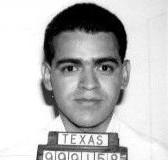 Paul Nuncio
Murderer · USA · 1993
Paul Selso Nuncio was convicted of capital murder in the strangulation death of…
1 victim
Paul Nuncio
Murderer · USA · 1993
Paul Selso Nuncio was convicted of capital murder in the strangulation death of…
1 victim
- Gender
- male
- Country
- USA
- Location
- Nevada/Oregon/Wyoming/California/Arizona/Idaho, USA
- Date of birth
- September 9, 1950
- Age at first offence
- 17
- Characteristics
- gang
- Victim profile
- Edward T. Arnold and John W. Bradford / David Dale Jensen (fellow inmate) / Gordon Stanton and Charles Miller / Sandra Ramsamoog, 19 / William Dean / Riogley McKenzie / Vivian Robinson / Paul Schrader, 70
- Method of murder
- Shooting - St abbing with knife - Beating - Strangulation
- Date(s) of murder
- 1967 - 1975 / 1981
- Years active
- 1967–1981
- Date of arrest
- —
- Status
-
Life imprisonment
Sentenced to death in Idaho on March 25, 1976; commuted to life in prison; sentenced to death in January 1983 in Idaho; commuted to life in prison; Idaho Supreme Court opinion 2002-73; condemned for two Idaho murders; United States Supreme Court case Arave v. Creech reversed in part and remanded
Case details
Defendant: Thomas Creech (also referred to as Thomas Eugene Creech) Jurisdiction: Idaho, United States (Ada County; State of Idaho) Victims named in the case record: Edward T. Arnold, John W. Bradford, David Dale Jensen, Gordon Stanton, Charles Miller, Sandra Ramsamoog, William Dean, Riogley McKenzie, Vivian Robinson, Paul Schrader, and others referenced in his confessions (with verified victims listed in the record)
Timeline
- 1975 — Thomas Eugene Creech was convicted on two counts of first degree murder for the deaths of Edward T. Arnold and John W. Bradford and was sentenced to death.
- October 23, 1975 — Creech was convicted on two counts of first degree murder.
- March 25, 1976 — Creech was formally sentenced to hang; he was sentenced to death in Idaho.
- January 1982 — Creech was on death row for the slaying 8 months earlier of fellow inmate David Dale Jensen, 23, of Pocatello.
- 1981 — While serving his life sentence in prison, Creech killed again; the killing of fellow inmate Dale Jensen occurred.
- January 1983 — Creech was sentenced to death in Idaho.
- March 30, 1993 — United States Supreme Court issued Arave v. Creech, 507 U.S. 463.
- June 6, 1995 — “Prisoner Kills Fellow Inmate Fourteen Years Later, His Appeals Still Thrive” appeared (Spokane Review-Spokesman).
- April 1995 — Creech was resentenced by Newhouse.
- 1991 — The Court of Appeals held part of the Idaho death penalty statute unconstitutional.
- 1993 — The U.S. Supreme Court reversed the court of appeals and upheld the Idaho statute but did not consider the other aspects of the 9th Circuit’s holding; the case was returned to the Idaho courts for resentencing and it remained pending.
- 1995 — The district court denied a federal habeas petition filed in 1985; the record describes the procedural posture including an unsuccessful petition to the United States Supreme Court and a federal habeas petition.
- 2002 — The Idaho Supreme Court issued opinion 2002-73.
- 1998-08-21 — Spokane Review-Spokesman dated August 21, 1998 reported that the Idaho Supreme Court again refused to reconsider previously raised issues and denied Creech’s bid to escape execution.
The offence
Ada County murders in 1975
Creech’s arrest followed a double murder in Ada County, Idaho, in 1975. It identified itinerant housepainters John Bradford and John Arnold as shot to death in Ada County after giving Creech a ride. The record states that Creech denied having committed the double murder and described himself as merely being a witness to the crime.
The record states that Carole Spaulding, an 18-year-old traveling companion, had been charged as an accessory to murder in the case. Creech named Spaulding’s teenaged sister as the killers and also named a missing youth named “Danny.”
Creech was convicted on two counts of first degree murder on October 23, 1975.
The record states: “Ironically, for all of his confessions, Creech denied the double murder which had led to his arrest in Idaho.”
Prison murder in 1981: David Dale Jensen
In 1981, Creech beat and kicked to death a fellow inmate at the Idaho State Penitentiary. The record identifies the victim as David Dale Jensen, described as a nonviolent car thief and as physically handicapped, with part of his brain removed and a plastic plate in his skull prior to incarceration.
The circumstances surrounding Jensen’s death remained unclear because Creech gave conflicting accounts. The record states:
- In one version, Creech killed Jensen in self defense.
- In another version given at his sentencing hearing, other inmates offered to pay Creech or help him escape if he killed Jensen; Creech, through an intermediary, provided Jensen with makeshift weapons and then arranged for Jensen to attack him to create an excuse for the killing.
The record reproduces the Idaho Supreme Court’s description of events (quoted verbatim) as:
“Jensen approached Creech and swung a weapon at him which consisted of a sock containing batteries. Creech took the weapon away from Jensen, who returned to his cell but emerged with a toothbrush to which had been taped a razor blade. When the two men again met, Jensen made some movement toward Creech, who then struck Jensen between the eyes with the battery laden sock, knocking Jensen to the floor. The fight continued, according to Creech's version, with Jensen swinging the razor blade at Creech and Creech hitting Jensen with the battery filled sock. The plate imbedded in Jensen's skull shattered, and blood from Jensen's skull was splashed on the floor and walls. Finally, the sock broke and the batteries fell out, and by that time Jensen was helpless. Creech then commenced kicking Jensen about the throat and head. Sometime later a guard noticed blood, and Jensen was taken to the hospital, where he died the same day.”
The record also describes other details of the sentencing hearing and the sentencing judge’s findings, including that the judge found the victim was “under the complete domination and control of the defendant,” that the murder was “extremely gruesome evidencing an excessive violent rage,” and that “[t]he murder, once commenced, appears to have been an intentional, calculated act.”
Investigation
Confessions and cross-jurisdiction claims
Creech astounded his jailers by confessing to 42 murders, allegedly committed over thirteen states since 1967. In his statement, Creech alleged that many of the homicides were sacrifices ordered by a cult of Satanists; a biker gang reportedly commissioned others and sometimes paid Creech upon completion of a “contract.”
Several jurisdictions dismissed the tales as fantasy, while others claimed bodies had been found by following the prisoner’s directions.
By October 1975, Creech was reliably linked with at least nine murders, including:
- two in Idaho
- two in Oregon
- two in Nevada
- one each in Arizona, California, and Wyoming
The record states that Creech gave directions to alleged Satanic ritual sites near San Diego, Seattle, and Missoula, Montana, but authorities described the solid evidence as negative in each case.
Verified victims listed in the record
The record lists his verified victims as:
- Gordon Stanton and Charles Miller, killed near Las Vegas
- Sandra Ramsamoog, 19, of Salem, Oregon
- William Dean, in Portland, Oregon
- Riogley McKenzie, murdered outside Baggs, Wyoming
- Vivian Robinson, of Sacramento, California
- Paul Schrader, age 70, in Tucson, Arizona
The record also states that Creech’s confessions remained impossible to verify or disprove in many respects.
Arrest
The record states that Creech’s double murder denial was significant because it concerned the double murder that had led to his arrest in Idaho.
Trial
1975 conviction for first degree murder (Ada County)
Creech’s jury found him guilty on two counts of first degree murder on October 23, 1975. The record also states that state law made the death penalty automatic and he was formally sentenced to hang on March 25, 1976.
Plea and sentencing for prison murder (Jensen)
Creech pleaded guilty to first-degree murder after being convicted of the brutal slaying of fellow inmate David Dale Jensen.
The trial judge held a sentencing hearing in accordance with Idaho Code § 19-2515(d) (1987). After the hearing, the judge issued written findings in the format prescribed by Rule 33.1 of the Idaho Criminal Rules.
Under the heading “Facts and Argument Found in Mitigation,” the judge listed (verbatim):
“did not instigate the fight with the victim, but the victim, without provocation, attacked him. [Creech] was initially justified in protecting himself.”
Under the heading “Facts and Argument[s] Found in Aggravation,” the judge stated (verbatim):
“[T]he victim, once the attack commenced, was under the complete domination and control of the defendant. The murder itself was extremely gruesome evidencing an excessive violent rage. With the victim's attack as an excuse, the . . . murder then took on many aspects of an assassination. These violent actions . . . went well beyond self-defense. . . . . . “. . .
“The murder, once commenced, appears to have been an intentional, calculated act.”
The record states that the judge found beyond a reasonable doubt five statutory aggravating circumstances, including that Creech exhibited “utter disregard for human life,” and the record quotes the judge’s written finding context (verbatim) as:
“[b]y the murder, or circumstances surrounding its commission, . . . exhibited utter disregard for human life.”
The record also states that the judge observed in this context:
“[a]fter the victim was helpless [Creech] killed him.”
The record states that the judge concluded mitigating circumstances did not outweigh aggravating circumstances and sentenced Creech to death, repeating that he “intentionally destroyed another human being at a time when he was completely helpless,” and (quoted verbatim):
“intentionally destroyed another human being at a time when he was completely helpless. ”
Sentencing
Death sentence and commutation sequence described in the record
The record states:
- Creech was sentenced to death in Idaho on March 25, 1976.
- His sentence was commuted to life imprisonment.
- Creech was sentenced to death in January 1983 in Idaho.
- His sentence was commuted to life in prison.
The record also states that four years later, based on the U.S. Supreme Court’s decision in Woodson v. North Carolina, 428 U.S. 280 (1976), the Idaho Supreme Court held that the statute under which Creech had been sentenced was unconstitutional because it provided for a mandatory death penalty, leading to commutation to life imprisonment.
Resentencing in April 1995
The record states that Creech was resentenced by Newhouse in April 1995 and that a Supreme Court opinion found that Newhouse “consistently imposed the death penalty at both the 1982 and 1995 sentencing hearings.” The record identifies 4th District Judge Robert Newhouse.
Appeals
Ninth Circuit constitutional ruling and U.S. Supreme Court reversal
The record states:
- In 1985, Creech filed a habeas petition with the federal district court, and the court denied the petition.
- Creech went to the United States Court of Appeals for the Ninth Circuit, and in 1991 the Court of Appeals held part of the Idaho death penalty statute unconstitutional and found two other defects in the original sentencing.
- In 1993, the U.S. Supreme Court reversed the court of appeals and upheld the Idaho statute but did not consider the other aspects of the 9th Circuit’s holding.
- The case was returned to the Idaho courts for resentencing and it remained pending.
United States Supreme Court: Arave v. Creech (March 30, 1993)
The record includes the syllabus and extensive text of Arave v. Creech, 507 U.S. 463, stating the legal issue and the holding.
The record states the Supreme Court’s syllabus points:
- Creech pleaded guilty to first-degree murder of a fellow prison inmate.
- The trial judge sentenced Creech to death based, in part, on the statutory aggravating circumstance that: “[b]y the murder, or circumstances surrounding its commission, the defendant exhibited utter disregard for human life.”
- The Idaho Supreme Court rejected vagueness and reaffirmed limiting construction from State v. Osborn, including the quoted definition:
“the phrase ‘utter disregard’ . . . is meant to be reflective of . . . the cold-blooded, pitiless slayer.”
The record states that the federal district court denied habeas relief, but the Court of Appeals found the “utter disregard” circumstance facially invalid for vagueness and that Osborn narrowing construction was inadequate.
The Supreme Court held:
- that the “utter disregard” circumstance, as construed by Idaho’s consistent narrowing definition, met constitutional standards on its face.
The syllabus states that the Court decided only the question whether the “utter disregard” circumstance, as interpreted by Idaho, was unconstitutionally vague, and that the Court of Appeals had no occasion to reach the Jeffers issue.
The record states that the judgment of the Court of Appeals was reversed in part and the case remanded for proceedings consistent with the Supreme Court opinion.
The record also includes the dissent by Justice BLACKMUN, joined by Justice STEVENS, and states that Justice O’CONNOR delivered the opinion of the Court.
Idaho Supreme Court further review and 1998 report
The record states that in Boise, the Idaho Supreme Court denied Creech’s bid to escape execution in a unanimous opinion, refused to reconsider previously raised issues, and rejected other claims, including Creech’s claim that he did not receive acceptable legal help when he decided to plead guilty to a prison murder 17 years earlier.
It states this was the court’s 4th review of appeals filed by Creech and that he twice before had death sentences voided only to see them reinstated.
The record states that Public Defender Gus Cahill argued that Creech was improperly cajoled into pleading guilty and that his attorney failed to make an issue of impropriety in subsequent appeals; Cahill also raised questions about specifics of the sentencing by 4th District Judge Robert Newhouse.
The record states Deputy Attorney General Michaelina Murphy argued that issues had been litigated through state and federal court or were barred from further consideration, and that the only real issue was whether Creech was allowed to provide all mitigating evidence and whether Newhouse properly assessed that evidence.
In an opinion written by Justice Cathy Silak, the Supreme Court found that Newhouse “consistently imposed the death penalty at both the 1982 and 1995 sentencing hearings.”
Other legal materials in the record (verbatim quotations from U.S. Supreme Court)
The record includes extended verbatim language from the Supreme Court’s opinion and dissent, including the following quoted clause in the dissent:
“Vague terms do not suddenly become clear when they are defined by reference to other vague terms,” Walton v. Arizona, 497 U.S., at 693-694, n. 16, 110 S.Ct. at 3078, n. 16 (dissenting opinion), quoting Cartwright v. Maynard, 822 F.2d 1477, 1489 (CA10 1987), nor do sweeping categories become narrow by mere restatement.
The record also includes quotations in the U.S. Supreme Court’s majority text, including the Osborn limiting construction:
“ ‘A . . . limiting construction must be placed upon the aggravating circumstances in I.C. § 19-2515g, that "[b]y the murder, or the circumstances surrounding its commission, the defendant exhibited utter disregard for human life." To properly define this circumstance, it is important to note the other aggravating circumstances with which this provision overlaps. ... We conclude instead that the phrase is meant to be reflective of acts or circumstances surrounding the crime which exhibit the highest, the utmost, callous disregard for human life, i.e., the cold-blooded, pitiless slayer.’ ”
Aftermath
The record states that Creech’s multiple confessions involved claimed Satanic sacrifice and alleged “contract” commissions by a biker gang, but authorities describe the evidence as negative in each case where authorities assessed directions to ritual sites.
The record further states that many of Creech’s confessions remained impossible to verify or disprove.
The record also states that investigative and appellate proceedings continued, including repeated Idaho Supreme Court review of Creech’s attempts to avoid execution, as of the 1998 report, and that the case returned to Idaho courts for resentencing after the U.S. Supreme Court decision.

Spotted an error, or have more information about this case?