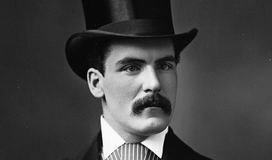
Dr. Thomas Neill Cream
Serial killer Herman Webster Mudgett
Serial killer · USA - Canada · 1886
Herman Webster Mudgett (May 16, 1861 – May 7, 1896), better known under the ali…
27 victims
Herman Webster Mudgett
Serial killer · USA - Canada · 1886
Herman Webster Mudgett (May 16, 1861 – May 7, 1896), better known under the ali…
27 victims
 Herman Webster Mudgett
Serial killer · USA - Canada · 1886
Herman Webster Mudgett (May 16, 1861 – May 7, 1896), better known under the ali…
27 victims
Herman Webster Mudgett
Serial killer · USA - Canada · 1886
Herman Webster Mudgett (May 16, 1861 – May 7, 1896), better known under the ali…
27 victims
 Johann Otto Hoch
Serial killer · USA · 1890
Johann Otto Hoch (1855 - 1906) was the most famous and last-used alias of a Ger…
15 victims
Johann Otto Hoch
Serial killer · USA · 1890
Johann Otto Hoch (1855 - 1906) was the most famous and last-used alias of a Ger…
15 victims
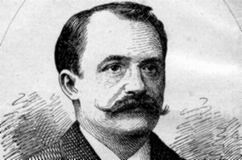 Hugo Schenk
Serial killer · Austria · 1883
Hugo Schenk was executed by hanging on April 22, 1884. · April 22, 1884 — Hugo…
6 victims
Hugo Schenk
Serial killer · Austria · 1883
Hugo Schenk was executed by hanging on April 22, 1884. · April 22, 1884 — Hugo…
6 victims
 John Frank Hickey
Serial killer · USA · 1883
John Frank Hickey, “The Postcard Killer,” was one of the first known and captur…
3 victims
John Frank Hickey
Serial killer · USA · 1883
John Frank Hickey, “The Postcard Killer,” was one of the first known and captur…
3 victims
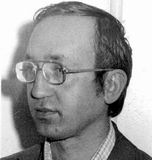 Vasiliy Kulik
Serial killer · Russia · 1984
Vasiliy Kulik was a Russian serial killer. He was responsible for the murders o…
13 victims
Vasiliy Kulik
Serial killer · Russia · 1984
Vasiliy Kulik was a Russian serial killer. He was responsible for the murders o…
13 victims
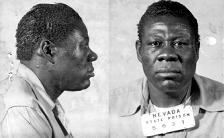 James Williams
Murderer · USA · 1948
James Williams was executed by asphyxiation-gas in Nevada on August 25, 1950. J…
2 victims
James Williams
Murderer · USA · 1948
James Williams was executed by asphyxiation-gas in Nevada on August 25, 1950. J…
2 victims
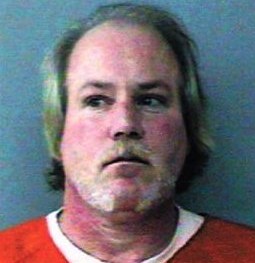 Scott Harlan Thorpe
Homicide · USA · 2001
Scott Harlan Thorpe, 40, opened fire at Nevada County's mental health office in…
3 victims
Scott Harlan Thorpe
Homicide · USA · 2001
Scott Harlan Thorpe, 40, opened fire at Nevada County's mental health office in…
3 victims
 Cevdet Yilmaz
Mass murderer · Netherlands · 1983
Cevdet Yilmaz was a Dutch national of Turkish birth and was aged 27. Cevdet Yil…
6 victims
Cevdet Yilmaz
Mass murderer · Netherlands · 1983
Cevdet Yilmaz was a Dutch national of Turkish birth and was aged 27. Cevdet Yil…
6 victims
 William Sapp
Murderer · USA
William Sapp was convicted of rape, kidnapping, and aggravated murder with deat…
3 victims
William Sapp
Murderer · USA
William Sapp was convicted of rape, kidnapping, and aggravated murder with deat…
3 victims
- Gender
- male
- Country
- USA / United Kingdom
- Location
- Illinois, USA / United Kingdom
- Date of birth
- May 27, 1850
- Age at first offence
- 31
- Characteristics
- poisoner
- Victim profile
- Daniel Stott / Ellen "Nellie" Donworth, 19 - Matilda Clover, 27 - Alice Marsh, 21, and Emma Shrivell, 18 (prostitutes)
- Method of murder
- Poisoning ( strychnine )
- Date(s) of murder
- 1881 / 1891-1892
- Years active
- 1881–1892
- Date of arrest
- J uly 13, 1892
- Status
-
Executed
Sentenced to life in prison in Illinois in November 1881; released in 1891; executed by hanging at Newgate Prison in London on November 15, 1892
Case information
Dr. Thomas Neill Cream (May 27, 1850 – November 16, 1892) was a serial killer who poisoned his victims. He was convicted for the murder of Matilda Clover and was sentenced to death.
Timeline
- August 1879 — Cream fled to the United States after a woman with whom he was alleged to have had an affair was found dead, pregnant, and poisoned by chloroform in an alleyway.
- July 14, 1881 — Mr Stott died of strychnine poisoning.
- November 1881 — Cream was sentenced to life imprisonment in Joliet Prison.
- 1891 — Cream was released from prison; he traveled to Britain after his father’s inheritance.
- October 1, 1891 — Cream arrived in Liverpool.
- October 13, 1891 — Ellen “Nellie” Donworth, a 19-year-old prostitute, went out with Cream and died on October 16 from strychnine poisoning.
- October 20, 1891 — Cream dated Matilda Clover, a 27-year-old prostitute.
- October 16, 1891 — Ellen “Nellie” Donworth died from strychnine poisoning.
- October 22, 1891 — Matilda Clover was interred at Tooting Cemetery.
- April 2, 1892 — Cream was back in London and attempted to poison a woman who refused to consume the drinks he was trying to give her.
- April 11, 1892 — Cream met two prostitutes, Alice Marsh (21) and Emma Shrivell (18), and went to their flat.
- May 12 — Officer Comley, along with Sergeant Alfred Ward, watched Cream buy the services of a prostitute near the Elephant and Castle, St. George’s Road, and followed the prostitute home to Elliott’s Row.
- June 3 — Cream was arrested on suspicion of blackmail.
- June 22 — The inquest into Martha Clover’s death commenced at Vestry Hall, in Tooting.
- July 13, 1892 — Cream was charged with the murder of Matilda Clover.
- 17 to 21 October, 1892 — Cream’s trial took place, with Justice Henry Hawkins presiding.
- October 17, 1892 — The trial opened for the murder of Clover.
- November 16, 1892 — Dr. Thomas Neill Cream was hanged at Newgate Prison.
Background
Cream was born in Glasgow, Scotland, in 1850 and raised in Quebec, Canada, after his family moved there in 1854. He was raised in Quebec and later studied medicine. He attended McGill and went to study medicine in London in 1876. He married a woman in Canada. His wife’s family forced Cream “to the church at gunpoint,” and the honeymoon lasted only just over when Cream left in the night for England, leaving a note for his wife. He returned to Canada long enough for his wife to die of a mysterious illness, which he would later be blamed for.
Cream studied medicine in London and later in Edinburgh. He was accepted at the Royal College of Physicians and Surgeons in Edinburgh and earned a license in midwifery.
He was described as a doctor who poison his victims and who attempted to frame others for his crimes. His attempts to frame other people led London police to him.
Early life and education
Cream enrolled at McGill College in Montreal as a medical student in 1867 and graduated four years later. He later registered at St. Thomas’ Hospital, Lambeth, South London, in October 1876. He did not pass the entrance requirements at the Royal College of Surgeons after six months of attending medical theatres, then returned to St. Thomas for extended education and supplementing it with a hands-on stint as an obstetrics clerk before applying to the Royal College of Physicians and Surgeons in Edinburgh. He earned a license in midwifery.
The alleged earlier poisoning involving chloroform
In August 1879, a woman with whom he was alleged to have had an affair was found dead, pregnant, and poisoned by chloroform in an alleyway, and Cream fled to the United States.
The offence(s)
Poisoning of Mr Stott (Illinois)
On July 14, 1881, Mr Stott died of strychnine poisoning. Cream was arrested along with Mrs Stott, who had obtained poison from Dr. Cream to do away with her husband, whom she suspected of cheating on her. Mrs Stott turned state’s evidence to avoid jail, leaving Cream to face a murder conviction.
Poisoning and death of Ellen “Nellie” Donworth (London)
On October 13, 1891, Ellen “Nellie” Donworth, a 19-year-old prostitute, went out for a few drinks with Cream. She was severely ill the next day and died on October 16 from strychnine poisoning.
Poisoning and death of Matilda Clover (London)
On October 20, 1891, Cream dated Matilda Clover, a 27-year-old prostitute. She was ill following that evening and died the next morning. Her death was at first recorded as related to alcoholism.
Later investigations determined the poisoning was due to strychnine, and Cream was charged with her murder.
Attempt to poison a woman on April 2, 1892
On April 2, 1892, after returning to London, Cream attempted to poison a woman who, finding him suspicious, refused to consume the drinks he was trying to give her.
Poisoning of Alice Marsh and Emma Shrivell (London)
On April 11, Cream met two prostitutes, Alice Marsh (21) and Emma Shrivell (18), and talked his way into their flat where he offered them bottles of Guinness. Both women died in agony after consuming the drinks with strychnine added.
Investigation
London police became involved after Cream’s attempt to frame two respectable and innocent doctors failed. Cream wrote to police accusing fellow doctors of killing several women, including Matilda Clover. The police determined that those accused were innocent and noticed the significance of what was claimed in the anonymous letter-writer’s accusation. Clover’s death had been noted as natural causes related to her drinking, so the anonymous accusations and Clover’s name were significant to investigators.
A policeman from New York City who visited London was told about the “Lambeth Poisoner” and Cream gave him a brief tour of where victims had lived. The American policeman mentioned this to a British policeman, leading to suspicion and surveillance by Scotland Yard. Police learned of Cream’s conviction for murder by poison in 1881 through liaison with the United States.
Officer Comley followed Cream. He reported that Cream spent many evenings outside the Canterbury Music Hall, “watching women very narrowly indeed.”
After his arrest for extortion/blackmail-related matters, a full inquest was conducted into Martha Clover’s death, and witnesses testified to Cream’s conversations and actions. Scotland Yard also dredged morgue records and missing-person files and interviewed local citizens for information about a supposed death of a person named Lou Harvey.
England police discovered that Cream’s real name was not Neill, but Cream, and that he stemmed from Canada.
Arrest
Cream was arrested on June 3 on suspicion of blackmail. He was booked at Bow Street Police Station and charged at the Magistrate’s Court. He was incarcerated at Holloway Prison and refused to speak but exclaim his innocence.
Trial
Cream’s trial took place from 17 to 21 October 1892. Justice Henry Hawkins presided.
Despite representation by barrister Gerald Geoghegan, the court found him guilty. The prosecution led by Attorney General Sir Charles Russell relied on witnesses including Lou Harvey’s testimony again. The defense argued the court could not condemn their client based on circumstantial evidence, and the defense produced none.
The jury took 10 minutes to find him guilty.
In passing the death sentence, Justice Hawkins told the prisoner that his willingness to murder was “so diabolical in its character, fraught with so much cold-blooded cruelty (that it could) be expiated only by your death.”
Cream went to “the drop” on November 16, 1892.
Sentencing
Cream was sentenced to life imprisonment in Joliet Prison after his Illinois conviction. In London, he was convicted at trial and was sentenced to death for the murder of Matilda Clover.
Appeals
No appeal information was included beyond the release after his Illinois imprisonment.
Outcome
Dr. Thomas Neill Cream was convicted and sentenced to death in London. He was executed by hanging at Newgate Prison.
Aftermath
Some accounts stated that his last words as he was hanged were a confession: “I am Jack...” or “I am Jack-”. The hood muffled the words. The narrative also stated that police officials and others who attended the execution made no mention of this.
Cream’s execution date was presented as November 15, 1892 in the status field and as November 16, 1892 elsewhere in the record.

Spotted an error, or have more information about this case?