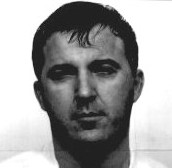
Jerry Lee Hogue
Murderer Ervil LeBaron
Murderer · USA · 1972
Ervil Morrell LeBaron (1925 to August 16, 1981) was the leader of a polygamous…
35 victims
Ervil LeBaron
Murderer · USA · 1972
Ervil Morrell LeBaron (1925 to August 16, 1981) was the leader of a polygamous…
35 victims
 Brian Kevin Rosenfeld
Murderer · USA · 1985
Brian Kevin Rosenfeld Brian Kevin Rosenfeld was sentenced to three concurrent l…
23 victims
Brian Kevin Rosenfeld
Murderer · USA · 1985
Brian Kevin Rosenfeld Brian Kevin Rosenfeld was sentenced to three concurrent l…
23 victims
 Marvin Gray
Murderer · USA · 1975
Marvin Gray was convicted killer who claimed responsibility for 23 slayings and…
23 victims
Marvin Gray
Murderer · USA · 1975
Marvin Gray was convicted killer who claimed responsibility for 23 slayings and…
23 victims
 Yahweh ben Yahweh
Murderer · USA · 1980
Yahweh ben Yahweh was born and legally named Hulon Mitchell Jr. (October 27, 19…
23 victims
Yahweh ben Yahweh
Murderer · USA · 1980
Yahweh ben Yahweh was born and legally named Hulon Mitchell Jr. (October 27, 19…
23 victims
 Martin Link
Murderer · USA · 1991
Martin Link was convicted by a jury in the Circuit Court of the City of St. Lou…
1 victim
Martin Link
Murderer · USA · 1991
Martin Link was convicted by a jury in the Circuit Court of the City of St. Lou…
1 victim
 Laurie Bembenek
Murderer · USA · 1981
Lawrencia “Bambi” Bembenek (August 15, 1958 – November 20, 2010) was known as L…
1 victim
Laurie Bembenek
Murderer · USA · 1981
Lawrencia “Bambi” Bembenek (August 15, 1958 – November 20, 2010) was known as L…
1 victim
 Pedro Alonso Lopez
Serial killer · Peru - Ecuador - Colombia · 1969
Name: Pedro Alonso Lopez · Nationality/Background: Colombian-born · Birth: born…
300 victims
Pedro Alonso Lopez
Serial killer · Peru - Ecuador - Colombia · 1969
Name: Pedro Alonso Lopez · Nationality/Background: Colombian-born · Birth: born…
300 victims
 Robert Alan Knight
Murderer · USA · 1993
Robert Alan Knight (DOB: 06/26/68) was convicted in a nonjury trial in the Fift…
1 victim
Robert Alan Knight
Murderer · USA · 1993
Robert Alan Knight (DOB: 06/26/68) was convicted in a nonjury trial in the Fift…
1 victim
 Clover Boykin
Murderer · USA · 1993
Clover Boykin killed her 5-month-old son, Dayton Boykin, in Florida on October…
2 victims
Clover Boykin
Murderer · USA · 1993
Clover Boykin killed her 5-month-old son, Dayton Boykin, in Florida on October…
2 victims
- Gender
- male
- Country
- USA
- Location
- Tarrant County, Texas, USA
- Date of birth
- September 26, 1950
- Age at first offence
- 29
- Characteristics
- rape, arson, domestic violence
- Victim profile
- Jayne Markham (female, 27)
- Method of murder
- Setting fire to the house
- Date(s) of murder
- January 13, 1979
- Years active
- 1979
- Date of arrest
- Next day
- Status
-
Executed
Executed by lethal injection in Texas on March 11, 1998
Case record: Jerry Lee Hogue
Background
Jerry Lee Hogue was executed by lethal injection in Texas on March 11, 1998. He was 47 years old at the time of his execution. Hogue had an extensive criminal record, including arrests for rape and false imprisonment. He was charged with desertion from the Army in 1972 and was court-martialed.
Hogue had been a former water bed builder in Aurora, Colorado. Texas authorities stated that Hogue was a self-employed auto repossessor when he was arrested the day after the January fire.
Hogue’s first trial ended in December 1979 with a deadlocked jury at the guilt-innocence stage when a mistrial was declared following a note from the jury foreman stating:
"we have followed your additional instructions and have continued our deliberations. Nothing has changed. We still stand 10 Guilty 2 Not Guilty with no reasonable expectation of a change of opinion."
Hogue avoided execution through a flurry of state and federal court appeals.
During the punishment phase of his March 1980 trial, evidence of a 1974 Colorado guilty plea rape conviction was admitted to show that there was a probability that Mr. Hogue would commit criminal acts of violence constituting a continuing threat to society. The rape conviction was set aside by the Colorado courts in 1994.
The offence
In the early morning fire, Hogue committed capital murder in the course of committing arson.
Hogue and his wife rented a house located at 2412 Southcrest in Arlington on November 9, 1978. Approximately one month later, on December 4, 1978, Hogue and his wife vacated the house without turning in their key, leaving a refrigerator, a round wall ornament and some trash. The property was cleaned up and on December 24 the house was leased to Mary Beth Crawford and Jayne Markham.
Living at the house with the two women were Markham’s eight-year-old son and Steve Renick, a friend of the women. Hogue returned to the house on a Wednesday, January 10, 1979, two days before the commission of the crime. When Markham answered the door, Hogue told her he had lived in the house and had left a wall hanging at the house and asked if he could get it. Markham let Hogue in and they conversed while Hogue stayed for quite a long time that evening.
On Thursday, Hogue showed up again. Markham had agreed to buy some used furniture from Hogue, so she went with him to pick up the furniture, and when they returned Hogue stayed for the duration of the evening. Eventually the women went to bed and only Hogue and Renick were awake.
Hogue asked Renick if he knew where he could get a gun. Renick showed Hogue the gun he kept in his footlocker. After cleaning the gun, Renick loaded it and placed it back inside the footlocker.
Hogue was at the house again early the next morning. Renick went to work and Crawford took Markham’s son to school. While Markham, Crawford and Hogue were eating breakfast, Hogue blurted out that he was a police officer and that he was arresting them for possession of marihuana. When the women asked for identification, Hogue said he did not have any but that his real purpose was to arrest Steve Renick because he was a heroin dealer. Hogue instructed the women to cooperate, stay in his sight all day long and not to talk to each other.
Hogue had them go into Markham’s bedroom. After Hogue left the bedroom and shortly thereafter the women heard a breaking noise, they followed the noise and found Hogue going through Renick’s footlocker. Hogue found Renick’s gun inside the footlocker. Hogue pointed the gun at the women and told them he was going to handcuff one of them. He proceeded to handcuff Markham and put Crawford into a closet. After a period of ten minutes, Hogue opened the closet door carrying the gun; he was nude from the waist down. Hogue stepped inside the closet, pointed the gun at Crawford’s head and instructed her to remove her clothes. When Crawford replied that she would not and that she had a venereal disease, Hogue backed out of the closet and shut the door.
A short while later, Hogue removed Crawford from the closet and led her into the dining room. There, Crawford saw Markham nude and blindfolded lying face down on the floor with her hands cuffed behind her. Hogue instructed Crawford to remove all of her clothes except her underwear and to lie down beside Markham. After a few minutes, Hogue forced Crawford to commit oral sodomy upon him. Hogue then put both women back into the bedroom. Crawford was returned to the closet while Hogue raped Markham. Hogue blindfolded both women and forced both of them to lay on the bed.
Hogue went through Markham’s purse. Hogue later permitted both women to get dressed, instructed them not to talk to each other, and when Hogue caught them talking he took Crawford into her room and handcuffed her to her bed.
At 3:15 p.m., Markham’s son returned home from school and Hogue made him go to his mother’s room and remain there. Around 6:00 p.m., Renick came home. Hogue met Renick at the front door carrying the gun and handcuffs, handcuffed Renick immediately and led him into Markham’s bedroom. Hogue told Renick that he was a narcotics agent and was arresting him. Hogue took Renick’s wallet and moved Renick into Crawford’s bedroom where Renick was handcuffed to the bed. Over the next few hours Hogue moved through the house, shuffling his prisoners from room to room.
During the evening, Hogue made numerous threats to kill them all. Hogue led Crawford into the living room and had her sit on the couch, left the room, and when he returned he was carrying a butcher knife. He stabbed Crawford in the stomach and dragged her into a bathroom.
After a short time, Hogue had both women go back into the living room. There he told them he was a hit man and had a contract out for each of them. Hogue took Crawford into the third bedroom. By then Crawford was bleeding heavily, in intense pain, and passing in and out of consciousness.
Hogue brought Markham into the room where Renick was confined. By then Renick’s hands were tied to the headboard and his feet had been bound together. Hogue proceeded to bind Markham by tying her hands behind her back, tying her feet together and then taking a wire and tying her feet to her hands.
When Renick and Markham begged Hogue to release them so they could take Crawford to the hospital, Hogue said he was a hit man and he was going to kill them all. Hogue left the room. The victims began to smell gasoline. They could hear Hogue coughing and sputtering in the attached garage. After a while Hogue returned carrying a Prestone antifreeze can and a rolled up newspaper. He told Markham and Renick he was going to kill them all, then left the room.
The victims saw Hogue backing down the hallway and pouring a liquid out of the antifreeze can. They soon smelled gasoline. Fire roared through the hallway, with flames shooting into the bedroom where Renick and Markham were tied up. Renick managed to free himself, break a window and jump outside. He tried to go back in and rescue Markham, who was screaming, but the flames were too intense. When the screaming stopped, he ceased his efforts. Renick ran to the window of the bedroom where Markham’s son was sleeping, pulled the child out of the window and escaped.
Crawford, awake at the time of the fire’s ignition, managed to jump out of a bedroom window. She ran next door to summon help, and on her way to the neighbors she saw Hogue climbing into his car. She ran to the neighbors’ house and rang the doorbell. The neighbors found her collapsed on the ground.
Emergency vehicles responded to the fire call at 1:14 a.m. When they arrived, the house was fully involved. Markham’s body was found by fireman inside the house. Her hands and feet had been tied behind her back, leaving her body in a crouched position. An autopsy showed that her hands and feet were tightly bound with insulated wire. Police found a Prestone antifreeze container sitting just inside the doorway of the laundry room and it smelled heavily of gasoline. Police also found two sections of garden hose on the floor of the garage next to a vehicle parked in the garage; these also smelled of gasoline. A fire investigator concluded that more than two gallons of gasoline had been used to start the fire and determined the fire had been deliberately set.
At the March 1980 trial, the jury convicted Hogue and sentenced him to death for capital murder. The indictment alleged that Hogue intentionally caused the death of Jayne Lynn Markham by setting fire to the house occupied by Markham; death was caused by asphyxiation due to smoke and carbon monoxide and conflagration to the body of Jayne Markham; and the death was intentionally committed in the course of committing and attempting to commit the offense of arson.
Victims and counts
Hogue’s conduct resulted in the death of Jayne Lynn Markham, 27. Three other people were imprisoned in the Arlington home, including Markham’s eight-year-old son, and those other imprisoned people managed to escape the flames that killed Jayne Markham. The record identified Steve Renick and Mary Beth Crawford as other residents imprisoned in the house; their stories and physical condition were used by the prosecution and were described in court findings.
Investigation and arrest
Hogue was arrested about 24 hours after the early morning fire. The arrest occurred shortly after 11:00 p.m. Sunday, January 14, 1979, when police found Hogue alone in a friend’s small upstairs apartment, which was totally dark, hiding, fully clothed, in the shower stall behind the closed shower door in the bathroom. Police had announced their presence and stated they were looking for Hogue, but he remained wholly silent and hidden. The account also stated that Hogue knew police were looking for him and had made no attempt to contact them, the fire department, emergency medical services, or any other authority and gave no explanation for his conduct.
The evidence described Hogue as fleeing the scene after setting the home ablaze.
Trial
At his March 1980 trial, Hogue was represented by attorneys Coffee and Roe. The jury found Hogue guilty of capital murder and answered affirmatively each of the two special issues called for by the then version of Texas Code of Criminal Procedure Art. 37.071, finding:
- Hogue’s conduct causing Markham’s death was committed deliberately with the reasonable expectation that her or another’s death would result.
- There was a probability Hogue would commit criminal acts of violence constituting a continuing threat to society.
Accordingly, Hogue was sentenced to death.
Hogue’s direct appeal history included representation changes on Hogue’s request: attorney Burns was replaced by attorney Gray. In March 1986, the Texas Court of Criminal Appeals, en banc, unanimously affirmed the conviction and sentence. In October 1986, the Supreme Court denied certiorari.
Prior conviction evidence at punishment stage
At the punishment phase, the prosecution introduced a copy of the September 23, 1974 Colorado court judgment convicting Hogue of rape based on his guilty plea and sentencing him to confinement for an indeterminate term not to exceed three years. Hogue had stated “I have no objection,” and defense counsel had also not objected. No objection was made to this evidence at any point in the trial, and it was not challenged on appeal in the direct appeal account.
Witnesses at punishment phase
Lieutenant Detective Diezei of the Boulder, Colorado Police Department testified that Hogue’s reputation in that community for being a peaceable and law-abiding citizen was bad and that he first heard about Hogue in approximately 1970.
Sara Sampson testified that she knew Hogue, having first met him about ten years earlier, and said his reputation for being peaceable and law-abiding was bad. Karen Hightower testified that on July 25, 1976, she met Hogue in an apartment building parking lot when her car would not start and he offered to help by loaning jumper cables. She later went out with him and said she told Hogue she did not want to see him anymore, after which he got angry.
Hightower testified that on August 2, 1976 Hogue telephoned her and stated that he wanted “for us to part friends,” and asked her to go with him to get a hamburger and meet his uncle, who Hogue said was expecting them. She said she accepted, and they went in his car to get a hamburger and then drove into the country. Hightower testified that Hogue stopped the car, pulled a long knife, grabbed her, threatened to kill her, made her commit sodomy, and raped her twice (she said there was no ejaculation). On cross-examination, Hightower admitted that the rape case growing out of this incident was no longer pending because following a mistrial she chose not to go through a retrial.
Dr. Grigson testified at the punishment phase. Dr. Grigson had not examined or interviewed Hogue or examined records. In response to a hypothetical question that paralleled the circumstances of the instant offence and the circumstances leading up to it as reflected by the prosecution’s evidence, and included reference to a previous rape conviction and a rape described by Karen Hightower, Dr. Grigson testified that a person so described “certainly would present very much of a continuing threat to society,” and would be such even if confined in a penal institution.
The defense presented psychologist Dr. Dickerson. Dr. Dickerson had not examined or interviewed Hogue or examined records. Dr. Dickerson testified that future dangerousness could not be predicted and that such predictions were wrong two out of three times. Dr. Dickerson also testified that it was especially improper to predict without examination of the individual and solely on the basis of a hypothetical question. On cross-examination, Dr. Dickerson was unwilling to state that future dangerousness could be predicted for anybody, no matter what they had done in the past. Dr. Dickerson also said that a committee of the American Psychiatric Association had condemned the practice.
Dr. Dickerson was recalled by the defense and, based on a hypothetical, testified that the Parole Board was very reluctant “to grant parole to someone with a history of that sort.”
Becky Hogue testified that she had known Karen Hightower “since about '72 or '76” and said her reputation for being a truthful person was very bad.
Mary Ebel testified that Hogue was her youngest son and identified three photographs as being of Hogue, his ex-wife Claudia, and his daughter Shawna. Ebel testified that Claudia was “the injured party in the rape case that sent Jerry to the Colorado State Reformatory.” Ebel testified that the photographs were taken at that Reformatory around January of ’76 while Hogue was there after he had already pleaded guilty and been sent to the Colorado State Reformatory. Ebel said she took Claudia to visit Jerry in the Reformatory because Claudia “has no other way to go.”
The prosecution did not cross-examine Ebel. The jury was instructed that in answering the punishment issues it could consider evidence introduced at the guilt-innocence stage as well as evidence introduced at the punishment stage.
Appeals
Hogue filed multiple applications for habeas corpus relief.
The federal habeas court record described that Hogue filed nine applications for habeas corpus relief over the last 18 years and that he repeatedly sought stays of execution.
Federal appeal: 131 F.3d 466
Hogue appealed the district court’s denial of his petition for habeas corpus under 28 U.S.C. § 2254 challenging his 1980 Texas conviction and death sentence for murder committed while committing arson.
The appeal included a primary complaint that at the punishment phase, the admission in evidence of a 1974 Colorado guilty plea rape conviction, later set aside in 1994 for ineffective assistance of counsel, rendered the death sentence invalid under Johnson v. Mississippi. The appellate decision stated that the claim was rejected procedurally barred for failure to object at trial and, alternatively, because admission of the prior conviction did not substantially influence the jury’s answer to either of the two punishment issues under Brecht v. Abrahamson. The appellate decision also rejected contentions relating to an allegedly biased juror and the constitutional validity of treating murder while committing arson as a capital offense where death was caused by the arson. The appellate decision affirmed the denial of habeas relief.
The caption included: Jerry Lee Hogue, Petitioner-Appellant, v. Gary L. Johnson, Director, Texas Department of Criminal Justice, Institutional Division, Respondent-Appellee; No. 95-10160; Federal Circuits, 5th; decision dated December 12, 1997.
Sentencing
Hogue was sentenced to death based on the jury’s affirmative answers to the two special issues under the then version of Texas Code of Criminal Procedure Art. 37.071. The special issues concerned deliberateness with reasonable expectation of death and probability of committing criminal acts of violence constituting a continuing threat to society.
Outcome
Hogue was executed by lethal injection in Texas on March 11, 1998.
Last statement
Hogue made last remarks to Mindy Crawford at the time of execution. Mindy Crawford had testified against Hogue. The warden asked Hogue if he had any last remarks. Hogue delivered remarks to Crawford, as recalled by National Public Radio reporter Dan Collison, who was also there. Collison recalled:
"He said, 'Mindy, I am with you, honey. I don't know why you're doing this. But I forgive you. You know he's a murderer. He will do it again. You're lucky you're still alive.' He then turned to his friends and told his friends to tell his family that he loved them. Turned back to Mindy Crawford and said, 'Mindy, you can stop this.' Then he turned, looked up at the warden and said, 'OK, warden, I'm ready.'"
Collison also recalled that the remarks were “eerie.”
Hogue’s sister, Ann Hickman, recalled:
"He said, 'Sis, I'm tired of fighting.'" and: "He said, 'I've made peace,' and he says, 'I'm ready to go.'" Hickman also stated: "And I told him, I said, 'Jerry, don't talk that way. You're going to get a stay.' But I believe he was ready."
Arson investigator Joseph Stewart described a break in the execution countdown process as follows:
"She had no reason to lie to me," Stewart says of the woman. and: "From experience, I've gotten pretty good (at judging) when somebody's being truthful. And from all indications, she appeared to be telling the truth to me."
A prosecutor, Rufus Adcock, was quoted about Hogue:
"He was probably the most pronounced antisocial sociopathic personality I've ever seen,"
A quote from Texas Governor George W. Bush stated:
"These are people who were found guilty by a jury of their peers," and: "These are people who have had full access to the courts of law. There's no doubt in my mind that each person who's been executed in our state was guilty of the crime committed."
Hogue stated in an interview done a week before execution:
"Executing innocent people is wrong," and: "I'm not saying everyone down here is innocent. I know that. But if one person is innocent, then the system has failed."
Aftermath
Arson investigator Stewart became upset after Hogue was executed, stating:
"I wasn't angry," and: "I was just in disbelief." Stewart said he had figured: "he'd been in there 20 years. What was 30 days if there was some doubt?" He also stated that DNA tests would not have taken 30 days and that: "They take about eight hours and cost about $4,000." Stewart described DNA testing as having “redrawing the lines between guilt and innocence, life and death.”
Hogue’s family members also made statements after his death. Hickman recalled:
"The last words he said to me was he loved me, and that he didn't do it," and said she put the phrase: "Keep the faith." on his tombstone.
Dan Rather and 60 Minutes II described requests for DNA testing of evidence from Hogue’s case and difficulties locating it. The record said 60 Minutes II had formally asked Texas authorities to make available DNA evidence recovered from the victim in Hogue’s case so it could be tested against the hair sample he left behind, and it said they had been looking for it since last week and were unable to find it.
Spotted an error, or have more information about this case?