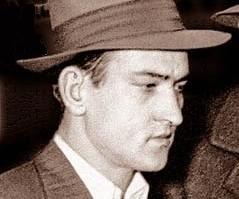
George Joseph Cvek
Murderer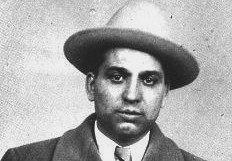 Harry Maione
Murderer · USA · 1937
Harry “Happy” Maione (1908 – February 19, 1942) was a New York mobster who serv…
12 victims
Harry Maione
Murderer · USA · 1937
Harry “Happy” Maione (1908 – February 19, 1942) was a New York mobster who serv…
12 victims
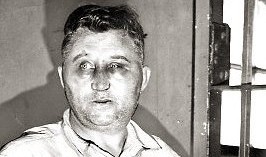 Harry Powers
Murderer · USA · 1931
Harry Powers was executed by hanging on March 18, 1932, at the West Virginia Pe…
5 victims
Harry Powers
Murderer · USA · 1931
Harry Powers was executed by hanging on March 18, 1932, at the West Virginia Pe…
5 victims
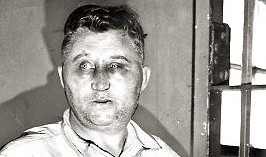 Herman Drenth
Murderer · USA · 1931
Herman Drenth was also known by the aliases Harry F. Powers and Cornelius O. Pi…
5 victims
Herman Drenth
Murderer · USA · 1931
Herman Drenth was also known by the aliases Harry F. Powers and Cornelius O. Pi…
5 victims
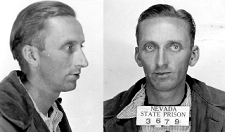 Luther Jones
Murderer · USA · 1936
Luther Jones Luther Jones was executed by asphyxiation-gas in Nevada on January…
4 victims
Luther Jones
Murderer · USA · 1936
Luther Jones Luther Jones was executed by asphyxiation-gas in Nevada on January…
4 victims
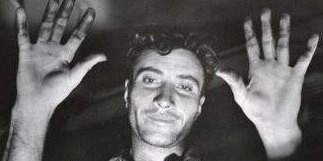 Albert Dyer
Murderer · USA · 1937
Albert Dyer was a 32-year-old WPA crossing guard and traffic guard at Centinela…
3 victims
Albert Dyer
Murderer · USA · 1937
Albert Dyer was a 32-year-old WPA crossing guard and traffic guard at Centinela…
3 victims
 Bruce Edwin Callins
Murderer · USA · 1980
Bruce Edwin Callins filed a petition for certiorari that was docketed in Johnso…
1 victim
Bruce Edwin Callins
Murderer · USA · 1980
Bruce Edwin Callins filed a petition for certiorari that was docketed in Johnso…
1 victim
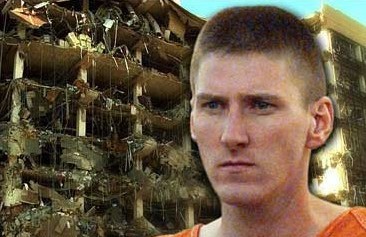 Timothy McVeigh
Mass murderer · USA · 1995
Timothy James McVeigh (April 23, 1968 – June 11, 2001) was a United States Army…
168 victims
Timothy McVeigh
Mass murderer · USA · 1995
Timothy James McVeigh (April 23, 1968 – June 11, 2001) was a United States Army…
168 victims
 Lee Ho-seong
Mass murderer · South Korea · 2008
Lee Ho-seong (July 17, 1967 – March 10, 2008) was a South Korean baseball playe…
4 victims
Lee Ho-seong
Mass murderer · South Korea · 2008
Lee Ho-seong (July 17, 1967 – March 10, 2008) was a South Korean baseball playe…
4 victims
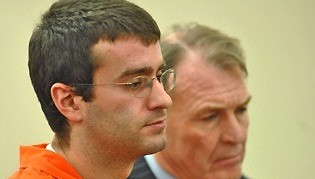 Christopher Porco
Murderer · USA · 2004
Christopher Porco (born July 9, 1983) was convicted of killing his father and a…
1 victim
Christopher Porco
Murderer · USA · 2004
Christopher Porco (born July 9, 1983) was convicted of killing his father and a…
1 victim
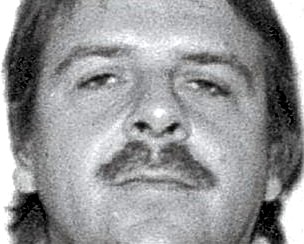 Ronald Lee Hoke
Murderer · USA · 1985
Ronald Lee Hoke Sr. was executed by lethal injection in Virginia on December 16…
1 victim
Ronald Lee Hoke
Murderer · USA · 1985
Ronald Lee Hoke Sr. was executed by lethal injection in Virginia on December 16…
1 victim
- Gender
- male
- Country
- USA
- Location
- Bronx, New York, USA
- Date of birth
- 1917
- Age at first offence
- 24
- Characteristics
- robbery, rape, kidnapping
- Victim profile
- Catherine Pappas, 29
- Method of murder
- Strangulation with a towel
- Date(s) of murder
- February 5, 1941
- Years active
- 1941
- Date of arrest
- —
- Status
-
Executed
Executed by electrocution in New York on February 26, 1942
Background
George Joseph Cvek was 23 when detectives identified him from a fingerprint. Catherine Pappas was 29, and her husband was John. Catherine Pappas had been newly immigrated from Alexandria, Egypt, and her neighbors referred to her as “Kitty” and “The Egyptian Princess.” Catherine Pappas was described as quiet and aloof, rarely spoke to her neighbors, seldom stepped outside, and had groceries and clothes delivered. Catherine Pappas attended the Greek Orthodox church a few blocks from her apartment on the Grand Concourse in the Bronx.
The offence
Catherine Pappas was strangled in the bedroom on February 5, 1941. John returned home that day and found his wife strangled. The scene in the living room suggested that she had spent the afternoon sipping coffee and brandy with her murderer. Two coffee cups and saucers from the couple’s finest china were set out on a serving table next to a plate of cookies and two partly filled wine glasses. A picture from the Pappas wedding two years earlier had been left on a chair. Police figured Catherine Pappas must have taken it down to show her guest.
A bottle of aspirin and a water glass were on another small table. A cup of coffee and murder were described as part of the killer’s apparent method. Police described signs of a struggle, including an overturned lamp, in the living room. The killer dragged Catherine Pappas to the bedroom, stuffed his handkerchief in her mouth, and bound her hands with his necktie and her legs with a kitchen towel. The murder weapon was another towel tightened around her throat. Police stated that Catherine Pappas had not been raped.
The killer made off with jewelry including Catherine Pappas’s wedding ring, a gold crucifix, $50 in cash, and a silver cigarette case. The killer left behind a pack of cigarettes and, most importantly, a clear set of fingerprints on the water glass.
The case was described as having “the earmarks of a phantom cops were calling ‘the Aspirin Bandit.’” In the past three months before the Pappas murder, the killer attacked two other local women, asking for aspirin before jumping them. In both attacks the killer took money and jewels but did not take lives.
Investigation
Detectives were described as following a pattern of attacks “from Maine to Delaware.” Detectives gained one critical clue from handwriting related to postcards and a second critical clue from the fingerprint on the water glass.
One woman told police that just before the Pappas murder, a stranger knocked on her door, said he was a friend of her husband, and launched into a tear-jerking tale. The woman knew the young man had to be lying because her husband had been in the grave for years.
Police learned that the bandit had close ties to Father Flanagan, and sometimes attempted to prove it by dropping a postcard in the mail to the head of Boys Town. Police learned there was a stack of odd messages at the Nebraska refuge. These messages were easy to identify because the bandit misspelled Flanagan’s name. From these postcards, police gained one of two critical clues: a handwriting sample.
The second clue was the fingerprint from the glass in the Pappas apartment, which yielded the name George Joseph Cvek.
Other victims and attacks described
In November, a couple picked up a hitchhiker on the Pulaski Skyway. The hitchhiker introduced himself as John Mitchell and said he was the mayor of Boys Town, the Nebraska refuge for youths founded by Father Edward Flanagan. The hitchhiker said he was heading north to find his sister, who had been seriously injured in a car wreck in Maine. The couple offered him cash along with the ride, and he reluctantly took it but insisted on writing down their address to pay them back.
A few days later, Mitchell knocked at their door in the afternoon when the husband was out at work. After the wife fed the visitor lunch, he complained of a headache. When the wife reached for the aspirin, he slipped his arm around her throat, bound her with her husband’s ties, and raped her. He then attacked and stole money and jewels in the described pattern.
Another couple that picked up a hitchhiker told an almost identical story. They gave him a ride and money, and he later showed up at their apartment when the husband was at work. He asked for aspirin before tying her up and stealing her fur coat.
It was stated that at least 20 accounts described a young man in a green coat who sobbed out the same hard-luck tale, wormed his way into a home, and attacked with or without aspirin.
Edward Wagner and his pregnant wife, Catherine, 20, were described as having picked up a hitchhiker shortly after the Pappas murder in Philadelphia. The stranger later showed up at their home, ate lunch, then raped Mrs. Wagner, causing her to miscarry.
Arrest
New York detectives Fred Durant, Edward Gillon, and Edward Mahon focused efforts on Salvation Army shelters and cheap hotels, comparing the handwriting on the Boys Town postcards to names in registries. They found a match at the Mills Hotel on 36th St. and Seventh Ave. A guest named Jack Mitchell was identified as one of the aliases Cvek frequently used.
Detectives waited disguised as desk clerks. Around 9 p.m., a strapping youth with a scarred lip and pimples, wearing a green coat and yellow shoes, entered the lobby. The detectives grabbed him. Before dawn, Cvek confessed to dozens of crimes, including the murder of Kitty Pappas.
Trial and sentencing
A jury composed of Bronx businessmen took 20 minutes to decide to give Cvek the sentence that would end his pain for good on May 19, 1941.
Confession and statements
Cvek told police:
“I put my arm around her, she screamed. I grabbed her. We were on the floor. I hit her on the side a few times. When she didn’t move, I knew she was dead.”
Cvek also told police that he had picked her address at random and used the “friend of your husband” lie to gain her trust and entry into the apartment, and that he insisted his death was an accident:
Cvek’s family in his hometown of Steelton, Pa. could not pretend to be surprised. His widowed, worn-out ma, Barbara Cvek, said:
“He's my boy and I don't want to see him die in the electric chair, but I don't feel much sympathy for him. He's always been bad. To me, he's always been a headache,”
Timeline
- February 5, 1941 — John returned home and found Catherine Pappas strangled in the bedroom.
- May 19, 1941 — A jury composed of Bronx businessmen sentenced Cvek.
- February 26, 1942 — Cvek died in the electric chair.
Outcome
Cvek died in the electric chair on February 26, 1942.
Other details
Catherine Pappas had been described as two decades younger than her husband, John. Police described Cvek as a “petty crook with a long record.” It was stated that Cvek was just 10 when his father hauled him into juvenile court for the first time for disobedience, surly behavior, and thieving. The record described that none of the clan’s hard-earned money was safe when George was around.
Spotted an error, or have more information about this case?