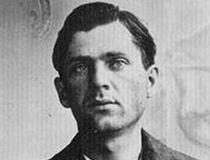
Leon Frank Czolgosz
Assassin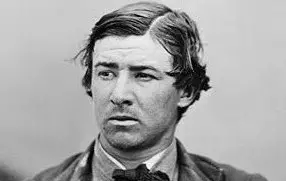 David Herold
Assassin · USA · 1865
David Edgar Herold (16 June 1842 – 7 July 1865) conspired with John Wilkes Boot…
1 victim
David Herold
Assassin · USA · 1865
David Edgar Herold (16 June 1842 – 7 July 1865) conspired with John Wilkes Boot…
1 victim
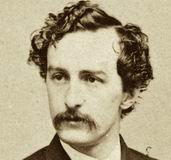 John Wilkes Booth
Assassin · USA · 1865
John Wilkes Booth (May 10, 1838 – April 26, 1865) was an American stage actor w…
1 victim
John Wilkes Booth
Assassin · USA · 1865
John Wilkes Booth (May 10, 1838 – April 26, 1865) was an American stage actor w…
1 victim
 Billy Gohl
Serial killer · USA · 1903
Billy Gohl (? - 1928) was an American serial killer who, while working as a uni…
40 victims
Billy Gohl
Serial killer · USA · 1903
Billy Gohl (? - 1928) was an American serial killer who, while working as a uni…
40 victims
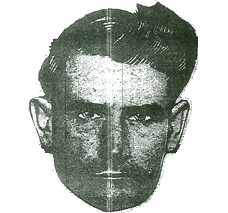 Henry Lee Moore
Serial killer · USA · 1911
Henry Lee Moore was sentenced to life in prison in Missouri in 1913. He was rel…
26 victims
Henry Lee Moore
Serial killer · USA · 1911
Henry Lee Moore was sentenced to life in prison in Missouri in 1913. He was rel…
26 victims
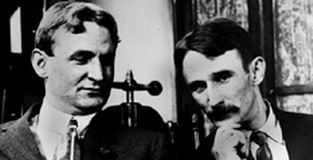 James & John McNamara
Mass murderer · USA · 1910
James B. (“J.B.”) McNamara · John J. (“J.J.”) McNamara · The brothers were Iris…
21 victims
James & John McNamara
Mass murderer · USA · 1910
James B. (“J.B.”) McNamara · John J. (“J.J.”) McNamara · The brothers were Iris…
21 victims
 John S. Williams
Murderer · USA · 1910
John S. Williams was convicted of murder and sentenced to life imprisonment on…
18 victims
John S. Williams
Murderer · USA · 1910
John S. Williams was convicted of murder and sentenced to life imprisonment on…
18 victims
 Mack Oran Hill
Murderer · USA · 1978
Mack Oran Hill was executed by lethal injection in Texas on August 8, 2001. Hil…
2 victims
Mack Oran Hill
Murderer · USA · 1978
Mack Oran Hill was executed by lethal injection in Texas on August 8, 2001. Hil…
2 victims
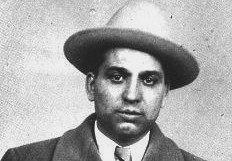 Harry Maione
Murderer · USA · 1937
Harry “Happy” Maione (1908 – February 19, 1942) was a New York mobster who serv…
12 victims
Harry Maione
Murderer · USA · 1937
Harry “Happy” Maione (1908 – February 19, 1942) was a New York mobster who serv…
12 victims
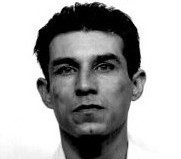 Henry Martinez Porter
Murderer · USA · 1975
July 9, 1985 — Henry Martinez Porter was pronounced dead at 12:31 a. m. followi…
1 victim
Henry Martinez Porter
Murderer · USA · 1975
July 9, 1985 — Henry Martinez Porter was pronounced dead at 12:31 a. m. followi…
1 victim
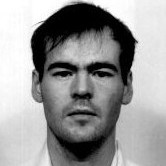 Robert Streetman
Murderer · USA · 1982
Robert Streetman was executed by lethal injection in Texas on January 7, 1988.…
1 victim
Robert Streetman
Murderer · USA · 1982
Robert Streetman was executed by lethal injection in Texas on January 7, 1988.…
1 victim
- Gender
- male
- Country
- USA
- Location
- Buffalo, New York, USA
- Date of birth
- January 1, 1873
- Age at first offence
- 28
- Characteristics
- anarchist
- Victim profile
- William McKinley, Jr., 58, the 25th President of the United States
- Method of murder
- Shooting ( .32 caliber revolver)
- Date(s) of murder
- September 6, 1901
- Years active
- 1901
- Date of arrest
- Same day
- Status
-
Executed
Executed by electrocution in Auburn prison on October 29, 1901
Case details
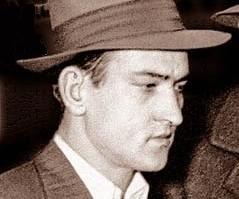
Leon Frank Czołgosz (1873 – October 29, 1901) was the assassin of U.S. President William McKinley.
He was also referred to with the surname “Nieman” and variations thereof.
Timeline
- July 29, 1900 — King Umberto I was assassinated by avowed anarchist Gaetano Bresci.
- August 31, 1901 — Czołgosz moved to Buffalo, New York, and rented a room near the site of the Pan-American Exposition.
- September 2, 1901 — Czołgosz purchased the .32 caliber Iver-Johnson “Safety Automatic” revolver for $4.50.
- September 5, 1901 — McKinley and his wife Ida arrived at the Exposition, designated as “President’s Day”; Czołgosz was at the fair for President’s Day and heard McKinley’s speech.
- September 6, 1901 — At the Pan-American Exposition, President William McKinley was shot twice by Czołgosz in the Temple of Music; Czołgosz was apprehended by crowd and security.
- September 7, 1901 — Czołgosz confessed in a statement that “I killed President McKinley because I done my duty. I didn't believe one man should have so much service and another man should have none.”
- September 9, 1901 — A bulletin stated, “The President's condition is becoming more and more satisfactory. Untoward incidents are less likely to occur.”
- September 10, 1901 — A bulletin stated, “The President's condition this morning is eminently satisfactory to his physicians. If no complications arise a rapid convalescence may be expected.”
- September 11, 1901 — The President took beef juice orally.
- September 12, 1901 — McKinley had his first solid food, some toast and egg with coffee, and his condition began to worsen later that day.
- September 13, 1901 — A bulletin stated, “The President's condition is very serious, and gives rise to the gravest apprehension.”
- September 14, 1901 — President McKinley died at 2:15 a.m.
- September 16, 1901 — A grand jury indicted Czołgosz.
- September 23, 1901 — Czołgosz’s trial began; he was convicted on September 24, 1901.
- September 24, 1901 — Czołgosz was convicted after the jury deliberated for only one hour.
- September 26, 1901 — The jury recommended the death penalty; Czołgosz asked the warden if he would be transferred to Sing Sing to be electrocuted.
- October 29, 1901 — Czołgosz was executed by electrocution at Auburn prison.
Background
Leon Frank Czołgosz was born in 1873. Some accounts gave his birthplace as Detroit, Michigan, and others gave Alpena, Michigan.
He was described as one of two children of Polish immigrants in one account, and as one of eight children (six boys and two girls) of Mary (née Nowak) and Paul Czołgosz in another account. His father and mother were described as Polish Catholic immigrants from Prussia, in one account.
His family moved to Detroit when he was five years old.
He left his family farm in Cleveland, Ohio, at the age of ten to work at the American Steel and Wire Company with two of his brothers. After workers went on strike, he and his brothers were fired.
He returned to the family farm in Warrensville, Ohio. At sixteen, he was sent to work in a glass factory in Natrona, Pennsylvania for two years before moving back home.
One account stated his mother died while giving birth to another child when he was 12.
He became a recluse and spent much of his time alone reading socialist and anarchist newspapers. He was described as constantly at odds with his family’s Roman Catholic beliefs and with his stepmother.
Anarchism and Emma Goldman
Czołgosz was influenced by anarchist writers and was affected after hearing a speech by Emma Goldman. He sought her out to discuss political matters.
Goldman’s advocacy included a piece written in defense of Czołgosz.
A warning issued by the radical Free Society newspaper included the following quotation:
“The attention of the comrades is called to another spy. He is well dressed, of medium height, rather narrow shouldered, blond, and about 25 years of age. Up to the present he has made his appearance in Chicago and Cleveland. In the former place he remained a short time, while in Cleveland he disappeared when the comrades had confirmed themselves of his identity and were on the point interested in the cause, asking for names, or soliciting aid for acts of contemplated violence. If this individual makes his appearance elsewhere, the comrades are warned in advance and can act accordingly.”
Czołgosz believed there was a great injustice in American society, an inequity that allowed the wealthy to enrich themselves by exploiting the poor. He concluded that the reason was the structure of government itself.
On July 29, 1900, King Umberto I was assassinated by avowed anarchist Gaetano Bresci. Bresci told the press he had to take matters into his own hands for the sake of the common man.
The assassination of Umberto I was described as sending shockwaves through the American anarchist movement. The assassination inspired Czołgosz.
Czołgosz attempted to duplicate the event as much as possible by buying the same Iver Johnson revolver Bresci had used. When he was later arrested, police found a folded newspaper clipping about Bresci in Czołgosz’s pocket.
Investigation and arrest
On August 31, 1901, Czołgosz moved to Buffalo, New York, and rented a room near the site of the Pan-American Exposition.
On September 6, 1901, he went to the exposition with a pistol concealed in a handkerchief.
At 4:07 p.m., Czołgosz reached the front of the line. He shot McKinley twice at point-blank range.
The crowd subdued Czołgosz, and the 4th Brigade, National Guard Signal Corps and police intervened. Czołgosz was beaten so severely that it was initially thought he might not live to stand trial.
Czołgosz was briefly held in a cell at Buffalo’s 13th Precinct house at 346 Austin Street before being moved to the city’s police headquarters downtown.
The offence
President William McKinley was shot twice by Leon Czołgosz at the Temple of Music at the Pan-American Exposition in Buffalo, New York.
At 4:07 p.m., McKinley was standing in a receiving line greeting the public for several minutes when Czołgosz reached the front of the line and shot McKinley twice in the abdomen at point-blank range.
A description of the shooting sequence included details that McKinley extended his hand; Czołgosz slapped it aside and shot him in the abdomen twice at point blank range. Another account stated McKinley reached out to take Czołgosz’s “bandaged” hand, but before he could shake it Czołgosz pulled the trigger twice.
McKinley initially appeared to recover. He died from his wounds on September 14, 1901.
Custody and trial
Following the assassination, newly-elevated President Theodore Roosevelt issued a pronouncement:
“When compared with the suppression of anarchy, every other question sinks into insignificance.”
On September 13, 1901, the day before McKinley succumbed to his wounds, Czołgosz was transferred from police headquarters since the headquarters were undergoing repairs, to the Erie County Women’s Penitentiary.
On September 16, 1901, he was taken to the Erie County Jail before being arraigned before County Judge Emery. After the arraignment, he was transferred to Auburn State Prison.
A grand jury indicted Czołgosz on September 16, 1901. It was stated that he spoke freely with his guards.
His defense lawyers were Robert C. Titus and Lorin L. Lewis. Czołgosz refused all interaction with Titus and Lewis and with the expert psychiatrist sent to test his sanity.
The district attorney at trial was Thomas Penney, assisted by a Mr. Haller, whose performance was described as “flawless”.
Although Czołgosz answered that he was pleading “Guilty”, Judge Truman C. White overruled and entered a “Not Guilty” plea on his behalf.
In the nine days from McKinley’s death on September 14 to Czołgosz’s trial on September 23, his lawyers were unable to prepare a defense because Czołgosz refused to speak to either one of them.
Lorin Lewis argued at trial that Czołgosz could not be found guilty for the murder because he was insane at the time.
On September 23 and 24, prosecution testimony was presented consisting of the doctors who treated McKinley and various eyewitnesses to the shooting. Lewis did not call any defense witnesses. Czołgosz refused to testify and did not speak in court.
In Lewis’s statement to the jury, the following quotation appeared:
“the only question that can be discussed or considered in this case is... whether that act was that of a sane person. If it was, then the defendant is guilty of the murder... If it was the act of an insane man, then he is not guilty of murder but should be acquitted of that charge and would then be confined in a lunatic asylum.”
The prosecutor laid stress on Czołgosz’s anarchist affiliations and called upon the jury to heed the popular demand for a quick trial and execution.
Judge White closed the trial with instructions to the jury supporting the prosecution’s argument that Czołgosz was not insane and that he knew clearly what he was doing.
Czołgosz was convicted on September 24, 1901, after the jury deliberated for only one hour.
On September 26, the jury recommended the death penalty.
Sentencing and execution
After returning to Auburn Prison, Czołgosz asked the warden if this meant he would be transferred to Sing Sing to be electrocuted, and seemed surprised to learn that Auburn had its own electric chair.
Czołgosz was executed by electrocution by three jolts at Auburn Prison on October 29, 1901. In one account, each jolt was described as at 1700 volts each; in another, each jolt was described as at 1800 volts.
His brother, Waldek, and his brother-in-law, Frank Bandowski, were in attendance.
When Waldek asked the Warden for his brother’s body to be taken for proper burial, he was informed that he:
“would never be able to take it away” and that crowds of people would mob him.
Czołgosz’s last words included the quotation:
“I killed the President because he was the enemy of the good people – the good working people. I am not sorry for my crime.”
As prison guards strapped him into the chair, he also said through clenched teeth:
“I am sorry I could not see my father.”
Czołgosz was autopsied by John T. Gerin, and his brain was autopsied by Edward Anthony Spitzka.
The body was buried on prison grounds following the autopsy. Prison authorities initially planned to inter the body with quicklime to hasten decomposition, tested quicklime on a sample of meat, then poured sulfuric acid into his coffin so his body would completely dissolve within 24 hours. The warden estimated the acid caused disintegration within 12 hours. His letters and clothes were burned, and names of those who had sent threatening or sympathetic correspondence were recorded for future reference.
In one passage, the following was included as an additional remorse statement:
“I wish the people to know I am sorry for what I did. It was a mistake and it was wrong. If I had it to do over again I never would do it. But it is too late now to talk of that. I am sorry I killed the President.”
Victim
U.S. President William McKinley was the victim of the assassination.
He was shot twice at point blank range in the abdomen and died on September 14, 1901.
Other details
The gun used was described as a .32 caliber Iver-Johnson “Safety Automatic” revolver, serial number 463344. It was purchased on September 2, 1901 for $4.50.
The pistol was described as currently on display at the Pan-American Exposition exhibit of the Erie County Historical Society in Buffalo, and as the only U.S. presidential assassination weapon not in federal custody.
The electrocution was filmed by Thomas Edison in poor quality.
Emma Goldman was arrested on suspicion of being involved in the assassination but was released due to insufficient evidence. She later published “The Tragedy at Buffalo,” comparing Czołgosz to Marcus Junius Brutus, the killer of Julius Caesar, and calling McKinley the “president of the money kings and trust magnates.”
The Temple of Music was torn down in November 1901, and the exposition grounds were described as being demolished.
A stone marker in the middle of Fordham Drive in Buffalo marked the approximate spot where the shooting occurred.
A stone marks the location of the Temple of Music where McKinley was shot.
Czołgosz’s story, along with those of eight other presidential assassins and would-be assassins, was described as the basis of the Broadway musical “Assassins”.
In “Assassins,” Czołgosz was described as being befriended by Charles Guiteau and John Wilkes Booth, and “The Ballad of Czolgosz” was described as an upbeat, folk song that contrasts with Booth’s earlier ballad.
Among personal effects found in his apartment was a U.S. quarter stamped with the date 2218. The face in profile on the quarter was not George Washington, but rather a face which had yet to be identified.
An antagonist of Warren Adler’s mystery novel, “American Quartet,” used Czołgosz as inspiration in a Washington, D.C. killing.
In 1921, Lloyd Vernon Briggs, Director of the Massachusetts Department for Mental Hygiene, reviewed the Czołgosz case and the cases of Clarence Richeson and Bertram G. Spencer and concluded that Czołgosz was:
“a diseased man, a man who had been suffering from some form of mental disease for years. He was not medically responsible and in the light of present-day psychiatry and of modern surgical procedure, there is a great question whether he was even legally responsible for the death of our President.”
Note on quotations preserved within the narrative
Additional quotations attributed within the narrative included:
“I killed President McKinley because I done my duty. I didn't believe one man should have so much service and another man should have none.” and “It is useless, gentlemen, I think we ought to have prayer.” and “Nearer, My God, to Thee.” and “Mr. President, can't you hear me? William! Don't you know me?” and “The President passed a good night and his condition this morning is quite encouraging. His mind is clear and he is resting well. Wound dressed at 8:30 and found in a very satisfactory condition.” and “The President's physicians report that his condition is most serious in spite of vigorous stimulation....unless it can be relieved the end is only a question of time.” and “THE PRESIDENT APPEARS TO BE DYING AND MEMBERS OF THE CABINET IN BUFFALO THINK YOU SHOULD LOSE NO TIME COMING” and “THE PRESIDENT DIED AT TWO-FIFTEEN THIS MORNING” and “Why should I? No one would wish to hurt me.”
Spotted an error, or have more information about this case?