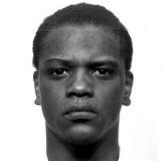
Bruce Edwin Callins
Murderer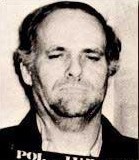 Ervil LeBaron
Murderer · USA · 1972
Ervil Morrell LeBaron (1925 to August 16, 1981) was the leader of a polygamous…
35 victims
Ervil LeBaron
Murderer · USA · 1972
Ervil Morrell LeBaron (1925 to August 16, 1981) was the leader of a polygamous…
35 victims
 Brian Kevin Rosenfeld
Murderer · USA · 1985
Brian Kevin Rosenfeld Brian Kevin Rosenfeld was sentenced to three concurrent l…
23 victims
Brian Kevin Rosenfeld
Murderer · USA · 1985
Brian Kevin Rosenfeld Brian Kevin Rosenfeld was sentenced to three concurrent l…
23 victims
 Marvin Gray
Murderer · USA · 1975
Marvin Gray was convicted killer who claimed responsibility for 23 slayings and…
23 victims
Marvin Gray
Murderer · USA · 1975
Marvin Gray was convicted killer who claimed responsibility for 23 slayings and…
23 victims
 Yahweh ben Yahweh
Murderer · USA · 1980
Yahweh ben Yahweh was born and legally named Hulon Mitchell Jr. (October 27, 19…
23 victims
Yahweh ben Yahweh
Murderer · USA · 1980
Yahweh ben Yahweh was born and legally named Hulon Mitchell Jr. (October 27, 19…
23 victims
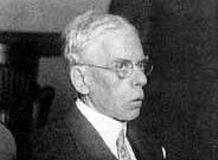 Henry Colin Campbell
Murderer · USA · 1928
Henry Colin Campbell, known as "The Torch Murderer," was executed by the State…
2 victims
Henry Colin Campbell
Murderer · USA · 1928
Henry Colin Campbell, known as "The Torch Murderer," was executed by the State…
2 victims
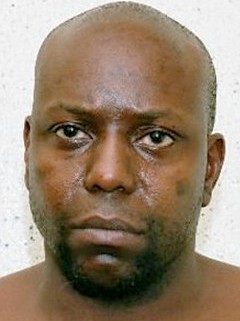 Peter Bryan
Homicide · United Kingdom · 1993
Peter Bryan was a schizophrenic cannibal who was sentenced to closed psychiatri…
3 victims
Peter Bryan
Homicide · United Kingdom · 1993
Peter Bryan was a schizophrenic cannibal who was sentenced to closed psychiatri…
3 victims
 Bennie Eddie Demps
Murderer · USA · 1971
Bennie Eddie Demps was convicted of the September 7, 1976 stabbing death of Alf…
3 victims
Bennie Eddie Demps
Murderer · USA · 1971
Bennie Eddie Demps was convicted of the September 7, 1976 stabbing death of Alf…
3 victims
 John Paul Phillips
Serial killer · USA · 1975
John Paul Phillips was a convicted murderer who was sentenced to death in 1986…
3 victims
John Paul Phillips
Serial killer · USA · 1975
John Paul Phillips was a convicted murderer who was sentenced to death in 1986…
3 victims
- Gender
- male
- Country
- USA
- Location
- Dallas County, Texas, USA
- Date of birth
- February 22, 1960
- Age at first offence
- 20
- Characteristics
- robbery
- Victim profile
- Allen Huckleberry (male customer bar)
- Method of murder
- Shooting
- Date(s) of murder
- June 27, 1980
- Years active
- 1980
- Date of arrest
- —
- Status
-
Executed
Executed by lethal injection in Texas on May 21, 1997
Case record
Legal posture and appellate context
Bruce Edwin Callins filed a petition for certiorari that was docketed in Johnson, 79 F.3d 432, 438 (5th Cir.1996), with the petition for cert. filed (Apr. 29, 1996) (No. 95-8790).
The court concluded that Callins’s claim did not fall within the Penry exception to Teague. The court stated that Sawyer and Fearance were explicit, and that the relevant inquiry was whether a petitioner was factually innocent of either an element of the crime or a mandatory sentencing criterion. The court previously likened the “actual innocence” standard to a different Teague exception that permits reliance on new procedures that are “implicit in the concept of ordered liberty,” because those procedures are so fundamental that they “implicat[e] factual innocence.” The court cited Sawyer v. Butler, 881 F.2d 1273, 1293 (5th Cir.1989) (en banc) (emphasis added), aff’d, 497 U.S. 227, 110 S.Ct. 2822, 111 L.Ed.2d 193 (1990).
The court concluded that Sawyer did not hold that anyone who was legally ineligible for a particular punishment is “actually innocent.” It stated that Sawyer merely likened sentencing criteria to the elements of a crime, focusing on the factual, not legal, basis for the verdict.
The court addressed Callins’s contention that the Texas Court of Criminal Appeals “effectively waived the State of Texas’ interests in federalism and finality regarding ex post facto claims” in Ieppert v. State, 908 S.W.2d 217 (Tex.Crim.App.1995). The court stated that Ieppert held that ex post facto claims were not subject to Texas’s procedural default rules because they were based upon a categorical prohibition against government behavior, not an individual right.
The court described two possible contentions. First, it stated Callins might argue that the state actually waived the protection of Rule 9(b), and it noted that even assuming arguendo that the state could waive that defense, the state had vigorously pressed it in the case. It cited United States v. Flores, 981 F.2d 231, 236 n. 9 (5th Cir.1993) (holding that district courts may raise abuse of the writ sua sponte).
Second, the court stated Callins might contend that the court should determine whether consideration of the petition would intrude significantly on the interests of the state in federalism and finality, taking into account the views of the Texas Court of Criminal Appeals about whether a particular type of claim should be subject to forfeiture. The court stated that while the Supreme Court could have mandated such a case-by-case analysis, it did not, and instead held that the court may consider a second petition only if the petitioner shows cause and prejudice or actual innocence.
The court stated that because Ieppert was not relevant to either inquiry, the court was foreclosed from holding that the state court impliedly waived its government’s right to plead abuse of the writ.
Statutory changes while the appeal was pending
The court stated that while the appeal was pending, Congress enacted the Antiterrorism and Effective Death Penalty Act of 1996, Pub.L. No. 104-132, 110 Stat. 1214. The court stated that the act would require dismissal of a claim presented for the first time in a second habeas petition unless it relied upon a legal theory or factual predicate previously unavailable to the petitioner.
The court quoted the rule for a second or successive habeas corpus application under section 2254. It stated that such a claim “shall be dismissed unless— (A) the applicant shows that the claim relies on a new rule of constitutional law, made retroactive to cases on collateral review by the Supreme Court, that was previously unavailable; or (B)(i) the factual predicate for the claim could not have been discovered previously through the exercise of due diligence; and (ii) the facts underlying the claim, if proven and viewed in light of the evidence as a whole, would be sufficient to establish by clear and convincing evidence that, but for constitutional error, no reasonable factfinder would have found the applicant guilty of the underlying offense.” It cited Id. § 106(b)(2) (to be codified at 28 U.S.C. § 2244(b)(2)) (emphasis added).
The court stated that Callins conceded he could have presented his carving doctrine claim in his first petition. It stated that Callins contended that his counsel was ineffective for failing to do so. The court then stated that § 106(b) would bar the court from considering that claim if that subsection was applicable to cases pending on appeal at the time of enactment, and noted that Congress did not specify an effective date for § 106 as it did for § 107 of the Act.
The court then stated that it lacked discretion to consider Callins’s challenge under either McCleskey or the antiterrorism act, and therefore it did not decide whether § 106 applied to this appeal. The court stated that the analysis was based on its understanding of McCleskey.
The court concluded that the petition was an abuse of the writ and stated: “Finding this petition to be an abuse of the writ, we AFFIRM.”
Additional notes included in the decision
- The court stated that the Eighth Circuit arguably had found that prisoners were not responsible for petitions filed by counsel who failed to satisfy an implied effectiveness requirement of § 848(q)(4). It cited Murray v. Delo, 34 F.3d 1367, 1373-74 (8th Cir.1994) (enunciating exception to McCleskey for cases in which counsel filed petition without client’s knowledge), cert. denied, --- U.S. ----, 115 S.Ct. 2567, 132 L.Ed.2d 819 (1995). It also cited Holmes v. Norris, 32 F.3d 1240, 1241 (8th Cir.) (holding that habeas attorney’s conflict-of-interest is cause for failure to raise ineffective assistance of counsel claim), vacated, 32 F.3d 1244 (en banc), cert. dismissed, --- U.S. ----, 115 S.Ct. 379, 130 L.Ed.2d 328 (1994).
The court stated that the Eighth Circuit cases did not attempt to distinguish Coleman. It further stated that to the extent the cases held the state responsible for statutorily-inadequate counsel, they were inconsistent with Coleman.
The court stated that Callins contended that two of its cases, Sones v. Hargett, 61 F.3d 410 (5th Cir.1995); Smith v. Collins, 977 F.2d 951 (5th Cir.1992), cert. denied, 510 U.S. 829, 114 S.Ct. 97, 126 L.Ed.2d 64 (1993), suggested that Sawyer applied to any constitutional defect if, but for the defect, the defendant would have been “ineligible” for the sentence. The court stated that each case involved an allegation of error relating only to sentencing, not conviction, and neither questioned the square holding of Fearance.
The court cited Schlup v. Delo, --- U.S. ----, ----, 115 S.Ct. 851, 861, 130 L.Ed.2d 808 (1995) (stating that if a petitioner failed to show cause and prejudice, a federal court could review claims only if failure to do so would result in a miscarriage of justice). It also cited Fearance, 56 F.3d at 637 (same).
The court stated that even if it had equitable discretion, Ieppert would hardly end its inquiry. It stated that Rule 9(b) protected not only the states’ interests in finality and federalism, but also the federal courts’ interest in not expending resources on unnecessarily repetitive litigation. It cited McCleskey, 499 U.S. at 491-92, 111 S.Ct. at 1468-69.
Spotted an error, or have more information about this case?