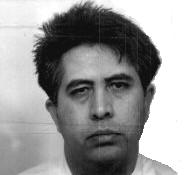
Genaro Ruiz Camacho
Murderer Brian Kevin Rosenfeld
Murderer · USA · 1985
Brian Kevin Rosenfeld Brian Kevin Rosenfeld was sentenced to three concurrent l…
23 victims
Brian Kevin Rosenfeld
Murderer · USA · 1985
Brian Kevin Rosenfeld Brian Kevin Rosenfeld was sentenced to three concurrent l…
23 victims
 Yahweh ben Yahweh
Murderer · USA · 1980
Yahweh ben Yahweh was born and legally named Hulon Mitchell Jr. (October 27, 19…
23 victims
Yahweh ben Yahweh
Murderer · USA · 1980
Yahweh ben Yahweh was born and legally named Hulon Mitchell Jr. (October 27, 19…
23 victims
 Russell Ellwood
Murderer · USA · 1991
Russell Ellwood was a former taxi driver. Authorities suspected him of killing…
20 victims
Russell Ellwood
Murderer · USA · 1991
Russell Ellwood was a former taxi driver. Authorities suspected him of killing…
20 victims
 Robert Martines Perez
Murderer · USA · 1994
Name: Robert Martines Perez · Other name used in proceedings: Robert Martinez P…
15 victims
Robert Martines Perez
Murderer · USA · 1994
Name: Robert Martines Perez · Other name used in proceedings: Robert Martinez P…
15 victims
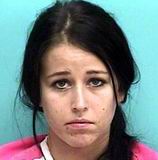 Nicole Baukus
Homicide · USA · 2012
Nicole Baukus was charged after a wrong-way crash in which two teenagers died a…
2 victims
Nicole Baukus
Homicide · USA · 2012
Nicole Baukus was charged after a wrong-way crash in which two teenagers died a…
2 victims
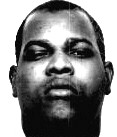 Vincent Edward Cooks
Murderer · USA · 1988
Vincent Edward Cooks was executed by lethal injection in Texas on December 12,…
1 victim
Vincent Edward Cooks
Murderer · USA · 1988
Vincent Edward Cooks was executed by lethal injection in Texas on December 12,…
1 victim
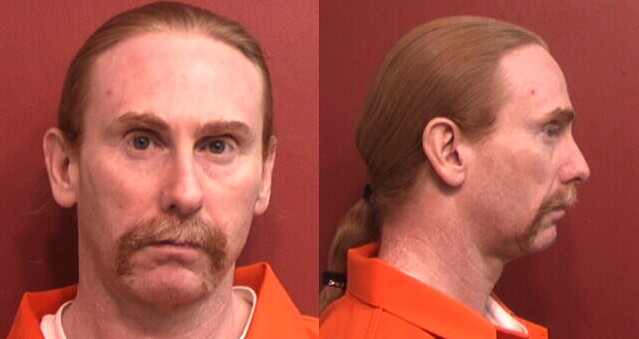 David Thomas Dawson
Murderer · USA · 1986
David Thomas Dawson · April 18, 1986 — Dawson checked into the room next to the…
3 victims
David Thomas Dawson
Murderer · USA · 1986
David Thomas Dawson · April 18, 1986 — Dawson checked into the room next to the…
3 victims
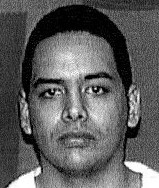 Arnold Prieto
Murderer · USA · 1993
Arnold Prieto was sentenced to death on June 2, 1995. The current status was st…
3 victims
Arnold Prieto
Murderer · USA · 1993
Arnold Prieto was sentenced to death on June 2, 1995. The current status was st…
3 victims
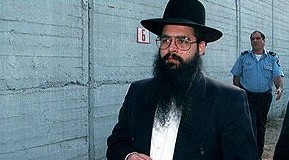 Ami Popper
Mass murderer · Israel · 1990
Ami Popper (Hebrew: עמי פופר; born 1969) was an Israeli convicted of murder. Po…
7 victims
Ami Popper
Mass murderer · Israel · 1990
Ami Popper (Hebrew: עמי פופר; born 1969) was an Israeli convicted of murder. Po…
7 victims
- Gender
- male
- Country
- USA
- Location
- Dallas County, Texas, USA
- Date of birth
- September 14, 1954
- Age at first offence
- 34
- Characteristics
- drugs, kidnapping
- Victim profile
- Sam Wright, 57, Evellyn Banks, 31, and Banks's 3 year old son Andre / ???
- Method of murder
- Shooting
- Date(s) of murder
- 1988
- Years active
- 1988
- Date of arrest
- —
- Status
-
Executed
Executed by lethal injection in Texas on August 26, 1998
Case information
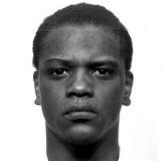
Name: Genaro Ruiz Camacho Also known as: Geno Camacho Alias in federal appellate caption: Genaro Camacho Born: September 14, 1954 Died: August 26, 1998
Timeline
- May 20, 1988 — Genaro Ruiz Camacho enlisted the aid of Juan Jackson and several others to collect a debt that Sam Junior Wright owed him as a result of a drug-related transaction; the men went to Wright’s home in Pleasant Grove, Texas, shared with Evellyn Banks, Andre Banks, and Evellyn’s two school aged children at school; David Wilburn, a young, retarded man who worked for Wright, interrupted when he knocked on the door; Camacho shot and killed Wilburn; Evellyn Banks and Andre Banks were abducted; Wright escaped; the kidnappers chased Wright around the block; Camacho ordered Jackson to shoot him; Jackson did not comply; Evellyn and Andre were taken to an apartment in Dallas shared by several defendants; Jackson left with his share of the money and did not return; the kidnappers kept Evellyn and Andre for two days.
- May 22, 1988 — Camacho and the other defendants decided to take Evellyn and Andre to Oklahoma to kill them because they had witnessed the murder of Wilburn and could provide evidence to the police if released.
- May 22, 1988 (evening) — Evellyn and Andre were taken to Ardmore, Oklahoma.
- May 23, 1988 (next morning) — Evellyn and Andre were taken to a location near Arbuckle National Forest; the kidnappers killed the victims and buried them in a pre-dug grave.
- October 6, 1988 — The United States charged Jackson and Camacho in a seven-count indictment.
- February 27, 1991 — The United States returned a virtually identical indictment deleting counts that pertained solely to a few co-defendants who had plead guilty and agreed to testify against the defendants.
- March 6, 1991 — The district court entered an order setting the case for trial on May 6.
- April 12, 1991 — Camacho filed his first motion for continuance; the district court granted the requested continuance and set the case for trial on its June docket.
- June 12, 1991 — Camacho again moved for a continuance; he requested a forty-five day continuance and the district court granted a continuance for only seven days.
- June 24 to July 9, 1991 — The United States tried Jackson and Camacho before a jury in the United States District Court for the Northern District of Texas, Dallas Division, with the Honorable A. Joe Fish presiding.
- July 9, 1991 — The jury returned a verdict finding Camacho guilty on all counts and finding Jackson guilty on all but one count; the district court gave both defendants life sentences under the sentencing guidelines for murder; the court ordered Camacho to pay the estate of Evellyn Banks $1,000,000 in restitution and ordered Jackson to pay $250,000 in restitution.
- 1993 — A Dallas County jury convicted Camacho of capital murder and sentenced him to die for Wilburn’s murder.
- Nov. 23, 1992 — The United States Court of Appeals, Fifth Circuit issued its opinion in United States of America v. Juan Jackson and Genaro Camacho, appeal number 91-7084.
- Jan. 20, 1993 — Rehearing was denied.
- August 26, 1998 — Camacho was executed by lethal injection in Texas.
Background
Genaro Ruiz Camacho was linked to five murders and described as a mid-level drug dealer who brought marijuana into Texas from Mexico and used murder to keep people in line. Camacho was described as a ruthless cannabis smuggler in Texas.
Camacho fled to Mexico after the May 20, 1988 events. The FBI learned via an informant that Camacho had escaped to the town of Arcelia, in Guerrero State, Mexico. The FBI requested that he be extradited to the United States, but Mexican authorities claimed that Arcelia and the surrounding area were under the total control of heavily-armed drug barons, and that any arrest attempt would result in a bloodbath. The FBI set up a sting operation to lure Camacho back to the United States.
Camacho was arrested as he crossed the border near McAllen, Texas.
The offence
Drug-debt collection and kidnapping
On May 20, 1988, Genaro Ruiz Camacho enlisted the aid of Juan Jackson and several others to collect a debt that Sam Junior Wright owed him as a result of a drug-related transaction. The men went to Wright’s home in Pleasant Grove, Texas, which he shared with Evellyn Banks and her three and a half year old son Andre Banks, and with Evellyn’s two school aged children who were at school.
Camacho insisted that Wright owed him between $10,000 and $20,000 and demanded that Wright pay him. Wright had $1,500 and gave it to Camacho, but Camacho was not satisfied.
Camacho and the armed co-defendants proceeded to terrorize their captives. David Wilburn, a young retarded man who worked for Wright, interrupted the kidnappers when he knocked on the door. Camacho told Wilburn to come in, searched him, and made him lie flat on the floor. Wilburn was not armed and offered no resistance. Without warning or provocation, Camacho shot and killed Wilburn.
After killing Wilburn, Camacho returned to Wright, asking when Wright could get the money. When Wright replied in a couple of days, Camacho demanded to know how Wright would get the money. Wright told Camacho he would sell his house and his car. Camacho replied that he would kill Evellyn and Andre if Wright failed to pay.
Camacho ordered the other defendants to handcuff Evellyn and Andre and put them in the car. Wright managed to escape the house and yelled to a neighbor to call the police. The kidnappers chased Wright around the block. Camacho ordered Jackson to shoot Wright, but Jackson did not comply.
Confinement, transfer, and killing
The kidnappers took Evellyn and Andre to an apartment in Dallas shared by several defendants. While two other defendants watched Evellyn and Andre, Jackson and another defendant counted and split the money. Jackson left with his share and never returned. The kidnappers kept Evellyn and Andre for two days.
On May 22, Camacho and the other defendants decided to take Evellyn and Andre to Oklahoma to kill them because they had witnessed the murder of Wilburn and could provide evidence to the police if released. That evening, the kidnappers took Evellyn and Andre to Ardmore, Oklahoma. The next morning, they took the victims to a location near Arbuckle National Forest, where they killed their victims and buried them in a pre-dug grave. The autopsies revealed that Evellyn was shot in the head twice and Andre was shot in the head four times.
Earlier kidnapping incident admitted at trial
At trial, the government introduced evidence of a prior kidnapping incident involving Jackson and Camacho. In that incident, the men drove to Wichita, Kansas to collect a debt owed to Camacho. Not finding the debtor, they kidnapped his sister-in-law and brought her to Dallas until the debt was paid a few days later. After obtaining the money, they released the woman and gave her a plane ticket back to Kansas.
Investigation
An informant provided information that Camacho had escaped to the town of Arcelia in Guerrero State, Mexico. Mexican authorities claimed that the Arcelia area was controlled by heavily-armed drug barons and that any arrest attempt would result in a bloodbath. The FBI therefore set up a sting operation to lure Camacho back to the United States.
Arrest
Trial
Federal charges and indictment
On October 6, 1988, the United States charged Jackson and Camacho in a seven-count indictment with:
- knowingly and willfully conspiring to kidnap Evellyn and Andre Banks in interstate commerce;
- knowingly and unlawfully kidnapping and transporting Evellyn and Andre Banks in interstate commerce; and
- willfully and unlawfully carrying and using a firearm during the commission of a felony.
On February 27, 1991, the United States returned a virtually identical indictment that only deleted counts pertaining solely to a few co-defendants who had plead guilty and agreed to testify against the defendants.
In the meantime, the State of Texas tried and convicted Camacho on a charge of capital murder.
Continuances
Camacho filed his first motion for continuance on April 12; the district court granted it and set the case for trial on its June docket. Camacho moved again for a continuance on June 12 requesting forty-five days; the district court granted a continuance for only seven days.
Jury verdict and sentencing
From June 24 to July 9, 1991, the United States tried Jackson and Camacho before a jury in the United States District Court for the Northern District of Texas, Dallas Division, with the Honorable A. Joe Fish presiding.
On July 9, the jury returned a verdict finding Camacho guilty on all counts and finding Jackson guilty on all but one count.
The district court gave both defendants life sentences under the sentencing guidelines for murder. The district court ordered restitution: Camacho was ordered to pay $1,000,000 to the estate of Evellyn Banks, and Jackson was ordered to pay $250,000 in restitution. Both defendants moved for new trials, and the district court denied the motions. They filed timely notices of appeal.
Appeals
The case proceeded to the United States Court of Appeals, Fifth Circuit, as: United States of America, Plaintiff-Appellee, v. Juan Jackson and Genaro Camacho, Defendants-Appellants. No. 91-7084. United States Court of Appeals, Fifth Circuit. Nov. 23, 1992. Rehearing Denied Jan. 20, 1993. Appeal from the United States District Court for the Northern District of Texas.
Issues raised and holdings
Jackson and Camacho contested their convictions for the kidnapping of Evellyn Banks and her three-year-old son Andre. Camacho asserted the district court erred by denying him a forty-five day continuance, allowing evidence of an earlier kidnapping, and by allowing the government to introduce evidence of an earlier kidnapping. He also contended the government failed to timely disclose Brady material. Jackson argued the evidence was insufficient to establish kidnapping under federal law because he could not reasonably foresee that the victims would be transported in interstate commerce. Both defendants argued they were improperly denied access to the presentence reports of their co-defendants. Both also urged that the court incorrectly sentenced them under the guideline for murder and ordered restitution unrelated to victims’ losses.
The appellate court:
- affirmed the convictions of both Jackson and Camacho;
- affirmed the sentences given by the district court;
- reversed and remanded the restitution orders because the district court did not support the restitution orders with factual findings.
Presentence reports and Jencks Act
The appellate court held that presentence reports were not statements discoverable under the Jencks Act, emphasizing the confidential nature of presentence reports and the need for special need before a third party could obtain a copy. The appellate court also described due process disclosure obligations under Brady v. Maryland and Giglio v. United States and explained that the district court examined the presentence reports in camera, found the defendants already had access to all the information the reports contained, and found the reports did not contain evidence favorable to the defendants.
Sufficiency of kidnapping evidence
The appellate court found Jackson’s arguments unconvincing regarding whether the government proved transportation in interstate commerce or knowledge/foreseeability. It explained that the federal kidnapping statute requires that the person be willfully transported in interstate commerce and treated transportation as jurisdictional rather than an element requiring the defendant to knowingly move the victim in interstate commerce.
Continuance denial
The appellate court found the district court did not abuse its discretion by granting only a seven-day continuance after a forty-five day request, noting the district court granted two continuances and that Camacho failed to show material prejudice.
Brady claim
The appellate court rejected Camacho’s Brady claim, finding the government provided the alleged Brady material sufficiently in time for Camacho to incorporate it into his defense, and that Camacho was able to interview witnesses and that they testified on his behalf at trial.
Evidence of earlier kidnapping
The appellate court rejected Camacho’s argument that the evidence of an earlier kidnapping was insufficient to establish that a kidnapping occurred, stating the district court applied the conditional evidence rule and relied on witness testimony and instructed the jury not to consider the earlier-kidnapping evidence unless beyond a reasonable doubt the defendants participated.
Sentencing guideline and restitution
The appellate court held that sentencing under the murder guideline was supported by facts that the district court concluded beyond a preponderance of the evidence: the appellate court described evidence that Camacho kidnapped Evellyn and Andre to facilitate their murders, including that he killed Wilburn and the victims witnessed the murder, creating the need to cover it up by eliminating witnesses. It also affirmed Jackson’s sentencing findings and restitution authority in principle while reversing restitution orders due to lack of factual findings supporting the restitution amounts.
Outcome
Federal appellate outcome: convictions affirmed; sentences affirmed; restitution orders reversed and remanded for further proceedings not inconsistent with the opinion. The appellate court’s summary: “We AFFIRM the convictions of both Jackson and Camacho. We also AFFIRM the sentences the district court gave both Jackson and Camacho. Finally, we REVERSE the restitution orders for both Jackson and Camacho and REMAND to the district court for proceedings not inconsistent with this opinion. AFFIRMED in part, REVERSED in part, and REMANDED.”
Texas capital murder conviction: A Dallas County jury convicted Camacho of capital murder and sentenced him to die for Wilburn’s murder.
Execution: Camacho was executed by lethal injection on August 26, 1998. The execution was delayed by two hours due to difficulties locating a suitable vein for the injection.
Last statement
Genaro Ruiz Camacho, Jr. made the following last statement:
“I love you all. We had a good service and I’ll be with you. I’ll be waiting for you in Heaven. Ok. Adios. That’s all I have to say.”
Other details
Named individuals and victim details
Victims:
- David L. Wilburn, 25, shot in the back of the head.
- Sam Wright (Sam Junior Wright), 57, escaped.
- Evellyn Banks, 31.
- Andre Banks, 3-year-old son of Evellyn Banks.
Other named person:
- Juan Jackson, defendant in the federal appeal.
- James Scott, a witness referenced in Camacho’s Brady claims.
- Jane Wallace, referenced in Camacho’s Brady claims.
- Rose Minter, referenced in Camacho’s Brady claims.
Persons described in connection with other killings and arguments about evidence
Camacho was linked to other murders. The appellate narrative included descriptions of additional allegations, including the slaying of a topless dancer, Pamela Miller, described as a 23-year-old Dallas topless dancer, with her dismembered body fed through a tree shredder after a botched drug deal, and also being beaten to death and having her head run over twice by a car before being dismembered. The narrative also described allegations that Camacho’s group had another companion account about ordering the baby shot repeatedly because the child continued to make noises after the initial shot.
Defense and prosecution quotations included in the narrative
- Sue Korioth, an assistant district attorney in Dallas, said: “He was such a vicious murderer he scared off his own people,” and “I think he enjoyed killing these people.”
- Genaro Camacho, Jr. said from the death row visiting area: “If I was, I would have hired the best attorneys around and I guarantee you I wouldn't be in here,” and later: “I'm ready for it, we've made all the preparations. I can't do much about it,” and “It's a new beginning.”
- James Murphy, personal attorney for Camacho, said: “I don’t think that the death penalty is right, because there are too many questions that go unanswered and I feel that in this case a man was put to death that may have been innocent.”
- Julius Whittier, Camacho’s defense attorney, said: “all the evidence wasn’t presented” and that “the trial lacked in fairness.”
- Julius Whittier said: “Who is to say that those other 20 volumes that the FBI withheld from me could have been enough to incarcerate Camacho from receiving the death penalty,” and “That just goes to prove how many people are put to death that may be innocent.”
- Julius Whittier said: “Do you know how many volumes I got to see? Only one!” and “There is no telling what evidence could have been presented.”
- Julius Whittier said: “What is to say that these witnesses cut a deal with FBI to incriminate Camacho so as to get themselves off the hook,” and “Do you really think they would incriminate themselves? Those other witnesses had something to gain by identifying Camacho.”
- Julius Whittier also said: “There is no telling where Wright is today.”
Federal case parties and procedural status for other participants (as described in narrative)
The narrative stated that Camacho was sentenced in federal court to life for the kidnapping of Banks and her son. It also stated that two of his companions were serving prison terms and the fourth was ruled incompetent to stand trial and was sent to a federal prison psychiatric center.
Disputed eyewitness description
The narrative stated that there were many concerns about what happened on May 20, 1988 in Dallas and whether Camacho was even at the scene. It stated that one of the eyewitnesses, Sabrina Wilson, said she saw Camacho drive by after Wilburn was murdered, and that the other three eyewitnesses said they weren’t sure if Camacho was even there that day.
Warrant detail included in narrative
The narrative stated that the FBI had a warrant out for Sam Wright’s arrest for Distribution of Heroine and that he had been a fugitive on the loose for three years.
Spotted an error, or have more information about this case?