Charles Rodman Campbell
Murderer Ervil LeBaron
Murderer · USA · 1972
Ervil Morrell LeBaron (1925 to August 16, 1981) was the leader of a polygamous…
35 victims
Ervil LeBaron
Murderer · USA · 1972
Ervil Morrell LeBaron (1925 to August 16, 1981) was the leader of a polygamous…
35 victims
 Brian Kevin Rosenfeld
Murderer · USA · 1985
Brian Kevin Rosenfeld Brian Kevin Rosenfeld was sentenced to three concurrent l…
23 victims
Brian Kevin Rosenfeld
Murderer · USA · 1985
Brian Kevin Rosenfeld Brian Kevin Rosenfeld was sentenced to three concurrent l…
23 victims
 Marvin Gray
Murderer · USA · 1975
Marvin Gray was convicted killer who claimed responsibility for 23 slayings and…
23 victims
Marvin Gray
Murderer · USA · 1975
Marvin Gray was convicted killer who claimed responsibility for 23 slayings and…
23 victims
 Yahweh ben Yahweh
Murderer · USA · 1980
Yahweh ben Yahweh was born and legally named Hulon Mitchell Jr. (October 27, 19…
23 victims
Yahweh ben Yahweh
Murderer · USA · 1980
Yahweh ben Yahweh was born and legally named Hulon Mitchell Jr. (October 27, 19…
23 victims
 Russell Ellwood
Murderer · USA · 1991
Russell Ellwood was a former taxi driver. Authorities suspected him of killing…
20 victims
Russell Ellwood
Murderer · USA · 1991
Russell Ellwood was a former taxi driver. Authorities suspected him of killing…
20 victims
 Joe Hill
Murderer · USA · 1914
Joe Hill was a Swedish-American labor activist, songwriter, and member of the I…
2 victims
Joe Hill
Murderer · USA · 1914
Joe Hill was a Swedish-American labor activist, songwriter, and member of the I…
2 victims
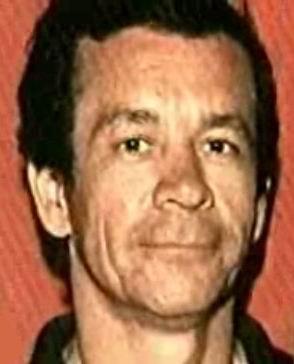 Alexander Komin | Russia
Serial killer · Russia · 1995
Alexander Komin was an electrician from Vyatskiye Polyany, Russia. He used his…
4 victims
Alexander Komin | Russia
Serial killer · Russia · 1995
Alexander Komin was an electrician from Vyatskiye Polyany, Russia. He used his…
4 victims
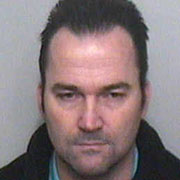 Stuart Campbell
Murderer · United Kingdom · 2001
Stuart Campbell (born 1958) was a builder who was convicted in December 2002 of…
1 victim
Stuart Campbell
Murderer · United Kingdom · 2001
Stuart Campbell (born 1958) was a builder who was convicted in December 2002 of…
1 victim
 Robert Gene Garza
Mass murderer · USA · 2002
Robert Gene Garza (male; Hispanic; black hair; brown eyes; height 05'07"; weigh…
10 victims
Robert Gene Garza
Mass murderer · USA · 2002
Robert Gene Garza (male; Hispanic; black hair; brown eyes; height 05'07"; weigh…
10 victims
 James Tenner
Murderer · USA · 1987
James Tenner was convicted of the hanging and murders of Alvin Smith and Donna…
2 victims
James Tenner
Murderer · USA · 1987
James Tenner was convicted of the hanging and murders of Alvin Smith and Donna…
2 victims
- Gender
- male
- Country
- USA
- Location
- Snohomish County, Washington, USA
- Date of birth
- October 21, 1954
- Age at first offence
- 28
- Characteristics
- rape, revenge
- Victim profile
- Renae Wicklund, her daughter Shannah, 8, and Barbara Hendrickson
- Method of murder
- St abbing with knife
- Date(s) of murder
- April 14, 1982
- Years active
- 1982
- Date of arrest
- —
- Status
-
Executed
Executed by hanging in Washington on May 27, 1994
Overview
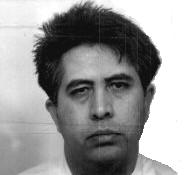
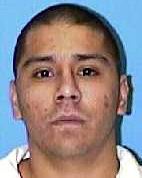
Charles Rodman Campbell (October 21, 1954 - May 27, 1994) was a convicted murderer who was executed in 1994. His case involved legal controversy surrounding capital punishment in the United States, including issues about the method of execution.
Background
Campbell had previously harmed the Wicklund household before the April 1982 killings. In 1974, he was previously convicted and sentenced for raping Wicklund. In that trial, Wicklund testified that Campbell attacked and sodomized her and held a knife to her baby's throat while forcing sex upon her.
Campbell later served six years of a 30-year sentence in a Washington prison. Upon his release, he tracked down Mrs. Wicklund and committed the three murders in 1982.
The offence
Campbell was charged with the April 1982 killing of Renae Wicklund, her eight-year-old daughter Shannah, and her neighbor Barbara Hendrickson, in Clearview, Snohomish County, Washington.
Police decided the killings were done out of revenge. Wicklund and Hendrickson had testified against Campbell after he had assaulted Wicklund in 1974 and after the earlier trial.
The 1974 assault and sodomy in Wicklund's residence in Clearview, Washington involved Campbell holding a knife to the throat of Wicklund's one-year-old daughter Shannah while threatening to harm her if Renae did not submit. After the attack, Wicklund ran to the house of her neighbor Barbara Hendrickson for help.
In March 1982, Campbell was transferred to a work release facility in Everett, Washington. On April 14, 1982, Renae Wicklund, Shannah Wicklund (then eight years old), and Barbara Hendrickson were found brutally slain in the Wicklund residence. Wicklund had been sick and remained at home that day, and Hendrickson had gone to assist her.
The evidence at trial showed that Renae Wicklund was the first victim. She was found naked on her bedroom floor. She had been beaten with a blunt instrument on her head, back, and upper chest. Her jaw and nose were broken, and she had been strangled. She had a seven-inch cut across her neck, from which she had bled to death. After her death, she had been vaginally assaulted with a blunt instrument which left a one-inch cut in her vaginal wall.
Shannah Wicklund was also strangled, and she had a seven-and-one-half-inch cut across her upper neck. She had lost so much blood that a sample was difficult to obtain.
Barbara Hendrickson’s throat also had been cut, leaving a seven-inch wound. She died of a massive hemorrhage.
Campbell was charged and tried on three counts of aggravated first degree murder. The Washington Supreme Court affirmed the convictions and sentence, noting that the State's case was "overwhelmingly strong."
Investigation
The jury heard evidence from witnesses who saw a man near the Wicklund residence on the afternoon of the murders and identified Campbell at trial as the man they had seen.
Two other witnesses described a car matching the description of Campbell's car and testified that they observed the car parked in an inlet in a wooded area near the Wicklund residence on April 14, 1982.
Judith Dirks testified that Campbell had visited her on the morning of April 14, that he had been drinking, and that he drank a six-pack of beer at her residence. Dirks later noticed her butcher knife was missing.
Debbie Kedziroski testified that Campbell visited her in the early afternoon of April 14. Kedziroski testified that Campbell proposed to have sexual relations and tugged at her clothes but did not hurt her.
Items seized from Campbell on the day of the murders included a pair of earrings that a witness identified as belonging to Renae Wicklund. An earring found in Campbell's car was identified by a business associate of Renae's as a birthday present he had given to Shannah. A glass found in the Wicklunds' kitchen bore a fingerprint matching Campbell's.
Another work-release resident directed police to a place on the Snohomish River where he and Campbell had been on the evening of April 14. Investigators and divers found a bracelet, three earrings, two necklaces, a piece of pottery, and a brass object, all of which were linked to the Wicklund residence and the victims.
Police decided the killings were done out of revenge, and the revenge aspect especially affected police and prosecutors because the people killed had worked in the system and had trusted it and done what they felt was right.
In a letter asking for a meeting with Gov. Mike Lowry, Campbell asserted that he was not only a defendant but "a victim as well." Lowry declined the meeting. Campbell had refused numerous requests for interviews over the years.
Snohomish County sheriff's detective Rick Bart, who investigated the murders, said: "There is another reason for the strong feelings toward Campbell, and the reason is Campbell," Bart said. "It's his attitude. It is the way he has come off to the public — so completely uncaring. It's like he looks at the world and asks: "Hey, why are you guys mad at me?' And that's what gets people," Bart said.
In that same context, Attorney Eric Lind, who prosecuted Campbell in Snohomish County Superior Court, said even Campbell's mother gave up on her son. Lind said: "She basically said death might be the best thing for him. It wasn't that she hated him. It was that she tried everything. It was a recognition of his evilness," he said.
Lind also said: "I view Campbell as this kind of intensely evil person, who feels that anybody he doesn't like is worthy of destruction. I have no doubt that if he was given a free pass out of prison, he has a short list of people he would kill. And I'm on that list," Lind said. "I may sound cold-blooded, but Campbell absolutely deserves to die for what he did. He is the best case for somebody who deserves the death penalty," said Eikenberry, who pushed for Campbell's execution for nearly 10 years as attorney general.
Arrest
No arrest details were included in the provided material.
Trial
Campbell was convicted of three counts of aggravated first degree murder in 1982. The jury convicted Campbell on November 26, 1982.
The jury found four aggravating factors:
- Campbell was serving a term of imprisonment at the time he committed the murders, Wash.Rev.Code 10.95.020.
- Barbara Hendrickson and Renae Wicklund were former witnesses against Campbell and their murders were related to the exercise of their official duties at that trial, Wash.Rev.Code 10.95.020(6)(b).
- Campbell murdered Barbara Hendrickson and Shannah Wicklund to protect or conceal his identity, Wash.Rev.Code 10.95.020(7).
- Campbell committed the murder in the course of, in the furtherance of, or in the immediate flight from the crime of burglary in the first degree, Wash.Rev.Code 10.95.020(9)(c).
In a separate proceeding, the jury found insufficient mitigating circumstances to merit leniency, and Campbell was sentenced to death.
Campbell’s waiver of presence during jury selection was addressed during the litigation. A court ordered jury selection at the Spokane County Courthouse, 275 miles east of the Snohomish County Courthouse.
On October 21, 1982, Campbell’s attorney told the court that Campbell wanted to waive his presence at jury selection and remain in Snohomish County. The prosecutor objected, expressing concern that Campbell was playing a game and that the proposed waiver was a tactic to create an issue for appeal. The judge addressed Campbell personally to satisfy himself that Campbell knew what he was doing, informed Campbell of his constitutional right to be present, and advised Campbell that he would have little contact with his lawyers while they were in Spokane.
Campbell stated: "I have a lot of confidence in Mr. Mestel and Mr. Savage going over there. They do that for a living. I am trying to prepare myself for my part in the trial and I am trying to relax and get my head together.... I feel like going to Spokane will be a real inconvenience.... My time will be limited and I will not be able to prepare things I am working on right now. It is my decision to stay here in Snohomish County so that I can accomplish that."
The judge concluded that there was "good cause" to honor Campbell's request and that honoring the request was "justified by the expense and difficulty and security means that would have to be taken to afford us to transport him and the security during the course of any jury selection in a foreign county."
Campbell executed a written waiver stating: "The defendant being advised that he has an absolute right to travel to Spokane and be present during the selection of the jury to sit in the guilt and penalty phases of this cause of action and mindful that by not attending the jury selection proceedings he will be forever precluded from challenging those persons impaneled by his counsel or from contesting its composition, knowingly, intelligently and voluntarily waives his right to be present to allow him to remain in Snohomish County to continue his preparation for trial."
Campbell also orally agreed in open court to waive his right to raise an ineffective assistance of counsel claim connected with the waiver of the right to be present.
On October 22, 1982, in a hearing the court indicated the waiver would be accepted, Campbell was present with attorney Mark Mestel and Jim Roche representing the State. The court addressed practical aspects of the waiver, including that if Campbell changed his mind once jury selection began, it would be difficult or impossible to bring him over.
Campbell responded that he understood and was still willing: "Yeah, I do."
When the court asked whether he appreciated that nothing could be done about changing his mind, Campbell responded: "I am."
The court accepted Campbell's waiver of his right to appear for any jury selection.
In court discussion, the State requested that Campbell waive in writing "all future objections to be raised as to competency of counsel." Campbell was asked whether he was willing to waive any claim of incompetency of counsel as a result of the waiver connected with nonappearance at jury selection, and Campbell agreed: "Yeah, I will waive it."
Sentencing
Campbell was sentenced to death on December 17, 1984.
The Snohomish County Superior Court issued a death warrant scheduling Campbell's execution for March 29, 1985. The Washington Supreme Court stayed the execution to allow Campbell to petition the United States Supreme Court for a writ of certiorari, and the United States Supreme Court denied certiorari on April 29, 1985.
A second death warrant issued on May 17, 1985, setting execution for July 25, 1985. Campbell moved the Washington Supreme Court for another stay, which was denied on July 18, 1985, treated as a personal restraint petition and dismissed on the merits. Campbell then filed a habeas corpus petition in the United States District Court for the Western District of Washington on July 22, 1985, and the district court granted a stay. The district court denied the habeas petition on February 12, 1986. The Ninth Circuit affirmed on October 6, 1987, and the Supreme Court denied certiorari in 1988.
The stay was dissolved on January 25, 1989. A third death warrant issued on February 15, 1989, scheduling execution for March 30, 1989. The Washington Supreme Court affirmed scheduling on March 23, 1989. A second petition for writ of habeas corpus was denied March 28, 1989, and on March 30, 1989, the Ninth Circuit granted a stay pending appeal.
Appeals
The case proceeded through multiple rounds of post-conviction litigation, including federal habeas corpus petitions and state personal restraint petitions.
The Washington Supreme Court affirmed the conviction and sentence in State v. Campbell, 103 Wash.2d 1, 691 P.2d 929 (1984). The Washington Supreme Court also stayed and then denied further requested stays in the course of various proceedings.
The Supreme Court of the United States denied certiorari after the first death warrant actions.
Later, Washington state law was amended in 1996 to make lethal injection the default method; prior to that, Washington state allowed a choice between hanging and lethal injection, and Campbell refused to make a choice so hanging was used under state law.
Regarding challenges to hanging, Campbell argued that hanging violated the Eighth Amendment prohibition of cruel and unusual punishment and raised issues about the method of execution and constitutionality.
On April 14, 1994, the United States Court of Appeals for the Ninth Circuit lifted the stay of execution.
On May 3, 1994, Campbell asked the U.S. Supreme Court to put another stay on his execution and rule on his claim that hanging was unconstitutional, but his request went unanswered.
The Ninth Circuit en banc proceedings addressed Campbell's claims, including:
- whether his absence at the empanelling of the state court jury violated constitutional rights,
- ineffective assistance claims in relation to waiver of presence,
- constitutionality of Washington’s death penalty statute,
- limits on mitigation instructions,
- access to courts and counsel during collateral proceedings,
- adequacy of evidentiary hearing and denial of stay,
- whether execution by hanging violates the Eighth Amendment,
- whether Washington employed qualified personnel for execution.
In its decision, the Ninth Circuit affirmed the district court's denial of Campbell's second federal habeas petition and affirmed the dissolution of the stay pending appeal. The panel affirmed that Campbell could waive his right to be present during empanelling and that his counsel's assistance was not ineffective in relation to the waiver.
The decision also concluded that hanging under the Washington Field Instruction did not violate the Eighth Amendment and rejected the First Amendment free exercise challenge relating to the lethal injection option.
A concurring and dissenting opinion also addressed disagreement about whether hanging violated the Eighth Amendment and about the evidentiary and legal analysis. Another dissenting opinion stated that death by hanging inflicts intolerably cruel and unusual punishment and violates the Eighth and Fourteenth Amendments.
Other details
Conditions of confinement
Campbell was locked up in the Intensive Management Unit of the Washington State Penitentiary at Walla Walla. His home was described as an 80-square-foot cell, and it was his only world for 23 hours of each day, with one hour outside his cell for exercise.
Background and mental health and drug history
The material included discussion of Campbell’s background and history of mental illness as examined by a psychiatrist in 1982.
A psychiatrist, Charles P. Tappin, examined Campbell in 1982 and wrote that Campbell was often put in his grandmother's care when young because his harddrinking father fought with his mother. The material included that Campbell’s recollection of his mother was that she was: "fool who had little perception of what was going on,"
The psychiatrist also quoted Campbell about his desire for autonomy: "she could never understand that I wanted to be myself and do what I wanted."
The material also included a quote from Campbell regarding his view of reality: "To use his words: "The world has created me and I am free to do what I want. There is no right or wrong or anyone to tell me what to do.""
The material included that Campbell spent two years at Green Hill reformatory for boys in Chehalis for theft and other crimes.
It was also included that Campbell admitted using methamphetamine at age 12, heroin at age 13, and that he admitted using LSD more than 200 times. Tests were reported as showing no sign of brain damage.
Prosecutorial and state legal context around execution
In the appellate proceedings, Washington’s death warrant scheduling and stays were described through multiple dates including March 29, 1985; July 25, 1985; March 30, 1989; and later the events in 1994 leading to execution.
Execution logistics and conduct
Campbell refused to cooperate with the execution. Prison officials used pepper spray to remove him from his cell and he was hanged strapped to a board. It took prison officials 90 seconds to place a hood on his head and to fix the noose before the trap was opened. Campbell died instantly.
State settlement
The material stated that the state settled with the victim's families for 2.3 million dollars for failing to notify the Wicklunds of Campbell's release status.
Age at execution
The material stated that Campbell died at age 39.
Timeline
- October 21, 1982 — Campbell waived his presence during jury selection and remained in Snohomish County.
- November 26, 1982 — A jury convicted Campbell on three counts of aggravated first degree murder; the jury found four aggravating factors and sentenced him to death.
- December 17, 1984 — Campbell was sentenced to death.
- April 14, 1994 — The Ninth Circuit lifted the stay of execution.
- May 3, 1994 — Campbell asked the U.S. Supreme Court to put another stay on his execution and rule that hanging was unconstitutional; the request went unanswered.
- May 27, 1994 — Campbell was executed by hanging in Washington.
Spotted an error, or have more information about this case?