Richard Eugene Harris
Murderer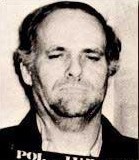 Ervil LeBaron
Murderer · USA · 1972
Ervil Morrell LeBaron (1925 to August 16, 1981) was the leader of a polygamous…
35 victims
Ervil LeBaron
Murderer · USA · 1972
Ervil Morrell LeBaron (1925 to August 16, 1981) was the leader of a polygamous…
35 victims
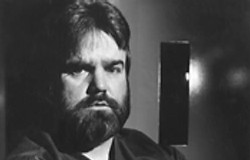 Marvin Gray
Murderer · USA · 1975
Marvin Gray was convicted killer who claimed responsibility for 23 slayings and…
23 victims
Marvin Gray
Murderer · USA · 1975
Marvin Gray was convicted killer who claimed responsibility for 23 slayings and…
23 victims
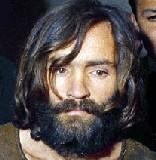 Charles Manson
Murderer · USA · 1969
Charles Milles Manson (born November 12, 1934) was an American criminal and mus…
9 victims
Charles Manson
Murderer · USA · 1969
Charles Milles Manson (born November 12, 1934) was an American criminal and mus…
9 victims
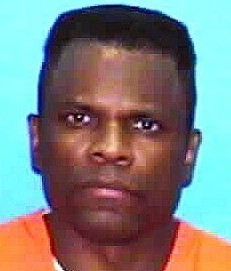 John Errol Ferguson
Murderer · USA · 1977
John Errol Ferguson was sentenced to death and was executed by lethal injection…
8 victims
John Errol Ferguson
Murderer · USA · 1977
John Errol Ferguson was sentenced to death and was executed by lethal injection…
8 victims
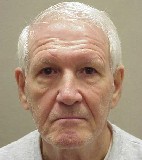 Robert Reldan
Murderer · USA · 1974
Name: Robert Reldan Robert Reldan was sentenced to life in prison on two counts…
8 victims
Robert Reldan
Murderer · USA · 1974
Name: Robert Reldan Robert Reldan was sentenced to life in prison on two counts…
8 victims
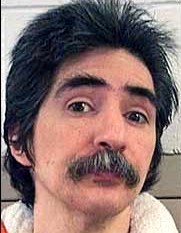 Roberto Arguelles
Serial killer · USA · 1992
Roberto Arguelles was serving a sentence for child molestation when he confesse…
4 victims
Roberto Arguelles
Serial killer · USA · 1992
Roberto Arguelles was serving a sentence for child molestation when he confesse…
4 victims
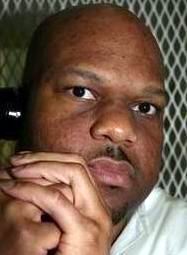 George Alarick Jones
Murderer · USA · 1992
April 13, 1993 — George Alarick Jones and three accomplices went to the Red Bir…
2 victims
George Alarick Jones
Murderer · USA · 1992
April 13, 1993 — George Alarick Jones and three accomplices went to the Red Bir…
2 victims
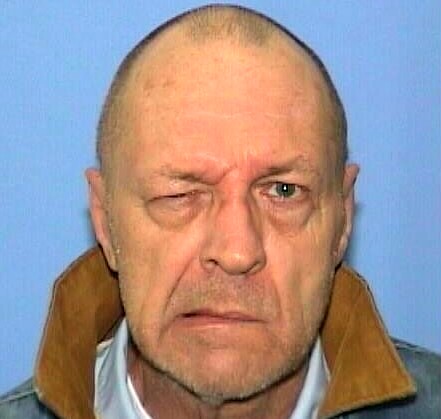 Robert Ben Rhoades
Serial killer · USA · 1989
February 3, 1990 — Regina K. Walters, age 14, was last seen alive at her mother…
3 victims
Robert Ben Rhoades
Serial killer · USA · 1989
February 3, 1990 — Regina K. Walters, age 14, was last seen alive at her mother…
3 victims
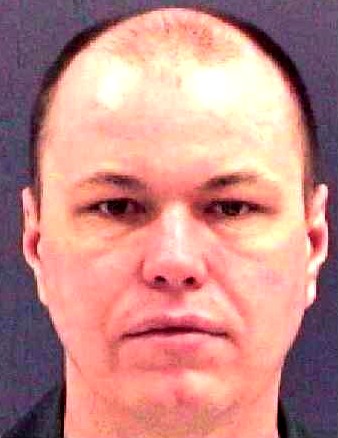 Virgil Presnell
Murderer · USA · 1976
Virgil Delano Presnell Jr. was convicted in 1976 and was sentenced to death in…
1 victim
Virgil Presnell
Murderer · USA · 1976
Virgil Delano Presnell Jr. was convicted in 1976 and was sentenced to death in…
1 victim
- Gender
- male
- Country
- USA
- Location
- Tulsa, Oklahoma, USA
- Date of birth
- ???
- Characteristics
- rape
- Victim profile
- Men
- Method of murder
- St abbing with knife / Shooting
- Date(s) of murder
- 1968 / 1975
- Years active
- 1968–1975
- Date of arrest
- June 13, 1975
- Status
-
Life imprisonment
Served five years for manslaughter on first killing; sentenced to 10 years to life on May 6, 1977; conviction for second degree murder was affirmed on appeal on March 2, 1979.
Case details
Richard Eugene Harris
STATUS
Served five years for manslaughter on first killing; sentenced to 10 years to life on May 6, 1977; conviction for second degree murder was affirmed on appeal on March 2, 1979.
The court and appeal
An appeal was taken from the District Court, Tulsa County; Jay D. Dalton, Judge. Richard Eugene Harris, appellant, appealed his conviction of the offense of Second Degree Murder in the District Court, Tulsa County; he received a sentence of not less than ten (10) years nor more than life in the penitentiary and appealed. The judgment and sentence were affirmed. Counsel listed were Larry Derryberry, Atty. Gen., and Givens L. Adams, Asst. Atty. Gen., for appellee; and James E. Frasier, Tulsa, for appellant. The opinion was issued by Cornish, Presiding Judge.
Timeline
- June 12, 1975 — Paul Thomas Shead arrived at his residence in Tulsa at approximately 6:30 p.m., ate dinner with his parents, and later took his dog for a walk in Mohawk Park.
- 8:00 p.m. (June 12, 1975) — After the television program ended, Mr. Shead left to take his dog for a walk in Mohawk Park.
- 8:30 p.m. (June 12, 1975) — Bob Gene Young encountered Paul Shead and his dog in Mohawk Park and entered into a brief conversation.
- 1:00 a.m. (June 13, 1975) — Officer G.T. McFadden discovered a brown Datsun that had gone off the road into a ditch in Mohawk Park.
- 1:10 a.m. (June 13, 1975) — Carl Gene Akins was assigned to investigate the homicide at Mohawk Park.
- 4:00 a.m. (June 13, 1975) — Akins assisted in the removal of the body from the automobile.
- June 13, 1975 — Mr. Edmond Shead identified the deceased as his son at the Hillcrest emergency room.
- 9:15 a.m. (June 13, 1975) — Dr. Leo Lowbeer performed an autopsy on Paul Thomas Shead.
- 4:30 p.m. (June 12, 1975) — Robert Dewayne Gifford, Ray Ward, and the defendant worked together on a construction job in Tulsa, Oklahoma, and later went to the Circle Plaza Bar.
- June 13, 1975, shortly after 9:00 a.m. — The defendant was arrested at the job site by Officer Bill McCracken.
Background
Richard Eugene Harris was convicted of Murder in the Second Degree in the District Court, Tulsa County.
The offence
The conviction involved a murder in the second degree. Paul Thomas Shead was the deceased and was found in a brown Datsun in Mohawk Park with a gunshot wound.
Investigation
Officer G.T. McFadden of the Tulsa Police Department discovered a brown Datsun that had gone off the road into a ditch in the eastern portion of Mohawk Park at approximately 1:00 a.m. on June 13, 1975. When he approached the car, he saw a white male in his late twenties in the driver’s seat with his head propped against the doorpost and his mouth gaping open. The man was wearing a brown T-shirt with a small red stain on the left portion of the chest. Officer McFadden noticed that the light switch was pulled out and that the car’s battery was dead. The officer checked the occupant for a pulse and found none. Officer McFadden testified that the deceased’s left foot was on the clutch, that the vehicle was in gear, and that the keys were in the ignition and turned to the “on” position. He observed a pair of undershorts on the floor between the feet of the victim. Skidmarks on the road tracked right in behind the vehicle. Officer McFadden radioed for a detective from the Identification Division.
Carl Gene Akins, a detective for the Tulsa Police Department, was assigned at 1:10 a.m. on June 13, 1975, to investigate the homicide at Mohawk Park. When he arrived, he met Officer McFadden and two security officers, who took care of the dog inside the car. Akins took measurements of the scene. Investigator Brown arrived, dusted the car for fingerprints, and took photographs. Akins and Brown inspected the interior of the car. They discovered a billfold lying on the front floorboard on the passenger side, containing items of identification bearing the name of Richard E. Harris, and a Radio Shack receipt with Paul Shead’s name and address on it. At approximately 4:00 a.m., Akins assisted in the removal of the body from the automobile. Akins observed a bullet hole in the left chest with a spot of blood around the hole, approximately the size of a 50 cent piece. There was no exit wound. The body was stiff when removed, and when officers attempted to put the body into a semiprone position, blood began gushing out of the wound. The arms and legs were cold to the touch and stiff. The body was clothed in blue-and-white-striped cutoff shorts and a brown polo shirt.
Akins followed the body to the Hillcrest emergency room, where Mr. Edmond Shead, the victim’s father, identified the deceased as his son.
Trial
Witness testimony about last sightings and background context
Paul Thomas Shead arrived at his residence in Tulsa at approximately 6:30 p.m. on June 12, 1975. He sat down to dinner with his parents, who resided at the same address. After eating, he watched television, interrupted by a telephone call. He conversed for a few minutes and then resumed watching television. When the program ended at 8:00 p.m., he left to take his dog for a walk in Mohawk Park, about five miles away. He was barefoot and was wearing blue-and-white-striped cutoff shorts and a brown T-shirt when he drove away in his 1975 Datsun B210.
Bob Gene Young occasionally went to Mohawk Park in the evening to enjoy a cool beer while his wife shopped. On June 12, 1975, he encountered Paul Shead and his dog at approximately 8:30 p.m. While engaged, Mr. Young and Mr. Shead entered into a brief conversation. Mr. Young then left to pick up his wife by 9:00 p.m. He said that Mr. Shead “really never met a stranger,” and that he would visit or attempt to get acquainted with almost anyone he met in the park. On cross-examination, Mr. Young stated that he had never been propositioned by Mr. Shead and that he did not know if Shead propositioned others in the park. He also stated that he knew Richard Maurice Johnson and that he had seen Mr. Shead and Mr. Johnson together.
Forensic evidence and medical evidence
Dr. Leo Lowbeer, Chief Pathologist of Hillcrest Medical Center, performed an autopsy on Paul Thomas Shead at 9:15 a.m. on June 13, 1975. His external examination revealed no undershorts, no shoes, and no stockings on the victim, and rigor mortis had completely developed except in the neck muscles. A bullet was located within the body and removed. Dr. Lowbeer found the trajectory remarkable: the bullet travelled downward from right to left and from front to back. The bullet entered the chest just left of the midline, perforated the second rib on the left side, both lobes of the left lung, the left diaphragm, the spleen, the diaphragm again below the spleen, and then the 10th rib on the left side. The cause of death was bleeding from the perforation of the blood vessels of the left lung. Although the amount of blood was massive, the perforation was small, indicating it would have taken some time for death by bleeding to have occurred. Dr. Lowbeer concluded that the victim could have easily lived for 30 minutes after receiving the gunshot wound and that he would have been capable of driving a car during that interval.
The victim’s stomach contained moderately digested food, indicating he had eaten approximately two to three hours prior to death. Dr. Lowbeer placed the time of death between 9:00 and 10:00 p.m., consistent with the fact that the deceased had last been seen alive at about 8:30 to 9:00 p.m. on June 12.
Thomas Dean Jordan, a firearms and tool mark examiner for the Oklahoma State Bureau of Investigation, examined the projectile removed from the body and determined the caliber and the type of weapon from which the projectile had been fired. He also examined the shirt for gunpowder residue and attempted to determine how far from the victim the murder weapon had been when fired. Jordan found the bullet measured .357 of an inch, indicating it was a .38 caliber projectile. An examination of class characteristics, lands and grooves, and direction of twist established that the projectile had six lands and grooves and a left-hand twist characteristic of a Colt revolver. Jordan testified that, to his knowledge, Colt was the only manufacturer producing a .38 caliber weapon with a left-hand twist.
Jordan testified that he conducted a Greiss examination upon the shirt. He described the test: covering fabric with sulfanilic acid and alphanaphthalamine using acetic acid as a transfer agent, transferring residue onto photo paper to give a density and diameter pattern, and then attempting by trial and error to duplicate the original density and diameter pattern to determine the distance from the weapon to the fabric when discharged.
In that case, the test was conducted with a .38 caliber Colt diamondback six-shot revolver with a four-inch barrel, as requested by the District Attorney. Jordan found the test weapon duplicated the density and diameter pattern found on the deceased’s shirt when discharged from a distance of 12 to 48 inches.
On cross-examination, Jordan testified that both a .357 and a .38 weapon are .38 caliber and that a .38 projectile could be fired from a .357 magnum weapon, but that a .357 magnum shell could not be fired from a .38 weapon. He also stated that Greiss test results would vary with ammunition type and the length of the barrel of the test weapon.
Evidence about weapon ownership and purchase
Thomas Dean Jordan’s identification was addressed in comparison with defense witness testimony.
Mark Williams, employed by Target Stores, Inc. as department manager of the Sporting Goods Department, testified that on May 16, Maxine Harris purchased a Colt diamondback .38 Special revolver and filled out a City of Tulsa application for purchase of a dangerous weapon at that time. Williams recalled the sale with particularity because the gun sold to Mr. Harris was a rare model. At trial, Williams was initially unable to identify the purchaser of the gun from those present in the courtroom. When the defendant’s wife was brought into the room, Williams pointed to her as the person who had bought the gun.
Evidence about alcohol and interactions at Circle Plaza Bar
Robert Dewayne Gifford testified that at 4:30 p.m. on June 12, 1975, he, Ray Ward, and the defendant worked together on a construction job in Tulsa, Oklahoma. After work that day, the three men went to the Circle Plaza Bar at 51st Street and Peoria, about one block from the construction site. Gifford testified that he had several beers and was intoxicated when the three men left the bar somewhere between 9:00 p.m. and 9:15 p.m. He stated that the defendant had bought all the beer that night. He also said it usually took about 40 minutes to drive from the construction site to his home in Mannford, and that on this particular night he arrived home before the 10:00 p.m. news.
Shortly after 8:00 a.m. on June 13, Gifford talked with the defendant at the job site. Gifford recalled that the defendant claimed to have left his billfold at the Circle Plaza Bar the night before. After hearing this, Gifford promised to call the bar to ask whether the wallet was still there when the bar opened. As foreman, he was permitted to make phone calls, whereas the defendant, who worked under Gifford, could not call for himself. Gifford never made the call because the defendant was arrested before the bar opened.
Ray Ward’s testimony generally corroborated Gifford’s testimony and elaborated on the amount of beer consumed. Ward said he had had in excess of six bottles of beer and agreed the defendant had paid for all of it. Ward recalled that he had seen a .38 caliber Colt with a ribbed barrel in the defendant’s car and that he had noticed a .38 caliber Smith and Wesson in the defendant’s car on another occasion. Ward stated those instances occurred before June 12, 1975, though he was unable to pin down the dates with certainty.
Arrest and statements
The defendant was arrested at the job site shortly after 9:00 a.m. on June 13, 1975, by Officer Bill McCracken of the Tulsa Police Department. McCracken located the defendant and asked him to walk to the police car. The defendant was seated in the rear seat of a two-door vehicle, and the officer sat in the front seat.
Officer McCracken first requested the defendant produce identification. The defendant told McCracken his billfold had been lost in a bar the night before, after which McCracken advised him of his rights. The defendant agreed to talk to McCracken and other officers. The defendant stated that after work on the previous day he had gone to a bar with two men with whom he worked and discovered his wallet was missing when he arrived home that night. He initially said he had not told anyone about the wallet at that time. Later, he changed his story. He said he had told his wife of the missing wallet, and they had started to go to the bar to retrieve it but had changed their minds about going.
Officer McCracken then inquired whether the defendant owned any guns. The defendant replied that he owned two guns: a .38 Smith and Wesson and a .38 Colt. He also stated his wife had lost the Colt at Tenkiller Lake the previous weekend. The defendant gave verbal permission to search his automobile, and officers searched it.
The defendant agreed to make a statement and was transported downtown to the police station where a statement was taken.
On cross-examination, the officer testified he had periodically worked on the case from June 13, 1975, until September 1976, when he left the police department. He stated he did not feel the matter had been worked out until the case was filed, and that it was filed sometime after he had left the department.
Defense motion and expert testimony
At the conclusion of Officer McCracken’s testimony, the State rested. The defendant entered a demurrer to the State’s evidence, more properly termed a motion for a directed verdict under 22 O.S. 1971 850 [22-850]. The motion was overruled.
The defendant called Tom Lewallen to testify. Lewallen, an officer of the Tulsa Police Department presented as an expert in firearms identification at the preliminary hearing, was unavailable to testify at trial. The State consented to the introduction of his prior testimony. Lewallen’s prior testimony was largely consistent with Jordan’s testimony, but Lewallen differed in his opinion on how many manufacturers make a .38 caliber weapon with six lands and grooves and a left-hand twist. Lewallen stated that six or eight companies manufacture such a weapon, but that Colt was the most popular. He said he did not know the names of other companies and that they imported weapons into the country. He also stated they were mostly companies that sold very few arms in the United States, but that many of the weapons were around.
Victim’s billfold and identification
Edmond Shead testified that he identified the deceased as his son. At trial, he identified the yellow Radio Shack receipt as probably the one given to his son when he purchased an eight-track tape eraser. He said that his son had a billfold but that it was not the one found in the automobile: the victim’s billfold was dark, smooth and considerably thicker. He stated his son usually kept $100.00 to $300.00 in his billfold and may have been carrying more because they had been planning to go on vacation. He further testified Paul Shead always had to carry a pocketbook because he needed his driver’s license, but that he had not seen his son’s billfold on the night of the murder or since, and he did not know what had happened to it.
Sufficiency of the evidence argument
The defendant cited cases for general propositions relating to the sufficiency of the evidence. He asserted that where the State relied entirely upon circumstantial evidence, the facts and circumstances must not only be consistent with and point toward the guilt of the defendant, but must also be inconsistent with his innocence. He also argued that proof amounting only to a suspicion or a mere probability was not sufficient to put before the jury, and that the circumstances relied upon by the State must exclude every reasonable hypothesis except that of guilt.
The opinion stated these statements were true. It then stated that, in the instant case, the facts were admittedly weak, but the evidence was sufficient to establish a prima facie case, to submit to the jury, and that the judgment and sentence were affirmed.
Sentencing
The defendant was sentenced to not less than ten (10) years nor more than life in the penitentiary. He had served five years for manslaughter on a first killing, and he was sentenced to 10 years to life on May 6, 1977.
Outcome
The conviction of Murder in the Second Degree was affirmed on appeal. The appeal was decided by Cornish, Presiding Judge, with March 2, 1979 listed alongside the appellate citation and docket details.
Other details
- Case number: F-77-771.
- Date shown for the appeal opinion: March 2, 1979.
- Victim last seen alive: between 8:30 and 9:00 p.m. on June 12 (for purposes of the autopsy time-of-death opinion).
- Autopsy findings: rigor mortis except in neck muscles; no undershorts, no shoes, no stockings on the victim.
- Gunshot trajectory: downward from right to left and from front to back.
- Greiss examination: conducted using a .38 caliber Colt diamondback six-shot revolver with a four-inch barrel; matching density and diameter pattern at 12 to 48 inches.
- Street/Bar location detail: Circle Plaza Bar at 51st Street and Peoria.
- Vehicle detail: 1975 Datsun B210.
- Vehicle scene detail: keys in the ignition turned to the “on” position; vehicle in gear; left foot on the clutch.
Spotted an error, or have more information about this case?