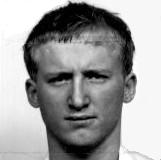
Joseph John Cannon
Homicide Edward Charles Allaway
Homicide · USA · 1976
Edward Charles Allaway Edward Charles Allaway was found not guilty by reason of…
7 victims
Edward Charles Allaway
Homicide · USA · 1976
Edward Charles Allaway Edward Charles Allaway was found not guilty by reason of…
7 victims
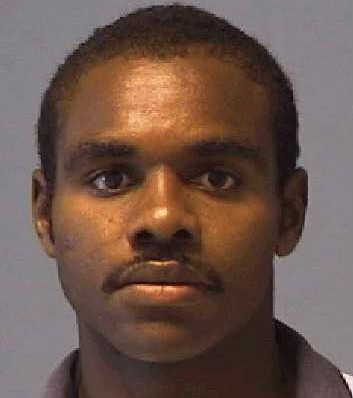 Clinton Bankston
Homicide · USA · 1987
15 August 1987 — Ann Morris (63), her sister Sally Nicholson (59), and Sally’s…
5 victims
Clinton Bankston
Homicide · USA · 1987
15 August 1987 — Ann Morris (63), her sister Sally Nicholson (59), and Sally’s…
5 victims
 Sipho Dube
Serial killer · South Africa · 2001
Sipho Dube was convicted of seven murders and three rapes and was sentenced to…
7 victims
Sipho Dube
Serial killer · South Africa · 2001
Sipho Dube was convicted of seven murders and three rapes and was sentenced to…
7 victims
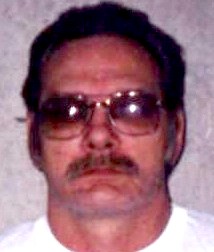 Gary Alan Walker
Spree killer · USA · 1984
Gary Alan Walker was a Tulsa County death row inmate who was executed by lethal…
6 victims
Gary Alan Walker
Spree killer · USA · 1984
Gary Alan Walker was a Tulsa County death row inmate who was executed by lethal…
6 victims
 Rebecca Bryan
Murderer · USA · 2011
Rebecca Bryan was convicted of first-degree murder for fatally shooting her hus…
1 victim
Rebecca Bryan
Murderer · USA · 2011
Rebecca Bryan was convicted of first-degree murder for fatally shooting her hus…
1 victim
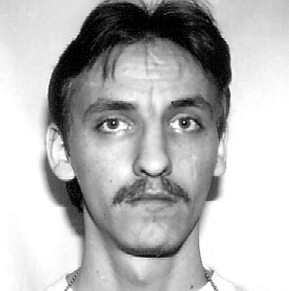 Richard Dillon
Murderer · USA · 1981
Richard Dillon · March 8, 1981 — Richard Dillon and another person committed a…
2 victims
Richard Dillon
Murderer · USA · 1981
Richard Dillon · March 8, 1981 — Richard Dillon and another person committed a…
2 victims
 Christopher Worrell
Serial killer · Australia · 1976
Christopher Worrell was described as a rapist and was later killed in a car acc…
7 victims
Christopher Worrell
Serial killer · Australia · 1976
Christopher Worrell was described as a rapist and was later killed in a car acc…
7 victims
 Yudenia Rodriguez
Murderer · USA · 2013
Yudenia Rodriguez, the accused. · Sonia Santiesteban, 65, Rodriguez’s mother an…
1 victim
Yudenia Rodriguez
Murderer · USA · 2013
Yudenia Rodriguez, the accused. · Sonia Santiesteban, 65, Rodriguez’s mother an…
1 victim
- Gender
- male
- Country
- USA
- Location
- Bexar County, Texas, USA
- Date of birth
- September 13, 1960
- Age at first offence
- 17
- Characteristics
- juvenile (17), rape, robbery
- Victim profile
- Anne Walsh, 45 (attorney)
- Method of murder
- Shooting
- Date(s) of murder
- September 30, 1977
- Years active
- 1977
- Date of arrest
- —
- Status
-
Executed
Executed by lethal injection in Texas on April 22, 1998
Case details
Joseph John Cannon was executed by lethal injection in Texas on April 22, 1998. He was identified as inmate #634. Cannon was 38 at the time of his execution.
Victim
Anne Walsh (45) was a San Antonio attorney who was shot repeatedly in 1977. Walsh was also described as a mother of 8.
Vincent Walsh was identified as the victim’s son and as being 13 at the time of the murder. Five sons of victim Anne Walsh attended the execution.
Timeline
- 1977 — Joseph John Cannon emptied a .22 caliber revolver into Anne C. Walsh at close range, attempted to have sex with her dead body, and then drove off in her truck.
- September 1977 — Anne Walsh’s brother, Dan Carabin, had represented Cannon in a burglary prosecution and persuaded her to let Cannon live at her home so he could remain on probation and avoid jail.
- A week later in 1977 — After coming home for lunch, Anne Walsh was shot repeatedly by Cannon.
- 1980 — At Cannon’s first trial, he pled insanity; the jury rejected this defense; during the punishment phase, psychological experts testified to Cannon’s low intelligence and mental instability and Cannon’s mother testified; the jury sentenced him to death; the trial court granted him a new trial.
- 1982 — At the second trial, Cannon received new appointed attorneys; they decided not to rely on an insanity theory; they tried to suppress Cannon’s blood-chilling confession and, after the court admitted it into evidence, tried to convince the jury not to credit the confession because of inconsistencies with the indictment and with other evidence; the second jury convicted Cannon; at the punishment stage, Cannon’s lawyers presented no mitigating evidence; once again the jury imposed the death sentence; the defense excluded testimony from the state’s psychiatric expert.
- 1985 — Cannon v. State was noted as upholding the jury’s decision on direct appeal: Cannon v. State, 691 S.W.2d 664 (Tex. Crim. App. 1985).
- 1986 — Certiorari was denied: cert. denied, 474 U.S. 1110 (1986).
- March 5, 1995 — Cannon filed his habeas petition in the district court.
- October 17, 1996 — The district court held a hearing on Cannon’s claim that his counsel was ineffective during the punishment phase of the second trial.
- November 19, 1996 — The district court denied Cannon’s application for a writ of habeas corpus.
- July 24, 1997 — United States v. Roberts was cited as holding that habeas petitioners who want to appeal need only a certificate of probable cause if they filed their petition in the district court before enactment of the AEDPA.
- August 4, 1997 — Gochicoa v. Johnson was cited in a footnote.
- Revised, February 17, 1998 — The United States Court of Appeals for the Fifth Circuit decision was shown as revised.
- April 22, 1998 — Joseph John Cannon was executed by lethal injection in Texas.
- April 23, 1998 — CNN material included as “Texas man executed…” described the execution as having occurred after two tries.
The offence
In 1977, when he was seventeen, Joseph John Cannon emptied a .22 caliber revolver into Anne C. Walsh at close range. It was stated that he attempted to have sex with her dead body and then drove off in her truck.
A week after Anne Walsh allowed Cannon to live at her home in September 1977 so he could remain on probation and avoid jail, Cannon shot Anne Walsh repeatedly after she came home for lunch. He was described as high on alcohol and drugs. It was stated that he also tried to rape her and then drove away in one of the family’s cars.
A confession was referenced as describing that Cannon had been drinking and taking drugs on Sept. 30, 1977, when Mrs. Walsh came home for lunch. The confession narrative stated that he shot her at least 6 times as she begged for her life, tried to rape her, then stole her daughter’s car.
A separate statement from the appellate decision characterized the killing as involving advanced planning and deliberate cocking and perhaps reloading of the gun, and an awareness immediately afterward that the murder was wrong.
Investigation
Paul Canales, the assistant district attorney who prosecuted Cannon, was quoted describing the outcome of Anne Walsh letting Cannon live with her: “The Good Samaritan story was turned upside down by him,” and “He’s the type of guy that makes you want to lock your doors and not pick up hitchhikers.”
Background / personal circumstances
Joseph John Cannon blamed his behavior on mental problems that started at age 4 when he was hit by a car. It was also stated that Cannon was hit by a truck at the age of four and left hyperactive, with a head injury and a speech impediment.
He was described as being kicked out of the 1st grade and never attending school. Another portion stated that he was expelled from school at the age of seven.
From the age of 10, Cannon was described as being diagnosed as suffering from organic brain damage, severe depression, with attempted suicide at age 15, schizophrenia, and borderline mental retardation.
One part stated that from seven to 17 he suffered repeated and severe sexual abuse from male relatives.
Cannon’s personal history included an account that he had learned to read and write on death row. His defense contentions also included that he contended he could not speak comprehensibly until he was about eight and that doctors repeatedly suggested institutionalization when he was a child, but his mother did not follow through.
The appellate decision recounted additional conduct including that at the first trial his mother testified that schools would not keep him because he was so disruptive, that he broke one girl’s arm, and that a boy drowned after Cannon threw him into a bayou. It further stated that when he was fourteen and fifteen, he was arrested six times on burglary and theft charges.
It was also stated that Cannon was a frequent juvenile violator and a runaway from Houston and was facing jail time for burglary unless he could find a stable living environment.
Trial
First trial (1980)
At his first trial in 1980, Joseph John Cannon pled insanity. The jury rejected the insanity defense.
During the punishment phase of the first trial, Cannon’s defense counsel presented psychological experts who testified to Cannon’s low intelligence and mental instability. Defense counsel also had Cannon’s mother testify about Cannon’s troubled, violent childhood. The jury apparently found this mitigating evidence unpersuasive and sentenced him to death.
The trial court granted Cannon a new trial.
In the appellate decision, it was stated that at the first trial, the state’s cross-examination brought out every offense the defense had omitted addressing, including a manslaughter charge, and that this contributed to a quick verdict in the second phase.
Second trial (1982)
At the second trial in 1982, Cannon received new appointed attorneys who decided not to rely on an insanity theory.
The attorneys attempted to suppress Cannon’s blood-chilling confession, and after the court admitted it into evidence, tried to convince the jury that it should not credit the confession because of inconsistencies with the indictment and with other evidence before them. This strategy failed and the second jury convicted Cannon.
At the punishment stage of the second trial, Cannon’s lawyers presented no mitigating evidence in the hope the jury would view Cannon as a confused, disadvantaged teenager with a momentary loss of self-control who no longer posed a threat to society. The lawyers also managed to exclude testimony from the state's psychiatric expert.
The appellate decision stated that the prosecution’s punishment evidence was limited to reports from a bailiff at the first trial and from Vincent Walsh, the victim’s son, who was 13 at the time of the murder, stating that Cannon had threatened them. It was also stated that the state told the jury that Cannon was on probation for burglary when he killed Walsh.
The appellate decision stated that the defense’s strategy resulted in the state’s failure to inform the jury about a pattern of juvenile violence that surfaced in the first trial, and that once again the jury imposed the death sentence.
Counsel and legal strategy
The appellate decision named Cannon’s counsel at the 1982 trial as Fred G. Rodriguez and Gus Wilcox.
It was stated that Rodriguez had tried seven capital cases as a state prosecutor, although it was his first capital case on the defense side. Wilcox had been an assistant district attorney in Bexar County from 1970 to 1977, when he entered private practice.
The appellate decision described Rodriguez as having conscientiously studied the first trial to learn from mistakes that might have contributed to the initial death sentence. It stated that Rodriguez’s reasoning included that the insanity defense was extremely weak and had been quickly dismissed by a previous jury; that Cannon refused to admit to the offense; and that psychological or psychiatric testimony would allow the prosecution to bring before the jury every conceivable wrong, offense, and referral to the probation office committed by young Cannon. Rodriguez also explained that by staying away from that type of testimony, they sought to keep out the record the defendant’s prior criminal history.
Rodriguez further stated the same rationale for staying away from psychological or psychiatric testimony applied to the punishment phase and that the potential psychological witnesses had examined Cannon after he had committed some criminal act and been referred to them, and that they did not want to place before the jury a pattern of anti-social behavior, aggressiveness and a long criminal history considered by the jury on future dangerousness. He wrote:
“Before conferring with co-counsel on our trial strategy, I had the benefit of meeting with and consulting Mr. Cannon's prior counsel, William Brown, examining his file and reading the complete transcripts [of the 1980 trial]. It was my belief (and later co-counsel joined me in this belief) that the insanity defense was extremely weak, and had been quickly dismissed by a previous jury and there was no reason to believe that a subsequent jury would react any differently. Additionally, our client refused to admit to the offense. Furthermore, the introduction of psychological/psychiatric testimony would allow the prosecution to bring before the jury, every conceivable wrong, offense and referral to the probation office committed by young Cannon. In the previous trial, the prosecution, through cross-examination, brought out every offense which the defense had omitted addressing, of which there were many, including a manslaughter charge. All of these acts/offenses contributed to a quick verdict in the second phase of the trial. By staying away from this type of testimony, we sought to keep out of the record the defendant's prior criminal history. This we accomplished completely. . . . The same rationale for staying away from psychological/psychiatric testimony was applicable to the punishment phase of the trial. All of the [potential psychological] witnesses had examined young Cannon after he had committed some criminal act and been referred to them. We didn't want to place before the jury a pattern of anti-social behavior, aggressiveness and a long criminal history which would be considered by the jury on the question of future dangerousness. That information could have been elicited quite easily from any or all of these medical witnesses or from any reputation witnesses including Cannon's mother by way of "have you heard" questions. Through our strategy we were able to keep out of the record all the damning testimony elicited by both sides which portrayed Cannon as an individual who, because of his criminal past, would periodically continue a life of crime and pose a continuing threat to society, and also keep out the testimony of Dr. Grigso[n]. Wilcox filed an affidavit that expressed the same views.”
Appeals
Direct appeal
The appellate decision stated that Cannon’s jury decision was upheld on direct appeal in Cannon v. State, 691 S.W.2d 664 (Tex. Crim. App. 1985). It also stated that certiorari was denied in 474 U.S. 1110 (1986).
The appellate decision also stated that the decision had survived five state petitions for habeas corpus.
Federal habeas corpus and Fifth Circuit decision
The appellate decision described that the district court held a hearing on October 17, 1996 and denied Cannon’s application for a writ of habeas corpus on November 19, 1996.
The appellate decision addressed the ineffective assistance claim and referenced the district court’s discussion that there was a genuine legal question at the time of Cannon’s trial as to whether unadjudicated acts of juvenile misconduct were admissible. It quoted the district court:
“[a]t the time of Cannon's trial, there was a genuine legal question as to whether unadjudicated acts of juvenile misconduct were admissible”
It also quoted that the defense’s strategy caused the state not to rebut Cannon’s evidence with “unadjudicated acts of misconduct which might have had the tendency to infuriate the jury.”
The appellate decision discussed that the district court granted a certificate of appealability without specifying which issue or issues were worthy of appellate attention. It also stated that Cannon asked for a certificate of appealability for the sole purpose of challenging the district court’s ruling that his appointed attorneys at his second trial did not violate his right to effective assistance of counsel.
The appellate decision quoted Cannon’s assertions:
“that trial counsel's decision not to present available mental health evidence in mitigation at the punishment phase of Appellant's trial amounted to constitutionally ineffective assistance . . . [and that] the deficiency prejudiced Appellant to the extent that a reasonable person would lose faith in the confidence of the outcome of the trial.”
The appellate decision described the governing law because Cannon filed his habeas petition in the district court on March 5, 1995, before the effective date of the Antiterrorism and Effective Death Penalty Act of 1995 (“AEDPA”), Pub. L. No. 104-132, 110 Stat. 1214. It cited Lindh v. Murphy holding that AEDPA’s standard for reviewing petitions by state prisoners codified at 28 U.S.C. § 2254(d) did not apply retroactively to petitions filed before April 24, 1996. It also addressed the change in 28 U.S.C. § 2253 from a certificate of probable cause to a certificate of appealability and cited Barefoot v. Estelle and Drinkard v. Johnson.
The appellate decision concluded that Cannon did not need further certification from a circuit judge and proceeded to merits. The appellate decision reviewed findings of fact for clear error and reviewed the ultimate conclusion on constitutional ineffectiveness de novo.
It affirmed the denial of the writ and vacated the stay of execution. The appellate decision stated:
- “The denial of the writ is AFFIRMED, and the stay of execution is VACATED.”
Sentencing
The appellate decision stated that in the punishment phase the jury imposed the death sentence on both the first and second trials, and that the trial court granted a new trial after the first punishment sentence.
The appellate decision also stated that the jury’s decision had been upheld on direct appeal and survived five state habeas petitions.
Outcome
Joseph John Cannon was executed by lethal injection in Texas on April 22, 1998 after two tries. The first attempt failed when a vein in Cannon’s arm collapsed, requiring the lethal needle to be removed and then restarted, prison officials said. Cannon died after a second dosage of lethal drugs was pumped into his arms.
During the execution, it was stated that Cannon had already made his final statement and goodbyes when the first injection began. Witnesses were led outside and waited while prison officials worked to establish another injection. Cannon greeted witnesses as they entered a second time.
Last statement
Joseph John Cannon made the following statement and goodbyes at the execution:
“I am sorry for what I did to your mom. It isn’t because I’m going to die. All my life I have been locked up. I could never forgive what I done. I am sorry for all of you. I love you all. Thank you for supporting me. I thank you for being kind to me when I was small. Thank you, God. All right.”
It was also stated that he said: “It’s come undone,” after closing his eyes momentarily and turning toward a window where witnesses were standing.
Other details
It was stated that Cannon was the fifth Texas inmate convicted of a murder committed at age 17 to be executed since the state resumed capital punishment in 1982. It was also stated that he was one of at least 27 condemned inmates in Texas who were 17 when they committed murders that earned them a trip to death row.
International attention was described in the provided material. It stated that Cannon’s attorneys argued before the U.S. Supreme Court he should be spared because international law sets 18 as the minimum age for executions. The high court was described as rejecting the appeal without dissent.
The provided material also stated that the execution was only the second time in 148 lethal injections in Texas that officials experienced difficulty with the needle. It referenced a prior “blow out” in December 1988 during the execution of Raymond Landry.
The provided material also listed other executions occurring early Wednesday: Missouri executed Glennon Paul Sweet, 41, for gunning down a state trooper in 1987, and Arizona executed Jose Roberto Villafuerte, a 45-year-old Honduran citizen, for the 1983 murder of a woman he left bound and gagged in his Phoenix trailer.
The appellate decision was shown with a caption indicating the appeal in the United States Court of Appeals for the Fifth Circuit, with Joseph John Cannon as Petitioner-Appellant and Gary Johnson, Director, Texas Department of Criminal Justice, Institutional Division, as Respondent-Appellee, and it stated that it was an appeal from the United States District Court for the Western District. The appellate panel was listed as HIGGINBOTHAM, DAVIS, and DENNIS, Circuit Judges.

Spotted an error, or have more information about this case?