
Richard Dillon
Murderer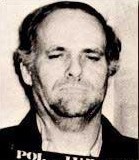 Ervil LeBaron
Murderer · USA · 1972
Ervil Morrell LeBaron (1925 to August 16, 1981) was the leader of a polygamous…
35 victims
Ervil LeBaron
Murderer · USA · 1972
Ervil Morrell LeBaron (1925 to August 16, 1981) was the leader of a polygamous…
35 victims
 Brian Kevin Rosenfeld
Murderer · USA · 1985
Brian Kevin Rosenfeld Brian Kevin Rosenfeld was sentenced to three concurrent l…
23 victims
Brian Kevin Rosenfeld
Murderer · USA · 1985
Brian Kevin Rosenfeld Brian Kevin Rosenfeld was sentenced to three concurrent l…
23 victims
 Marvin Gray
Murderer · USA · 1975
Marvin Gray was convicted killer who claimed responsibility for 23 slayings and…
23 victims
Marvin Gray
Murderer · USA · 1975
Marvin Gray was convicted killer who claimed responsibility for 23 slayings and…
23 victims
 Yahweh ben Yahweh
Murderer · USA · 1980
Yahweh ben Yahweh was born and legally named Hulon Mitchell Jr. (October 27, 19…
23 victims
Yahweh ben Yahweh
Murderer · USA · 1980
Yahweh ben Yahweh was born and legally named Hulon Mitchell Jr. (October 27, 19…
23 victims
 Russell Ellwood
Murderer · USA · 1991
Russell Ellwood was a former taxi driver. Authorities suspected him of killing…
20 victims
Russell Ellwood
Murderer · USA · 1991
Russell Ellwood was a former taxi driver. Authorities suspected him of killing…
20 victims
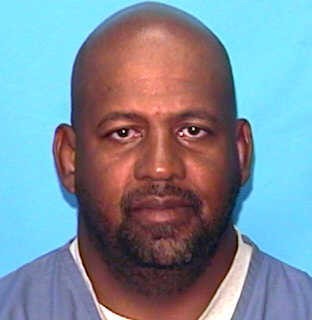 Michael Tyrone Crump
Murderer · USA · 1985
Defendant (Appellant): Michael Tyrone Crump · Plaintiff/Respondent (Appellee):…
2 victims
Michael Tyrone Crump
Murderer · USA · 1985
Defendant (Appellant): Michael Tyrone Crump · Plaintiff/Respondent (Appellee):…
2 victims
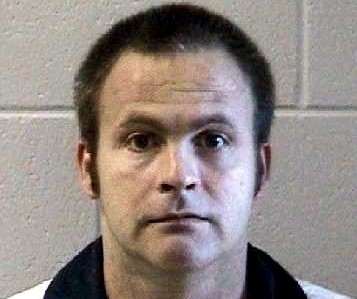 William Lipham
Murderer · USA · 1985
Name: William Anthony Lipham Age: 33 Lipham was sentenced to death on February…
1 victim
William Lipham
Murderer · USA · 1985
Name: William Anthony Lipham Age: 33 Lipham was sentenced to death on February…
1 victim
 Karen McCarron
Murderer · USA · 2006
Karen McCarron was convicted in Illinois of killing her three-year-old daughter…
1 victim
Karen McCarron
Murderer · USA · 2006
Karen McCarron was convicted in Illinois of killing her three-year-old daughter…
1 victim
 Norman Afzal Simons
Serial killer · South Africa · 1986
Norman Afzal Simons was a former teacher. He later converted to Islam in 1993,…
22 victims
Norman Afzal Simons
Serial killer · South Africa · 1986
Norman Afzal Simons was a former teacher. He later converted to Islam in 1993,…
22 victims
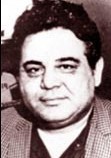 Samuel Byck
Murderer · 1974
Samuel Joseph Byck attempted to hijack a plane with the intention of crashing i…
2 victims
Samuel Byck
Murderer · 1974
Samuel Joseph Byck attempted to hijack a plane with the intention of crashing i…
2 victims
 Raymond Oscar Butler
Murderer · of Los Angeles · 1994
Raymond Oscar Butler was sentenced to death on July 29, 1996. The killings invo…
3 victims
Raymond Oscar Butler
Murderer · of Los Angeles · 1994
Raymond Oscar Butler was sentenced to death on July 29, 1996. The killings invo…
3 victims
- Gender
- male
- Country
- USA
- Location
- Petersburg, Pike County, Indiana, USA
- Date of birth
- December 12, 1962
- Age at first offence
- 19
- Characteristics
- burglary, rape
- Victim profile
- William Hilborn, 72, and Mary Hilborn, 65
- Method of murder
- St abbing with knife
- Date(s) of murder
- March 8, 1981
- Years active
- 1981
- Date of arrest
- 4 days after
- Status
-
Released
Writ of habeas corpus was granted; Dillon would be released unless the case was retried within the next 90 days.
Case identification
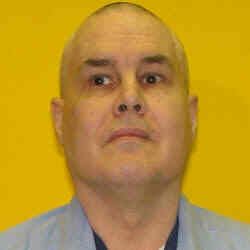
Richard Dillon
Timeline
- March 8, 1981 — Richard Dillon and another person committed a burglary during which William Hilborn and Mary Hilborn were fatally stabbed.
- July 28, 1981 — Richard Dillon was convicted by the Knox County, Indiana, Superior Court of two counts of felony murder and one count each of burglary and conspiracy.
- August 21, 1981 — Following the jury’s recommendation, the trial judge sentenced Richard Dillon to death.
- April 15, 1981 — Fulcher’s wife’s divorce became final against Fulcher’s wishes.
- April 18, 1981 — Fulcher’s brother had a motorcycle accident that left him paralyzed.
- July 5, 1981 — Fulcher’s father underwent emergency heart surgery and was in the hospital in very serious condition.
- July 7, 1981 — Fulcher filed an affidavit attesting to his own incompetence and requesting a continuance from the July 13, 1981 trial date.
- July 13, 1981 — Trial was scheduled to begin on this date.
- July 20, 1981 — Trial commenced on this date to afford Fulcher an extra weekend to prepare after the jury was selected.
- April 20, 1984 — The district court held that Dillon’s allegations represented merely “sub-issues” of the main issue.
- June 21, 1984 — The district court’s dissenting justices were described as pleading for clearer findings by the state’s trial judges in a matter described as form more than substance.
Background
Richard Dillon was convicted for crimes involving the March 8, 1981 stabbing murder of William and Mary Hilborn during a burglary. The defendant was eighteen years old at the time of trial and had no prior criminal record.
Lawyer Jimmy Fulcher represented Dillon at trial. Although Fulcher had some civil and criminal experience, that experience was limited. He had been admitted to the bar for only two and one-half years, and his only significant courtroom experience was a “major felony trial” (Tr. Vol. I at 13) that he had just completed. Fulcher’s representation occurred during a time of personal crisis for him.
In February 1981, Fulcher’s wife of eleven years filed for divorce, and the divorce became final against his wishes on April 15, 1981 (Tr. Vol. I at 12). On April 18, 1981, Fulcher’s brother had a motorcycle accident that left him paralyzed (id. at 6; Tr. Vol. III at 633). Trial was scheduled to begin on July 13, 1981. On July 5, Fulcher’s father, who had been quite ill for some time, underwent emergency heart surgery and was in the hospital in very serious condition (Tr. Vol. I at 6). Fulcher’s father’s condition was the final event prompting Fulcher to file an affidavit on July 7, attesting to his own incompetence and requesting a continuance from the July 13 trial date so that he could prepare adequately.
The trial judge denied the request for a continuance, but after the jury was selected the trial was delayed until July 20 to afford Fulcher an extra weekend in which to prepare. Dillon’s trial concluded at the end of July.
After exhausting all state remedies, Dillon filed a petition for writ of habeas corpus in federal district court. He requested an evidentiary hearing on allegedly new evidence related to his claim of ineffective assistance of counsel. The district court denied the request and denied each of Dillon’s contentions.
The offence
Richard Dillon was convicted of two counts of felony murder and one count each of burglary and conspiracy. These charges stemmed from the March 8, 1981 stabbing murder of William and Mary Hilborn during a burglary.
Investigation and arrest
The defendant was arrested four days later after making a lengthy written confession to Indiana state police officers. The confession was admitted into evidence at his trial.
Trial
Richard Dillon was convicted on July 28, 1981, by the Knox County, Indiana, Superior Court of two counts of felony murder and one count each of burglary and conspiracy.
Dillon attempted, at Fulcher’s recommendation, to plead guilty to being an accomplice to the murder. The plea was contrary to facts already admitted into evidence and was properly rejected by the trial judge.
Fulcher conceded that he had spent less than four hours with Dillon from the time of arrest to trial (Tr. Vol. I at 6). The State countered this admission with evidence showing Fulcher visited Dillon 10-15 times in the first jail in which he was imprisoned and may have visited Dillon in the second jail in which he was confined (id. at 12). The opinion noted that even if this was accepted, the frequency of visits was not probative of the length of the visits.
At Dillon’s death penalty hearing, Fulcher offered limited evidence. The only evidence Fulcher offered, in addition to what was already introduced at trial, was an “extremely limited direct examination of the defendant.” Fulcher asked Dillon his age, whether he had ever before been in trouble with the law, whether he had intended to kill anyone, and nothing else (Tr. Vol. VIII at 2076-2077). Fulcher offered no character witnesses either at trial or at the death penalty hearing.
Sentencing
Following the recommendation of the jury, the trial judge sentenced Dillon to death on August 21, 1981.
Dillon alleged that the trial judge did not himself specifically find that the State proved beyond a reasonable doubt each of the facts necessary to impose the death penalty. The allegation was described as patently false, and the opinion stated that the Supreme Court of Indiana clarified this in Dillon v. State, 454 N.E.2d 845, 852-854 (Ind.1983). The trial judge stated that:
“the court finds beyond a reasonable doubt that the aggravating circumstances * * * outweigh the mitigating circumstance” (quoted in id. at 854).
The opinion therefore affirmed the district court finding that the trial judge’s findings comported with the Indiana death penalty statute.
Habeas corpus proceedings
Dillon filed a petition for writ of habeas corpus in federal district court after exhausting state remedies. He requested an evidentiary hearing based on allegedly new evidence relating to his ineffective assistance of counsel claim. The district court denied the evidentiary hearing and also denied the following contentions:
- that Dillon had been deprived of assistance of counsel in violation of the Sixth Amendment,
- that he was convicted in part on evidence obtained during an illegal detention in violation of his Fourth Amendment rights,
- that the Indiana death penalty statute was unconstitutional, and
- that the trial court did not find beyond a reasonable doubt that elements to support the imposition of the death sentence were present.
On appeal, the court affirmed the district court’s refusal to hold an evidentiary hearing and its finding that the state trial judge’s imposition of the death sentence complied with Indiana law. The appeals court disagreed with the district court’s conclusion that Dillon received effective assistance of counsel under the Sixth Amendment. Accordingly, the writ of habeas corpus was granted if there was no retrial.
Ineffective assistance of counsel analysis (Sixth Amendment)
The court analyzed the Sixth Amendment guarantee of “Assistance of Counsel.” It referenced Supreme Court standards including United States v. Cronic and Strickland v. Washington.
The court described Strickland’s requirements as requiring both deficient performance below reasonable professional performance and prejudice sufficiently to deprive the defendant of a fair trial. It discussed deference to counsel’s performance and the question of whether, absent errors, the sentencer would have concluded that the balance of aggravating and mitigating circumstances did not warrant death.
The court treated the affidavit Fulcher filed alleging his own incompetence, reaffirmed in a second affidavit filed after trial, as highly unusual. It reasoned that an inexperienced attorney defending a young defendant with no prior criminal record on very serious charges increased the significance of the affidavit.
The court stated that, although the trial judge was frustrated by Fulcher’s request, the trial judge arbitrarily denied Fulcher’s request for delay and thereby abrogated Dillon’s right to effective assistance of counsel.
It also stated that Fulcher’s actions could not be treated as a trial strategy. It rejected the State’s contention that Fulcher wanted to force plea bargaining because the State needed to try Dillon before trying an alleged accomplice. The opinion stated that the State did not demonstrate that its case against the accomplice was so weak it would have forced plea bargaining and stated that much of the physical evidence introduced against Dillon was found in the accomplice’s possession or was otherwise connected primarily to him rather than to Dillon (Tr. Vol. VIII at 2005, 2007, 2021, 2032, 2036, 2038). It concluded that no other evidence to support the plea-bargaining argument appeared in the record.
The opinion also stated that, even if granting a continuance might have been grossly unfair to the State by possibly forcing plea bargaining, that argument was irrelevant to the effective-assistance determination because the crux was fairness to Dillon.
Evidence about counsel’s preparation and specific deficiencies
The court stated that errors by Fulcher that prejudiced Dillon’s trial supported Dillon’s Sixth Amendment allegation. It relied in part on the State of Indiana’s identified errors in its argument opposing the continuance, including that the State said there was an “immense amount of evidence in this case to go through” (Tr. Vol. III at 634), that Fulcher had been dilatory in giving Dillon’s defenses to the State (including an alibi defense that was barred for not complying with statutory time requirements), and that Fulcher failed to pursue avenues of investigation he knew were available (Tr. Vol. III at 634-636).
The opinion reasoned that Fulcher’s lack of preparation showed itself at trial, and it identified additional issues including the attempted accomplice plea and Fulcher’s failure to initiate plea bargaining.
In discussing the attempted accomplice plea, the opinion cited that the Sixth Amendment did not require counsel to do what was impossible or unethical, referencing United States v. Cronic and quoting:
“Of course, the Sixth Amendment does not require that counsel do what is impossible or unethical. If there is no bona fide defense to the charge, counsel cannot create one and may disserve the interests of his client by attempting a useless charade.” (Cronic, 104 S.Ct. at 2045 n. 19)
The opinion stated that no possible trial strategy could underlie the inappropriate accomplice plea and that it resulted from Fulcher’s incompetence. It further stated that Fulcher never attempted to plea bargain with the State and treated failure to initiate plea-bargaining negotiations as inexplicable in the context described.
It characterized Fulcher’s conduct at Dillon’s death penalty hearing as confirming lack of preparation, citing the extremely limited direct examination and absence of character witnesses.
The court concluded that, considering Dillon’s youth and lack of prior criminal record, the irrevocability of the penalty invoked, Fulcher’s inexperience, and the heavy stress under which Fulcher admitted he was unable to prepare adequately, Fulcher’s omissions and mistakes prejudiced Dillon’s trial sufficiently to warrant retrial.
Evidentiary hearing request
The court addressed Dillon’s claim that new evidence required an evidentiary hearing. Dillon alleged that his trial counsel had a wager on the outcome of the trial, that he improperly conferred with counsel for the codefendant, and that he never attempted or initiated a plea agreement or informed Dillon of any such agreement.
The State conceded the district court had authority to hold an evidentiary hearing, but argued that the evidentiary hearing was not mandated and that the allegations constituted issues not raised below and were barred. The appeals court described the district court’s reasoning that the allegations were merely “sub-issues” of the main issue, referencing:
“sub-issues” of the main issue (Mem. Order of April 20, 1984).
The court concluded that the evidence cited by Dillon did not justify a hearing because Dillon knew the facts on which he based his allegations prior to his filing for post-conviction relief. It also reasoned that Strickland did not establish new standards requiring a hearing and discussed United States ex rel. Cosey v. Wolff, stating it was not contrary because in this case Fulcher was not available and had already been heard from via affidavits he filed before trial and after trial in which he admitted his own incompetence. It also stated that, unlike in Cosey, no trial strategy explanation existed in this context.
The opinion affirmed that the denial of an evidentiary hearing was proper.
Trial court death sentence findings (reasonable doubt)
Dillon also challenged the trial judge’s death sentence findings. The court rejected this challenge as patently false by reference to Dillon v. It stated that the trial judge stated he found beyond a reasonable doubt that the aggravating circumstances outweighed the mitigating circumstance, and it affirmed the district court’s finding that the trial judge’s findings comported with Indiana’s death penalty statute.
Outcome
The appeals court granted the writ of habeas corpus. It stated that Dillon would be released unless the case was retried within the next 90 days.
Aftermath / further notes in the opinion
The opinion contained additional notes and references, including:
- The Sixth Amendment quotation:
“In all criminal prosecutions, the accused shall enjoy the right * * * to have the Assistance of Counsel for his defense.” (Sixth Amendment)
It described three categories identified in Strickland, including “actual or constructive denial of the assistance of counsel altogether,” conflict of interest, and actual ineffective representation.
It discussed that the focus should be on the adversarial process rather than the defendant’s assessment of counsel’s preparation, citing United States v. Cronic and Morris v. Slappy.
It addressed a statement by Dillon that he did not want Fulcher to withdraw, and it discussed an exchange between Dillon and Fulcher, characterizing Fulcher’s belief that he was required to indicate on the record that Dillon appreciated the significance of what Fulcher had alleged in his affidavit. It stated that the judge did not question Dillon and that nothing in the record suggested the judge believed such questioning was necessary (citing Tr. Vol. IV at 841-842).
It quoted part of Fulcher’s statements recorded in trial transcripts:
“take whatever disciplinary action is coming to me for being incompetent, and for doing this to the court and to the State and to the witnesses” (Tr. Vol. III at 638)
It included an observation that Fulcher’s trial was his first capital murder case, and it noted that appellate counsel’s involvement stemmed from being appointed to assist Fulcher in appealing Dillon’s conviction and sentence, and that Fulcher’s subsequent withdrawal provided evidence of unfamiliarity and ineffectiveness.
It noted that in July 1984 Fulcher was disbarred for two years for neglect in prosecuting a case unrelated to the one before the court, citing: In the Matter of Fulcher, 464 N.E.2d 327 (Ind.1984)
It quoted a description of dissenting justices and the district court’s view in a quoted sentence:
“pleading for clearer findings by the state's trial judges, but * * * such is a matter of form more than substance” (Mem. Order of June 21, 1984)

Spotted an error, or have more information about this case?