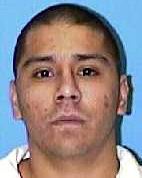
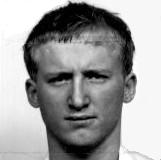
Rogelio Cannady
Murderer Brian Kevin Rosenfeld
Murderer · USA · 1985
Brian Kevin Rosenfeld Brian Kevin Rosenfeld was sentenced to three concurrent l…
23 victims
Brian Kevin Rosenfeld
Murderer · USA · 1985
Brian Kevin Rosenfeld Brian Kevin Rosenfeld was sentenced to three concurrent l…
23 victims
 Yahweh ben Yahweh
Murderer · USA · 1980
Yahweh ben Yahweh was born and legally named Hulon Mitchell Jr. (October 27, 19…
23 victims
Yahweh ben Yahweh
Murderer · USA · 1980
Yahweh ben Yahweh was born and legally named Hulon Mitchell Jr. (October 27, 19…
23 victims
 Russell Ellwood
Murderer · USA · 1991
Russell Ellwood was a former taxi driver. Authorities suspected him of killing…
20 victims
Russell Ellwood
Murderer · USA · 1991
Russell Ellwood was a former taxi driver. Authorities suspected him of killing…
20 victims
 Robert Martines Perez
Murderer · USA · 1994
Name: Robert Martines Perez · Other name used in proceedings: Robert Martinez P…
15 victims
Robert Martines Perez
Murderer · USA · 1994
Name: Robert Martines Perez · Other name used in proceedings: Robert Martinez P…
15 victims
 William Smedley
Murderer · United Kingdom · 1947
William Smedley was executed by hanging at Armley Gaol on August 14, 1947. Stev…
1 victim
William Smedley
Murderer · United Kingdom · 1947
William Smedley was executed by hanging at Armley Gaol on August 14, 1947. Stev…
1 victim
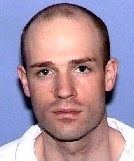 Randy Halprin
Murderer · USA · 2000
Randy Halprin (Randy Ethan Halprin), TDCJ Number 999453 · Date of birth: 09/13/…
1 victim
Randy Halprin
Murderer · USA · 2000
Randy Halprin (Randy Ethan Halprin), TDCJ Number 999453 · Date of birth: 09/13/…
1 victim
 Gameel Al-Batouti
Mass murderer · USA · 1999
Gameel Al-Batouti (also rendered “Gamil ElBatouty” or “El Batouty” in U.S. offi…
216 victims
Gameel Al-Batouti
Mass murderer · USA · 1999
Gameel Al-Batouti (also rendered “Gamil ElBatouty” or “El Batouty” in U.S. offi…
216 victims
 Anthony Bertolotti
Murderer · USA · 1983
Anthony Bertolotti was executed in Florida by electrocution on July 27, 1990. H…
1 victim
Anthony Bertolotti
Murderer · USA · 1983
Anthony Bertolotti was executed in Florida by electrocution on July 27, 1990. H…
1 victim
- Gender
- male
- Country
- USA
- Location
- Bee County, Texas, USA
- Date of birth
- May 29, 1972
- Age at first offence
- 18
- Characteristics
- rape
- Victim profile
- Anna Robles, 13, and Rick Garcia, 15 / Leovigildo Bonal (his cellmate)
- Method of murder
- Strangulation - St abbing with knife / Beating with a steel lock
- Date(s) of murder
- 1990 / 1993
- Years active
- 1990–1993
- Date of arrest
- —
- Status
-
Executed
Executed by lethal injection in Texas on May 19 , 2010
Overview
Rogelio Cannady was executed by lethal injection in Texas on May 19, 2010, after being convicted of capital murder and sentenced to death for murdering his cellmate, Leovigildo Bonal, while Cannady was in prison serving two life sentences for prior murders.
Timeline
- June 2, 1994 — A Bee County grand jury indicted Cannady for capital murder.
- January 27, 1995 — The trial court quashed the capital allegations in the indictment on grounds that the prior murder offenses occurred before the effective date of the law that made the killing of the state prisoner a capital murder; the State appealed.
- January 4, 1996 — The Court of Appeals for the Thirteenth Judicial District of Texas reversed the trial court’s ruling and reinstated the capital allegations.
- December 3, 1997 — A jury found Cannady guilty of capital murder.
- December 5, 1997 — After a punishment hearing, the same jury returned an affirmative answer to the statutory special issue regarding future dangerousness and a negative finding to the mitigation special issue; the trial court sentenced Cannady to death.
- January 5, 2000 — Cannady’s conviction and death sentence were affirmed on direct appeal by the Texas Court of Criminal Appeals.
- October 2, 2000 — The U.S. Supreme Court denied certiorari in Cannady’s direct appeal.
- May 23, 2001 — The Texas Court of Criminal Appeals denied Cannady’s state habeas application.
- August 8, 2002 — Cannady filed a federal habeas petition in a U.S. district court.
- July 18, 2003 — Cannady’s federal habeas petition was dismissed without prejudice so that Cannady could return to state court to exhaust claims.
- September 15, 2003 — Cannady filed a second state habeas application in the Texas Court of Criminal Appeals.
- October 22, 2003 — The Texas Court of Criminal Appeals dismissed the second state habeas application as an abuse of the writ.
- December 19, 2003 — Cannady refiled his federal habeas petition in a U.S. District Court.
- April 29, 2005 — The federal district court denied Cannady’s habeas petition and denied a Certificate of Appealability (“COA”); Cannady appealed.
- March 22, 2006 — The Fifth U.S. Circuit Court of Appeals denied Cannady’s request for COA.
- October 2, 2006 — The U.S. Supreme Court denied Cannady’s petition for certiorari.
- June 30, 2008 — The convicting trial court entered an order setting Cannady’s execution date for November 6, 2008.
- September 9, 2008 — The convicting trial court entered an order modifying Cannady’s execution date and reset it for November 19, 2008.
- September 16, 2009 — The Texas Court of Criminal Appeals dismissed a writ application filed by Cannady in the Cameron County trial court challenging the validity of his two previous murder convictions.
- November 17, 2009 — Cannady asked the United States Court of Appeals for the Fifth Circuit for permission to file a successive habeas corpus petition.
- December 15, 2009 — The appeals court denied the motion.
- February 19, 2010 — Cannady filed a petition for an original writ of habeas corpus in the U.S. Supreme Court; the petition remained pending.
- May 19, 2010 — Cannady was executed by lethal injection.
- May 19, 2010 (related hearing outcome timing) — The condemned inmate was pronounced dead at 6:19 p.m. CDT, eight minutes after the lethal injection began.
Background
Rogelio Cannady was 37 at the time of execution and was from Harlingen. He was convicted of capital murder and sentenced to death.
Cannady had a history of juvenile offenses beginning in 1984. At age seventeen, he was sentenced to 20 years in prison for assaulting a fellow teenager while attempting to steal a bicycle.
On December 10, 1989, when Cannady was seventeen, he committed a robbery in Harlingen, Texas. While he was out on bond for that crime, on June 29, 1990, in La Feria, Texas, Cannady fatally stabbed Rick Garcia, a fifteen year-old-boy. On the same day, Cannady sexually assaulted Anna Robles, a thirteen-year-old girl, then helped strangle her. Cannady was convicted of the robbery charge in September 1990 and sentenced to 20 years in prison.
Although Cannady was originally charged with capital murder for the double homicide, in exchange for his guilty pleas, the charges were reduced to murder. He was sentenced to two consecutive life terms on January 22, 1991.
The offence
Cannady killed his cellmate, Leovigildo Bonal, inside the medium custody housing area at the McConnell Unit in Beeville. Bonal was 55 years old. Bonal had been serving a 15-year sentence for murder from Tarrant County.
On October 10, 1993, Cannady beat Bonal with a combination lock attached to a belt and repeatedly stomped and kicked Bonal in the head with steel-toed boots. Prison guards found Bonal lying on the cell floor with his hands tied behind his back with a belt. Cannady had no apparent wounds or injuries; his boots and clothing were covered with blood. Blood was splattered and smeared on the cell walls, the bedding of both bunks, and the furniture.
A piece of the combination lock used to beat Bonal was found hidden inside a boot, and another piece was in the toilet. Patricia Graham of the Texas Department of Public Safety Crime Lab analyzed blood splatters and testified that their velocity indicated that the victim had been beaten. Patterns were created on the ceiling by blood flying off a weapon, possibly a combination lock. She also discerned that someone stomped in a puddle of blood or stomped on the victim lying in the blood or that the victim's head bounced up and down in the blood. She collected samples of blood from the cell, the belt, and Cannady's and Bonal's clothing. All blood samples were Type B and belonged to the same person; Bonal had Type B blood and Cannady has Type O blood.
Bonal’s autopsy revealed numerous lacerations and abrasions on the scalp and face, and lacerations, abrasions, and swelling on the arms, hands, and one leg. A circular imprint that matched the combination lock was found on his torso. He suffered two skull fractures and extensive hemorrhaging over the scalp and in the brain. One skull fracture was slightly circular in nature. The medical examiner matched the injuries to the lock retrieved from the cell and testified that it would take a fair amount of force to cause the fatal fractures and injuries Bonal sustained. The injuries were consistent with homicide from the impact of a lock and from being stomped on by a person wearing boots.
Bonal died two days later.
Cannady did not deny fatally beating Bonal, but he insisted the attack was self defense from Bonal's sexual advances. Cannady testified that he woke up when he thought he heard someone call “chow time,” got up to look out of the cell, and when he turned around saw Bonal touching himself sexually. Cannady testified that he confronted Bonal and hit him in the face, grabbed his lock and attached it to his belt, hit Bonal, and kept hitting Bonal because Bonal kept coming toward him. Cannady admitted that he hit and kicked Bonal repeatedly and used a weapon fashioned from a lock and a belt. Cannady also admitted dismantling the weapon and tying Bonal's hands after Bonal became unconscious, which he said was to prevent Bonal from striking back. Cannady asserted he killed Bonal in self-defense for fear of being raped.
Investigation and evidence
A technician from the Texas Department of Public Safety Crime Lab analyzed the blood splatters and testified about their velocity indicating the victim had been beaten, and described ceiling patterns created by blood flying off a weapon, possibly a combination lock. The technician also collected blood samples from the cell, the belt, and Cannady's and Bonal's clothing. The blood samples were Type B and belonged to the same person; Bonal had Type B blood; Cannady has Type O blood.
Arrest
No arrest information was provided in the case record for the Bonal homicide.
Trial
Cannady was indicted for capital murder and was tried and convicted.
Before trial, Cannady filed a motion alleging that the offenses for which he received his life sentences, and on which the capital murder indictment relied, were committed before September 1, 1993. Cannady argued that because the date the prior offenses were committed was an element of capital murder under Texas Penal Code 19.03(a)(6), and because the prior offenses were committed before September 1, 1993 and were not listed “3(g)(1)” offenses until September 1, 1993, he should not be subject to a capital murder charge. Cannady argued that the allegations in the indictment should be quashed.
On January 27, 1995, the trial judge agreed and quashed the aggravating elements in the indictment, leaving the murder charge intact. The State appealed, and the Thirteenth Court of Appeals reversed.
During jury selection, Cannady complained about the trial court’s denial of challenges for cause to four different veniremembers including prospective juror Herring and prospective juror Christensen. Cannady asserted that the trial court denied a challenge for cause to Herring because Herring stated that Cannady's being in prison would affect his ability to presume Cannady innocent; Herring initially said he “can't help but think [Cannady's] guilty if he's already killed two people,” but subsequently said on multiple occasions that he would follow the law and would render an impartial verdict. The appellate court held the trial judge did not abuse discretion in denying the challenge for cause.
Cannady asserted the trial court erred in denying a challenge for cause to Christensen, claiming Christensen evinced a clear bias against the law of self-defense. The appellate court found Christensen had expressed views while acting as a correctional officer and said he would listen to the case and follow the law, and held the trial court did not abuse discretion.
Cannady also argued the trial court did not allow him to question veniremember Rohr about her definition of “impartial” given her connections to law enforcement and witnesses; the appellate court overruled the point of error.
Motion for mistrial during cross-examination
Cannady complained that the trial court erred in failing to grant his motion for mistrial when the prosecutor accused Cannady and his trial counsel of fabricating a story to create a defense during cross-examination. The appellate court addressed two instances where Cannady made motions for mistrial.
First, the prosecutor asked:
- “You lied when you talked to Bill Lazenby the first time, didn't you, sir?”
- “You also lied when you told Captain Lazenby that you pulled that man off that top bunk and beat him after he crawled up there the first time after you hit him. You lied about that, too, didn't you?”
- “I notice also when you were taken out of that cell before you had an opportunity to talk to the lawyers, you weren't crying like a baby when you were walking down that hall, were you?”
- “You were acting like you was [sic] as calm as a cucumber, weren't you?”
- “You were hollering to your cell mates. What were you telling your cell mates when you were walking down those stairs? "I beat him down"? Did you tell them that?”
- “What defense did you create then with the testimony when -- before you had a chance to talk to a lawyer?”
- “And you're telling this jury also that what you said in that statement that's on that television [videotape] before you had a chance to talk to your lawyer is all a lie.”
Defense counsel objected, including:
- “Your Honor, at this moment in time, I make another objection. Any reference to his lawyer. He's attacking the defendant through -- He's constantly saying, "After you talked to your attorneys, you changed your testimony." We object. He's attacking the defendant over the Defense Lawyer's shoulder, Your Honor.”
The court sustained the objection and instructed the jury appropriately; defense counsel moved for a mistrial:
- “And we move for a mistrial, Your Honor.”
The court:
- “Be overruled.”
Second, the prosecutor asked:
- “So you lied about why it started, you lied about what you used, and you lied about what you did in the fight because you were trying to deceive the investigator; is that correct?”
- “After you hit him in this situation, you said, "Oh, hold it. I'm sorry, man. Just -- all I wanted to do is hit you a couple of times. Now then you understand where we are. Go on back to your bunk and go to sleep."”
- “You didn't do that. You didn't understand the law to say that you got to retreat just a little bit, so you're molding your testimony to fit --”
Defense counsel objected, and the court sustained the objection:
- “I object again. THE COURT: I sustain the objection.”
Defense counsel moved for a mistrial:
- “And I move for a mistrial, Your Honor.”
The court:
- “Be overruled. We're asking a lay witness a law question.”
Cannady’s second supplemental point of error regarding this claim was overruled.
Motion for mistrial during closing argument
Cannady also claimed the trial court erred in failing to grant his motion for mistrial when the prosecutor accused Cannady and his trial counsel of fabricating a story to create a defense during final argument on guilt/innocence. In addressing the complaint, the appellate court described the prosecutor’s comments and defense objections.
The prosecutor stated:
- “Ladies and gentlemen of the jury, this [charge] was generated by [Cannady], and you as a jury have a right to consider the fact that he's been convicted for two murders, that he's been convicted of robbery, and use that as part of whether or not you believe this man could, under any stretch of anybody's imagination, tell you the truth. He doesn't have that ability. He don't [sic] even know what the truth was. If it stood up today and hit him in the face he wouldn't recognize it. That's where he stands at this time, and he tells you he is weak. His lawyer tells you he's weak. His lawyer would have you believe that he's weak. But is he? The testimony that he give [sic] you from that witness stand tells you that he is a predator, that he stalks his prey. And I find it absolutely impossible to understand how any lawyer could stand up --”
Defense counsel objected:
- “Your Honor, I object at this moment in time, he's attacking the Defendant over the shoulder of the defense attorney, Your Honor.”
The court:
- “All right. Rephrase.”
The prosecutor continued:
- “How anything or anybody could stand up and tell a jury --”
Defense counsel renewed the objection:
- “Your Honor, again, we renew the same objection, Your Honor, he's attacking the Defendant over the shoulder --”
The court:
- “Your argument is he's attacking [the] Defendant over counsel's shoulder?”
Defense counsel:
- “Yes, Your Honor.”
The court:
- “I'll sustain the objection.”
Defense counsel asked for a mistrial:
- “We ask for a mistrial, Your Honor.”
The court:
- “Be overruled.”
The appellate court held any harm was cured by sustaining the objection and instructing the jury.
Sentencing
After trial, a punishment hearing occurred in which the jury returned:
- an affirmative answer to the statutory special issue regarding future dangerousness; and
- a negative finding to the mitigation special issue.
The trial court sentenced Cannady to death.
Cannady also raised an issue on appeal about whether Article 42.08(b) required his death sentence to be cumulated or stacked on the sentence he was serving at the time of the offense. The appellate court concluded that the sentence of death may be executed without regard to other sentences Cannady might have pending.
Appeals
Cannady’s conviction and sentence were affirmed on direct appeal by the Texas Court of Criminal Appeals on January 5, 2000.
The U.S. Supreme Court denied certiorari in Cannady’s direct appeal on October 2, 2000.
Cannady filed a state habeas application; it was denied by the Texas Court of Criminal Appeals on May 23, 2001.
Cannady filed a federal habeas petition in a U.S. district court on August 8, 2002; it was dismissed without prejudice on July 18, 2003 so that Cannady could return to state court to exhaust claims.
Cannady filed a second state habeas application on September 15, 2003; it was dismissed as an abuse of the writ on October 22, 2003.
Cannady refiled his federal habeas petition in a U.S. District Court on December 19, 2003. The federal district court denied the habeas petition and denied a Certificate of Appealability (“COA”) on April 29, 2005; Cannady appealed. The Fifth U.S. Circuit Court of Appeals denied Cannady’s request for COA on March 22, 2006. The U.S. Supreme Court denied Cannady’s petition for certiorari on October 2, 2006.
Cannady’s subsequent habeas-related filings included:
- A subsequent writ application filed in the Bee County trial court on March 2, 2009, which the Texas Court of Criminal Appeals dismissed.
- A writ application filed in the Cameron County trial court challenging the validity of Cannady’s two previous murder convictions, dismissed by the Texas Court of Criminal Appeals on September 16, 2009.
- A request to the U.S. Court of Appeals for the Fifth Circuit for permission to file a successive habeas corpus petition on November 17, 2009, denied on December 15, 2009.
- A petition for an original writ of habeas corpus in the U.S. Supreme Court filed on February 19, 2010, which remained pending.
Outcome
Cannady was executed by lethal injection in Texas on May 19, 2010. He was pronounced dead at 6:19 p.m.
Other details
Victims and relationships in prior cases referenced during execution
Cannady was sentenced to two life sentences after pleading guilty to the 1990 murders of:
- Ricardo Garcia, 16, of Freer, and
- Ana Robles, 13, of Brownsville,
with the murders occurring while they were runaways from a youth home. Garcia was stabbed 13 times, and Robles was raped and strangled. Two of Garcia’s brothers witnessed Cannady’s execution; Cannady did not address them and the brothers declined to speak with reporters afterward.
Cannady’s defense in the Bonal case asserted fear of being raped by Bonal.
Witnesses and final statements at execution
In the death chamber, Cannady selected witnesses including his brother, Victor Villapando; niece Adela Martinez; and three friends: Norma Baeza, Juana Bello and Gary Ojeda. Cannady also nodded and smiled.
Cannady spoke to his brother and childhood friend Gary Ojeda and told the witnesses:
- “I'm going to be OK,”
- “Y'all take care of yourself ... May God have mercy on my soul.”
- “I was in there right now thinking how we grew up. You know how we grew up in the same house.”
- “We need to take care of each other like we used to.”
- “I thought it was going to be harder than this,”
- “I am ready to go.”
- “I am going to sleep now. I can feel it, it’s affecting me.”
- “I love you... May God have mercy on my soul.” He laughed, lifted his head from the gurney, and began snoring.
Spotted an error, or have more information about this case?