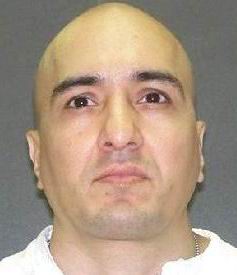
Peter Anthony Cantu
Murderer Brian Kevin Rosenfeld
Murderer · USA · 1985
Brian Kevin Rosenfeld Brian Kevin Rosenfeld was sentenced to three concurrent l…
23 victims
Brian Kevin Rosenfeld
Murderer · USA · 1985
Brian Kevin Rosenfeld Brian Kevin Rosenfeld was sentenced to three concurrent l…
23 victims
 Russell Ellwood
Murderer · USA · 1991
Russell Ellwood was a former taxi driver. Authorities suspected him of killing…
20 victims
Russell Ellwood
Murderer · USA · 1991
Russell Ellwood was a former taxi driver. Authorities suspected him of killing…
20 victims
 Robert Martines Perez
Murderer · USA · 1994
Name: Robert Martines Perez · Other name used in proceedings: Robert Martinez P…
15 victims
Robert Martines Perez
Murderer · USA · 1994
Name: Robert Martines Perez · Other name used in proceedings: Robert Martinez P…
15 victims
 Billy Frank Vickers
Murderer · USA · 1993
Billy Frank Vickers Vickers was executed by lethal injection in Texas on Januar…
14 victims
Billy Frank Vickers
Murderer · USA · 1993
Billy Frank Vickers Vickers was executed by lethal injection in Texas on Januar…
14 victims
 Steven Avery
Murderer · USA · 2005
Steven Avery was accused of luring Teresa Halbach, a young photographer working…
1 victim
Steven Avery
Murderer · USA · 2005
Steven Avery was accused of luring Teresa Halbach, a young photographer working…
1 victim
 Eddie Wayne Davis
Murderer · USA · 1994
Eddie Wayne Davis was sentenced to death. · He was also known as EDDIE DAVIS, E…
1 victim
Eddie Wayne Davis
Murderer · USA · 1994
Eddie Wayne Davis was sentenced to death. · He was also known as EDDIE DAVIS, E…
1 victim
 Edward Brian Capetillo
Homicide · USA
Edward Brian Capetillo was a Latino male who was 17 years of age at the time of…
1995 victims
Edward Brian Capetillo
Homicide · USA
Edward Brian Capetillo was a Latino male who was 17 years of age at the time of…
1995 victims
 Eddie James Johnson
Murderer · USA · 1987
Eddie James Johnson was executed by lethal injection in Texas on June 17, 1997.…
3 victims
Eddie James Johnson
Murderer · USA · 1987
Eddie James Johnson was executed by lethal injection in Texas on June 17, 1997.…
3 victims
 Paul Merhige
Mass murderer · USA · 2009
Paul Merhige was held without bail and remained in prison awaiting trial. · 200…
4 victims
Paul Merhige
Mass murderer · USA · 2009
Paul Merhige was held without bail and remained in prison awaiting trial. · 200…
4 victims
- Gender
- male
- Country
- USA
- Location
- Harris County, Texas, USA
- Date of birth
- May 27, 1975
- Age at first offence
- 18
- Characteristics
- rape, gang
- Victim profile
- Elizabeth Pena (female, 16) and Jennifer Ertman (female, 14)
- Method of murder
- Strangulation
- Date(s) of murder
- June 24, 1993
- Years active
- 1993
- Date of arrest
- —
- Status
-
Executed
Executed by lethal injection in Texas on August 17, 2010
Case information
Defendant: Peter Anthony Cantu Victims: Jennifer Ertman (14), Elizabeth Pena (16) Court: Harris County (Texas), including the 178th District Court for the execution setting; the Texas Court of Criminal Appeals addressed the direct appeal and later habeas relief; the United States Supreme Court denied certiorari.
Timeline
- June 24, 1993 — A Houston gang calling itself the “Black and Whites” met to initiate a new member, Raul Villareal; Jennifer Ertman (14) and Elizabeth Pena (16) crossed paths with the group while taking a shortcut across railroad tracks; Cantu grabbed and dragged both girls down a hill; the group subjected both girls to gang rape and then took them into nearby woods where they were strangled and then stomped to make sure they were dead.
- January 4, 1993 — Patricia Lourdes Lopez’s body was found; her murder was later connected to the same participants through evidence later developed after the Ertman and Pena murders.
- 9/23/93 — Cantu was indicted for capital murder by a Harris County grand jury.
- 2/3/94 — A jury found Cantu guilty of capital murder.
- 2/9/94 — After a separate penalty hearing, Cantu was sentenced to death.
- 1/29/97 — The Texas Court of Criminal Appeals affirmed Cantu’s verdict and sentence.
- 12/1/97 — The U.S. Supreme Court denied Cantu’s petition for certiorari review.
- 2/23/98 — Cantu filed an application for state writ of habeas corpus.
- 6/7/2006 — The state trial court denied Cantu’s state post-conviction relief.
- 12/13/06 — The Texas Court of Criminal Appeals denied state habeas relief.
- 2/4/09 — The federal district court denied relief.
- 2/5/09 — Cantu appealed to the United States Court of Appeals for the Fifth Circuit.
- 8/11/09 — The federal appeals court affirmed the denial of certificate of appealability.
- 2/4/10 — Cantu filed a petition for certiorari review in the U.S. Supreme Court.
- 4/19/10 — The U.S.
- 4/21/10 — The 178th District Court set Cantu’s execution date for August 17, 2010.
- August 17, 2010 — Cantu was executed by lethal injection in Texas at 6:17 p.m.
Background
Peter Anthony Cantu led a small gang in Houston known as the “Black and Whites.” The gang met on the night of June 24, 1993, to initiate a new member, Raul Villareal. Cantu was described as the self-appointed leader of the gang.
Cantu was also described as being known for repeated behavioral problems, and he had been in an alternative school since sixth grade. His offenses escalated over time and included stealing a bicycle from an eight-year-old at age 11.
At the time of the Ertman and Pena murders, the group included Cantu and several other young men who carried out the attack. In addition to Cantu, other participants present included Roman Sandoval, Joe Medellin, Efrian Perez, and Derrick Sean O’Brien. Roman Sandoval’s brother Frank, and Joe Medellin’s fourteen-year-old brother, Venancio, were also present. Venancio watched while others raped both girls and later was directed by Cantu during the assault sequence.
The offence
Initiation and encounter
On June 24, 1993, the gang met to initiate Raul Villareal. The initiation involved fighting each member of the gang for a five- to ten-minute period. After Raul fought all of the members, he was welcomed into the gang. The gang drank beer and engaged in horseplay, and then headed toward nearby railroad tracks.
Jennifer Ertman and Elizabeth Pena were visiting a girlfriend. They decided to head home taking a shortcut across the railroad tracks to arrive before curfew. They first encountered Roman and Frank Sandoval as they made their way home and passed them without incident. However, as they passed Joe Medellin, he grabbed Elizabeth and dragged her down a hill as she screamed for help. Jennifer ran back to help but Cantu grabbed Jennifer and dragged her down the hill as well.
Cantu asked the Sandoval brothers if they wanted to “get some,” but Roman told him that he did not rape or kill girls.
Gang rape
The subsequent boastful statements revealed that what then ensued was a brutal gang rape of both girls. Fourteen-year-old Venancio watched as the others raped both girls orally, vaginally, and anally until Cantu told him that he should “get some.” The girls were still being raped when Cantu whispered to Venancio, “We’re going to have to kill them.” During the assault, the group also engaged in a “sadistic frenzy” described as gang-raping the girls for more than an hour and forcing oral sex, kicking them, knocking out teeth, pulling hair, and breaking ribs.
One of the gang members later said during a brag session that by the time he got to one of the girls, “she was loose and sloppy.” Another boast included “virgin blood” being on him.
Attempt to kill and killing
After the rapes ended, Cantu told the group to take the girls into the woods, and the group strangled them. Cantu kicked Elizabeth in the face with his steel toe boots, knocking out several teeth, and stepped on Jennifer’s neck until she stopped moving. They later took turns stomping both girls’ necks to make sure they were dead.
Cantu also told Venancio they were going to have to kill them, and the group used strangulation methods including a belt and shoelaces. Jennifer was strangled with a belt that later broke, with part of the belt left at the scene and the rest found in O’Brien’s home. Shoelaces were used to strangle Pena. The medical examiner testified that Elizabeth’s two front teeth were knocked out before she died, and that two of Jennifer’s ribs were broken after she had died. Testimony also showed the bodies were kicked and necks stomped after the strangulations to ensure death.
Regrouping and gloating
Later that night, Joe Medellin, Efrian Perez, and Raul Villareal regrouped at Cantu’s house to brag about their exploits. Cantu walked in as the rest were recounting events to Cantu’s older brother Joe and sister-in-law Christina Cantu in graphic detail. Cantu appeared happy and amused and agreed with recollection of events. Cantu parceled out jewelry and money he had taken from the girls.
Venancio was left behind at the woods, with others telling him he was “too little to watch.”
Investigation
Christina Cantu later convinced her husband Joe to report the incident to police. By the time the bodies were discovered, they were so badly decomposed that dental records were required to identify them. The medical examiner determined that the girls died of a trauma to the neck consistent with strangulation.
Eventually, all individuals who participated in the gang rape and murder were arrested and most of the jewelry was recovered, including some from Cantu’s bedroom. Cantu confessed, including written statements described as a first statement admitting role in raping and stealing, but silent as to murder; after police informed him one other participant fully confessed, Cantu gave a second statement describing how both girls were killed.
A break in the case was attributed to a call from a person identifying himself as “Gonzalez,” along with details about the location near T.C. Jester Park and White Oak bayou. Police traced a 911 call to the Cantu home.
Arrest
The text described that Cantu’s brother, using an alias in the call to police, phoned police after hearing the gang gloating and resulted in the arrests of the participants who had participated in the gang rape and murder.
Trial
Charges and verdict
Cantu was indicted for capital murder by a Harris County grand jury on 9/23/93. A jury found Cantu guilty of capital murder on 2/3/94.
The indictment charged Cantu with capital murder for killing Jennifer Ertman in the course of committing or attempting to commit robbery, kidnapping, and aggravated sexual assault. Cantu was sentenced to death after a separate penalty hearing on 2/9/94.
Participants and other related proceedings
The trials of Cantu and Derrick O’Brien were held before their fellow gang members, while the trials of Efrain Perez, Raul Villareal, and Jose Medellin were held simultaneously with common witnesses. Venancio Medellin was handled in juvenile court and given the maximum sentence split between juvenile and adult prison facilities. He was not eligible for the death penalty because of his age, and he did not participate in the murders.
Direct appeal and punishment trial issues
In the punishment trial, several witnesses testified that Cantu had a history of violent behavior and offenses. Evidence of extraneous offenses admitted included that Cantu stole a bicycle from an eight-year-old and then turned it in for a reward; that Cantu threatened a woman and broke a window in her home; that Cantu attacked a sixth-grade teacher; that Cantu threatened another student’s father, saying that he wanted to kill him; that Cantu created problems at school by fighting and cursing; that Cantu threatened to kill an officer of the law; and that Cantu made threats at a hospital and in jail.
Cantu raised forty-five points of error on direct appeal, and the Texas Court of Criminal Appeals affirmed the judgment.
Quotes and verbatim statements
Randy Ertman yelled at Cantu during the victim impact statement: “Look at me … look at me good!”
At the sentencing phase argument, Cantu had no final statement prior to execution, and multiple sources recorded that Cantu did not make a final statement at execution.
At trial, one prosecutor’s excerpt quoted in the appellate decision included the following jury-argument language: [THE STATE:] [I would] [l]ike to talk to you briefly about the issue of mitigation[.] * * * Nowhere will you find the court instructing you that you have to find any evidence that you've heard in this case mitigating. * * * [W]hy do you consider mitigation, ... that's because the courts allow you to individualize the justice. There might be a fact and circumstance out there that just cries out for mercy, cries out for you to give the person some leniency and not give them the death penalty,.... Keep that in mind when you think in terms of what is it that really compels our mercy and do you see it in this case? A little thing that I would suggest is that you kind of go in the step of number one, you look to determine is there any mitigation. If there is the mitigation, is it sufficient, sufficient to rise to the level that you want to take this man, [appellant], and show him some mercy. Does it rise to that level? And then ask yourself another question. Is there a connection between what they try to give to you as mitigation, is there some connection between that and the crime itself, when you think of what you discovered to possibly be mitigating. Does that cause the defendant's behavior? Does it justify it? Is there a link there and correlation between what you've heard and what you saw happen on June 24th, 1993?
Defense objected to the “nexus” suggestion; the excerpt included: [DEFENSE:] Excuse me, [prosecutor's name omitted]. Your Honor, we object to the suggestion that there has to be a nexus between the mitigation and the returning of a verdict which would result in a life sentence.
A handwritten letter excerpt quoted by the appellate decision, attributed to Beatrice Martinez, read: Efrian, what's up, ugly? Is your room clean today? Today you all came out on TV again and it said that their parents are trying to do everything they can to give you all the death penalty, even Yuni, but I don't think so because that's when we go out and take our asses on strike. All cuzz them fine ass girls you all wanted to fuck. Especially the white chick, she looked good, huh, Junior? Ha-ha.
At trial, Cantu appeared to agree with co-defendants’ accounts, including statements quoted in the appellate decision such as: [WITNESS:] I did that. Yeah, yeah, I remember that. [WITNESS:] He just said, I did that, too. [WITNESS:] Yes. [THE STATE:] They were all saying that? [WITNESS:] Yes. And during recounted trial testimony in the appellate decision: Joe Cantu also testified appellant agreed he had killed both girls and stomped on their necks. Joe Cantu also testified appellant agreed with everything that was being said about the rapes and killing, nodding his head and saying, “[Y]eah daddy, you got it.”
Sentencing
The jury sentenced Cantu to death after a separate penalty hearing on 2/9/94.
During execution reporting, Cantu was executed in Texas at 6:17 p.m., and he did not make a final statement. The article said he stared straight up toward the ceiling, took one deep breath before he closed his eyes, and did not acknowledge victims’ families. It also stated that Cantu had no personal witnesses attending the execution and that he did not acknowledge the victims’ families.
The article referenced that he was the third connected execution with the case, and stated that earlier executions occurred for Derrick O’Brien and Jose Medellin and that another attacker was given a 40-year sentence due to juvenile status.
Appeals
State direct appeal
The Texas Court of Criminal Appeals affirmed Cantu’s verdict and sentence on 1/29/97.
U.S. Supreme Court
The U.S. Supreme Court denied Cantu’s petition for certiorari review on 12/1/97.
State habeas
Cantu filed an application for state writ of habeas corpus on 2/23/98; the Texas Court of Criminal Appeals denied state habeas relief on 12/13/06.
Federal habeas and appeals
Cantu filed his federal habeas corpus petition in a Houston U.S. district court on 9/19/07. The federal district court denied relief on 2/4/09. Cantu appealed to the United States Court of Appeals for the Fifth Circuit on 2/5/09. The federal appeals court affirmed denial of certificate of appealability on 8/11/09.
Further petition
Cantu filed a petition for certiorari review in the U.S. Supreme Court on 2/4/10; the U.S. Supreme Court denied it on 4/19/10.
Outcome
Cantu was executed by lethal injection in Texas on August 17, 2010. He was pronounced dead at 6:17 p.m.
Cantu’s execution was described as the third connected with the case. The text also stated that two of the six assailants had their death sentences commuted to life in prison when the U.S. Supreme Court barred capital punishment for those who commit crimes under the age of 18, and that a 14-year-old attacker received a 40-year sentence. The executions of Jose Medellin and Derrick O’Brien were described as having occurred in 2008 and 2006, respectively.
Aftermath
Victims’ family members were described as attending the execution. Adolfo Pena stated: “We can say it’s the end, but it’s never going to be closure,” and also said: “Three of the animals that did this are gone. (The execution) doesn’t really make me feel any better, knowing that there are three guys that got away with this. But I think I will probably sleep a little better.”
Melissa Pena said: “There’s nothing he would have said to me that would have made any difference,” and “He did a horrendous crime to these two girls and he deserved to die. And 17 years later he died – not soon enough. Seventeen years is a long time to have something eating on you like that. We think about those girls every day.”
Longtime friend Jim Stacey spoke on behalf of the Ertman family, stating: “We can say it’s the end, but it’s never going to be closure,” and: “Randy and Sandy have been through enough – there’s nothing left for them to say,” and: “There’s no way to ever get closure from this. Maybe some satisfaction, but never closure.”
Death penalty opponents spoke over a loudspeaker against Cantu’s execution and the state’s system of capital punishment. Supporters and memorial events at T.C. Jester Park were also described, including Melinda Rios saying: “They left my house and they were supposed to go home,” and “I had no idea they would be coming to this.”
During the execution day reporting, the text noted that supporters gathered outside the Walls Unit, and a memorial bench gathering included Maria Frausto, who said: “They are still in our hearts and prayers.”
Other details
Jury and legal issues addressed on direct appeal
The Texas Court of Criminal Appeals overruled the defendant’s points of error, affirming the capital murder conviction and death sentence. The appellate decision addressed issues including:
- denial of challenges to the Texas death penalty scheme related to future parole eligibility information to jurors and the 35-year parole eligibility minimum for life sentences,
- denial of challenges to jury argument and alleged “nexus” requirements between mitigation evidence and the offense,
- admissibility of co-defendants’ hearsay statements that were characterized as adopted admissions or statements against interest,
- impeachment of defense witness Beatrice Martinez using quoted letter content,
- evidentiary issues regarding victim impact evidence for Elizabeth Pena when Pena was not the named victim in the indictment, where the court held the character-and-activities portion was irrelevant but determined admission was harmless beyond a reasonable doubt,
- denial of mistrial after improper argument that was cured by instruction,
- denial of expert assistance funds for jury study,
- constitutionality challenges to the capital sentencing scheme under multiple theories,
- arguments regarding lesser-included offenses, including murder, sexual assault, robbery, and kidnapping,
- intoxication instruction at punishment phase,
- admission of unadjudicated extraneous offenses,
- jury charge instructions on punishment issues and related constitutional claims,
- an asserted voidness argument about the plea procedure, which was rejected.
Federal habeas certificate of appealability
Cantu’s application for a certificate of appealability was denied by the United States Court of Appeals for the Fifth Circuit.
The appellate decision described the issues raised for a certificate of appealability, including due process about informing the jury about parole eligibility after thirty-five years, refusal to instruct on lesser-included offenses, constitutionality of the instruction method for mitigating evidence, and ineffective assistance claims related to photographs and sentencing-phase argument.
The Fifth Circuit denied the certificate of appealability on all issues raised. It stated that reasonable jurists would not disagree with the resolution of the parole eligibility and mitigation instruction issues and that due process and Eighth Amendment issues regarding lesser-included offenses and counsel effectiveness were not grounds for issuance of a certificate of appealability.
Related murders discussed in the text
The text described that six months before the Ertman and Pena murders, three of their killers murdered Patricia Lourdes Lopez. Her body was found by police on January 4, 1993. It described the circumstances of her being stranded on the freeway after running out of gas, being stopped by Joe Medellin, Peter Cantu, and Sean O’Brien, being asked to buy beer since they were underage, being taken to a back parking lot in Melrose Park in Houston, being raped and sexually assaulted before being stabbed to death, and being strangled. The narrative described evidence linking O’Brien and Medellin to the murder, including O’Brien’s fingerprints on a beer can and Medellin’s DNA matching semen samples taken from Patricia’s body.


Spotted an error, or have more information about this case?