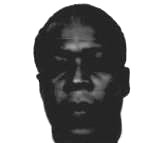
Eddie James Johnson
Murderer Brian Kevin Rosenfeld
Murderer · USA · 1985
Brian Kevin Rosenfeld Brian Kevin Rosenfeld was sentenced to three concurrent l…
23 victims
Brian Kevin Rosenfeld
Murderer · USA · 1985
Brian Kevin Rosenfeld Brian Kevin Rosenfeld was sentenced to three concurrent l…
23 victims
 Yahweh ben Yahweh
Murderer · USA · 1980
Yahweh ben Yahweh was born and legally named Hulon Mitchell Jr. (October 27, 19…
23 victims
Yahweh ben Yahweh
Murderer · USA · 1980
Yahweh ben Yahweh was born and legally named Hulon Mitchell Jr. (October 27, 19…
23 victims
 Russell Ellwood
Murderer · USA · 1991
Russell Ellwood was a former taxi driver. Authorities suspected him of killing…
20 victims
Russell Ellwood
Murderer · USA · 1991
Russell Ellwood was a former taxi driver. Authorities suspected him of killing…
20 victims
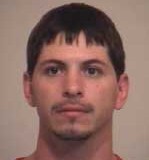 John Warren Parsons
Murderer · USA · 2005
John Warren Parsons was from Chillicothe, Ohio. He was wanted as an FBI Ten Mos…
1 victim
John Warren Parsons
Murderer · USA · 2005
John Warren Parsons was from Chillicothe, Ohio. He was wanted as an FBI Ten Mos…
1 victim
 Brandy Holmes
Murderer · USA · 2003
Brandy Aileen Holmes was convicted of first-degree murder and sentenced to deat…
1 victim
Brandy Holmes
Murderer · USA · 2003
Brandy Aileen Holmes was convicted of first-degree murder and sentenced to deat…
1 victim
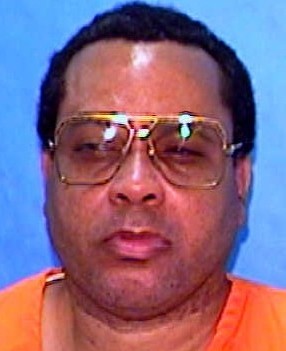 Dwayne Irvin Parker
Murderer · USA · 1989
Dwayne Irvin Parker was indicted and later sentenced in the Seventeenth Judicia…
1 victim
Dwayne Irvin Parker
Murderer · USA · 1989
Dwayne Irvin Parker was indicted and later sentenced in the Seventeenth Judicia…
1 victim
 Ana Maria Cardona
Murderer · USA · 1990
Ana Maria Cardona was sentenced to death on April 1, 1992. She was resentenced…
1 victim
Ana Maria Cardona
Murderer · USA · 1990
Ana Maria Cardona was sentenced to death on April 1, 1992. She was resentenced…
1 victim
 Michelle Byrom
Murderer · USA · 1999
Name: Michelle Byrom · Offender data (as stated): White; age 43 at crime (DOB 1…
1 victim
Michelle Byrom
Murderer · USA · 1999
Name: Michelle Byrom · Offender data (as stated): White; age 43 at crime (DOB 1…
1 victim
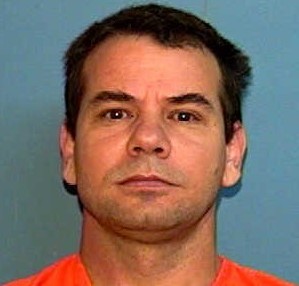 John Calvin Taylor
Murderer · USA · 1997
John Calvin Taylor · Date of sentence: 10/07/99 · Registry date of offense: 12/…
1 victim
John Calvin Taylor
Murderer · USA · 1997
John Calvin Taylor · Date of sentence: 10/07/99 · Registry date of offense: 12/…
1 victim
- Gender
- male
- Country
- USA
- Location
- Aransas County, Texas, USA
- Date of birth
- J uly 31, 1952
- Age at first offence
- 35
- Characteristics
- revenge
- Victim profile
- David Magee, Virginia Cadena and her 10-year-old daughter, Elizabeth Galvan
- Method of murder
- Shooting (.25-caliber pistol)
- Date(s) of murder
- September 29, 1987
- Years active
- 1987
- Date of arrest
- —
- Status
-
Executed
Executed by lethal injection in Texas on June 17, 1997
Case record
Eddie James Johnson was executed by lethal injection in Texas on June 17, 1997.
The offence
Eddie James Johnson, 44, was convicted of murdering David Magee, Virginia Cadena, and Virginia Cadena’s 10-year-old daughter, Elizabeth Galvan, in September 1987.
The three victims were abducted Sept. 29, 1987, from their apartment in Aransas Pass, about 20 miles northeast of Corpus Christi along the Texas Gulf Coast. Johnson and the victims were linked to the killings through evidence described at trial and later in appellate proceedings. After being driven to a remote spot, the victims were shot repeatedly with two guns: a .25-caliber semiautomatic and a .38-caliber pistol.
David Magee’s ankles and hands were tied with telephone wire. The young girl, Elizabeth Galvan, appeared to have been run over with a car and dragged while pinned beneath the vehicle. Virginia Cadena appeared to have been hanging out of the car and also was dragged. The bodies were found by the police in a roadside ditch in rural area of Aransas County, north of Corpus Christi.
Investigation
Johnson became a suspect when co-workers at an oil-field services company told of hostility between Johnson and David Magee. Witnesses said Johnson was particularly upset when Magee was selected over him to become yard foreman, refused to take orders from Magee, and promised to “get even.”
Trial
A jury returned affirmative findings to the two Texas special sentencing issues used in death penalty cases, and the court imposed a sentence of death.
The Texas Court of Criminal Appeal affirmed Johnson’s conviction and sentence, and later denied rehearing. Johnson v. State, 803 S.W.2d 272 (Tex.Crim.App.1990).
Johnson’s trial involved forensic evidence. After trial began, Johnson’s attorneys became aware that the prosecution intended to prove its case partly through forensic evidence. The trial court approved funds for the trial attorneys to hire forensic experts to assist the defense with fingerprinting, blood, serology, and ballistic evidence. The appellate proceedings later described that Johnson’s attorneys did not develop any forensic evidence or prepare to rebut the prosecution’s expert testimony.
At trial, the state presented serological and forensic evidence implicating Johnson in the murders. The appellate court summarized key forensic evidence and later habeas testimony as follows:
- At trial, the state’s hair expert testified that the hair fragments on the jeans found in the dumpster had the same “unique” reddish tint as Johnson’s head hair; several experts who testified at the evidentiary hearing testified those fragments had no such tint and were not suitable for comparison to Johnson’s head hair.
- At trial, counsel’s questioning of the state’s blood expert focused on identifying the source of unknown blood stains by matching them to the known blood samples with which they might have been consistent; the habeas experts testified the focus should have been on how frequently the combinations of the genetic markers identified in the unknown stains occur in the population at large, making it less likely they came from the particular source with which they were consistent.
- At trial, the state’s expert testified that a coke can found in the car bore Johnson’s bloody palm print; the habeas experts testified that faulty fingerprinting procedures suggested strongly that Johnson’s palm print on the can was not in blood, providing an inference that the print was innocently placed on the can before the bloody murders.
In addition to the forensic evidence described above, the appellate court set out other evidence linking Johnson to the crime:
- Johnson despised one of the victims, illustrating motive.
- Johnson’s fingerprints on a telephone and a beer can in the victims’ apartment placed him at the scene of the crime.
- A telephone cord was used to bind one of the victims, and the phone with Johnson’s prints did not have a cord.
- Johnson, wearing “fairly new jeans,” took a cab to the vicinity of the victims’ apartment on the night of the murders.
- Johnson’s palm print was on the coke can in one of the victims’ bloody cars.
- A witness sold Johnson a .25 caliber gun that experts testified at his trial was used to kill one of the victims.
- A unique holster belonging to a .38 caliber gun (the caliber used to kill two of the other victims) was found under a vacant trailer next to Johnson’s; the holster and .38 caliber gun were stolen from a car in a parking lot accessible to employees of a plant where Johnson worked.
- Police found shells and gun cleaning kits in Johnson’s trailer consistent with both .25 and .38 caliber guns.
- Other evidence indicated that the car where police found the bodies was extremely bloody.
- Police found wet boots in Johnson’s trailer with human blood on them.
- Police found a wet pair of new jeans in a dumpster in his trailer park that were the size and brand his wife had recently bought for him.
- The blood splatter pattern on the jeans matched the pattern on Johnson’s boots.
- The jeans contained fragments of African-American hair and a Caucasian hair; Johnson was African-American, and the Caucasian hair was consistent with that of one of the victims.
- Police found a wet pair of underwear with the jeans of the same brand and size as the jeans found in Johnson’s trailer.
- Even if Johnson’s habeas experts had testified at trial, the appellate court stated there would still be no explanation for Johnson’s prints being on anything in Cadena’s car, and that the defense presented no evidence that Johnson and Cadena were friends.
Sentencing
During the penalty phase, the court refused Johnson’s requested instruction that if Johnson received a life sentence he would not be eligible for parole for twenty years.
The appellate record noted that in 1988 in Texas, a person convicted of capital murder who received a life sentence was ineligible for parole until he had served twenty years in prison, referencing TEX. CODE CRIM. PROC. ANN. art. 42.18 Sec. 8(c)(12).
Appeals
Direct and certiorari
See Johnson v.
The United States Supreme Court denied certiorari. See Johnson v. Texas, 501 U.S. 1259, 111 S.Ct. 2914, 115 L.Ed.2d 1078 (1991).
Federal habeas corpus
Eddie James Johnson, a Texas death row inmate, appealed the district court’s denial of his petition for writ of habeas corpus.
The case was captioned: Eddie James Johnson, Petitioner-Appellant, v. Wayne Scott, Director, Texas Department of Criminal Justice, Institutional Division, Respondent-Appellee. No. 94-60400. Federal Circuits, 5th Cir. October 18, 1995. Appeal from the United States District Court for the Southern District of Texas. Before JOLLY, WIENER and EMILIO M. GARZA, Circuit Judges.
Johnson was convicted of murdering David Magee, Virginia Cadena, and Elizabeth Galvan. The appellate proceedings referenced TEX. PENAL CODE ANN. Sec. 19.03(a)(6)(A).
Johnson sought postconviction relief in the state courts. Pursuant to the trial court’s recommendation, the Texas Court of Criminal Appeals denied Johnson’s state application for writ of habeas corpus. Johnson then filed an application for writ of habeas corpus in the United States District Court for the Southern District of Texas. After an evidentiary hearing on Johnson’s ineffective assistance of counsel claim, the district court denied habeas relief but issued a certificate of probable cause to appeal. The appellate court then affirmed the district court.
Johnson contended that:
- He received ineffective assistance of counsel because of his attorneys’ failure to rebut and effectively challenge the state’s forensic evidence.
- The trial court’s failure to instruct the jury concerning the parole implications of a life sentence violated his Fourteenth and Eighth Amendment rights.
- He was denied a fair trial because of a juror’s exposure to prejudicial information.
The appellate court stated it reviewed ineffective assistance of counsel claims under Strickland v. Washington and concluded Johnson was not prejudiced by the errors, so the ineffective assistance claim failed.
On the parole-instruction issue, the appellate court concluded that Allridge v. Scott controlled the due process argument. It also concluded that neither the due process clause nor the Eighth Amendment compelled instructions on parole in Texas, referencing Andrade v. McCotter and Knox v. Collins.
On the juror-exposure issue, the appellate court addressed Johnson’s claim that a juror read and watched newspaper and television reports about the trial in violation of the trial judge’s orders. The appellate record stated that the juror saw Johnson in shackles during one of the television reports; however, the juror had already seen Johnson in shackles inside the courtroom. The appellate court concluded Johnson did not present specific facts showing prejudice and therefore was not entitled to an evidentiary hearing.
The appellate court also included discussion comparing Johnson’s argument to United States v. Luffred, and described that in Luffred the juror’s exposure was exacerbated by the court’s instruction about an excluded chart. It stated that, unlike in Luffred, the juror in Johnson’s case did not learn new or misleading information about Johnson’s case from news reports.
Outcome of federal appeal
For the foregoing reasons, the appellate court affirmed.
Outcome
Eddie James Johnson was executed by lethal injection in Texas on June 17, 1997 at Huntsville State Prison. He was pronounced dead at 6:34 p.m. CDT, seven minutes after an executioner released a lethal dose of drugs into his arms.
Final statement
Johnson’s last statement was: “I would like to say to the Magee family and the Cadena family that I was friends with David and Virginia and I did not commit this offense. I have tried to do something to compensate the families by writing a book. I would like for the proceeds to go to the Magee family and the Cadena family. There is someone who will be contacting them or they can get in touch with my attorney. I would like to thank you for standing by me and loving me and carry my best to my "sun," my butterfly. Goodbye, sun, I love you.”
Other details
A later report described that the execution was the second execution in two days in Texas, and that Texas had 23 executions that year.
In the forensic discussion surrounding ineffective assistance, the appellate court stated: “A reasonable probability is a probability sufficient to undermine confidence in the outcome.” and quoted additional Strickland-related language: “A reasonable probability is a probability sufficient to undermine confidence in the outcome.” “Some errors will have had a pervasive effect on the inferences to be drawn from the evidence, altering the entire evidentiary picture, and some will have had an isolated, trivial effect.”

Spotted an error, or have more information about this case?