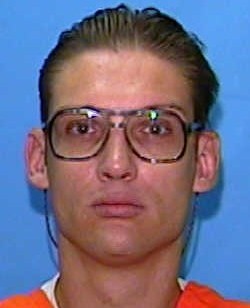
Eddie Wayne Davis
Murderer Brian Kevin Rosenfeld
Murderer · USA · 1985
Brian Kevin Rosenfeld Brian Kevin Rosenfeld was sentenced to three concurrent l…
23 victims
Brian Kevin Rosenfeld
Murderer · USA · 1985
Brian Kevin Rosenfeld Brian Kevin Rosenfeld was sentenced to three concurrent l…
23 victims
 Russell Ellwood
Murderer · USA · 1991
Russell Ellwood was a former taxi driver. Authorities suspected him of killing…
20 victims
Russell Ellwood
Murderer · USA · 1991
Russell Ellwood was a former taxi driver. Authorities suspected him of killing…
20 victims
 Robert Martines Perez
Murderer · USA · 1994
Name: Robert Martines Perez · Other name used in proceedings: Robert Martinez P…
15 victims
Robert Martines Perez
Murderer · USA · 1994
Name: Robert Martines Perez · Other name used in proceedings: Robert Martinez P…
15 victims
 Billy Frank Vickers
Murderer · USA · 1993
Billy Frank Vickers Vickers was executed by lethal injection in Texas on Januar…
14 victims
Billy Frank Vickers
Murderer · USA · 1993
Billy Frank Vickers Vickers was executed by lethal injection in Texas on Januar…
14 victims
 Douglas Feldman
Murderer · USA · 1998
Douglas Alan Feldman was convicted of capital murder in Texas and was sentenced…
2 victims
Douglas Feldman
Murderer · USA · 1998
Douglas Alan Feldman was convicted of capital murder in Texas and was sentenced…
2 victims
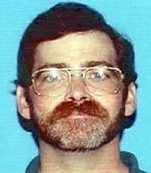 Sean Gillis
Serial killer · USA · 1994
Sean Vincent Gillis was convicted of killing eight Louisiana women. At trial st…
8 victims
Sean Gillis
Serial killer · USA · 1994
Sean Vincent Gillis was convicted of killing eight Louisiana women. At trial st…
8 victims
 Ann Miller Kontz
Murderer · USA · 2000
Ann Miller Kontz was the widow of Eric Miller and the defendant in the arsenic…
1 victim
Ann Miller Kontz
Murderer · USA · 2000
Ann Miller Kontz was the widow of Eric Miller and the defendant in the arsenic…
1 victim
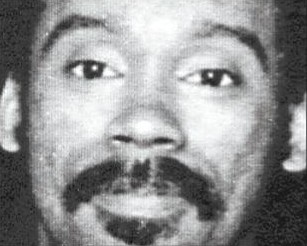 Michael Marnell Smith
Murderer · USA · 1977
Michael Marnell Smith was a condemned murderer and rapist who was executed in V…
1 victim
Michael Marnell Smith
Murderer · USA · 1977
Michael Marnell Smith was a condemned murderer and rapist who was executed in V…
1 victim
 Keli Lane
Murderer · Australia · 1996
Keli Lane (born 21 March 1975) was a former Australian water polo player. She w…
1 victim
Keli Lane
Murderer · Australia · 1996
Keli Lane (born 21 March 1975) was a former Australian water polo player. She w…
1 victim
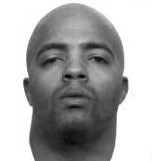 Anthony Nathaniel Bonham
Murderer · USA · 1981
Anthony Nathaniel Bonham (also shown as Antonio Nathanial Bonham) was executed…
1 victim
Anthony Nathaniel Bonham
Murderer · USA · 1981
Anthony Nathaniel Bonham (also shown as Antonio Nathanial Bonham) was executed…
1 victim
- Gender
- male
- Country
- USA
- Location
- Polk County, Florida, USA
- Date of birth
- September 13, 1968
- Age at first offence
- 26
- Characteristics
- child molester, alcohol, kidnapping, rape, torture
- Victim profile
- Kimberly Ann Waters, 11 (his girlfriend's daughter)
- Method of murder
- Strangulation
- Date(s) of murder
- March 3, 1994
- Years active
- 1994
- Date of arrest
- —
- Status
-
Executed
Sentenced to death on June 30, 1995; executed by lethal injection in Florida on July 10, 2014
Case record: Eddie Wayne Davis
Identifiers and background
- Eddie Wayne Davis was sentenced to death.
- He was also known as EDDIE DAVIS, EDDIE W DAVIS, and EDDIE WAYNE DAVIS.
- Race: White; Sex: Male.
- Hair color: Brown; Eye color: Blue.
- Weight: 223 lbs.
- Birth date: 09-12-68.
- Offense date: 03-03-94.
- Sentencing date: 06-30-95.
- Received: 07-15-94.
- County: Polk.
- DC Number: 097852.
- Tenth Judicial Circuit, Polk County.
- Case number: 94-1248.
- Sentencing judge: The Honorable Daniel True Andrews.
- Trial attorney (Assistant Public Defender): Austin Maslanik & Robert Norgard.
- Direct appeal attorney (Assistant Public Defender): Robert Moeller.
- Collateral appeals: Richard Kiley & James Viggiano (CCRC-M).
- Prison sentence history entries:
- 09/30/1984: BURGUNOCCSTRUC/CV OR ATT. (with a noted disposition line: 03/11/1988 POLK 8404335 5Y 0M 0D)
- 05/28/1987: BURGUNOCCSTRUC/CV OR ATT. (03/11/1988 POLK 8702449 5Y 0M 0D)
- 03/11/1988: POLK 8702449 5Y 0M 0D (also referenced as GRAND THEFT MOTOR VEHICLE)
- 03/11/1988: POLK 8702449 5Y 0M 0D (BURLARY TOOLS-POSSESS)
- 03/03/1994: 1ST DG MUR/PREMED. OR ATT. (06/30/1995 POLK 9401248 DEATH SENTENCE)
- 03/03/1994: BURGLARY ASSAULT ANY PERSON (06/30/1995 POLK 9401248 19Y 0M 0D)
- 03/03/1994: KIDNAP V<13/AGG.CHLD ABUSE (06/30/1995 POLK 9401248 19Y 0M 0D)
- 03/03/1994: SEX BAT BY ADULT/VCTM LT 12 (06/30/1995 POLK 9401248 LIFE)
- Incarceration history:
- 05/21/1985 to 12/08/1986
- 03/17/1988 to 04/05/1989
- 06/14/1989 to 10/20/1992
- 07/15/1994 to Currently Incarcerated
Victim information and people involved
- Victim: Kimberly Waters (11-year-old).
- Victim’s mother: Beverly Schultz.
- Victim’s sister: Crystal Waters.
- Victim’s grandmother: Mary Hobbs.
- Victim’s uncle: Tom Briner.
- Major Grady Judd (approached Davis in holding cell; is referenced in trial materials and execution-related accounts).
- Assistant State Attorney: John Aguero (prosecuted Davis in 1995, referenced in execution-related accounts).
- Sheriff: Polk Sheriff Grady Judd (referenced in execution-related accounts).
- Attorney roles listed in the postconviction materials include Austin Maslanik (lead counsel) and Public Defender Rex Dimmig (prepared statement quoted in execution-related accounts).
- Mental health experts referenced in the postconviction materials include:
- Dr. Michael Maher (for voluntary intoxication evidence at an evidentiary hearing)
- Dr. Dee (Dr. Henry Dee)
- Dr. Krop (Dr. Harry Krop)
- Dr. McClane (Dr. Thomas McClane)
- Dr. Bourg–Carter (Dr. Sherri Bourg–Carter)
- A stepfather referenced in the postconviction materials: Brad Hudson.
- Davis’s biological father referenced in the postconviction materials: Eddie Arnold Davis.
- Other defense witnesses referenced in the postconviction materials included Davis’s father, stepmother, girlfriend, coworker and friend, maternal aunt, grandmother, paternal aunt, control release supervisor, and special group leader and youth counselor at HRS.
Timeline
- 05/21/1985 — Davis began incarceration (in the incarceration history list).
- 07/15/1994 — Davis was received (also referenced as part of incarceration history).
- 03/03/1994 — Offense date.
- 03/04/1994 — Police found the body of eleven-year-old Kimberly Waters in a dumpster close to her home (as stated in multiple accounts).
- 03/05/1994 — Police questioned Davis.
- 06/01/95 — Jury returned guilty verdicts on all counts.
- 06/05/97 — Florida Supreme Court affirmed convictions and sentences.
- 06/09/95 — Jury recommended a death sentence by a vote of 12-0.
- 06/12/02 — A 3.850 Motion was denied (as stated in procedural history).
- 06/30/95 — Davis was sentenced to death; sentencing also included 19 years for burglary with assault and kidnapping a child under thirteen; and life imprisonment for sexual battery on a child under twelve.
- 07/07/2014 — Florida Supreme Court affirmed clemency-related denials in separate orders and denied a stay of execution (as stated in the 2014 federal district court habeas proceeding).
- 07/10/2014 6:43 p.m. — Florida executed Davis by lethal injection at Florida State Prison.
- 09/12/68 — Davis’s birth date.
Background
Davis was described as an unemployed roofer and drinking when he entered the house of a girl he dated briefly, Beverly Shultz. Her two daughters, Crystal and Kimberly, were home alone that night while her mother was working a double shift as a nurse. 11-year-old Kimberly was asleep in her mother's bed.
The offence
Davis awakened Kimberly and put his hand over her mouth to prevent her from yelling. He led her to the living room, where he gagged her with a rag so she could not yell. Davis then led her into an adjacent trailer park where Davis formerly lived.
While in the trailer, Davis attempted to put his penis inside of Kimberly. When he did not succeed, he resorted to raping her with his fingers.
Afterwards, Davis took Kimberly to a nearby Moose Lodge. There, Davis struck her several times and placed a piece of plastic over her mouth. Kimberly struggled and ripped the plastic, but Davis held it over her mouth and nose until she stopped moving. Davis then disposed of the body in a dumpster and left.
Kimberly’s body was found the next day. The body had numerous bruises. The area between the vagina and anus had been lacerated. The cause of death was determined to be strangulation.
Investigation and evidence
- DNA evidence: blood on Davis’ boots was consistent with Kimberly’s blood; Kimberly’s fingernail scrapings contained the DNA of Davis.
- Boots: police obtained a pair of blood-stained boots from the trailer Davis had just vacated; subsequent DNA tests revealed the blood on the boots was consistent with the victim’s blood.
- Arrest-related warrant: a warrant was issued for Davis’s arrest, and he was taken to the police station for further questioning.
- Confessions: Davis repeatedly confessed to police, at first implicating Kimberly’s mother.
Arrest and custodial interviews
On March 5, police questioned Davis, described as a former boyfriend of Kimberly’s mother, at the new residence where he and his girlfriend were moving. Davis denied having any knowledge of the incident and said he had been drinking at a nearby bar on the night of the murder.
Later that same day, police again located Davis at a job site and brought him to the police station for further questioning, where he repeated his alibi and provided a blood sample. While he was being questioned, police obtained blood-stained boots from the trailer Davis and his girlfriend had just vacated.
A warrant was issued for Davis’s arrest. On March 18, Davis agreed to go to the police station for more questioning. He was not told about the arrest warrant. At the station, he denied involvement and repeated his alibi. After police advised him of DNA test results, he insisted they had the wrong person and asked if he was being arrested.
After requesting to contact his mother so she could obtain an attorney, the interview ceased and Davis was placed in a holding cell. Shortly afterward, Major Grady Judd approached him and expressed disappointment in Davis. Davis made a comment suggesting Beverly Schultz was involved. Judd explained that he could not discuss the case unless Davis reinitiated contact because Davis had requested an attorney. Davis said he wanted to talk and then confessed to the crimes against Kimberly and implicated Beverly Schultz as having solicited the crimes.
Within a half hour, police conducted a taped interview in which Davis gave statements similar in substance to the untaped confession. Davis’s full Miranda warnings were not read to him until the taped confession began.
In May, 1994, Davis wrote a note asking to speak to detectives about the case. Police conducted a second taped interview on May 26, 1994. In that interview, police asked if Davis was willing to proceed without advice of counsel; Davis responded yes, but specific Miranda warnings were not recited. During that interview, Davis again confessed to killing Kimberly but stated that Beverly Schultz was not involved.
Trial
Charges and verdicts
Davis was indicted on:
- Count I: First-Degree Murder
- Count II: Burglary with Assault
- Count III: Kidnapping of a Child Under 13
- Count IV: Sexual Battery of a Child Under 12
On 06/01/95, the jury returned guilty verdicts on all counts of the indictment.
The jury found Davis guilty of first-degree murder, burglary with assault or battery, kidnapping a child under thirteen years of age, and sexual battery on a child under twelve years of age.
The jury unanimously recommended a sentence of death, and the trial court sentenced Davis to death.
Jury recommendation and sentencing
- 06/09/95: Jury recommended a death sentence by a vote of 12-0.
- 06/30/95: Sentencing:
- Count I (First-Degree Murder) — Death
- Count II (Burglary with Assault) — 19 years
- Count III (Kidnapping of a Child Under 13) — 19 years
- Count IV (Sexual Battery of a Child Under 12) — Life imprisonment
Aggravation and mitigation findings (trial court sentencing)
In aggravation, the trial court found:
- The murder was committed by a person under sentence of imprisonment.
- The murder was committed during the commission of a kidnapping and sexual battery.
- The murder was committed for the purpose of avoiding or preventing a lawful arrest.
- The murder was especially heinous, atrocious, or cruel.
Statutory mitigation:
- The murder was committed while the defendant was under the influence of extreme mental or emotional disturbance, and this factor was given great weight.
Nonstatutory mitigation findings included:
- Davis was capable of accepting responsibility and had shown remorse and offered to plead guilty.
- Davis exhibited good behavior while in jail and prison.
- Davis demonstrated positive courtroom behavior.
- Davis was capable of forming positive relationships with family members and others.
- Davis had no history of violence in any of his past criminal activity.
- Davis did not plan to kill or sexually assault the victim when he began his criminal conduct.
- Davis cooperated with police, confessed involvement, did not resist arrest, and did not try to flee or escape.
- Davis had always confessed to crimes for which he had been arrested in the past, accepted responsibility, and pled guilty.
- Davis had suffered from effects of being placed in institutional settings at an early age and spending a significant portion of his life in such settings.
- Davis obtained his GED while in prison and participated in other self-improvement programs.
Appeals
Direct appeal (Florida Supreme Court)
- Davis v. State, 698 So.2d 1182 (Fla. 1997) (Direct Appeal).
- The Florida Supreme Court affirmed.
The Florida Supreme Court held, on automatic appeal, that:
- Defendant was not in custody for purposes of Miranda when he voluntarily went to police station.
- Statement in which jail employee expressed his disappointment was not impermissible renitiation of interrogation after assertion of Miranda rights.
- Miranda warnings were required prior to interview after defendant reinitiated contact.
- Improper admission of statement obtained was harmless.
- Recording of 911 emergency call by victim's mother was admissible.
- Prosecutor's reference to portions of defendant's statement as “bald-faced lies” and crime and its perpetrator as “vicious and brutal” were not improper.
- Instructions on aggravators for imposition of death penalty accurately stated law.
- Defendant’s control release status at time murder established aggravating factor of defendant being under sentence of imprisonment at time of murder.
Judicial concurrence noted:
- Anstead, J., concurred in result only as to conviction and concurred as to sentence (as stated).
Davis v. State, 875 So.2d 359 (Fla. 2003) (PCR).
- The Florida Supreme Court affirmed the denial of postconviction relief and denied the petition; petition denied.
Postconviction relief and habeas
- Davis v. Scott, 2014 WL 3407473 (M.D.Fla. 2014) (Habeas).
- In the federal district court habeas proceeding, the Emergency Petition for Writ of Habeas Corpus and the Emergency Application for Stay of Execution were dismissed/denied; the Emergency Application for Stay of Execution was DENIED.
Postconviction holdings included:
- Ineffective assistance of counsel claims were denied.
- The Florida Supreme Court held that:
- Attorney's failure to pursue defense of voluntary intoxication and request instruction was not deficient performance.
- Attorney did not render deficient performance by failing to obtain an on-the-record waiver by defendant of his right to testify in the penalty phase.
- Attorney did not render ineffective assistance by failing to present a more qualified expert to testify that defendant suffered from post-traumatic stress syndrome due to sexual abuse as a child and while in prison.
- Allowing child victim's mother to remain in the courtroom after testifying was not shown to be abuse of discretion.
Jurisdiction and procedural posture:
- The Supreme Court’s orders in the postconviction and habeas proceedings are reflected in the citations listed.
- On automatic appeal, the Supreme Court affirmed the conviction and death sentence.
Sentencing
Davis received:
- Death sentence for first-degree murder on 06/30/95.
- Additional sentences:
- 19 years for burglary with assault.
- 19 years for kidnapping a child under thirteen.
- Life imprisonment for sexual battery on a child under twelve.
Outcome
The Florida Supreme Court affirmed the convictions and sentences.
Davis’s execution occurred on July 10, 2014 by lethal injection in Florida.
Execution details and final meal/words
- Execution: lethal injection at Florida State Prison on July 10, 2014.
- Execution time referenced: 6:43 p.m. (also referenced that IV needle was put in around 6:30 p.m. in one account).
- Davis declined to say final words.
- Prior to execution, Davis spent time with his mother and a Catholic spiritual adviser before eating his last meal.
Last meal (as listed):
- Chopped steak with onion gravy, home fries, corn, Brussels sprouts, cherry ice cream and a Dr Pepper.
Additional quotations preserved
Public Defender Rex Dimmig (representing Polk, Highlands and Hardee counties), in a prepared statement:
"Florida's simplistic practice of ignoring, incapacitating and ultimately exterminating the troubled youth of our state has failed to protect our most vulnerable citizens."
"Without more, the cycle of neglect, abuse and violence will continue. There will be more Eddie Wayne Davises and regrettably, more Kimberly Waterses."
Kimberly Waters’s uncle Tom Briner (quoted in execution-related accounts):
"Twenty years, four months and six days and we finally have justice,"
Polk Sheriff Grady Judd (quoted about setting an execution date):
"There are a lot of terrible crimes that occur but that is in the top 10 of my 41 years of service, and I’ve seen thousands and thousands of vicious crimes,"
Mary Hobbs (quoted about not attending execution and later about closure), including:
"I don't need to see it. I just need to know it's done,"
"For the first time in 20 years, I'm OK."
Crystal Waters (quoted after execution; vigil at gravesite):
"I'm relieved it's over,"
"I just hope now we can remember Kimberly and her life, not her death."
Assistant State Attorney John Aguero (quoted about seeing Davis’s breathing starting to get labored):
"all I could think about was Kimberly. "That poor child had to be terrified," he said, recalling how she was suffocated, "and here he was, unconscious, and didn't know he was dying."
Mary Hobbs (quoted in another execution account about attending and closure):
"I'll be there for my dead daughter, and for my little granddaughter. I want closure, and I think it will help. Why should he keep breathing air? My granddaughter isn't. She never had a chance against an animal like that. We've waited long enough. It's time for justice now."
Other details
Clemency and federal habeas ruling (2014)
In the 2014 federal district court proceeding (Davis v. Scott, 2014 WL 3407473), the court described clemency review and found that Davis’s federal constitutional claims about clemency procedures were dismissed and a stay of execution was denied.
The federal district court described that:
- On June 2, 2014, Florida’s Governor signed a death warrant stating that “executive clemency for EDDIE WAYNE DAVIS, as authorized by Article IV, section 8(a), Florida Constitution, was considered pursuant to the Rules of Executive Clemency and it has been determined that executive clemency is not appropriate.”
- On July 7, 2014, the Florida Supreme Court affirmed both decisions in separate orders and denied Davis’ application for a stay of execution.
The federal court concluded:
- The Emergency Petition for Writ of Habeas Corpus was DISMISSED.
- The Emergency Application for Stay of Execution was DENIED.
Spotted an error, or have more information about this case?