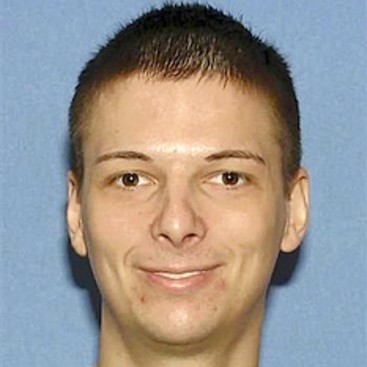
Stephen Kazmierczak
Mass murderer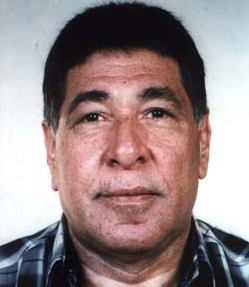 Gameel Al-Batouti
Mass murderer · USA · 1999
Gameel Al-Batouti (also rendered “Gamil ElBatouty” or “El Batouty” in U.S. offi…
216 victims
Gameel Al-Batouti
Mass murderer · USA · 1999
Gameel Al-Batouti (also rendered “Gamil ElBatouty” or “El Batouty” in U.S. offi…
216 victims
 Omar Mateen
Mass murderer · USA · 2016
Omar Mir Seddique Mateen was an American mass murderer who killed 49 people and…
49 victims
Omar Mateen
Mass murderer · USA · 2016
Omar Mir Seddique Mateen was an American mass murderer who killed 49 people and…
49 victims
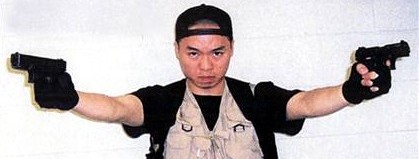 Seung-Hui Cho
Mass murderer · USA · 2007
Seung-Hui Cho was a mass murderer who shot and killed 32 people and wounded man…
32 victims
Seung-Hui Cho
Mass murderer · USA · 2007
Seung-Hui Cho was a mass murderer who shot and killed 32 people and wounded man…
32 victims
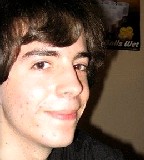 Adam Lanza
Mass murderer · USA · 2012
Adam Lanza, 20, fatally shot twenty children and six adult staff members in a m…
27 victims
Adam Lanza
Mass murderer · USA · 2012
Adam Lanza, 20, fatally shot twenty children and six adult staff members in a m…
27 victims
 Eric Harris
Mass murderer · USA · 1999
Eric Harris committed suicide by gunshot to the roof of the mouth on April 20,…
13 victims
Eric Harris
Mass murderer · USA · 1999
Eric Harris committed suicide by gunshot to the roof of the mouth on April 20,…
13 victims
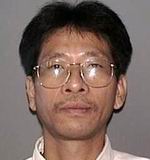 Jiverly Wong
Mass murderer · USA · 2009
December 8, 1967 — Jiverly Antares Wong was born. · late 1980s — Wong first cam…
13 victims
Jiverly Wong
Mass murderer · USA · 2009
December 8, 1967 — Jiverly Antares Wong was born. · late 1980s — Wong first cam…
13 victims
 James Edward Clayton
Murderer · USA · 1987
James Edward Clayton lived about a half block away from Lori Barrett’s home. Lo…
1 victim
James Edward Clayton
Murderer · USA · 1987
James Edward Clayton lived about a half block away from Lori Barrett’s home. Lo…
1 victim
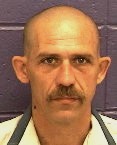 Carl Junior Isaacs
Mass murderer · USA · 1973
Carl Junior Isaacs was a white male. He was born on 08/09/1953, was 5'08'' tall…
6 victims
Carl Junior Isaacs
Mass murderer · USA · 1973
Carl Junior Isaacs was a white male. He was born on 08/09/1953, was 5'08'' tall…
6 victims
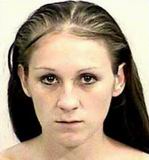 Brandy Lee Rose Devine
Murderer · USA · 2012
Brandy Lee Rose Devine was a 25-year-old mother accused in connection with the…
1 victim
Brandy Lee Rose Devine
Murderer · USA · 2012
Brandy Lee Rose Devine was a 25-year-old mother accused in connection with the…
1 victim
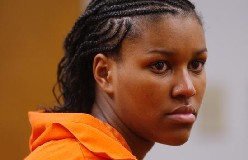 Laisha Landrum
Homicide · USA · 2004
Laisha Landrum, 18, was convicted in January 2006 and sentenced on February 20,…
1 victim
Laisha Landrum
Homicide · USA · 2004
Laisha Landrum, 18, was convicted in January 2006 and sentenced on February 20,…
1 victim
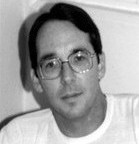 William Zeigler
Mass murderer · USA
William Thomas Zeigler Jr. was prosecuted in Florida for the murders of four pe…
1975 victims
William Zeigler
Mass murderer · USA
William Thomas Zeigler Jr. was prosecuted in Florida for the murders of four pe…
1975 victims
- Gender
- male
- Country
- USA
- Location
- Delkab, Illinois, USA
- Date of birth
- August 26, 1980
- Age at first offence
- 28
- Characteristics
- school shooting
- Victim profile
- Catalina Garcia, 20 / Julianna Gehant, 32 / Ryanne Mace, 19 / Gayle Dubowski, 20 / Daniel Parmenter, 20 (students)
- Method of murder
- Shooting with a Remington 870 shotgun and three handguns (a 9mm Glock, a 9mm Sig Sauer, and a .380 Hi-Point)
- Date(s) of murder
- February 14, 2008
- Years active
- 2008
- Date of arrest
- —
- Status
-
Died in custody
Died of a self-inflicted gunshot wound during the school shooting event on February 14, 2008
Case record: Stephen Kazmierczak
Status / outcome
Stephen Kazmierczak died of a self-inflicted gunshot wound during the Northern Illinois University shooting on February 14, 2008.
Timeline
- February 14, 2008 — Stephen (Steven) Kazmierczak opened fire in Cole Hall at Northern Illinois University, then shot himself.
- February 15, 2008 — A candlelight vigil was held on campus on the evening of Friday, February 15, with public figures Jesse Jackson and Robert W. Pritchard speaking.
- February 19, 2008 — Faculty and staff returned to work on Tuesday, February 19.
- February 21, 2008 — A special ceremony at MLK Commons observed five minutes of silence from 3:06–3:11 pm CST, accompanied by the tolling of bells.
- February 24, 2008 — A special memorial service was held in the NIU Convocation Center; classes resumed the day before.
- February 24, 2008 — All classes and athletic events were canceled through February 24, 2008.
- February 25, 2008 — Then-Governor Rod Blagojevich and University President John G. Peters proposed demolition of the current Cole Hall.
- May 8, 2008 — It was announced that Cole Hall would be remodeled inside and out pending $7.7 million in state funding.
- August 27, 2009 — The NIU Board of Trustees approved a $9.5 million budget for the Cole Hall renovation project.
- October 2, 2009 — A metal sculpture titled “Remembered,” designed by artist Bruce Neimi, was unveiled.
- January 27, 2010 — Governor Pat Quinn came to the NIU campus to release the funds for the renovation of Cole Hall.
- June 1 — A legislative reporting requirement described in relation to firearm-owner identification cards would take effect June 1.
The incident (school shooting event)
On February 14, 2008, Stephen (spelled “Steven” in some references) Kazmierczak shot multiple people on the campus of Northern Illinois University in DeKalb, Illinois, United States. The shooting took place at Cole Hall at approximately 3:06 p.m. local time and occurred during an oceanography class in a lecture hall holding 150 to 200 students. The door he used led directly to the stage in front of the classroom.
Kazmierczak fired into the crowd with a Remington 870 shotgun and three handguns, described as a 9mm Glock, a 9mm Sig Sauer, and a .380 Hi-Point. The shotgun was smuggled in using a guitar case, and the handguns were concealed under his coat. One witness reported that at least 30 shots were fired. Police later collected 48 shell casings and six shotgun shells.
The school placed the campus on lockdown. Students and teachers were advised to head to a secure location, take cover, and avoid the scene and all buildings in the vicinity of the area.
A total of 24 people were shot, and six people died in the incident, including the perpetrator, who shot himself before police arrived. Another account described five people dying along with the shooter in the event. By February 15, at least seven victims were in critical condition, one was in good condition, and eight were discharged, according to Kishwaukee Community Hospital.
Two wounded people were transferred by helicopter to Rockford’s Saint Anthony Medical Center, three were transferred to Downers Grove’s Good Samaritan Hospital, and one was transferred to Rockford Memorial Hospital. Two patients who had been hospitalized died as a result of their injuries.
By 4:00 pm CST, school officials announced there was no further danger and that counselors would be made available in all residence halls. The university administration canceled all classes for the rest of the week as well as the following week.
Weapons and technical actions described
Kazmierczak removed the hard drive from his laptop computer and a computer chip from his cell phone and did not leave a note that could help explain why he chose a geology class on Valentine’s Day to open fire.
Authorities have traced the shotgun and one of the handguns to a gun dealer in Champaign, where purchases were described as legal. An agent described tracing the other two weapons. A Bureau of Alcohol, Tobacco, Firearms and Explosives spokesperson said agents were dispatched to the scene to assist and help trace the weapons. The FBI also sent agents to assist.
Police received a 911 call from inside the auditorium at 3:06 p.m. and arrived 29 seconds later, finding the gunman dead.
Perpetrator: Stephen (Steven) Kazmierczak
Kazmierczak was described as a 27-year-old former sociology student at Northern Illinois University.
He was described as a fairly normal and unstressed person by campus police. Faculty, students, and staff were described as revering him, and there was no indication of any trouble.
NIU Police Chief Donald Grady described him as “an outstanding student” and said he reportedly stopped taking medication recently and became “somewhat erratic”. In a separate quotation, Grady said: “There were no red flags,” and that Kazmierczak was someone “revered by faculty and students alike.”
NIU President John G. Peters said:
“a very good academic record, no record of trouble.”
Kazmierczak was described as Vice-President of the NIU chapter of the American Correctional Association and as having written about the U.S. correctional system, specifically prisons.
In 2006, Kazmierczak, along with two other graduate students and under the lead authorship of a sociology professor, co-authored an academic paper titled:
“Self-injury in Correctional Settings: 'Pathology' of Prisons or of Prisoners?”
It was published in the academic journal Criminology & Public Policy.
He was enrolled at NIU in the spring of 2007, where he took two courses in Arabic and a course called “Politics of the Middle East”. His research paper was on Hamas and its social service projects. He left to begin graduate work in the School of Social Work at the University of Illinois at Urbana-Champaign, intending to study mental health issues.
He was enrolled part-time at UIUC during the fall of 2007 and worked from September 24 through October 10 at the Rockville Correctional Facility for Women near the Illinois-Indiana border. His reasons for leaving were unclear; it was said he “did not come back to work,” according to Doug Garrison of the Indiana Department of Correction. By early 2008, he was again enrolled full time at UIUC.
Kazmierczak obtained a FOID card in January 2007.
He enlisted in the United States Army in September 2001 and was discharged before completing basic training in February 2002 for lying on his application about his mental illness.
He was born in Elk Grove Village, Illinois, on August 26, 1980, to Gail and Robert Kazmierczak. He graduated from Elk Grove High School in 1998, during which he was treated temporarily for mental illness at the Elk Grove Village Thresholds-Mary Hill House psychiatric center for being “unruly” at home, according to his parents.
Kazmierczak’s family moved to Florida in 2004, but he continued education in Illinois. His mother died in Lakeland, Florida in September 2006 from amyotrophic lateral sclerosis (also known as Lou Gehrig’s disease). At the time of Kazmierczak’s death, his father was living in a retirement community in Lakeland.
Kazmierczak graduated from NIU in 2006, received the Dean’s award in 2006, and was described as a standout and well-regarded student.
ABC News described his behavior as seeming to become more erratic in the weeks leading up to the shooting and said it was believed he stopped taking medication beforehand.
His girlfriend, Jessica Baty, confirmed he was taking Xanax (anti-anxiety), Ambien (sleep aid), and Prozac (antidepressant), all prescribed by a psychiatrist. She said he stopped taking Prozac about three weeks prior to the February 14 shooting. She also said that during their two-year courtship she had never seen violent tendencies, and she expressed bewilderment over the cause of the rampage:
“He was anything but a monster,” Baty said. “He was probably the nicest, most caring person ever.”
Since the shooting, authorities intercepted packages he sent to Baty, including a gun holster and ammunition, a textbook on serial killers for her class, the book The Antichrist by Friedrich Nietzsche, and a final note written for her, signed with his given name and family name.
Some accounts described investigators being confused because they had not found a suicide note.
A story published by Esquire alleged a history of mental illness and attempted suicides, that Kazmierczak was bullied in high school, and that he showed an interest in previous school shootings, particularly those at Columbine High School and Virginia Tech. A report published by the United States Fire Administration stated that he was believed to have studied Cho’s actions and used a similar MO.
Victims (deceased)
Six people, all residents of Illinois, were killed in the incident:
- Catalina Garcia, 20 — Cicero
- Julianna Gehant, 32 — Mendota
- Ryanne Mace, 19 — Carpentersville
- Gayle Dubowski, 20 — Carol Stream
- Daniel Parmenter, 20 — Elmhurst
- Steven Kazmierczak, 27 — Champaign (perpetrator)
A separate identification list also described the dead students as Daniel Parmenter, 20, of Westchester; Catalina Garcia, 20, of Cicero; Ryanne Mace, 19, of Carpentersville; Julianna Gehant, 32, of Meriden; and Gayle Dubowski, 20, of Carol Stream.
Victims (injured)
Eighteen people survived the incident with injuries, described as all from Illinois:
- Amanda Benoit, 20 — Kankakee
- Nicole Berns — DeKalb
- Troy Chamberlain, 19 — Sycamore
- Lauren Debrauwere, 19 — Lake Barrington
- Samantha Dehner, 20 — Carol Stream
- J.D. Donohue, 19 — Rolling Meadows
- Ryne Erickson, 20 — Des Plaines
- Brian Karpes, 27 — Rolling Meadows
- Patrick Korellis, 22 — Lindenhurst
- Jeff Malina — Glenview
- Harold Ng, 21 — Mundelein
- Joseph Peterson, 26 — DeKalb (course instructor)
- Unnum Rahman, 19 — Plainfield
- Maria Ruiz Santana, 19 — Elgin
- Jerry Santoni, 22 — Frankfort
- Jeremy Walker, 20 — Caledonia
- Sherman Yau, 20 — Naperville
Events during the shooting (witness accounts)
One account described that about 15 minutes were left in Geology 104: Introduction to Ocean Science, when the door beneath the lecture hall’s clock flew open, and Kazmierczak entered dressed in black with a shotgun in his hands. The account described an “icy moment of bewilderment” and that witnesses reported he fired wordlessly.
Doug Quesnel, 22, said:
“Nothing seemed out of place,” said junior Doug Quesnel, 22. “It was weird he walked through there, but nothing seemed wrong until the shots went off.”
A witness described that Joseph Peterson was standing on a stage at the front of the 300-seat auditorium clicking through a PowerPoint presentation when a side door opened and Kazmierczak began shooting. Desiree Smith, described as a senior from Bolingbrook studying journalism, said:
“It didn’t even sound like I thought a gun would sound like,” said Desiree Smith, a senior from Bolingbrook studying journalism. “It sounded like a cork coming out of a champagne bottle.”
Smith described reaching for another girl and then crawling toward the back of the auditorium. Shane Pope, 21, said:
“I was prepared for one of the bullets to hit me in the back,” said junior Shane Pope, 21, who was sitting toward the back. “I was prepared for that to be my last moment.”
Harold Ng, 21, said:
“I was still in the dream state and I didn’t think it was reality. It was like a video game,” he said.
John Giovanni, 20, said:
“You need to get out. You never know how good of a marksman he is. . . . My goal was getting out there and running as far as I could to be safe.”
Jillian Martinez, described as a freshman from Carpentersville, said:
“All I saw was the flash of shooting,” she continued. “He pulled out his gun. He just started shooting at all the kids. He just started shooting at people, and I ran out of there as fast as I could. I ran all the way to the student center; when I got there I could still hear shooting [from the classroom].”
Another account described an eyewitness, Meghan Murphy, 22, saying:
“He was a statue, aiming.”
Meghan Murphy described that she saw a door slam open and Kazmierczak wielding a shotgun. Another witness, John Giovanni, said:
“He just fires right into the audience,” Giovanni said.
“He didn’t say a word. It didn’t look like he was aiming directly at someone. I think he was trying to hit as many people as he could.”
Loren Weese, 18, a freshman from Schiller Park, said:
“I remember stepping over them. I didn't talk to anybody.”
Another quote from DeKalb community and bystanders included:
- Carolyn DeSantis’ account of anxiety about her son Michael, with the quote: “I was just freaking out,” and “I called him every five minutes to see if he was OK.”
- Darrin Robinson said:
- Rosa Balli, 47, owner of Eduardo’s Mexican Restaurant, said:
- Jillian Teegarden, 22, said:
- Ethan Gill asked:
“What if I was off by another 30 seconds or so, would he have shot me?” Gill said.
“I'm just so scared to death that I'm going to hear someone's name that I haven't gotten a hold of,”
“I think everyone is numb and kind of out of it. This just doesn't happen in DeKalb,”
“I just want them to take care of the problem,” he said.
University and emergency response
The university official website reported the possibility of a gunman on campus at 3:20, within 20 minutes of the shooting. It warned:
“There has been a report of a possible gunman on campus. Get to a safe area and take precautions until given the all clear. Avoid the King Commons and all buildings in that vicinity.”
By 3:40 p.m., all NIU classes were canceled for the remainder of the day, and the campus was closed by NIU officials as part of a new security plan devised after the Virginia Tech shooting 10 months earlier. Students were asked to contact their parents.
All NIU Huskie sporting events, home and away, through Sunday were canceled.
Students and teachers were told to stay in place or “get to a safe area and take precautions until given the all clear.”
Aftermath: vigils, memorial services, and community actions
Approximately 2,000 gathered on campus on the evening of Friday, February 15, for a candlelight vigil to commemorate the victims. The Lutheran Campus Ministry held nightly candlelight vigils.
All classes and athletic events were canceled through February 24, 2008. Faculty and staff returned to work on Tuesday, February 19, and for the remainder of that week received special information and training to help students upon their return to classes the following week.
A special ceremony at MLK Commons on February 21 observed five minutes of silence from 3:06–3:11 pm CST and included tolling of bells. Moments of silence were also held elsewhere throughout the DeKalb community.
A special memorial service was held in the NIU Convocation Center on February 24, the day before classes resumed, honoring the victims and initiating activities and services aimed at community recovery.
Due to the loss of one week of instructional time in the middle of the semester, an extra week was added in May.
Public condolences were offered to NIU President John Peters and the university community by United States President George W. Bush, Illinois Governor Rod Blagojevich, U.S. Senators Barack Obama and Dick Durbin, and U.S. Congressman Donald Manzullo, as well as local communities and school districts, and a “plethora of universities across the United States.”
Tributes in sports and public life
The Chicago Blackhawks wore NIU Huskies decals on their helmets during a game on Sunday, February 17, 2008, versus the Colorado Avalanche. A moment of silence was observed before the national anthem, and the team wore the same decal during their next two games at the St. Louis Blues and at home against the Minnesota Wild.
The Chicago Wolves of the AHL held an NIU night with a moment of silence and NIU students given the opportunity to participate during in-game promotions.
During spring training, Chicago White Sox manager Ozzie Guillén and general manager Ken Williams sported NIU caps in tribute to the victims. For their 2008 season, the Chicago Cubs flew an NIU flag over the grandstands in the outfield.
Virginia Tech had a tribute with students wearing shirts saying “Hokies for Huskies”. Students wore these shirts during their basketball game against Georgia Tech on February 23, 2008.
Jon Bon Jovi offered condolonces in a Billboard magazine article, after his band Bon Jovi was forced to cancel rehearsals slated to begin on February 14, 2008 at the NIU Convocation Center in preparation for the North American leg of the Lost Highway Tour.
Cole Hall and memorial developments
On February 25, then-Governor Rod Blagojevich and University President John G. Peters proposed demolition of the current Cole Hall, describing it as responding to “bad” memories of students who had to attend classes in the building. The proposal would tear down Cole Hall, leave the Cole Hall site as a memorial site, and erect a new building called “Memorial Hall” nearby at an approximate cost of $40 million.
President Peters sent a message to NIU students via student email accounts soliciting comments, and a committee was established to help reach consensus on the future of Cole Hall.
On May 8, 2008, it was announced Cole Hall would be remodeled inside and out pending $7.7 million in state funding. The decision was said to be based on conversations between Dr. Peters and members of the campus community and results of an online survey taken by students and faculty. The lecture hall where the shooting happened would no longer be used as classroom space, and another lecture hall would be built elsewhere on campus.
On August 27, 2009, the NIU Board of Trustees approved a $9.5 million budget for the Cole Hall renovation project, approximately $8 million of which would come from the state funding and the rest from student fees. The East auditorium, described as the scene of the incident, would no longer be used for classes, and a replacement lecture hall would be built elsewhere on campus.
On January 27, 2010, Governor Pat Quinn came to NIU to release funds for the renovation.
A memorial sculpture and garden were developed. On October 2, 2009, a metal sculpture designed by artist Bruce Neimi entitled “Remembered” was unveiled at Northern Illinois University. It was part of a garden built in remembrance of the victims, located directly across from Cole Hall. The memorial area featured five red granite walls erected in a half-circle pattern reading:
“Forward Together Forward Together Forward.”
The phrase was described as borrowed from the university’s fight song and used as a motto and theme in community healing after the shooting. Each wall featured the name of one of the students who died in the shooting. The memorial also included a walking path with benches, flanked by trees and shrubbery. The memorial was funded entirely by private donations.
Earlier incident and possible threats
The campus was shut down on December 10, 2007, the first day during exam week, after graffiti was found on a restroom wall warning of a possible shooting. A university spokesman said the warning discovered December 10 made reference to the Virginia Tech massacre, in which 32 people were killed, but that it could not be immediately determined whether the threat was related to the February 14, 2008 shootings.
The Chicago Sun-Times reported that an unknown person posted the graffiti in the Grant Towers D residence hall, including a racial slur and the notation:
“What time? The VA tech shooters [sic] messed up w/ having only one shooter.”
NIU President John Peters stated he did not believe the December incident was connected to the February 14 shootings.
Safety measures and legislation related to firearm owner identification
The university administrators said the school imposed new safety measures after the terrorist attacks of Sept. 11, 2001 and upgraded those measures after the Virginia Tech shooting. On Friday, State Police Director Larry Trent discussed legislation aimed at requiring public and private mental health institutions to report names of patients to the Illinois Department of Human Services. Trent said names reported were checked against the state police database. If patients were found to have Firearm Owner’s Identification Cards (FOID), the gun license was revoked.
Master Sgt. Luis Gutierrez was quoted describing the process:
“I f any of those patients are found to have Firearm Owner's Identification Cards, (FOID) the gun license is revoked, according to Master Sgt. Luis Gutierrez , an Illinois State Police spokesman.”
Gutierrez also said police seize the guns, if necessary.
It was stated that public institutions had reported patient names to the Department of Human Services for years, but the legislation requiring public and private institutions to do so would take effect June 1.
Other details: family and statements at the time
In Lakeland, Florida, local sheriff’s police interviewed Kazmierczak’s father Robert at the request of investigators in DeKalb and would not release details. Robert Kazmierczak was quoted:
“Please leave me alone. I have no statement to make. This is a very hard time. I’m a diabetic.”
He broke down crying and went back inside his mobile home. The account also said records indicated Kazmierczak’s wife died in 2006.
Missing note and motive
Investigators were expected to spend at least three more weeks until releasing a report on the incident.
Authorities described Kazmierczak’s motive as unknown or a “mystery,” with Donald Grady quoted as saying the motive was a mystery and refusing to discuss what medication Kazmierczak was taking or anything about his medical condition. Investigators were described as not finding a suicide note.
Spotted an error, or have more information about this case?