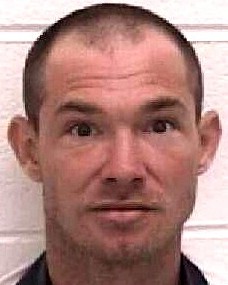
Scott Dawn Carpenter
Murderer Brian Kevin Rosenfeld
Murderer · USA · 1985
Brian Kevin Rosenfeld Brian Kevin Rosenfeld was sentenced to three concurrent l…
23 victims
Brian Kevin Rosenfeld
Murderer · USA · 1985
Brian Kevin Rosenfeld Brian Kevin Rosenfeld was sentenced to three concurrent l…
23 victims
 Russell Ellwood
Murderer · USA · 1991
Russell Ellwood was a former taxi driver. Authorities suspected him of killing…
20 victims
Russell Ellwood
Murderer · USA · 1991
Russell Ellwood was a former taxi driver. Authorities suspected him of killing…
20 victims
 Robert Martines Perez
Murderer · USA · 1994
Name: Robert Martines Perez · Other name used in proceedings: Robert Martinez P…
15 victims
Robert Martines Perez
Murderer · USA · 1994
Name: Robert Martines Perez · Other name used in proceedings: Robert Martinez P…
15 victims
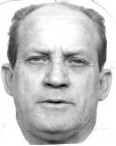 Billy Frank Vickers
Murderer · USA · 1993
Billy Frank Vickers Vickers was executed by lethal injection in Texas on Januar…
14 victims
Billy Frank Vickers
Murderer · USA · 1993
Billy Frank Vickers Vickers was executed by lethal injection in Texas on Januar…
14 victims
 Billy Lee Oatney
Murderer · USA · 1996
Defendant: Billy Lee Oatney Court: Washington County Circuit Court Judge: Alan…
1 victim
Billy Lee Oatney
Murderer · USA · 1996
Defendant: Billy Lee Oatney Court: Washington County Circuit Court Judge: Alan…
1 victim
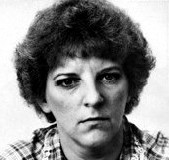 Genene Jones
Serial killer · USA · 1977
Genene Anne Jones (born July 13, 1950) was a former pediatric nurse who worked…
11 victims
Genene Jones
Serial killer · USA · 1977
Genene Anne Jones (born July 13, 1950) was a former pediatric nurse who worked…
11 victims
 Adam Mayes
Murderer · USA · 2012
Adam Mayes (September 2, 1976 – May 10, 2012) was accused in the Bain murder-ki…
2 victims
Adam Mayes
Murderer · USA · 2012
Adam Mayes (September 2, 1976 – May 10, 2012) was accused in the Bain murder-ki…
2 victims
 Changyin & Changping Shen
Serial killers · China · 1999
Changyin Shen and Changping Shen were convicted and sentenced to death for kill…
12 victims
Changyin & Changping Shen
Serial killers · China · 1999
Changyin Shen and Changping Shen were convicted and sentenced to death for kill…
12 victims
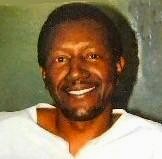 Darrell Grayson
Murderer · USA · 1980
Darrell Grayson was executed by lethal injection in Alabama on July 26, 2007. ·…
1 victim
Darrell Grayson
Murderer · USA · 1980
Darrell Grayson was executed by lethal injection in Alabama on July 26, 2007. ·…
1 victim
- Gender
- male
- Country
- USA
- Location
- McIntosh County, Oklahoma, USA
- Date of birth
- January 2, 1975
- Age at first offence
- 19
- Characteristics
- robbery
- Victim profile
- A. J. Kelley, 56 (convenience store owner)
- Method of murder
- St abbing with knife
- Date(s) of murder
- February 6, 1994
- Years active
- 1994
- Date of arrest
- Same day
- Status
-
Executed
Executed by lethal injection in Oklahoma on May 7, 1997
Case record: Scott Dawn Carpenter
Background
Scott Dawn Carpenter was a 22-year-old man when he was executed. He was described as quiet, easy-going, respectful, cooperative, non-aggressive, pleasant, polite, a good student and non-violent. He had no prior arrests or convictions and attended church with his family.
Carl Kelley's testimony described A.J. Kelley (Carl Kelley's father) as honest and hard-working, working two to three jobs at a time, and as strict with his sister. On the day of his death, Carl Kelley said his father had sold the shop and was preparing to draw disability, and that his father was going blind.
The offence
On February 6, 1994, at approximately 5:30 p.m., A.J. Kelley was killed at the Dutchess Creek Bait and Grocery Store at Porum Landing on Lake Eufaula, Oklahoma.
Retired Oklahoma City police officer Jim Parsons and his friend Jerry Yort drove to the store to return an empty beer keg. Parsons had sold the store to the present owner, A.J. Kelley, some years earlier. Parsons and Yort noticed an older model Ford pickup truck parked at a gas pump when they drove up. Carrying the empty keg, they entered the store and Parsons proceeded to yell out Kelley's name. Kelley did not answer.
Carpenter met Parsons at the door of the minnow room. Carpenter asked where Kelley was and told Parsons the store owner was in the cooler on the other side of the store. Parsons tried to enter the minnow room, but Carpenter blocked the way, stating that Kelley did not allow anyone in the back room. Parsons noticed Carpenter seemed nervous and that he had water dripping from his hands. Parsons and Yort backed out and remained outside for several minutes while Carpenter remained inside.
During this time, Yort wrote down the tag number of the pickup truck and a description of the vehicle. Two other customers entered and subsequently left the store. Carpenter exited after these customers left, walked to the Ford pickup and drove away. Parsons noticed a drop of blood on one of Carpenter’s shoes as he left the store.
Upon reentering the store, Parsons discovered Kelley lying between two compressors in the minnow room with a wound to his neck. Parsons pursued Carpenter in his vehicle while Yort phoned for assistance. Parsons lost sight of Carpenter, returned to the store, and he and Yort secured the crime scene until police arrived.
On the store’s counter, Parsons found a paper bag containing warm corn dogs, cigarettes, and chewing tobacco. There was no money missing from the cash registers, but the gas pump indicated approximately $37 worth of gasoline had been dispensed from one of the fuel pumps. The cash register tape also showed an incomplete sales transaction amounting to approximately $43.
At the sentencing hearing, an expert witness testified about head injuries that Carpenter had suffered and speculated that he may have had a seizure at the time of the killing. The expert testimony described that Carpenter suffered a head injury at age six when he was struck by a nail in the right temporal lobe. The testimony also described four other severe head injuries, with the last occurring two months before the murder.
Carpenter was apprehended about an hour later and confessed to stabbing Kelley, stating he did not know why he had stabbed the victim. He indicated he had not taken anything from the store.
Investigation
Carpenter’s pickup truck tag number and a description were written down by Jerry Yort during the incident.
Parsons and Yort secured the crime scene until police arrived after discovering Kelley.
Arrest
Carpenter was stopped in Stigler, Oklahoma, a short distance away from the bait store. During questioning, Carpenter confessed to stabbing Kelley and professed not to know why he had stabbed the victim. Carpenter indicated he had not taken anything from the store.
Trial
Charges, plea, and proceedings in the trial court
On February 10, 1994, Carpenter was charged with Malice Murder or, in the alternative, Felony Murder, in connection with the death of A.J. Kelley.
On September 19, 1994, the first day of trial, Carpenter entered a plea of nolo contendere to First Degree Murder in Case No. F-94-18 in the District Court of McIntosh County before the Honorable Robert A. Layden, District Judge.
A sentencing hearing was held November 13, 1994. Judge Layden found the existence of the sole aggravating circumstance alleged, that the murder was committed to avoid arrest and prosecution, and sentenced Carpenter to death.
Formal judgment and sentence were pronounced at a sentencing hearing held December 16, 1994, over defense counsel’s objections, because Carpenter had escaped from jail and was not present at the sentencing.
On December 27, 1994, counsel filed a motion to withdraw plea on behalf of Carpenter. The motion was argued on February 7, 1995, before the Honorable Steven W. Taylor and denied.
Carpenter had entered a blind guilty plea to a first-degree murder charge, and the judge imposed the death sentence. Carpenter filed for competency proceedings and later waived further appeals.
During sentencing, an expert witness testified about head injuries and possible seizure.
Information charging felony murder
The felony murder information alleged:
"that the said defendant did unlawfully, regardless of malice, while in the commission of the crime of Robbery with a Dangerous Weapon take the life of A.J. Kelley, a Human Being, by means of a knife held in the hands of the said Defendant and with which the said defendant did stab the body of the said A.J. Kelley from which mortal wounds the said A.J. Kelley did languish and die, . . ."
At his plea, Carpenter testified that he knew the elements of the crimes he was charged with and that if he chose to go to trial the burden was on the State to prove each of the elements.
Sentencing
At sentencing, Judge Layden found the sole aggravating circumstance alleged, that the murder was committed to avoid arrest and prosecution, and sentenced Carpenter to death.
In mitigation, Carpenter put on evidence that he was always a good student, had never caused trouble either at home or school, had no prior arrests, and no prior history with law enforcement in any capacity. Carpenter claimed he did not remember the stabbing and did not know why he had killed the victim, stating: "it could have been anybody."
On cross-examination, mitigation witnesses also testified that Carpenter was the type of person who thought things through and made rational decisions.
Appeals
Oklahoma Court of Criminal Appeals decision (case citation included in record)
The case in the Oklahoma Court of Criminal Appeals was identified as Oklahoma Court of Criminal Appeals 1996 OK CR 56 929 P.2d 988, Case Number: C-95-0057, decided 11/07/1996.
Carpenter was the petitioner and the State of Oklahoma was the respondent. The appeal was from the District Court of McIntosh County before the Honorable Robert A. Layden, District Judge.
Counsel listed in the record included: Paul S. Faulk and Steve Nash, Capital Trial Division, Okla. Indigent Defense System, Norman, for Defendant at trial; Thomas C. Giulioli, District Attorney, O.R. Barris, III, Assistant District Attorney, Eufaula, for the State at trial; Anne M. Moore, Division Chief, Capital, Direct Appeals Division, Oklahoma Indigent Defense System, Norman, for Petitioner on appeal; and W.A. Drew Edmondson, Attorney General, William L. Humes, Asst. Attorney General, Oklahoma City, for Respondent on appeal.
The judgment of the trial court was affirmed and the Petition for Certiorari was denied.
Propositions of error raised by Carpenter
Carpenter raised propositions of error including:
- His First Degree Murder conviction was void because the Information did not allege the essential elements of first degree felony murder, failing to confer subject matter jurisdiction.
- His Sixth Amendment right to counsel and due process rights were violated when the trial court imposed judgment and sentence in absentia.
- His due process and Eighth Amendment rights were violated because the State ignored a directive in Hunter and filed a Bill of Particulars three months after formal arraignment and one month before trial.
- The District Attorney abdicated his duty to exercise impartial discretion in filing a Bill of Particulars and in plea negotiations and acted as a special prosecutor controlled by the victim’s family.
- Due process and Eighth Amendment rights were violated because the evidence was insufficient to prove murder committed to avoid arrest or prosecution, the only aggravating circumstance alleged.
- His nolo contendere plea was not knowing and voluntary because the trial court improperly advised him on the elements of First Degree Felony Murder and because the plea was not supported by a sufficient factual basis.
- His nolo contendere plea was involuntary because it was induced by deficient performance of counsel, violating Sixth Amendment rights.
- The District Judge who presided at the hearing on the motion to withdraw his nolo contendere plea exceeded and abused his authority.
- His death sentence was inherently unreliable because mitigating evidence outweighed aggravating evidence and because the trial court was not aware it could impose a sentence less than death.
- His death sentence must be vacated because the use of victim impact evidence at sentencing violated Eighth and Fourteenth Amendment rights.
The appellate court denied the petition and affirmed the judgment and sentence of the trial court.
Facts and findings relevant to aggravation and review
The appellate court described evidence used to support the murder-to-avoid-arrest aggravator, including:
- Carpenter’s planning of a robbery and luring Kelley into the back room of the store to kill him.
- The victim’s store being the only one where Carpenter and the victim were alone together for some period of time.
- Testimony that Carpenter was well known to the victim and familiar with the store.
- Claims that Carpenter had gone to the store to buy something, while at the time of apprehension he had no money.
- Carpenter leaving the scene and disposing of the murder weapon along a highway.
- Carpenter being found in Stigler, Oklahoma, in a direction opposite to where he claimed he was headed.
The appellate court addressed Carpenter’s claim that his statement to police that he did not know why he had killed Kelley prevented proof that the murder was committed to avoid arrest or prosecution. The appellate court treated the police statement as direct evidence of guilt, and treated the evidence of intent to avoid arrest as sufficient.
On mandatory sentence review, the appellate court determined:
- The murder-to-avoid-arrest aggravating circumstance was factually substantiated and amply supported by the evidence at trial.
- There was no indication the death sentence was imposed under the influence of passion, prejudice, or any other arbitrary factor.
Competency and further proceedings
Carpenter filed a letter requesting that an execution date be set and wrote: "I have never claimed innocence to the crime I committed, was charged with and found guilty of murder," and "The state affirmed their decision on the first step in the appellant process and I feel and want the punishment of death carried out as soon as possible."
The Oklahoma Court of Criminal Appeals ordered a competency hearing. Carpenter spoke on his own behalf, saying he understood the difference between life and death and wanted to be put to death. After the hearing, Judge Steven W. Taylor found Carpenter competent and sent findings of fact to the Court of Criminal Appeals.
The competency-related quoted statements included:
"I could be in the system for 60 or 70 years," Carpenter said. "I see no future in that."
At that time, Carpenter’s counsel, Deborah Reheard, supported Carpenter’s decision despite personally opposing the death penalty. Reheard spent two hours with him the night before his execution and told prison officials as she left him that he had not changed his mind and that she would not be filing any appeals. Reheard told prison officials she had faxed the order to the death row unit manager, who gave it to Carpenter.
The Oklahoma Court of Criminal Appeals ordered the execution of the judgment and sentence of death to be carried out, finding that Carpenter had exhausted or waived all remedies available.
Outcome
Carpenter’s judgment and sentence were affirmed by the Oklahoma Court of Criminal Appeals. The Petition for Certiorari was denied.
Carpenter waived his appeals and directed his lawyer not to file any more appeals. He made no final statement from the death chamber.
He was executed by lethal injection in Oklahoma State Penitentiary at McAlester, in a room adjacent to the living quarters known as H- Unit.
A doctor pronounced Carpenter dead at 12:22 a.m., shortly after the lethal brew was introduced into his veins, and Carpenter was pronounced dead some minutes after the lethal injection was administered. His breathing and movement were described, including:
"This was followed by a guttural sound, multiple spasms and gasping for air" until his body stopped moving, three minutes later.
Aftermath
Officials described the accommodation of family members of victims wishing to view executions as a new state program rushed into law. Four relatives of the victim were in the small audience that saw Carpenter die.
Carpenter requested a final meal served at noon, consisting of barbecued beef ribs, corn on the cob, baked beans, potato salad, hot rolls, sweetened lemonade and pecan pie with whipped topping. Prison officials said he declined an evening meal.
Carpenter spent his last day alone, watching television. His mother stayed with him for 80 minutes, and he had no other family visitors who signed up to view his death. Attorney General Drew Edmondson said: "are with the family of A.J. Kelley. Their trip through our justice system is now complete, and I hope, in its resolution, they may now find some peace."
Other details
Trial court and judicial officers mentioned in the record
- Honorable Robert A. Layden, District Judge.
- Honorable Steven W. Taylor.
- Judge Lane, who authored the appellate opinion in the Oklahoma Court of Criminal Appeals decision (the opinion identified "Laning, Judge:").
People and roles mentioned in the record
- Jim Parsons: retired Oklahoma City police officer and former owner of the store.
- Jerry Yort: friend of Jim Parsons; wrote down the pickup truck tag number and description.
- A.J. Kelley: convenience store owner and victim.
- Deborah Reheard: Carpenter’s new lawyer named by a McIntosh County judge.
- Carl Kelley: relative of the victim and Muskogee resident; said A.J. Kelley ran two restaurants in Muskogee.
- Drew Edmondson: Attorney General of Oklahoma (quoted).
- Paul S. Faulk: defense counsel.
- Steve Nash: defense counsel.
- Thomas C. Giulioli: District Attorney.
- O.R. Barris, III: Assistant District Attorney.
- Anne M. Moore: appellate counsel for Carpenter.
- W.A. Drew Edmondson: Attorney General.
- William L. Humes: Assistant Attorney General.
- Dr. Phillip Murphy: clinical psychologist.
- Karen Billings: investigator referenced in the appellate record.
- Paul Faulk: referenced in the appellate record.
Dates and procedural landmarks referenced
- February 6, 1994: Carpenter was charged and the killing occurred on that date in the facts section.
- Approximately 5:30 p.m. on February 6, 1994: time of the events described at the store.
- February 10, 1994: date Carpenter was charged with Malice Murder or Felony Murder in connection with Kelley’s death.
- August 18, 1994: the State announced its intention to seek the death penalty.
- September 19, 1994: the first day of trial and Carpenter entered a plea of nolo contendere.
- November 13, 1994: sentencing hearing held; death sentence imposed.
- December 16, 1994: formal judgment and sentence pronounced while Carpenter was absent due to escape.
- December 27, 1994: motion to withdraw plea filed.
- February 7, 1995: motion argued before Judge Taylor and denied.
- January: Carpenter wrote a letter to the Oklahoma Court of Criminals Appeals about firing his lawyer and not filing further appeals.
- Feb. 13: a hearing was set and held where Carpenter testified on his mental and emotional status.
- 11/07/1996: date of the Oklahoma Court of Criminal Appeals decision.
- May 7, 1997: listed as the execution date in the case status field.
- May 8, 1997: referenced in the narrative as the early Thursday morning execution timing and as the date an execution date was set for 12:01 a.m. May 8.
Spotted an error, or have more information about this case?