David Loomis Cargill
Murderer Brian Kevin Rosenfeld
Murderer · USA · 1985
Brian Kevin Rosenfeld Brian Kevin Rosenfeld was sentenced to three concurrent l…
23 victims
Brian Kevin Rosenfeld
Murderer · USA · 1985
Brian Kevin Rosenfeld Brian Kevin Rosenfeld was sentenced to three concurrent l…
23 victims
 Marvin Gray
Murderer · USA · 1975
Marvin Gray was convicted killer who claimed responsibility for 23 slayings and…
23 victims
Marvin Gray
Murderer · USA · 1975
Marvin Gray was convicted killer who claimed responsibility for 23 slayings and…
23 victims
 Yahweh ben Yahweh
Murderer · USA · 1980
Yahweh ben Yahweh was born and legally named Hulon Mitchell Jr. (October 27, 19…
23 victims
Yahweh ben Yahweh
Murderer · USA · 1980
Yahweh ben Yahweh was born and legally named Hulon Mitchell Jr. (October 27, 19…
23 victims
 Russell Ellwood
Murderer · USA · 1991
Russell Ellwood was a former taxi driver. Authorities suspected him of killing…
20 victims
Russell Ellwood
Murderer · USA · 1991
Russell Ellwood was a former taxi driver. Authorities suspected him of killing…
20 victims
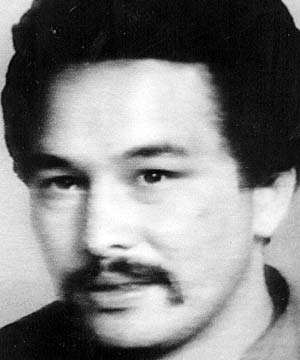 Paul Joseph Dally
Murderer · New Zealand · 1989
Paul Joseph Dally kidnapped Karla Cardno, 13, in Lower Hutt on May 26, 1989. He…
1 victim
Paul Joseph Dally
Murderer · New Zealand · 1989
Paul Joseph Dally kidnapped Karla Cardno, 13, in Lower Hutt on May 26, 1989. He…
1 victim
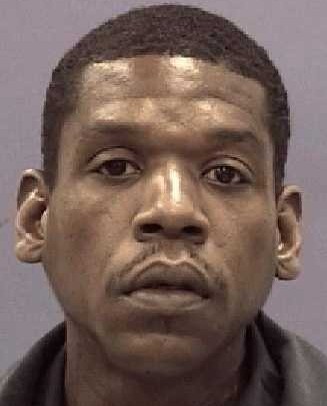 Michael Miller
Murderer · USA · 1987
Michael Miller was sentenced to death in November 1988 in Walton County for the…
1 victim
Michael Miller
Murderer · USA · 1987
Michael Miller was sentenced to death in November 1988 in Walton County for the…
1 victim
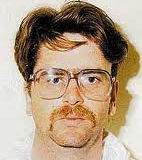 Shaun Anthony Armstrong
Murderer · United Kingdom · 1994
Shaun Anthony Armstrong was sentenced to life imprisonment on July 28, 1995. Sh…
1 victim
Shaun Anthony Armstrong
Murderer · United Kingdom · 1994
Shaun Anthony Armstrong was sentenced to life imprisonment on July 28, 1995. Sh…
1 victim
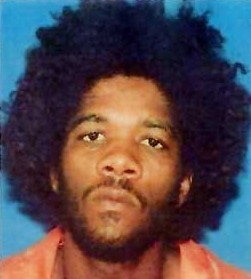 Kevin Cooper
Mass murderer · USA · 1983
Kevin Cooper (born 1958) was a death row inmate held in California’s San Quenti…
4 victims
Kevin Cooper
Mass murderer · USA · 1983
Kevin Cooper (born 1958) was a death row inmate held in California’s San Quenti…
4 victims
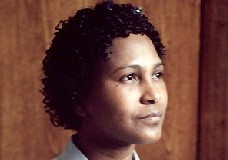 Wanda Jean Aallen
Murderess · USA · 1981
Wanda Jean Allen was born on August 17, 1959 and was executed on January 11, 20…
2 victims
Wanda Jean Aallen
Murderess · USA · 1981
Wanda Jean Allen was born on August 17, 1959 and was executed on January 11, 20…
2 victims
 Trupti Patel
Justice miscarriage · United Kingdom · 1997
Trupti Patel was a qualified pharmacist from Berkshire, England. She was born i…
0 victims
Trupti Patel
Justice miscarriage · United Kingdom · 1997
Trupti Patel was a qualified pharmacist from Berkshire, England. She was born i…
0 victims
- Gender
- male
- Country
- USA
- Location
- Muscogee County, Georgia, USA
- Date of birth
- 1959
- Age at first offence
- 26
- Characteristics
- armed robbery
- Victim profile
- Cheryl, 29, and Danny Williams, 41 (married couple)
- Method of murder
- Shooting
- Date(s) of murder
- January 22, 1985
- Years active
- 1985
- Date of arrest
- February 13, 1985
- Status
-
Executed
Executed by electrocution in Georgia on June 9, 1998
Case overview
David Loomis Cargill was executed by electrocution in Georgia on June 9, 1998. He was sentenced to death in Muscogee County in July 1985 for the robbery and murder of Cheryl Williams and Danny Williams during a robbery at the Premium Oil Service Station where Cheryl Williams worked part time. The Williamses had four male children under age ten.
Timeline
- Jan. 16, 1985 — A light green 1969 pickup truck with a gray right-front fender and a dog box in the back was stolen from John McCollom of Opelika, Alabama.
- Jan. 22, 1985 — David Cargill and his brother Tommy Cargill robbed the Premium Oil Service Station on River Road in Bibb City, Muscogee County, Georgia; Cheryl Williams and Danny Williams were shot and found lying face down in the service station with two bullet wounds in the head each.
- Feb. 13, 1985 — David Cargill was arrested in Columbus, Georgia.
- July 15-20, 1985 — A Muscogee County jury found David Cargill guilty of two counts of murder and two counts of armed robbery.
- July 20, 1985 — The trial court imposed a death sentence for each murder.
- July 1985 — Cargill was sentenced to death.
- March 11, 1986 — The Supreme Court of Georgia affirmed Cargill’s murder and armed robbery convictions and death sentences.
- April 1, 1986 — The Supreme Court of Georgia denied reconsideration.
- Feb. 23, 1987 — The United States Supreme Court denied Cargill’s petition for a writ of certiorari.
- Apr. 20, 1987 — The United States Supreme Court denied Cargill’s petition for rehearing.
- May 22, 1987 — Cargill filed a petition for a writ of habeas corpus in the Superior Court of Butts County.
- July 13, 1988 — An evidentiary hearing was held in state habeas corpus proceedings.
- Aug. 18, 1989 — The state habeas corpus court denied relief in an unpublished order.
- Oct. 25, 1989 — The Supreme Court of Georgia denied the application for a certificate of probable cause to appeal.
- May 29, 1990 — The United States Supreme Court denied Cargill’s petition for a writ of certiorari.
- Aug. 13, 1990 — The United States Supreme Court denied Cargill’s petition for rehearing.
- Jan. 31, 1991 — Cargill filed a petition for a writ of habeas corpus in the United States District Court for the Middle District of Georgia.
- Apr. 13, 1994 — The district court denied relief.
- Aug. 27, 1997 — The United States Court of Appeals for the Eleventh Circuit affirmed the district court’s denial of federal habeas corpus relief.
- Aug. 21, 1997 — The circuit court denied rehearing.
- Apr. 20, 1998 — The United States Supreme Court denied Cargill’s petition for a writ of certiorari.
- May 26, 1998 — The United States Supreme Court denied Cargill’s petition for rehearing.
- June 9, 1998 — Cargill was executed by electrocution.
Background
Cheryl Williams was 29 years old and Danny Williams was 41 when they were killed. Cheryl Williams worked part time at the Premium Oil Service Station on River Road in Bibb City, Muscogee County, Georgia. Danny Williams came to the station on the evening of Tuesday, January 22, 1985, to help his wife after putting their four children, all male, to bed; the children were under age ten. David Cargill and his brother Tommy Cargill were both from Phenix City, Alabama.
Brenda Cargill Mathis married David Cargill in 1983 and divorced him shortly after he was arrested in this case. At the time of the murders, Brenda Mathis testified that she and the appellant were living with her and a child of hers by a previous marriage.
The offence
On the evening of January 22, 1985, David Cargill and his brother Tommy Cargill robbed the Premium Oil Service Station on River Road in Bibb City, Muscogee County, Georgia. Gunpowder residue indicated that Cheryl Williams had been shot from a distance less than two feet. Forensic evidence established that both victims were lying on the floor when they were shot, and they were found face down in the service station. Both Danny Williams and Cheryl Williams were each shot twice in the head.
During the robbery, approximately $482.79 was taken from the service station. Danny Williams’ knife, valued at $35, was also taken. The cash formed the basis for one count of armed robbery, while the knife formed the basis for the second armed robbery count.
A light green 1969 pickup truck had been stolen from John McCollom of Opelika, Alabama, on January 16, 1985. This truck was seen near the service station on the night of the murders and armed robberies. John McCollom testified that he owned the truck and that it had a gray right-front fender and a dog box in the back of the truck.
Investigation
A murder weapon was found hidden under a dog house in the back yard of Hoyt Ledford’s house in a plastic bag, and no fingerprints were found on it. The gun had been previously sold to David Cargill. Clinton Layfield testified that he had purchased the gun from Andy Ferguson and that he sold it to the appellant. Travis Allred testified that he had had a conversation with David Cargill about “easy money,” and Allred testified that Cargill said, “Well, I've been scoping out this place on River Road and I want to rob it and I know where the safe is and everything, but if the people there, you know, identify me that they would -- that he would have to kill the people. And I just said, 'O.K.,' you know and walked off from him.”
Arrest
David Cargill was arrested in Columbus, Georgia, on February 13, 1985, at a motel. Numerous, heavily armed law-enforcement officers were used to effect the arrest. David Cargill was read his Miranda rights both before and after being placed in the patrol car. He was not interrogated until approximately 40 to 45 minutes after his arrest at police headquarters.
The interrogation was conducted by Columbus Police Department Detectives Rudolph Lovell and Eugene Allmond. David Cargill was again read his rights by Detective Allmond and indicated that he understood them. Detective Allmond began the interrogation by showing photographs of Danny and Cheryl Williams, both before and after they were murdered. Detective Allmond discussed the stolen Ford pickup truck, the murder weapon, and certain items of clothing Cargill had worn on the night of the murders. Detective Lovell brought Brenda Mathis into the room and told David Cargill what she had related, and Detective Lovell asked Brenda Mathis, “Is what I have just said true and do you intend to testify to that in court?” Brenda Mathis looked at Cargill and said, “Yes, it's all true and I will testify to it in court.”
David Cargill responded to Detective Allmond’s discussion of what Tommy had said, stating: “All of you son of a bitches are alike. The only time [he] would've said anything to you is if you beat hell out of him . . . I don't care what you say, I don't know what you're talking about and I'll admit it -- I mean I'll deny it to my dying day . . . f--- you.”
Detective Allmond left the room and Detective Lovell began interrogating David Cargill. Detective Lovell brought a tape recorder into the interrogation room and played a taped message from Tommy Cargill to David Cargill, which read: “Uh, David, this is Tommy. I wanted you to know I didn't want to tell them all this stuff, but I got to thinking about all of it and I've done some serious thinking. Right now, buddy, you're the only hope I got. They've got me charged with it. The only way they can clear me with it is for you to tell them that you done it. I don't know if you'll do that or not, but I'd appreciate it if you would. It's hard for me to ask you to do something like this after I done went and told on you and all, but right now you're the only hope I've got, buddy. "David, I want you to think about something. I know you don't have a family and all, but I've got a little girl and one day I want to get out and see her; but as it stands, unless you tell them, there ain't no way I'll ever be able to do that, buddy. I don't know if you love your old lady and that little boy or not, but I wouldn't take nothing in the world for mine.”
Tommy Cargill was then brought into the interrogation room. The appellant asked Tommy if he had been hurt. Tommy responded, “No, man, they've treated me real nice and no one's laid a hand on me.” Tommy apologized to David for what he had told the police. David asked Tommy if they had told him that Richard was dead. Tommy responded that they had. David asked Tommy whether he had been told before or after they told him about Richard, and Tommy responded, “After.” Tommy told David, “David, I'm sorry, but I have a little girl and I want to get out of jail some day. If you don't tell them that you shot them, I'm going to the electric chair.” At that time, David “teared up.”
In a subsequent interrogation, David Cargill admitted he shot both Cheryl and Danny Williams.
Trial
At trial on July 15-20, 1985, a Muscogee County jury found David Cargill guilty of two counts of murder and two counts of armed robbery. One armed robbery count was based upon the cash taken from the service station, while the second armed robbery count was based upon taking the knife of Danny Williams. The jury imposed a sentence of death for each murder. For Cheryl Williams’s murder, the jury found that Cargill committed the murder while engaged in the commission of an armed robbery. For Danny Williams’s murder, the jury found that Cargill committed the murder while engaged in the commission of the murder of Cheryl Williams.
The trial court imposed a death sentence for each murder in accordance with the jury’s sentencing verdict on July 20, 1985.
Clinton Layfield testified about purchasing and selling the gun. Patrick Tidwell testified that he encountered David Cargill around 9:00 to 10:00 o’clock on the evening of January 22 and gave him a ride home, stopping at a Kentucky Fried Chicken restaurant where Cargill bought “a big family-sized thing of chicken” and some other food, and Tidwell testified that Cargill had a lot of money at the time.
Walter Holler testified that he encountered the appellant at Screamin’ Willie's on the Saturday night after the murders and approached the appellant by propping his arm on the appellant’s shoulder, asking, “How about it, David?” David Cargill responded, “Get out of my face. I killed two. One more wouldn't matter.”
Brenda Mathis testified about Cargill’s statements and actions, including that she heard him talk about the “big crime” or the “big one” and that he would not leave any witnesses because, “[d]ead men don't talk.” She testified that on the morning of January 22, Tommy Cargill came to their apartment and David Cargill told him to return when it got dark; Tommy left in the truck, then returned that evening, saying “‘The girl,' or either, 'the girls are there alone' that he had just went by there.” She also testified that David Cargill retrieved a gun he had previously given her for safe keeping, telling her not to leave any fingerprints on it. She testified that David Cargill put the gun in his pocket and said to Tommy, “‘Good. Let's go.'” She testified that David Cargill returned between 9:00 and 10:00 and brought a large box of Kentucky fried chicken and other food including chocolate pudding, and that he rubbed chocolate pudding into what appeared to be blood on his shirt sleeve. She testified that David laughed and said, “Aha, they must not have got anything.” She testified that he later gave her approximately $150 to $175 and told her to say it was child-support money from her former husband. She also testified that on Saturday night after the crimes were committed, she and David went with Richard Whitley to a club called Screamin' Willie's and stayed until the club closed at 2:00 a.m., and that on the way back Cargill said he was tired of Clinton Layfield’s “bad mouthing” and that he set Layfield’s apartment on fire.
Brenda Mathis testified that on the following Monday, a news report appeared on television and David Cargill went out to get a cup of coffee and that was the last time she saw him. She subsequently went to Tommy Cargill’s to find out where David Cargill was, and when Tommy would not tell her, she threatened to call police. Tommy told her, “‘Don't go to the police. It will just make things worse for us. We've got enough on us.'”
Sentencing
David Cargill was sentenced to death for each murder in July 1985. His brother Tommy Cargill received a life sentence.
Appeals
The Supreme Court of Georgia affirmed Cargill’s murder and armed robbery convictions and death sentences on March 11, 1986, and denied reconsideration on April 1, 1986.
The United States Supreme Court denied Cargill’s petition for a writ of certiorari on February 23, 1987, and denied a petition for rehearing on April 20, 1987.
Cargill filed a petition for a writ of habeas corpus in the Superior Court of Butts County on May 22, 1987. An evidentiary hearing was held on July 13, 1988. The state habeas corpus court denied relief on August 18, 1989 in an unpublished order. The Supreme Court of Georgia denied the application for a certificate of probable cause to appeal on October 25, 1989. The United States Supreme Court denied Cargill’s petition for a writ of certiorari on May 29, 1990, and denied rehearing on August 13, 1990.
Cargill filed a petition for a writ of habeas corpus in the United States District Court for the Middle District of Georgia on January 31, 1991. On April 13, 1994, the district court denied relief. On August 27, 1997, the United States Court of Appeals for the Eleventh Circuit affirmed the district court’s denial of federal habeas corpus relief. The circuit court denied rehearing on August 21, 1997.
The United States Supreme Court denied Cargill’s petition for a writ of certiorari on April 20, 1998, and denied a petition for rehearing on May 26, 1998.
Outcome
David Cargill concluded his direct appeal and state and federal habeas corpus proceedings. The Commissioner of the Department of Corrections set the specific date and time for the execution as 7:00 p.m. on June 9, 1998, pursuant to discretion given to the Commissioner under state law. Cargill was executed by electrocution in Georgia on June 9, 1998.
Aftermath
Scott Stallings, a spokesman for the state Department of Corrections, said that David Cargill asked for forgiveness and said he hoped his execution would bring closure to those he hurt.
Spotted an error, or have more information about this case?