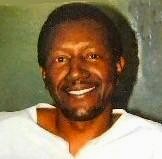
Darrell Grayson
Murderer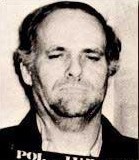 Ervil LeBaron
Murderer · USA · 1972
Ervil Morrell LeBaron (1925 to August 16, 1981) was the leader of a polygamous…
35 victims
Ervil LeBaron
Murderer · USA · 1972
Ervil Morrell LeBaron (1925 to August 16, 1981) was the leader of a polygamous…
35 victims
 Brian Kevin Rosenfeld
Murderer · USA · 1985
Brian Kevin Rosenfeld Brian Kevin Rosenfeld was sentenced to three concurrent l…
23 victims
Brian Kevin Rosenfeld
Murderer · USA · 1985
Brian Kevin Rosenfeld Brian Kevin Rosenfeld was sentenced to three concurrent l…
23 victims
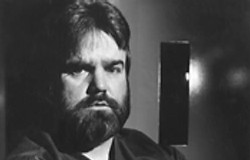 Marvin Gray
Murderer · USA · 1975
Marvin Gray was convicted killer who claimed responsibility for 23 slayings and…
23 victims
Marvin Gray
Murderer · USA · 1975
Marvin Gray was convicted killer who claimed responsibility for 23 slayings and…
23 victims
 Yahweh ben Yahweh
Murderer · USA · 1980
Yahweh ben Yahweh was born and legally named Hulon Mitchell Jr. (October 27, 19…
23 victims
Yahweh ben Yahweh
Murderer · USA · 1980
Yahweh ben Yahweh was born and legally named Hulon Mitchell Jr. (October 27, 19…
23 victims
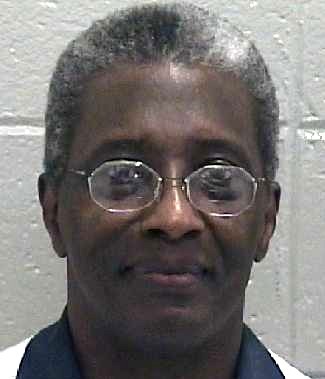 Brandon Astor Jones
Murderer · USA · 1979
Brandon Astor Jones, also known as Wilbur May, was convicted of murder and sent…
1 victim
Brandon Astor Jones
Murderer · USA · 1979
Brandon Astor Jones, also known as Wilbur May, was convicted of murder and sent…
1 victim
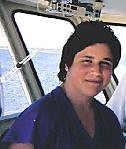 Eric Alan Stoneman
Homicide · USA · 2005
Eric Alan Stoneman was the 14-year-old defendant who was sentenced in December…
1 victim
Eric Alan Stoneman
Homicide · USA · 2005
Eric Alan Stoneman was the 14-year-old defendant who was sentenced in December…
1 victim
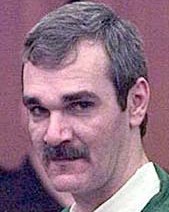 Richard Charles Johnson
Murderer · USA · 1985
Richard Charles Johnson was hitchhiking when he was picked up in September 1985…
2 victims
Richard Charles Johnson
Murderer · USA · 1985
Richard Charles Johnson was hitchhiking when he was picked up in September 1985…
2 victims
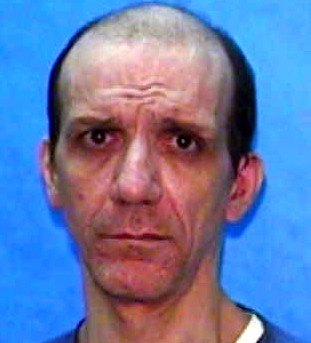 Francisco del Junco
Serial killer · USA · 1995
Francisco del Junco came to Miami in the 1980 Mariel boat lift. He was describe…
4 victims
Francisco del Junco
Serial killer · USA · 1995
Francisco del Junco came to Miami in the 1980 Mariel boat lift. He was describe…
4 victims
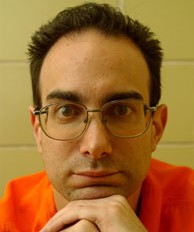 Martin Tankleff
Homicide · USA · 1988
Martin (“Marty”) Tankleff (born August 29, 1971) was a Long Island, New York re…
2 victims
Martin Tankleff
Homicide · USA · 1988
Martin (“Marty”) Tankleff (born August 29, 1971) was a Long Island, New York re…
2 victims
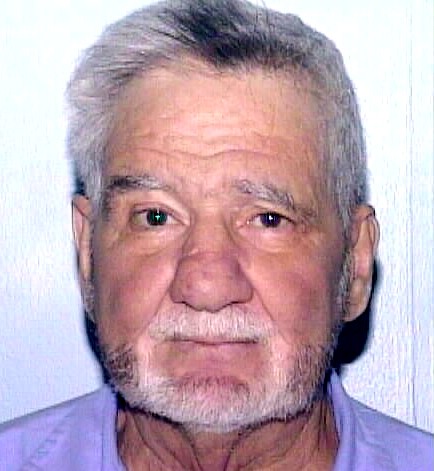 Edmund Lopes
Murderer · USA · 1966
Edmund Lopes was a Baptist minister. After being sentenced for murdering his wi…
2 victims
Edmund Lopes
Murderer · USA · 1966
Edmund Lopes was a Baptist minister. After being sentenced for murdering his wi…
2 victims
- Gender
- male
- Country
- USA
- Location
- Shelby County, Alabama, USA
- Date of birth
- February 26, 1961
- Age at first offence
- 19
- Characteristics
- rape, torture, domestic violence
- Victim profile
- Annie Laura Orr (female, 86)
- Method of murder
- Asphyxia due to suffocation
- Date(s) of murder
- December 24, 1980
- Years active
- 1980
- Date of arrest
- Same day
- Status
-
Executed
Executed by lethal injection on July 26, 2007 in Alabama
Case record: Darrell Grayson
Darrell Grayson was executed by lethal injection in Alabama on July 26, 2007.
Timeline
- December 23, 1980 — Darrell Grayson, Victor Kennedy, and two other individuals met at Kennedy's residence and drank wine and played cards.
- December 24, 1980 — Grayson and Kennedy entered Annie Laura Orr's home in Montevallo through a rear basement door, attacked her, restrained, beat, raped her, threatened her, fired two shots into her bedroom block and wall, and suffocated to death.
- December 24, 1980 — Annie Laura Orr’s son discovered her dead body in her home in Montevallo, Alabama, and called law enforcement officers.
- December 24, 1980 — Police found Grayson “squatting in the bushes” in a wooded area near his home.
- 1981 — Grayson left most of his belongings to other inmates and left a ring to Esther Brown.
- Aug. 6, 1999 — Victor Kennedy was executed in Alabama's electric chair at Holman Prison in Atmore.
- July 16, 2007 — The 11th U.S. Circuit Court of Appeals in Atlanta upheld a Montgomery federal judge's dismissal of a lawsuit Grayson filed challenging Alabama's lethal injection procedures as being unconstitutionally cruel.
- July 26, 2007 — The U.S. Supreme Court denied a request for a stay of execution, Grayson was pronounced dead at 6:16 p.m., and he was executed at Holman Correctional Facility.
- Wednesday — The Alabama Supreme Court denied a request to postpone the execution.
Background
Darrell Grayson was raised in Montevallo, Alabama, with eleven siblings in a single parent household. He dropped out of school in the ninth grade. At age 19, and with no prior criminal history, he was convicted and received the death penalty from an all white jury. He was on Death Row at Holman Prison in Atmore, Alabama since 1982.
After some years of severe depression, the death of his mother brought about the decision to better himself. He began to write commentary and poetry and received his GED and Associate Science degree.
In 1994 he became active in Project Hope to Abolish the Death Penalty. In 2000 he became its chairman. He edited and assembled Wings of Hope, the Project Hope newsletter, with primitive equipment in the prison.
The offence
On Christmas Eve, December 24, 1980, Annie Laura Orr was awakened by Darrell Grayson and Victor Kennedy, who entered her home through a basement door. The men played cards and drank wine with friends on the evening of December 23, 1980. They went to burglarize Orr's home in the early morning hours of December 24, 1980 “to get money for Christmas.”
Orr was attacked as she slept. The pair used a flashlight. Grayson and Kennedy subdued and beat her, striking her in the head with a blunt instrument and breaking several of her ribs.
Grayson placed a pillowcase over Orr’s head and wrapped masking tape tightly around her head. After finding little money, the pair began threatening Orr by beating her further, threatening to drown her, and firing two shots from Kennedy's pistol into her bedroom block and wall.
During the assault, the pair raped Orr repeatedly. Orr lived through the assault for a considerable period of time, begging her assailants not to hurt her but to take her money and leave. Orr died of her injuries and was described as dying from suffocation.
Later that morning, Orr's son discovered her dead body in her home in Montevallo, Alabama. Police found Grayson in the bushes with Orr’s wedding rings in his wallet and Grayson’s bloody shirt nearby. A trail of playing cards led from the scene of the crime to Kennedy's home.
Investigation
Investigators found Orr’s wedding rings in Grayson’s wallet and found a blood-splattered shirt hidden under a rock near his home. The blood stains matched Orr’s blood type, according to court records.
A trail of playing cards led from Orr’s home to Kennedy’s home. Police also found evidence that linked Grayson to the crime.
Grayson was interviewed and told police that he had performed yard work for Orr in the past and was familiar with her house, and that he had entered her home with Kennedy in the early morning of December 24, 1980, awakening Orr. Grayson admitted that they had repeatedly raped Orr while searching her house for valuables.
Within thirty minutes of the interview, Grayson waived his Miranda rights again and confessed; this confession was tape-recorded. Two days later, he waived Miranda rights again and gave another recorded statement to police. In that statement he explained that he and Kennedy had been planning for a couple of weeks to rob Orr to get money for Christmas, selected her because he had worked for her and knew where she kept money, and stated Orr begged them to take her money and not hurt her. Grayson stated that he taped a pillowcase over Orr’s face to prevent her from recognizing him and that he could not understand what she was saying. He also stated that both he and Kennedy raped Orr repeatedly, that they unsuccessfully searched for money and other valuables, and that at one point he took Orr to the bathroom and returned her to the bedroom, where he raped her again, but he could not remember why he took her to the bathroom or what happened there. He stated Kennedy urged him to leave the house while he was raping Orr, and he left Orr on her bed with the pillowcase taped over her head and face as he left the house.
Arrest
On the afternoon of December 24, 1980, officers began looking for Grayson after knowing Kennedy and Grayson had been seen together the previous night. Officers discovered him “squatting in the bushes” in a wooded area near his home.
Following his arrest, Grayson confessed.
Trial
Grayson was tried for capital murder during a burglary. The indictment involved nighttime burglary and intentional killing of Annie Laura Orr. The indictment included allegations of breaking and entering with the intent to commit robbery and intentional killing.
A jury found Grayson guilty of the capital offense “as charged in Count One and Two of the indictment.” After a punishment hearing, the jury fixed the defendant's punishment at death. After a sentencing hearing, the trial judge followed the jury's recommendation and sentenced Grayson to death by electrocution.
Grayson and Victor Kennedy were convicted in 1981 of the Dec. 24, 1980, murder of an 86-year-old widow in Montevallo. Orr was the widow of a Montevallo University dean and the mother of a former Montevallo mayor.
Evidence and expert testimony
Officers described the crime scene, the physical evidence including the playing cards leading to Kennedy’s house, and the circumstances leading to Grayson's arrest. The transcripts of Grayson’s confessions were admitted into evidence. The State presented expert testimony.
The State’s trace evidence expert testified about the comparison of hairs recovered from the crime scene and hairs taken from Grayson and Kennedy. The expert testified that several hairs recovered at the crime scene had “negroid” characteristics consistent with Grayson’s and Kennedy’s hair and inconsistent with the victim’s, but the hairs were too small to allow an individual comparison. The expert also testified that a hair recovered from Grayson’s sock following his arrest was consistent with the victim’s head hair and inconsistent with Grayson’s, and the expert could not opine as to whether the hair was the victim’s.
The State’s fingerprint expert testified that latent fingerprints lifted from Orr’s home and on evidence were insufficient to allow analysis.
The State’s ballistics expert testified that two bullets found in the wall between Orr’s bedroom and bathroom and on the floor in her bedroom were of the .38 caliber size and were fired from the same weapon, likely a Smith and Wesson revolver. The expert further testified that the hole in a shattered clock in Orr’s home was consistent with a .38 bullet. On cross-examination, the ballistics expert testified that the police had not given him a gun that matched up with the bullets.
The State’s serology expert testified that bloodstains found on a pillowcase and a bed spread in Orr’s bedroom could not be typed, and nor could urine and semen stains found on a bed sheet recovered from Orr’s bathroom. The expert also testified that bloodstains on Grayson’s shirt recovered from the woods near his house were type O and could have come from either Orr or Kennedy, both of whom were type O, but could not have come from Grayson, who was type B. The expert testified that a large blood and semen stain on Orr’s nightgown was type B, consistent with Grayson’s blood.
Grayson provided garbled testimony, mainly to the effect that he was too drunk to remember anything.
Jury deliberation
A jury took only two hours to find Grayson guilty of murder and burglary.
Sentencing
A jury fixed the defendant's punishment at death after the punishment hearing. The trial judge followed the jury's recommendation and sentenced Grayson to death by electrocution.
The trial judge said:
"The court cannot think of a case it has seen, heard, or even read, that would equal the cruelty shown in this case by the defendant to Mrs. Orr."
Appeals
Grayson’s capital murder conviction and death sentence were affirmed.
Grayson v. State, 479 So.2d 69 (Ala.Cr.App. 1984) (Direct Appeal) held that the Court of Criminal Appeals affirmed. The court addressed issues including effective assistance of counsel and funds for expert witnesses, denial of motion for change of venue, and voluntariness of confessions, and found the death sentence appropriate. The opinion stated, in relevant part:
"AFFIRMED."
Grayson v. State, 675 So.2d 516 (Ala.Cr.App., 1995) (Postconviction) affirmed the denial of postconviction relief. The opinion stated:
In considering Grayson’s death sentence, an Alabama Court of Criminal Appeals judge stated:
"Grayson confessed several times, testified at trial about the murder and his role in it, and does not contend that he was denied a fair trial. The non-biological evidence against him was and is overwhelming. For example, Grayson admitted that he and Kennedy planned the robbery a week before; the victim's wedding rings were found in Grayson's wallet; Grayson's bloody shirt was found in the woods near his house; and Grayson was discovered hiding in the woods after his mother told him of Mrs. Orr's death."
DNA testing and stay of execution
Memory lapse and DNA testing were subjects of postconviction activity and efforts to challenge the execution. Grayson claimed in recent years that he had no memory of the crime and unsuccessfully appealed to the court to order DNA testing that wasn't available in 1981.
The Innocence Project, the NAACP, the Southern Christian Leadership Conference, and other groups called on Gov. Bob Riley to issue a stay so tests could be conducted.
Gov. Bob Riley refused to commute or issue a reprieve and refused requests to intervene. Riley’s prepared statement included:
"No new evidence has come to light that would warrant a reprieve or a commutation,"
The U.S. Supreme Court in a two-sentence order denied a request for a stay of execution.
The Alabama Supreme Court denied a request to postpone the execution.
Outcome
Grayson was executed by lethal injection at Holman Correctional Facility. He was pronounced dead at 6:16 p.m.
During his execution, Grayson raised his head to look at Esther Brown, an anti-death penalty activist who had become his friend, and smiled. Esther Brown saw him and he mouthed “I love you,” which he answered in kind. Asked by the warden if he had a statement, he answered:
"Peace"
After several minutes, Grayson turned his head to the right, closed his eyes, and took his last breath.
As witnesses were escorted out of the witness rooms, Esther Brown stood and said, under her breath:
"Bloody murderers."
In a statement, Lee Rawlings Binion said:
"The family of Annie Laurie Orr has seen the final chapter of this lengthy 27-year struggle come to an end. We are grateful that justice has finally been served."
Prosecution described the victim as being robbed of about $30 and her wedding rings. Court documents described the victim as being raped by both men, with a pillowcase pulled over her head and masking tape used to bind her.
Prison authorities said that in his final hours Grayson met with friends and family, read and had his last meal, an egg and cheese omelet with fresh sliced tomatoes. He was described as laughing and joking and in a good mood. He left most of his belongings, including a TV, radio, headphones and a pair of Nike shoes, to other inmates. He left a ring to Brown.
Other details
Victim
Annie Laura Orr was 86 years old at the time of the killing. She was described as a Montevallo widow.
Co-defendant
Victor Kennedy was Grayson’s co-defendant and accomplice. Kennedy was executed in Alabama's electric chair at Holman Prison in Atmore on Aug. 6, 1999.
Witnesses for the execution
Witnessing on Grayson’s behalf were anti-death penalty activist Esther Brown and one of Grayson's attorneys, Charlotte Norby. Witnessing on behalf of Grayson’s victim was Lee Rawlings Binion, Orr’s granddaughter.
Grayson’s statement and poems
Friends, I want to thank all of you for your dedication to the cause of justice and for your unwavering faith in mankind. If the Governor does not grant me DNA testing before Thursday I will die not knowing whether I am guilty or not, but I will die knowing that there are many people in Alabama and beyond its borders who will continue the struggle for justice for all. I want you to know that there is peace for me in that thought. As some of you may know, from childhood on I wanted to make a difference and leave the world better than I found it. These feelings only became stronger on death row where there is so much misery. Project Hope to Abolish the Death Penalty became the vehicle to strive for more and achieve it. When I see you here today, and I do see you, when I read the letters you have sent me and keep up with the efforts of so many who have stepped up to the plate, I know not only that I have achieved my dream of making a difference but that I leave this dream in the hands of caring, dedicated people. Truly that is the greatest gift, besides life, that you could give me. I thank each and everyone of you from the bottom of my heart! Until we meet again, keep the faith and as I always say when I close my editorials, keep Hope alive!
Darrell B. Grayson Chairman of Project Hope to Abolish the Death Penalty
Darrell Grayson also provided:
"STATEMENT OF FACTS After 20+ years on death row and acceptance of guilt, I came to question my participation in the crime of which I was convicted and for which I received the death penalty."
His statement continued describing affidavits, claims about being passed out from drugs and alcohol, and challenges related to DNA testing, expert evidence, and counsel.
He also wrote:
Glory Wings Indeed, I recall very well, That special feeling of being exalted, Flying helter skelter over vast fields My dusky heels beating a tattoo on the earth, On my skinny youthful bottom. The rays of the sun seemed filtered As through clouds with golden flash-lights, Alive with thousands of golden fingers Caressing my damp joy infused face, As glory wings lifted skywards, Oh yes, to race the boundless heavens.
Letter from Ambassador of European Union
An EU delegation letter included:
EUROPEAN UNION DELEGATION OF THE EUROPEAN COMMISSION
The Head of Delegation
Washington, 1 June 2007
Ms. Esther Brown Executive Director Project Hope to Abolish the Death Penalty P.O. Box 1362 Lanett, Alabama 36863
Dear Ms. Brown, I have received your letter of 27 May regarding the case of Darrell Grayson in which you reinforce your request for me to write to Governor Riley. I want to inform you that I, in fact, had already sent a letter to the Governor about a week before I received your letter. I told Governor Riley of my meeting with you and how you expressed many concerns about the use of lethal injections in Alabama. I also raised the American Bar Association's broader, and equally negative assessment (June 2006) of the entire Alabama capital punishment process. I urged the Governor to work to establish moratorium on all executions and to stop the imposition of new death sentences. Sincerely, John Bruton Ambassador
Advocacy claims included in the record
Grayson was described as being adopted by activists as an example of the need for a state law mandating DNA testing for Death Row inmates. The Innocence Project argued that DNA tests not available at the time of Grayson's trial might have proved him innocent.
Grayson’s capital murder conviction did not include a rape accusation, while supporters argued it was an aggravating factor cited by prosecutors to get the death sentence.
Personal connections mentioned during the execution
Prison authorities said Grayson met with his spiritual adviser, his sister, two nephews and two nieces, and three attorneys in his final hours. Orr’s granddaughter, Lee Rawlings Binion, wiped away tears as she witnessed the execution.

Spotted an error, or have more information about this case?