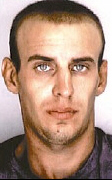
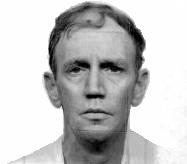
Richard Cartwright
Murderer Russell Ellwood
Murderer · USA · 1991
Russell Ellwood was a former taxi driver. Authorities suspected him of killing…
20 victims
Russell Ellwood
Murderer · USA · 1991
Russell Ellwood was a former taxi driver. Authorities suspected him of killing…
20 victims
 Robert Martines Perez
Murderer · USA · 1994
Name: Robert Martines Perez · Other name used in proceedings: Robert Martinez P…
15 victims
Robert Martines Perez
Murderer · USA · 1994
Name: Robert Martines Perez · Other name used in proceedings: Robert Martinez P…
15 victims
 Billy Frank Vickers
Murderer · USA · 1993
Billy Frank Vickers Vickers was executed by lethal injection in Texas on Januar…
14 victims
Billy Frank Vickers
Murderer · USA · 1993
Billy Frank Vickers Vickers was executed by lethal injection in Texas on Januar…
14 victims
 Donald Herb Johnson
Murderer · USA · 1989
Donald Herb Johnson was sentenced to death on October 1, 1997. Donald Herb John…
1 victim
Donald Herb Johnson
Murderer · USA · 1989
Donald Herb Johnson was sentenced to death on October 1, 1997. Donald Herb John…
1 victim
 John Albert Burks
Murderer · USA · 1982
Defendant: John Albert Burks John Albert Burks was executed by lethal injection…
2 victims
John Albert Burks
Murderer · USA · 1982
Defendant: John Albert Burks John Albert Burks was executed by lethal injection…
2 victims
 Joel Carl Smith
Murderer · United Kingdom · 2003
Joel Carl Smith (born 1973) was a drug dealer. He was also known as “Cocaine” o…
2 victims
Joel Carl Smith
Murderer · United Kingdom · 2003
Joel Carl Smith (born 1973) was a drug dealer. He was also known as “Cocaine” o…
2 victims
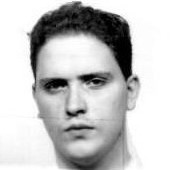 Monty Allen Delk
Murderer · USA · 1985
November 28, 1986 — Monty Allen Delk telephoned Gene Olan "Bubba" Allen II and…
2 victims
Monty Allen Delk
Murderer · USA · 1985
November 28, 1986 — Monty Allen Delk telephoned Gene Olan "Bubba" Allen II and…
2 victims
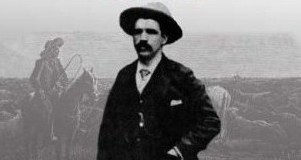 Jackson Lee Davis
Murderer · USA · 1896
Jackson Lee Davis, also known as Diamondfield Jack, was an inmate. · June 4, 18…
2 victims
Jackson Lee Davis
Murderer · USA · 1896
Jackson Lee Davis, also known as Diamondfield Jack, was an inmate. · June 4, 18…
2 victims
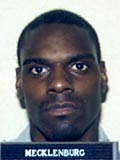 Lonnie Weeks
Murderer · USA · 1993
Lonnie Weeks was convicted of murdering a state trooper during a 1993 traffic s…
1 victim
Lonnie Weeks
Murderer · USA · 1993
Lonnie Weeks was convicted of murdering a state trooper during a 1993 traffic s…
1 victim
- Gender
- male
- Country
- USA
- Location
- Nueces County, Texas, USA
- Date of birth
- February 11, 1964
- Age at first offence
- 32
- Characteristics
- robbery
- Victim profile
- Nick Moraida (gay man, 37)
- Method of murder
- Shooting (.38 caliber pistol)
- Date(s) of murder
- August 1, 1996
- Years active
- 1996
- Date of arrest
- August 1996
- Status
-
Executed
Executed by lethal injection in Texas on May 19, 2005
Case record: Richard Cartwright
Background
Richard Cartwright was a white man from Chicago. He was convicted of capital murder and sentenced to death in Texas for the killing of Nick Moraida.
Cartwright had prior criminal history. He was sentenced to two-years probation for the felony offense of unlawful possession of a controlled substance in February 1990 in Cook County.
The offence
On August 1, 1996, Richard Cartwright and two male accomplices met Nick Moraida after Moraida pulled up in a small black sports car. The trio invited Moraida to go drinking with them at a seaside park and then drove to a secluded fishing area off a cul-de-sac on Ocean Way.
Once the men were parked in the cul-de-sac, they went down a hill to the seawall area. Cartwright pulled out a gun and said, “This is a robbery. Put your hands on the cement [wall].” At the same time, one accomplice held a knife to Moraida’s neck.
The men took Moraida’s watch, keys, wallet and an envelope containing cash. Moraida’s throat was cut, and Cartwright shot the victim. The source also described the stabbing and gunshot sequence as follows: their plan turned deadly when Moraida refused to give up and tried to flee, one man tried to stab Moraida but could not kill him, and Cartwright shot him in the back with a .38 caliber pistol.
Moraida was stabbed and shot to death. His body was discovered the next day by a man and his grandson when they went to the seawall area to go fishing.
The robbery proceeds were described as about $180, and other passages stated the robbery netted between $60 and $200, and that the men planned to use the money to buy drugs.
Investigation
The case involved evidence that the gun used in the robbery and murder belonged to either Kelly Overstreet or Dennis Hagood. A medical examiner testified that when multiple people were involved in a crime in which gunfire occurred, it was typically the owner of the gun that did the shooting. Another medical examiner testimony stated that he believed Moraida was attacked by two individuals.
At trial, the prosecution relied heavily on the testimony of Cartwright’s co-defendants and on circumstantial evidence.
People involved
- Nick Moraida: victim, age 37 (also described as 34 in some passages). He was robbed and killed after being lured to a gulfside park and a secluded seawall area.
- Dennis Hagood: co-defendant; convicted and sentenced to 20 years imprisonment; testified against Cartwright.
- Kelly Overstreet: co-defendant; convicted and sentenced to 50 years imprisonment; testified against Cartwright.
Trial
Cartwright was convicted of capital murder and sentenced to death in 1997.
Cartwright’s conviction and death sentence were affirmed by the Texas Court of Criminal Appeals.
During the trial, the medical examiner testified that the knife wounds were not fatal and that the gunshot wound was the cause of death.
Cartwright and two other men were indicted for the capital murder of a man they lured to the waterfront area of Corpus Christi, Texas, by posing as homosexuals. After robbing the victim, one of the other men stabbed him and cut his throat, and Cartwright shot him in the back. The prosecution’s theory was that Overstreet stabbed the victim and Cartwright shot him, while Hagood searched the victim’s car.
Overstreet and Hagood pleaded guilty in return for trial testimony against Cartwright. Overstreet testified against Cartwright and Hagood testified against Cartwright.
The testimony included the sequence that when they had Moraida at the concrete seawall, Cartwright pulled out a pistol and told him, “This is a robbery. Put your hands on the cement.” Overstreet then held a knife to the victim’s neck. The men robbed him, Overstreet cut Moraida’s throat, and Cartwright shot him in the back.
Sentencing
Cartwright received the death penalty. The Texas Court of Criminal Appeals affirmed Cartwright’s conviction and sentence.
Other sentences were imposed on co-defendants:
- Kelly Overstreet was sentenced to 50 years in prison.
- Dennis Hagood was sentenced to 20 years in prison.
Appeals
Cartwright filed a petition for writ of certiorari that was denied by the U.S. Supreme Court in November 1999.
Cartwright filed a petition for state writ of habeas corpus in July 1998. The Texas Court of Criminal Appeals denied his petition.
Cartwright filed a petition for writ of habeas corpus in federal district court in September 2002. In July 2003, the district court denied Cartwright’s petition for federal habeas relief.
Cartwright filed an application for a certificate of appealability (“COA”) in the 5th U.S. Circuit Court of Appeals, which denied the application. A citation was provided: Cartwright v. Dretke , 103 Fed.Appx. 545 (5th Cir. 2004) (Habeas).
The U.S. Supreme Court denied Cartwright’s petition for certiorari review on January 24, 2005.
In the federal habeas proceedings, the COA was denied. The holdings included:
- Defense counsel’s use of only six of fifteen peremptory strikes allowed under state law was not ineffective.
- Although the prosecutor’s comment in closing argument of the guilt phase of the capital murder trial, referring to defense counsel as being “sneaky,” was improper, defense counsel made a legitimate strategic decision not to object.
- The prosecutor’s argument during the penalty phase of capital murder trial, asking jurors to imagine consideration defendant and codefendants gave victim, did not improperly urge jurors to disregard the special issues.
The federal court record also included the following quoted portion of the prosecutor’s argument at the guilt-innocence phase, quoted in the appellate decision:
... Dr. Rupp would change his mind any time you asked him a different way, the question. I mean, isn't it kind of funny how the defense lawyer says, Dr. Rupp, I wanna bring you up here as an expert, and here I'm giving you the autopsy report and the pictures, and the defense neglects to give him any other information? Not one scrap of evidence. Not one statement from a police officer or report from a police officer or identification officer, not one statement from a witness, not even what happened in court. Remember I said, "Dr. Rupp, if you heard that somebody said that they heard this defendant admit to the crime, would that change your mind," he goes, "Sure it would change my mind. Sure it would change my mind." The defense lawyer is trying to blindside you by putting on this so-called expert on human behavior with not enough information--not enough information. And every time I talked to Dr. Rupp, he kept saying, I wasn't asked that. I wasn't asked that. I was only asked this. Well, don't you think that's kind of important, Dr. Rupp, to know the whole story? You *551 folks got the whole story. How come he didn't? How come the defense lawyer didn't give him--have the courtesy to give him all the information? A little sneaky, isn't it? Little sneaky.
Cartwright asserted that his trial counsel rendered ineffective assistance by failing to object to that argument. Defense counsel stated in an affidavit presented to the state habeas court that, although he felt the prosecutor’s comments about him being “a little sneaky” were improper, he did not feel they were sufficiently damaging to object and did not want to object to avoid calling the remarks to the jury’s attention.
The state habeas court found the prosecutor’s reference to defense counsel as being “sneaky” was improper, but that the comment did not harm Cartwright’s defense and that counsel’s decision not to object was reasonable trial strategy. The district court agreed that the prosecutor’s comment about defense counsel being “sneaky” was improper and concluded counsel made a legitimate strategic decision not to object, and that the comment did not infect the entire trial with undue unfairness. The appellate decision stated that reasonable jurists would not conclude the district court’s assessment of this claim was debatable or wrong.
Cartwright’s request for a COA was denied.
Outcome
Cartwright was executed by lethal injection in Texas on May 19, 2005.
The final statement included this apology:
“I want to apologize to the victim's family for any pain and suffering I caused them.”
He also urged other death row inmates:
“just keep your heads up and stay strong.”
The lethal injection was started. He was pronounced dead at 6:16 p.m. in one account.
Other details
Final meal
Cartwright requested fried chicken, a cheeseburger, onion rings, french fries, bacon, sausage, cheesecake and cinnamon rolls.
Final words and letters
A final statement also included: “I just want to thank all my friends and family who gave me support these past eight years. I want to apologize to the victim's family for any pain and suffering I caused.” He told fellow inmates to “keep your heads up and stay strong.”
Multiple passages described that Cartwright declined to speak with reporters and instead wrote letters to anti-death-penalty organizations, which posted the letters.
Described guilt themes and duress arguments
At trial and in appellate efforts, Cartwright maintained innocence, with his claim focusing on responsibility for the murder rather than involvement in the robbery. He blamed Overstreet for the murder.
Cartwright’s attorneys argued on appeal that he was under duress and following Overstreet’s orders because he was afraid of him.
A quoted letter attributed to Kelly Overstreet included:
“I sometimes do things I don't really mean to do, I usually do these things when I am high. I have always hated faggots but I didn't mean to kill the little 'queen.' I was pretty high that night, and I guess my rage overcame my ass. I guess that is what being a skinhead is all about.”
A later written statement attributed to Overstreet to Cartwright’s lawyers included:
“I intentionally made Cartwright out to be the bad guy out of spite when in fact I am the one who was at the forefront of all events.”
Cartwright’s attorneys argued that jurors relied on inaccurate information and that Overstreet’s testimony was false, seeking executive clemency and a reprieve.
Additional person and place details
One passage described Cartwright as “a former mechanic from Chicago” executed at Huntsville. Another passage described the victim’s sister, Angela Moraida of Corpus Christi, and stated she did not attend the execution.
The event was described as taking place in Corpus Christi, Texas, including location references to a seaside park, Ocean Way, Ocean Drive, and a seawall area.
Other procedural and legal citations included in the materials
- Cartwright v. Dretke , 103 Fed.Appx. 545 (5th Cir. 2004) (Habeas)
- Cartwright v. State, No. 72,786 (Tex.Crim.App. May 5, 1999) (unpublished)
- Cartwright v. Texas, 528 U.S. 972, 120 S.Ct. 415, 145 L.Ed.2d 324 (1999)
Additional execution context facts included
A passage stated that Cartwright was scheduled to enter the state’s death chamber after 6 p.m. on May 19, 2005, and described him as the 344th Texas inmate to die by lethal injection, and the eighth execution that year. Another passage stated Texas had four additional executions scheduled for 2005.
Inmate communications and other non-trial content included
The materials also included messages and letters about prison conditions and pen pal requests, including a dated message attributed to Paul Colella dated January 14, 2002 with an allegation of brutality, and a message attributed to Richard Cartwright in March 2002 thanking people for organizing a protest of death row conditions.
A quoted statement attributed to Richard Cartwright in a “Message Of Thanks” included:
“Once again I feel the need to put my thoughts on paper! I heard someone saying ‘Look out your window.’ I climbed on my bunk, stood on tip toes and to my utter delight I see a picket line, protesting the horrid conditions on Death Row. Yes right in the main entrance to Polunsky. To all of you who participated or helped organize the protest, I truly thank you from the bottom of my heart. The hardest emotion to keep hold of in here is hope! You have lightened my despair with so often overwhelms my hope. I truly believe changes will come. Not quickly, but it will come. You have renewed my hope in that. It will be a long hard struggle but together we shall overcome. Thank all of you from all of us here on the row. Mom, if your reading this. I love you. Stay strong and keep hope alive. Also a big thanks to my friend “Mouse”! Your friendship really made a big difference in my life! In hope Rich Cartwright # 999224”
Spotted an error, or have more information about this case?