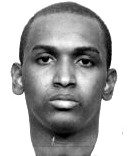
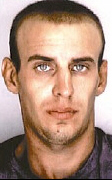
Robert Earl Carter
Mass murderer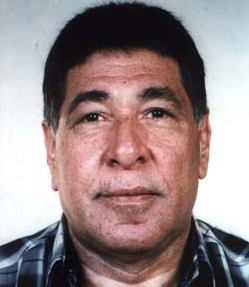 Gameel Al-Batouti
Mass murderer · USA · 1999
Gameel Al-Batouti (also rendered “Gamil ElBatouty” or “El Batouty” in U.S. offi…
216 victims
Gameel Al-Batouti
Mass murderer · USA · 1999
Gameel Al-Batouti (also rendered “Gamil ElBatouty” or “El Batouty” in U.S. offi…
216 victims
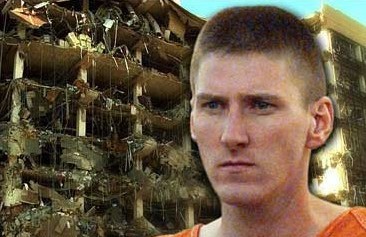 Timothy McVeigh
Mass murderer · USA · 1995
Timothy James McVeigh (April 23, 1968 – June 11, 2001) was a United States Army…
168 victims
Timothy McVeigh
Mass murderer · USA · 1995
Timothy James McVeigh (April 23, 1968 – June 11, 2001) was a United States Army…
168 victims
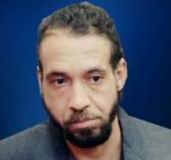 Julio Gonzalez
Mass murderer · USA · 1990
Julio Gonzalez was sentenced to 174 twenty-five-year sentences (a total of 4,35…
87 victims
Julio Gonzalez
Mass murderer · USA · 1990
Julio Gonzalez was sentenced to 174 twenty-five-year sentences (a total of 4,35…
87 victims
 David Burke
Mass murderer · USA · 1987
David Augustus Burke (May 18, 1952–December 7, 1987) was an employee of USAir,…
43 victims
David Burke
Mass murderer · USA · 1987
David Augustus Burke (May 18, 1952–December 7, 1987) was an employee of USAir,…
43 victims
 George Jo Hennard
Mass murderer · USA · 1991
George Jo Hennard carried out a mass killing at a Luby’s Cafeteria in Killeen,…
23 victims
George Jo Hennard
Mass murderer · USA · 1991
George Jo Hennard carried out a mass killing at a Luby’s Cafeteria in Killeen,…
23 victims
 John Francis Roche
Serial killer · USA · 1953
John Francis Roche was a male inmate. He was described as a mass murderer. Roch…
5 victims
John Francis Roche
Serial killer · USA · 1953
John Francis Roche was a male inmate. He was described as a mass murderer. Roch…
5 victims
 Sarah Dutra
Murderer · USA · 2001
Sarah Dutra (defendant) · Larry McNabney (victim; Sacramento, California attorn…
1 victim
Sarah Dutra
Murderer · USA · 2001
Sarah Dutra (defendant) · Larry McNabney (victim; Sacramento, California attorn…
1 victim
 Ralph Lynch
Murderer · USA · 1998
Ralph Lynch was convicted in Ohio for the kidnapping, rape, and murder of 6-yea…
1 victim
Ralph Lynch
Murderer · USA · 1998
Ralph Lynch was convicted in Ohio for the kidnapping, rape, and murder of 6-yea…
1 victim
 Sabine Hilschenz
Murderer · Germany · 1988
Sabine Hilschenz was a German woman convicted of infanticide involving eight of…
9 victims
Sabine Hilschenz
Murderer · Germany · 1988
Sabine Hilschenz was a German woman convicted of infanticide involving eight of…
9 victims
 Wilbur Dobbs
Murderer · USA · 1973
December 14, 1973 — Wilbur Wiley Dobbs, with Walter Lee Harris and Charles Burk…
1 victim
Wilbur Dobbs
Murderer · USA · 1973
December 14, 1973 — Wilbur Wiley Dobbs, with Walter Lee Harris and Charles Burk…
1 victim
 Terry Darnell Edwards
Murderer · USA · 2002
Name: Terry Darnell Edwards TDCJ Number: 999463 Date of birth: 08/10/1973 Gende…
2 victims
Terry Darnell Edwards
Murderer · USA · 2002
Name: Terry Darnell Edwards TDCJ Number: 999463 Date of birth: 08/10/1973 Gende…
2 victims
- Gender
- male
- Country
- USA
- Location
- Burleson County, Texas, USA
- Date of birth
- March 7, 1966
- Age at first offence
- 26
- Characteristics
- arson, parricide
- Victim profile
- Bobbie Davis, 45, Nicole Davis, 16, Lea Erin Davis, 5, Brittany Davis, 6, Jason Davis, 4 (his son) , and Denitra Davis, 9
- Method of murder
- St abbing with knife / Shooting
- Date(s) of murder
- August 18, 1992
- Years active
- 1992
- Date of arrest
- Same day
- Status
-
Executed
Executed by lethal injection in Texas on May 31, 2000
Timeline
- Aug. 18, 1992 — Firefighters responded to a house fire in Somerville, Texas; the bodies of Bobbie Davis (45), Nicole Davis (16), Lea Erin Davis (5), Brittany Davis (6), Jason Davis (4), and Denitra Davis (9) were discovered inside the house.
- Aug. 19, 1992 — Carter told Lisa Davis that he had been burned when, while mowing his lawn, he had ignited gasoline he had thrown on the grass and the fire blew up in his face.
- Aug. 21, 1992 — During a follow-up visit to Dr. Mark English’s office, Cookie told one of the attending nurses that she did not want Carter’s ears to be bandaged because he would "stand out at the funeral" they planned to attend the next day.
- Aug. 22, 1992 — The funeral service for the victims was held in the gymnasium of the local high school; photographs and videotapes of a man identified as Carter with bandages on his face in attendance were introduced at trial.
- Aug. 23, 1992 — A search of Carter’s residence revealed a box of .22 caliber bullets; a fingerprint on the box matched Carter’s right thumb print.
- Aug. 26, 1992 — Carter testified before the Burleson County grand jury investigating the murders.
- Feb. 8, 1994 — A jury found Carter guilty of the capital offense of murdering six individuals during the same criminal transaction.
- Feb. 11, 1994 — The jury answered affirmatively the first two special punishment issues and answered in the negative the third special punishment issue submitted pursuant to state law; the trial court assessed punishment at death.
- May 8, 1996 — The Texas Court of Criminal Appeals affirmed the conviction and sentence.
- June 26, 1996 — Rehearing was denied by the Texas Court of Criminal Appeals.
- Feb. 24, 1997 — The United States Supreme Court denied certiorari review.
- Oct. 6, 1997 — Carter filed an application for state writ of habeas corpus with the convicting court.
- Nov. 19, 1997 — The Court of Criminal Appeals denied the state writ of habeas corpus.
- Aug. 28, 1998 — Carter filed a federal habeas petition in the United States District Court for the Western District of Texas, Austin Division.
- Mar. 18, 1999 — The district court entered an order denying habeas relief.
- Nov. 2, 1999 — The United States Court of Appeals for the Fifth Circuit affirmed the judgment of the district court.
- Dec. 22, 1999 — The Fifth Circuit denied rehearing.
- May 31, 2000 — Robert Earl Carter was executed by lethal injection in Texas; he was pronounced dead at 6:20 p.m.
- June 1, 2000 — An Associated Press report described the execution and Carter’s statements immediately before being pronounced dead.
- May 5, 2000 — Another Associated Press report described Carter’s execution as occurring on Wednesday and included statements made in the death chamber.
- May 26, 2000 — Texas Attorney General MEDIA ADVISORY scheduled Carter’s execution after 6 p.m. on Wednesday, May 31.
Background
Robert Earl Carter was employed as a state prison guard and was the father of 4-year-old Jason Davis. Somerville, Texas was the location of the house fire in 1992. The victims were Bobbie Davis (45), her daughter Nicole Davis (16), and her grandchildren Lea Erin Davis (5), Brittany Davis (6), Jason Davis (4), and Denitra Davis (9). Bobbie Davis was Jason’s maternal grandmother, and Denitra was Jason’s half-sister. The other three victims lived with Jason and Denitra in the same home, which was owned by Bobbie Davis.
Lisa Davis was Jason’s mother. Lisa Davis also lived with her mother, Bobbie, but she was at work the time of the murders. Four days before the murders, Carter was served with a paternity suit filed by Lisa seeking child support in excess of the $100 per month he had been voluntarily paying for Jason’s support. Carter received the paternity suit on Aug. 14, 1992. Carter’s wife, who went by the nickname Cookie, was at work at about 6 a.m. on the morning of the fire; a co-worker called Carter at home to come get Cookie, who was very upset, but Carter hung up without comment. A supervisor subsequently called Carter. The co-worker testified it normally took 15–20 minutes to drive from Carter’s residence to the Brenham State School where she and Cookie worked, but Carter did not arrive until 30–45 minutes after being called. The co-worker testified Carter wore a baseball cap pulled down on his head and a long sleeved-jogging suit, kept his hands in his pockets, and had "splotches" on his face.
The offence
In the early morning hours of Aug. 18, 1992, firefighters responded to a house fire in Somerville, Texas. Inside the house, the bodies of the six victims were discovered. Autopsies showed Bobbie Davis was stabbed at least 29 times in the head and neck, with all of the stab wounds penetrating her brain. Nicole Davis was shot five times in the head and was also stabbed in the head and chest. Lea Erin Davis, Brittany Davis, Jason Davis, and Denitra Davis were each stabbed in the head and chest between seven to 13 times.
The fire caused extensive damage to the home and to the bodies of the victims and was determined to have been set by someone pouring gasoline or a similar substance in each bedroom and living room, as well as on each body, and then igniting it. After the murders, the perpetrators poured gasoline on the bodies and set the house on fire to conceal the murders.
Investigation
After Rangers interviewed Carter about burns, Rangers went to Carter’s residence to verify his story. Rangers found a small patch of burned grass immediately adjacent to the front porch of Carter’s house, but the burned area was six inches wide by three and one-half feet long and nothing of the nature to have caused Carter’s burns.
Dr. Mark English treated Carter for recent second-degree burns to his left palm, both ears, and nose later described as occurring before or around the morning of Aug. 18. Carter initially claimed that while mowing his lawn he had ignited gasoline he had thrown on the grass and the fire blew up in his face. After three hours of questioning, Carter retracted his earlier story about his burns and gave a taped statement.
In the taped statement, Carter said he was with Anthony Graves at the scene of the murders and was burned inside the residence or near the front door after it was set on fire. Carter claimed he and Graves drove to the house and Graves went inside. Carter testified that after he heard a shout, he went in the house, saw Bobbie Davis lying in the living room, and heard screams. Carter claimed he saw blood everywhere and saw Graves go from room to room until it got "all calm," after which he observed Graves "pouring gas everywhere." Carter claimed that he then left and reentered the house where he was burned. Carter also said that upon leaving the scene, the gas can was thrown out the window and that he burned his clothes and threw the remains in the trash. He admitted seeing blood all over Bobbie Davis, who was slumped over, and admitted hearing gunshots from the back bedroom and seeing three other dead bodies, one of whom was his son, Jason Davis. Carter admitted that the story about getting burned while using gas to burn grass was an "excuse."
A search of Carter’s residence the next day, Aug. 23, revealed a box of .22 caliber bullets. A fingerprint on the box matched Carter’s right thumb print. An FBI agent determined that one bullet removed from Nicole’s body had the same elemental composition as two unfired bullets contained in the box from Carter’s residence. The agent stated that the bullet recovered from Nicole’s body and the two unfired bullets came from the same box of ammunition or from two different boxes of ammunition manufactured by Winchester Western on the same day.
Gregory Burns, confined in the Burleson County jail on a charge of attempted murder, testified that his cell was near separate cells in which Graves and Carter were confined. Burns testified that he heard Carter tell Graves: "We shouldn't have done it," and he heard Graves respond: "Well, why did you put my name in it?"
Before testifying before the grand jury, Carter said Graves physically and verbally threatened him when they were in jail. Carter testified that as a result he told the grand jurors that he had fabricated the statements to the Rangers implicating Graves. Carter also said he spoke with Graves in jail before testifying before the grand jury and knew Graves had previously testified before the grand jury.
Carter told the grand jurors he was concerned about the financial burden of increased child support that probably would result from Lisa Davis’ paternity suit. He testified he had owned a .22 pistol but it had been stolen six months before the murders. Carter did not report the theft to his wife or to police. He admitted he was at the site of the murders that night and drove to Houston a day or so later to trade in the Sunbird he drove that night. Carter conceded that during Aug. 22 questioning by the Rangers he had asked several times to talk to the district attorney in order to "make a deal."
Several individuals testified at Graves’ trial that they had overheard Carter and Graves talking in jail where the two discussed the need to protect Cookie from being implicated in the murders.
Arrest
Carter was treated for recent second-degree burns and was questioned by Texas Rangers. Cookie received news of the fire and six deaths shortly after she reported to work at about 6 a.m. and Carter arrived at work later than normal. Carter voluntarily drove to the Brenham DPS office at the request of Texas Rangers and was interviewed regarding his burns. Carter agreed to accompany three Rangers to the DPS regional office in Houston for further questioning.
After questioning, Carter retracted his earlier story and gave a taped statement placing himself at the scene with Anthony Graves.
Trial
Procedural history
In Sept. 1992, Carter was indicted in the 21st District Court of Burleson County, Texas for the capital offense of murdering six individuals during the same criminal transaction. The case was tried on a change of venue to Bastrop County, Texas, where Carter entered a plea of not guilty.
Conviction and special punishment issues
A jury found Carter guilty of the capital offense on Feb. 8, 1994. After a separate punishment hearing, on Feb. 11, 1994, the jury answered affirmatively the first two special punishment issues and answered in the negative the third special punishment issue submitted pursuant to state law. The trial court assessed punishment at death. Appeal was automatic to the Texas Court of Criminal Appeals, which affirmed the conviction and sentence on May 8, 1996, and denied rehearing on June 26, 1996.
Carter’s testimony at Graves’ trial
After Carter was convicted and sentenced to death for the murders, Carter testified at Graves’ trial for capital murder. Carter testified that he and Graves went to the Davis home in the early morning hours of Aug. 18. Carter testified he was armed with a hammer and a .22 pistol and Graves had a knife. Upon entering the residence, Carter testified he hit Bobbie Davis with the hammer, then Graves began stabbing her. Carter testified that Nicole suddenly appeared and Carter chased her into a bedroom where he shot her several times.
Carter testified that he went outside and retrieved a gas can from his car. He testified he reentered the house and poured gasoline on Bobbie and in the living room where she was located. Carter testified that he then went to the bedroom where he had shot Nicole and poured gasoline on Nicole and another body he found there. Carter testified that he proceeded to two other bedrooms, pouring gasoline on the bodies he found in each room.
Carter testified that he burned himself while attempting to flee from the fire. Carter testified that after getting Cookie from her job, he burned a small patch of grass at his residence and threw himself on the fire to re-burn himself. Carter testified that he cleaned blood off his car with gasoline, and that he gathered the clothes he had been wearing during the murders and the weapons used by him and Graves and drove to a rural area. Carter testified he burned his clothes at one location and disposed of the pistol, knife, and hammer at separate locations. Carter testified that a day or two later he traded in the vehicle he drove during the murders for a new car.
Carter testified in the grand jury proceedings that he fabricated statements made to the Rangers, while also adding additional details to the alleged fabricated story and confirming details of his tape-recorded statement under questioning.
Drugs and alcohol
No evidence was presented demonstrating that the murders were attributable to drug or alcohol use.
Prior criminal history
No evidence of prior convictions was presented at trial.
Prosecutor and defense attorney references
Charles Sebesta was referenced as the prosecutor in the case. Roy Greenwood was referenced as the defense attorney for Graves. Gregory Burns testified from the Burleson County jail.
Sentencing
The trial court assessed punishment at death after the jury’s special punishment findings on Feb. 11, 1994.
Appeals
Carter’s appeal was automatic to the Texas Court of Criminal Appeals, which affirmed the conviction and sentence on May 8, 1996, and denied rehearing on June 26, 1996. The United States Supreme Court denied certiorari review on Feb. 24, 1997. Carter next filed an application for state writ of habeas corpus with the convicting court on Oct. 6, 1997, which was denied by the Court of Criminal Appeals on Nov. 19, 1997.
Carter did not petition the Supreme Court for certiorari review. Carter filed a federal habeas petition in the United States District Court for the Western District of Texas, Austin Division, on Aug. 28, 1998; on Mar. 18, 1999, the district court entered an order denying habeas relief. The district court granted permission to appeal two issues, and the United States Court of Appeals for the Fifth Circuit affirmed the judgment on Nov. 2, 1999, and denied rehearing on Dec. 22, 1999. Carter filed a petition for writ of certiorari pending before the Supreme Court.
Outcome
Robert Earl Carter was executed by lethal injection in Texas on May 31, 2000. Texas Attorney General MEDIA ADVISORY stated Carter was scheduled to be executed after 6 p.m., Wednesday, May 31st.
At execution, Carter was pronounced dead at 6:20 p.m. An Associated Press report described Carter’s statements before lethal injection:
"I'm sorry for all the pain I've caused your family," he said, looking at six relatives of the victims.
"It was me and me alone. Anthony Graves had nothing to do with it. I lied on him in court."
"I hope you will find peace and comfort with Christ Jesus," Carter said.
"It's a shame it has come to this."
"I'm ready to go home to be with my lord," he said, closing his eyes.
A separate report included these statements:
Another execution-day account included these statements:
"It was me and me alone. Anthony Graves had nothing to do with it. I lied on him in court. My wife had nothing to do with it. Anthony Graves don't even know anything about it. My wife don't know anything about it."
Other details
Carter’s wife was originally named as a co-defendant, but no information was available about her case. A listing of victims’ relationships included that Bobbie Davis was the maternal grandmother of Jason, while Denitra was Jason’s half-sister.
The Texas execution information described that Carter was the 19th condemned killer put to death in Texas in that year, the seventh that month, and the first of two executed that week. Carter worked as a corrections officer at the Pack II Unit of the Texas Department of Criminal Justice in Navasota.
At execution, Carter claimed full responsibility for the entire incident. He expressed sorrow for the Davis family, love for his own family, and proclaimed his faith in Jesus Christ.
Spotted an error, or have more information about this case?