Marc Chahal
Mass murderer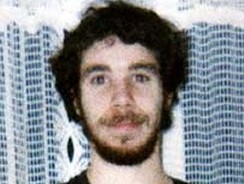 Marc Lepine
Mass murderer · Canada · 1989
Marc Lépine committed a shooting at the École Polytechnique engineering school…
14 victims
Marc Lepine
Mass murderer · Canada · 1989
Marc Lépine committed a shooting at the École Polytechnique engineering school…
14 victims
 Roger Warren
Mass murderer · Canada · 1992
Roger Warren was convicted of 9 counts of second-degree murder in connection to…
9 victims
Roger Warren
Mass murderer · Canada · 1992
Roger Warren was convicted of 9 counts of second-degree murder in connection to…
9 victims
 Pierre Lebrun
Mass murderer · Canada · 1999
Pierre Lebrun committed suicide by shooting himself on April 6 1999, after carr…
4 victims
Pierre Lebrun
Mass murderer · Canada · 1999
Pierre Lebrun committed suicide by shooting himself on April 6 1999, after carr…
4 victims
 Valery Fabrikant
Mass murderer · Canada · 1992
Valery Fabrikant was a former associate professor of mechanical engineering at…
4 victims
Valery Fabrikant
Mass murderer · Canada · 1992
Valery Fabrikant was a former associate professor of mechanical engineering at…
4 victims
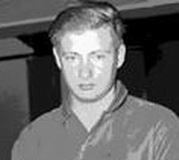 Victor Ernest Hoffman
Mass murderer · Canada · 1967
Victor Ernest Hoffman (born 1946; died May 21, 2004) was found not guilty by re…
9 victims
Victor Ernest Hoffman
Mass murderer · Canada · 1967
Victor Ernest Hoffman (born 1946; died May 21, 2004) was found not guilty by re…
9 victims
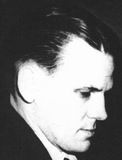 James Crittenton Lucas
Murderer · USA · 1938
James Crittenton Lucas was an American criminal known as James “Texas Bank Robb…
1 victim
James Crittenton Lucas
Murderer · USA · 1938
James Crittenton Lucas was an American criminal known as James “Texas Bank Robb…
1 victim
 Anna Zwanziger
Murderer · Germany · 1808
Anna Margaretha Zwanziger was executed by a sword in Nuremberg on September 17,…
3 victims
Anna Zwanziger
Murderer · Germany · 1808
Anna Margaretha Zwanziger was executed by a sword in Nuremberg on September 17,…
3 victims
 Nicolai Bonner
Serial killer · 2005
Nicolai Bonner was an Israeli serial killer who, in 2005, under heavy influence…
4 victims
Nicolai Bonner
Serial killer · 2005
Nicolai Bonner was an Israeli serial killer who, in 2005, under heavy influence…
4 victims
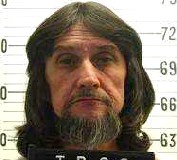 Olen Hutchison
Murderer · USA · 1988
Olen Edward Hutchison, also known as Olen “Eddie” Hutchison, was the defendant.…
1 victim
Olen Hutchison
Murderer · USA · 1988
Olen Edward Hutchison, also known as Olen “Eddie” Hutchison, was the defendant.…
1 victim
- Gender
- male
- Country
- Canada
- Location
- Vernon, British Columbia, Canada
- Date of birth
- 1966
- Age at first offence
- 30
- Characteristics
- revenge, spree killer, domestic violence
- Victim profile
- His estranged wife, her sister (the bride-to-be) and seven of her relatives
- Method of murder
- Shooting
- Date(s) of murder
- April 6, 1996
- Years active
- 1996
- Date of arrest
- —
- Status
-
Died in custody
Killed himself by shooting the same day; massacre ended with assailant suicide
Case information
Marc Chahal was an estranged husband who opened fire at his wife’s family as relatives gathered for a wedding in Vernon, British Columbia. He killed his wife and nine other relatives, wounded two others, and then returned to a motel where he killed himself.
Timeline
- Prior to 5 April 1996 — Marc Chahal threatened his wife after their separation and carried out preparations including exchanging his own vehicle for a rental van before driving to Vernon.
- In January 1995 — Rajwar Kaur Gakhal returned to her family after separating from Chahal and complained to police in Vernon about his violent behavior; she requested that the police take no action.
- April 5, 1996 — Chahal carried out the shooting during a pre-wedding gathering at the Gakhal home in Vernon.
- April 6, 1996 — Chahal’s rampage and suicide were described in reporting, including police statements that the victims included the bride-to-be and that a suicide note apologized for the rampage.
- April 7, 1996 — Reporting described police conclusions that Chahal planned the murders deliberately with an escape in mind, and that he realized he could not escape undetected only when he killed himself.
- April 2, 2006 — Manpreet Grewal published an account of a survivor’s recollections.
Background
Rajwar Kaur Gakhal was the wife of Mark Chahal and an intended target of the attack as her family prepared for a wedding in Vernon. The family was described as Sikh immigrants from India and the Gakhals’ home was in the Mission Hill district of Vernon.
Karnail Gakhal operated a planing machine and worked for 26 years at a Tolko Forest Products Ltd. sawmill in neighboring Lavington. A superintendent, Ron Shunter, recalled Karnail Gakhal as “a friendly sort of fellow, ” “Quiet, reliable, a good employee.”
Chahal had threatened his wife since their separation last year. Rajwar Kaur Gakhal had complained to police at their home in the Vancouver area and then to police in Vernon when she returned to her family after separating from Chahal in January 1995. She requested that police take no action against him. Chahal’s violent behavior and animosity toward his wife and her family were described as known among relatives.
Balwinder Gakhal was described as the intended bride for a wedding planned for that Saturday. Balwinder’s husband, Torlok, was described as Karnail’s cousin. Balwinder reported that Chahal told others “he was going to make sure none of their other daughters would ever get married.”
Friends and relatives continued to arrive in Vernon for what was to have been a wedding celebration. The groom’s name was withheld by family members, and police managed to contact the groom Friday as he traveled from Toronto. The wedding events were also referenced in connection with the Sikh holiday of Vaisakhi, which was coming in the same time period.
The offence
On April 5, 1996, Mark Chahal, 30, walked up to the home of his wife’s family in Vernon as relatives gathered for a wedding. A dark green minivan pulled up to the curb. Chahal stepped from the minivan, levelled a .40-calibre Smith and Wesson semi-automatic handgun (one of two pistols he carried) and fired.
Karnail Gakhal was killed near the Mazda’s right front tire, described as fatally wounded near the driveway with blood streaming down the inclined driveway towards the street. Chahal fired again through a bay window at the front of the house, then entered and moved room to room repeatedly firing both weapons. He paused twice to shove fresh 10-round clips into the semi-automatic.
Neighbor Rick Young described what he saw and heard:
“He had two guns,” said neighbor Rick Young, who was playing outside with his two children. “One in each hand, just like the old western-style shooters, blasting away. He was only a few yards away. He turned and looked me in the eye. I thought I was going to die. He had a full opportunity to plug me full of holes. But he just turned away from me and went around again to the back of the house and then fired some shots at the back.”
Nearby resident Chantal Beaudoin said:
“I heard gunshots and screaming,” said nearby resident Chantal Beaudoin. “I woke my mom up and I told her.”
Chahal walked out of the Gakhal house after police were already on the way. He paused to fire additional rounds into the beige siding. He then stepped into his rented van, buckled his seat belt, and departed.
In addition to Karnail, multiple family members were killed. The account listed the deaths of the estranged wife’s family, including Darshan (45), Rajwar (26), and the bride-to-be Balwinder (24), as well as younger daughters Kalwinder (21), Halvinder (17), and the only son Jaspal (14). The account also listed the deaths of Jasbir (30) and her husband Balgit Saran (33). One of Jasbir’s three young daughters, six-year-old Justine, had a bullet wound through both thighs. Saran’s 60-year-old mother, Gurmail, was injured with a bullet in her face.
A 12-gauge shotgun was found loaded in Chahal’s rented van, and it was described as not used. Police found 28 spent revolver casings and two empty semiautomatic gun clips, described as each containing 10 shots.
A .38-calibre revolver was referenced as one of the weapons used, along with the .40-calibre semiautomatic handgun.
Two people survived: a 60-year-old woman and a 6-year-old girl were shot but survived. The account also stated that two children escaped the gunman entirely and were believed to have been spared intentionally.
Investigation and weapon details
Police described the attack as planned deliberately with an escape in mind. Reporting described how Chahal had exchanged his own vehicle for a rental van before driving to Vernon, suggesting intent to flee after the killings.
Police believed Chahal was only in the home for three to four minutes, but the dead were described as having multiple gunshot wounds. Chahal’s firearms included a .40-calibre semi-automatic handgun and a .30-calibre revolver; a later report referenced a .38-calibre revolver. A 12-gauge shotgun, not used, was found loaded in his rented van.
After the massacre, Chahal drove to a second-floor room at the Globe Motel, where he had checked in the previous evening under the name “M. Singh.” Police said he penned a short apology note, dated and signed, apologizing to his family for what he had done, and leaving telephone numbers so police could reach his next of kin. The note included that police could find his identification in the pocket of his pants.
Arrest and custody
No arrest was described because Chahal died by suicide immediately after the attack.
Trial
No trial proceedings were described.
Sentencing
No sentence was described.
Appeals
No appeals were described.
Outcome
Police said Chahal killed himself after writing an apology for the rampage. A suicide note apologized for the killings and he was found dead on the floor just before 11 a.m. after firing the semi-automatic “one last time—into his own head.”
Police identified a staged connection between the use of a suicide note and the end of the rampage. Sgt. Doug Hartl of the Royal Canadian Mounted Police commented on suicide in connection with whether Chahal used his own car:
“In a murder-suicide, it really is irrelevant whether or not you're using your own car,” said Sgt. Doug Hartl of the Royal Canadian Mounted Police. “We think his decision to commit suicide is a result of what occurred in the house, maybe because he felt his identity would be known.”
Aftermath
A mayor, Wayne McGrath, addressed shock in Vernon:
“Our community is in a state of deep shock,” a sombre Vernon mayor, Wayne McGrath, told a news conference the day after the shootings.
Community members gathered for a candlelight vigil for nine members of the Gakhal family who were killed in a hail of bullets on April 5. The temple became a place of mourning, and as dusk fell on April 5, traditional Sikh wailing filled the building. Temple president Satwant Dhindsa said:
“We are gathering together, talking, preparing hot meals so they will have some comfort, “ said temple president Satwant Dhindsa. “Everybody is in shock. We don't know what to think.”
Police believed Chahal spared two children intentionally, as the account described that two children were the only ones to escape the gunman entirely.
Survivor account and later reflections
The current case summary described survivor Brittany Saran’s recollections of the shooting. Brittany Saran was identified as one of four survivors of the Vernon massacre and described as Chahal’s estranged niece’s family member. The account stated that six-year-old twins Brittany and Justine and four-year-old sister Courtney were watching television with their mom in their grandparents’ living room when Chahal began his rampage. The summary also stated that by the end of the attack, the entire Gakhal family including Brittany’s grandparents, four aunts and an uncle, and mother Jasbir Saran and her father, Roger, were dead.
The summary described Brittany’s memories as follows:
“I remember everything vividly, as if it had happened a couple of hours ago,” says Brittany Saran, speaking for the first time about surviving the massacre that claimed nine family members and gunman Mark Chahal, her estranged uncle.
It described additional personal impacts:
“I remember Halloween firecrackers could make me shudder when I was young,” she says. “I would be scared and run to my grandparents. I can still feel insecure, just hearing a door slam. “I still have haunting dreams of that terrible day. I still feel unsettled if I have to go to Vernon for any reason.”
The summary included statements about school and stage experiences:
“When I am on stage, my eyes always search for my parents' faces in the crowds. I can imagine their camera clicking. Those are some of the hardest mom- ents for me.”
It also quoted the approach her family took in dealing with the tragedy:
“We, as siblings, don't talk about the tragedy too often. We all deal with our ugly memories in our own way.”
Brittany Saran described volunteering and employment memories connected to Abbotsford Community Services (ACS):
“I felt the connection as soon as I walked in,” says Brittany.
She also stated her views about preventing future violence:
“I want my parents remembered not only with happy memories, but also in the context of what happened to them. They need to learn and prevent it from happening in the future. People in government and police need to know that there is something really wrong when people get guns and shoot and change lives forever.”
The summary included a quote from Justine:
Adds Justine: “Our grandparents' whole life in the last 10 years has revolved around us, but they are older and traditional and can only do so much. Absolutely nothing can take the place of our parents.”
Other details
Police said the massacre was the second-worst in Canada’s history, behind the 1989 killing of 14 female engineering students at a Montreal university by a gunman who then killed himself.
After the killings, reporting described that Chahal could not live with what he had done and committed suicide shortly afterward.
The account described that police concluded Chahal had planned the murders deliberately but that he realized he could not escape undetected only when he killed himself.
A forensic psychologist, Stephen Hart of Simon Fraser University in Burnaby, was quoted about the temptation of easy explanations:
“It's tempting to look for an easy explanation when we see visible differences, “ said Stephen Hart, a forensic psychologist at Simon Fraser University in Burnaby. “It allows us to say, 'that won't happen to us.' “
An additional psychologist-like analysis quote included abusive-men entitlement:
“Abusive men often view themselves as king of the castle-their control over the family is tied to identity,” he sa id. “That is true in the West-but in other cultures the belief can be more extreme.”
Gian Sandhu, a resident of Williams Lake, B.C., and past president of the Canadian branch of the World Sikh Organization, commented on concern about cultural stereotyping:
“That idea concerns us,” said Gian Sandhu, a resident of Williams Lake, B.C., and past president of the Canadian branch of the World Sikh Organization. “This was an appalling tragedy-why is it being painted as having a cultural nature?”
Gian Sandhu further stated:
“Arranged marriages are not the same as they w ere 50 years ago,” he added. “It's more like assisted marriage, and there is consent by the bride and groom.”
A counsellor perspective was attributed to Shashi Assanand:
“The issues of power and control are the same in all cultures,” she says. “ What is different is the way people respond. With an arranged marriage, everyone takes an active role in making or breaking the relationship. So the blame can be attached to the whole family. It's likely that in Chahal's mind, the Gakhals were part of the problem because they were protecting his wife.”
The summary included comments from Aruna Papp and a quote about violence being seen as part of marriage:
“ Asian couples often think that violence is just part of marriage,” she says. “And women are socialized to believe that marriage is their fate, and that they cannot leave.”
It also referenced a book, The Seven of Us Survived, and described that it chronicles the failure of several arranged marriages.
Spotted an error, or have more information about this case?