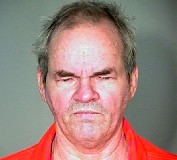
Warren Summerlin
Murderer Ervil LeBaron
Murderer · USA · 1972
Ervil Morrell LeBaron (1925 to August 16, 1981) was the leader of a polygamous…
35 victims
Ervil LeBaron
Murderer · USA · 1972
Ervil Morrell LeBaron (1925 to August 16, 1981) was the leader of a polygamous…
35 victims
 Brian Kevin Rosenfeld
Murderer · USA · 1985
Brian Kevin Rosenfeld Brian Kevin Rosenfeld was sentenced to three concurrent l…
23 victims
Brian Kevin Rosenfeld
Murderer · USA · 1985
Brian Kevin Rosenfeld Brian Kevin Rosenfeld was sentenced to three concurrent l…
23 victims
 Marvin Gray
Murderer · USA · 1975
Marvin Gray was convicted killer who claimed responsibility for 23 slayings and…
23 victims
Marvin Gray
Murderer · USA · 1975
Marvin Gray was convicted killer who claimed responsibility for 23 slayings and…
23 victims
 Yahweh ben Yahweh
Murderer · USA · 1980
Yahweh ben Yahweh was born and legally named Hulon Mitchell Jr. (October 27, 19…
23 victims
Yahweh ben Yahweh
Murderer · USA · 1980
Yahweh ben Yahweh was born and legally named Hulon Mitchell Jr. (October 27, 19…
23 victims
 Russell Ellwood
Murderer · USA · 1991
Russell Ellwood was a former taxi driver. Authorities suspected him of killing…
20 victims
Russell Ellwood
Murderer · USA · 1991
Russell Ellwood was a former taxi driver. Authorities suspected him of killing…
20 victims
 Tyrone Noling
Murderer · USA · 1990
Tyrone Noling was sentenced to death for the murders of Bearnhardt Hartig and C…
2 victims
Tyrone Noling
Murderer · USA · 1990
Tyrone Noling was sentenced to death for the murders of Bearnhardt Hartig and C…
2 victims
 Celeste Beard
Murderer · USA · 1999
Celeste Beard Johnson (born February 13, 1963) was a convicted American murdere…
1 victim
Celeste Beard
Murderer · USA · 1999
Celeste Beard Johnson (born February 13, 1963) was a convicted American murdere…
1 victim
 Myra Osborne
Murderer · USA · 2010
Myra Osborne of Vandalia, Mo. was the former co-worker of Carol Andrews, a 72-y…
1 victim
Myra Osborne
Murderer · USA · 2010
Myra Osborne of Vandalia, Mo. was the former co-worker of Carol Andrews, a 72-y…
1 victim
- Gender
- male
- Country
- USA
- Location
- Phoenix, Arizona, USA
- Date of birth
- February 4, 1947
- Age at first offence
- 34
- Characteristics
- rape
- Victim profile
- Brenna Jean Bailey (delinquent account investigator)
- Method of murder
- B ashed in her head
- Date(s) of murder
- April 29, 1981
- Years active
- 1981
- Date of arrest
- Next day
- Status
-
Sentenced to death
Sentenced to death on July 12, 1982
Case details
Defendant: Warren Wesley Summerlin Victim: Brenna Jean Bailey
Background
On April 29, 1981, Brenna Jean Bailey went to Summerlin's Phoenix home to see if Summerlin could somehow make payments on his delinquent loan. Summerlin sexually assaulted Bailey and then bashed in her head. He wrapped her body in his stepdaughter's bedspread, stuffed her in the trunk of his car, and parked it at a parking lot not far from his home.
The offence
Brenna Jean Bailey was assaulted, her head was bashed, and she was wrapped in Summerlin's stepdaughter's bedspread. Her body was put in the trunk of Summerlin's car and later found in connection with a decaying-body odor.
Investigation
An anonymous crime hotline tip led investigators to suspect Summerlin had murdered the missing woman from “Pacific Finance Company” and that he had rolled up the victim's body in a carpet. The caller was later identified as Summerlin's mother-in-law, who testified that the basis of her information was her daughter's extra-sensory perception.
Early the next morning, a road paving crew outside a market about a mile from the Summerlin residence alerted the market's manager to a smell emanating from the trunk of a parked car, later determined to have been owned by Bailey. The manager recognized the odor as that of a decaying body and telephoned the police.
Upon arrival, officers observed a pair of panties, pantyhose, and shoes on the floor-board of the back seat. They forced open the trunk and found Bailey's body wrapped in a bloody bedsheet. Her skull was crushed, and she was partially nude.
Police obtained a search warrant for the Summerlin residence and found numerous items of incriminating evidence. After the search warrant was read to Summerlin, he stated, “I didn't kill nobody.” When the detective did not respond, Summerlin asked: “Is this in reference to the girl that was at my house?” In response to the officer's inquiry as to which girl he was referring, Summerlin described Bailey. Summerlin's wife identified the bloody bedspread found with the victim as belonging to the Summerlin household.
Arrest
Summerlin was arrested for the murder of Brenna Bailey. At the police station, he asked to speak to his wife and then made several incriminating statements while police officers were within listening distance.
Trial
Presiding Judge: Philip W. Marquardt Prosecutor: Jessica Gifford Start of trial: June 1, 1982 Verdict: June 8, 1982
The jury found Summerlin guilty of both first-degree murder and sexual assault. The judge set a sentencing hearing to hear testimony and argument on aggravating and mitigating circumstances approximately one month after the verdict.
During the trial proceedings in the murder case, the entire case lasted only four days, and the jury was out for a little over three hours.
Other criminal matter mentioned
Summerlin was also convicted of aggravated assault in a separate proceeding connected to a road rage incident. The aggravated assault conviction later served as one of two statutory aggravating circumstances in the penalty phase of the murder trial.
Sentencing
Sentencing: July 12, 1982
At sentencing, the judge found two aggravating circumstances and no sufficiently substantial mitigating circumstances. The court relied on two statutory grounds:
- That the defendant had a prior felony conviction involving the use or threatened use of violence on another person, Ariz. Rev.Stat. § 13-703(F)(2) (1981) (amended in 1993).
- That Summerlin committed the offense in an especially heinous, cruel, or depraved manner, id. § 13-703(F)(6).
Aggravating circumstances: Prior convictions involving violence; especially heinous/cruel/depraved Mitigating circumstances: None
Summerlin was sentenced to death.
Appeals
Published opinions:
- State v. Summerlin, 138 Ariz. 426, 675 P.2d 686 (1983).
- Schriro v. Summerlin, 542 U.S. 348 (2004).
Federal habeas proceedings and Ring
In Schriro v. Summerlin, the United States Supreme Court held that a requirement that aggravating factors be found by a jury rather than a judge would not be applied retroactively.
In Summerlin v. Stewart in the United States Court of Appeals for the Ninth Circuit, the court considered whether to grant a writ of habeas corpus as to Summerlin's conviction and death sentence. The Ninth Circuit affirmed the district court's judgment as to the conviction but concluded that Ring v. Arizona required that the penalty of death in this case be vacated.
The Ninth Circuit opinion stated that Ring applied retroactively so as to require that the penalty of death be vacated.
The Ninth Circuit also discussed Summerlin’s claims on appeal, including claims of ineffective assistance of counsel during the guilt phase and the sentencing phase, a constitutional challenge to Arizona’s death penalty statute as applied (judge versus jury for elements necessary for a death sentence), a conflict of interest involving the public defender, a due process claim based on the trial judge’s marijuana use during trial and deliberation, and a cumulative errors argument. The Ninth Circuit held:
- It affirmed the district court’s judgment denying habeas relief as to the conviction for first-degree murder.
- It reversed the judgment insofar as it related to the imposition of the penalty of death, based on retroactive application of Ring.
- It remanded.
- It concluded it did not need to reach the merits of other penalty-phase errors or whether cumulative errors required reversal.
Key procedural disposition in the Ninth Circuit: AFFIRMED IN PART; REVERSED IN PART; REMANDED.
State reassurances after Ring
After the Ring decision, the Arizona Supreme Court vacated all death sentences in cases pending on direct appeal, see State v. Smith, 203 Ariz. 75, 50 P.3d 825, 831 (2002). The Arizona legislature later changed the substantive law pertaining to capital punishment to provide for jury sentencing in capital cases.
Outcome
Summerlin received a sentence of death on July 12, 1982.
The Ninth Circuit concluded that Ring v. Arizona required vacating the death penalty, reversing the district court’s judgment insofar as it related to the penalty of death and remanding.
Other details
Presiding and prosecution roles
The sentencing hearing’s presiding judge was Judge Marquardt, and the aggravation and mitigation process included brief proceedings. The recorded aggravation case before the sentencing judge consisted of certified copies of documents relating to the aggravated assault conviction, and the sentencing hearing extended only twenty-six transcript pages.
In-transaction statements
After the search warrant was read, Summerlin stated: “I didn't kill nobody.” When the detective did not respond, Summerlin asked: “Is this in reference to the girl that was at my house?” During discussion after counsel arrangements, the exchange included:
- Roe’s statement to the court: “I believe he understands, your Honor.”
- Summerlin’s response: “No, I don't understand,”
- Roe’s reply: “Then what is your question?”
- Summerlin asked and said about withdrawing: “Okay. I would like to withdraw from my plea agreement. Is that what you want me to say?”
At sentencing phase discussions about witnesses in mitigation, counsel stated: “With the consent of the Defendant, the Defendant has no witnesses in mitigation at this time and ... we'll rest.” When asked about Monday, counsel stated: “Well, I would not call any witnesses at all.”
Spotted an error, or have more information about this case?