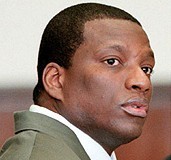
Alfred Gaynor
Serial killer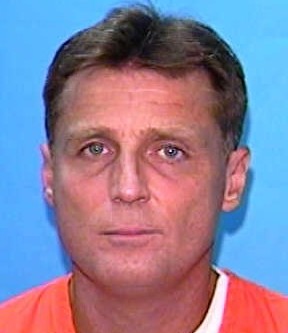 Glen Edward Rogers
Serial killer · USA · 1993
Glen Edward Rogers was a spree killer whose cross-country rampage in 1994-95 le…
70 victims
Glen Edward Rogers
Serial killer · USA · 1993
Glen Edward Rogers was a spree killer whose cross-country rampage in 1994-95 le…
70 victims
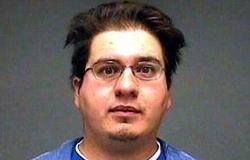 Efren Saldivar
Serial killer · USA · 1989
Efren Saldivar (born 30 September 1969) was an American serial killer who murde…
50 victims
Efren Saldivar
Serial killer · USA · 1989
Efren Saldivar (born 30 September 1969) was an American serial killer who murde…
50 victims
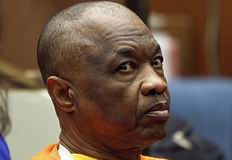 Lonnie Franklin
Serial killer · USA · 1985
Lonnie Franklin was convicted as the “Grim Sleeper” serial killer, a nickname u…
25 victims
Lonnie Franklin
Serial killer · USA · 1985
Lonnie Franklin was convicted as the “Grim Sleeper” serial killer, a nickname u…
25 victims
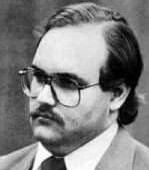 Richard Angelo
Serial killer · USA · 1987
Richard Angelo was 26 years old when he went to work at Good Samaritan Hospital…
25 victims
Richard Angelo
Serial killer · USA · 1987
Richard Angelo was 26 years old when he went to work at Good Samaritan Hospital…
25 victims
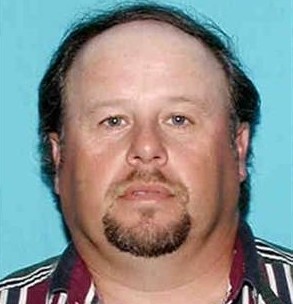 Ronald Dominique
Serial killer · USA · 1997
Ronald Joseph Dominique (born 1964) was an American serial killer from the Bayo…
23 victims
Ronald Dominique
Serial killer · USA · 1997
Ronald Joseph Dominique (born 1964) was an American serial killer from the Bayo…
23 victims
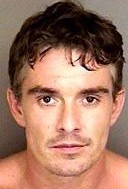 Jeremy Jones
Serial killer · USA · 1992
Name: Jeremy Jones · Aliases/identities mentioned: John Paul Chapman · Age (as…
21 victims
Jeremy Jones
Serial killer · USA · 1992
Name: Jeremy Jones · Aliases/identities mentioned: John Paul Chapman · Age (as…
21 victims
 Susan Eberhart
Murderer · USA · 1872
Susan Eberhart was a white woman aged between 17 and 21. She served as the hous…
1 victim
Susan Eberhart
Murderer · USA · 1872
Susan Eberhart was a white woman aged between 17 and 21. She served as the hous…
1 victim
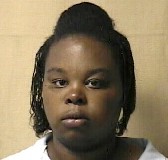 Dorthia Bynum
Homicide · USA · 1998
Dorthia Bynum was sentenced to a minimum of 124 years in prison after pleading…
1 victim
Dorthia Bynum
Homicide · USA · 1998
Dorthia Bynum was sentenced to a minimum of 124 years in prison after pleading…
1 victim
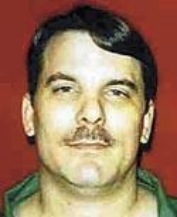 David Clayton Hill
Murderer · USA · 1994
June 9, 1964 — David Clayton Hill was born. · March 7, 1994 — Spencer Guerry wa…
1 victim
David Clayton Hill
Murderer · USA · 1994
June 9, 1964 — David Clayton Hill was born. · March 7, 1994 — Spencer Guerry wa…
1 victim
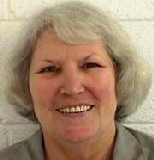 Lois Nadean Smith
Murderer · USA · 1982
Lois Nadean Smith was convicted of the July 4, 1982 murder of 21-year-old Cindy…
1 victim
Lois Nadean Smith
Murderer · USA · 1982
Lois Nadean Smith was convicted of the July 4, 1982 murder of 21-year-old Cindy…
1 victim
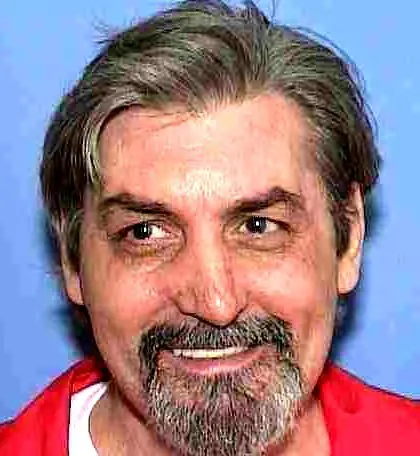 Jessie Derrell Williams
Murderer · USA · 1983
Jessie Derrell Williams was executed by lethal injection in Mississippi on Dece…
1 victim
Jessie Derrell Williams
Murderer · USA · 1983
Jessie Derrell Williams was executed by lethal injection in Mississippi on Dece…
1 victim
- Gender
- male
- Country
- USA
- Location
- Springfield, Massachusetts, USA
- Date of birth
- 1967
- Age at first offence
- 28
- Characteristics
- rape, rapist, drugs, drug addict
- Victim profile
- Vera E. Hallums, 45 / Amy Smith, 20 / Jill Ann Ermellini, 34 / Robin M. Atkins, 29 / JoAnn C. Thomas, 38 / Yvette Torres, 33 / Loretta Daniels, 38 / Rosemary Downs, 42 / Joyce Dickerson-Peay, 37
- Method of murder
- Strangulation
- Date(s) of murder
- 1995 - 1998
- Years active
- 1995–1998
- Date of arrest
- April 10, 1998
- Status
-
Life imprisonment
Sentenced to life in prison on May 19, 2000
Case record: Alfred Gaynor
Background
Alfred Gaynor was a serial killer from western Massachusetts who was convicted in 2000 of four murders and later admitted responsibility for additional killings. Prosecutors and police said he robbed other women for drug money, raped most of his victims, and often posed their bodies grotesquely to shock whoever found them. In several cases, the bodies were discovered by the victims’ young children. Gaynor said he had been an addict spurred by an addiction to crack cocaine and alcohol. He also said, “I know it’s hard to understand but I truly am a good person.” He said he did not want to admit guilt in any murders because he did not want to hurt his mother who died in 2006, stating, “I just couldn’t destroy everything she believed in.” He said, “Nothing was going to separate me from my drugs,” and, “Crack cocaine is your first and last love.” At a September 2009 hearing, Gaynor said he took so long to admit he killed Amy Smith and others because, “I was embarrassed and I didn’t want it to appear that I was a monster, but I came to conclusions that I am."
At one point after his 2000 convictions, Gaynor proclaimed, “I’m innocent.”
Gaynor’s nephew, Paul Fickling, was serving time on a manslaughter conviction reduced from a murder charge for his role in the 1996 deaths of Paul Fickling’s ex-girlfriend, Amy Smith, and Smith’s toddler, who was left to die alone with her mother’s body. Gaynor confessed to killing Smith but had not been indicted in that case.
The offence
Murder and rape convictions (2000 trial)
Gaynor was convicted of killing four women: JoAnn C. Thomas, Loretta Daniels, Rosemary Downs, and Joyce Dickerson-Peay.
The crimes occurred during a three-month killing spree in 1997-1998, in Springfield, Massachusetts, and the trial for the four murders was held as a single trial for all four murder and rape charges.
Prosecutors said Gaynor offered the victims cocaine, then sodomized them and choked them to death. DNA tests were described as a key part of the case, linking Gaynor to physical evidence found on or near the bodies of the four women.
Additional admissions (pleas in 2010)
In 2010, Gaynor added an eighth murder to his record by admitting that a woman he strangled in 1995 was his first killing. His guilty plea to another murder placed him among the most prolific serial killers in recent Massachusetts history, according to prosecutors.
Gaynor admitted raping and killing three women in 1997: Jill Ann Ermellini, Yvette Torres, and Robin Atkins. He also confessed to the murders of these women and to the murder of Vera Hallums. His new admissions were made public during proceedings that involved a plea deal for his nephew, Paul Fickling.
The victims described in the additional admissions were:
- Vera Hallums, a 45-year-old mother of four, tied with electrical cords, beaten and strangled in her Springfield apartment in April 1995.
- Jill Ann Ermellini, 34, whose body was found inside an abandoned truck at 406 Oak St. in Indian Orchard on June 16, 1997.
- Yvette Torres, 33, whose partially clothed body was found propped against the bathroom door of her Healy Street apartment on November 15, 1997.
- Robin Atkins, whose body was found in an alley next to 19 Spring St. on Oct. 25, 1997.
Gaynor pleaded guilty to three more murders and was sentenced to concurrent life terms without the possibility of parole for the rape and murders of Atkins, Ermellini and Torres.
Investigation
In preparation for the new trial for Paul Fickling, DNA testing was described as finding that Fickling was not the child’s father, although he thought he was the father of Destiny Smith.
For the 2000 convictions, the state Supreme Judicial Court decision described DNA as a key factor. The court said police did every DNA test available and the results came up the same way once they got Gaynor’s sample, and they could not exclude him.
Police and prosecutors described a claim by the defense that Gaynor was tricked into voluntarily giving a blood sample used to build a genetic profile connecting him to all four murders. The defense argued Springfield Sgt. Mark Rolland and Detective Eugene Dean fooled Gaynor into voluntarily giving a blood sample that provided the DNA, and that the test results would be used only to compare with blood found inside the fourth murder victim’s car.
The Supreme Judicial Court ruled that police never stated that Gaynor’s blood would be used solely for comparison to the blood in the car, and that police did not have to tell a defendant all the purposes for extracting blood. The court also rejected the argument that Gaynor had been tricked into providing police with blood samples for DNA tests.
Arrest
During the period described in the case record, Gaynor had been arrested after killings that included the murder of Vera Hallums in April 1995 and additional killings thereafter. A report in 2010 described that by the time he was arrested three years later, he had killed eight other women and that the toddler daughter of one of his victims had been left with her mother’s body to die of starvation and dehydration in the family’s South End apartment.
The date “April 8, 1998” was used in describing the time of his arrest in relation to other unsolved homicides.
Trial
2000 convictions and sentencing
In May 2000, Gaynor was convicted of four murders and sentenced to four life terms without parole, according to the accounts in the record. The New York Times described the sentencing as four life terms without parole and described the prosecution’s theory that Gaynor offered cocaine to the victims, sodomized them and choked them to death.
The state Supreme Judicial Court later described Gaynor as convicted by an all-white jury in Berkshire County. The defense had sought to move the trial to Boston for a more racially diverse jury, and all victims were described as black.
Gaynor continued to deny his guilt after the verdicts, telling a television news crew from Springfield that he was innocent just before he was taken away in a van.
Sentencing
May 19, 2000
Gaynor was sentenced to life in prison on May 19, 2000. The case record described that his later concurrent life terms without possibility of parole were imposed in 2010 for the rape and murders of Atkins, Ermellini and Torres.
In 2010, he was sentenced to an eighth life term, and “without my truth, they have nothing,” was said by Gaynor in court as he was sentenced to an eighth life term.
Gaynor was ordered to serve concurrent life terms without the possibility of parole for the rape and murders of Atkins, Ermellini and Torres.
Appeals
2005 Supreme Judicial Court decision
The Massachusetts Supreme Judicial Court upheld the conviction of Alfred J. Gaynor and refused to order a new trial, dismissing key defense arguments that police used trickery in obtaining evidence and that it was wrong to join the cases at trial.
Associate Justice Francis X. Spina wrote a 42-page decision. The court refused to order a new trial for Alfred J. Gaynor, who was serving four consecutive life sentences.
The decision rejected Gaynor’s request to reduce the verdicts and rejected the defense’s claim that the trial judge erred by joining the four murder and rape charges at a single trial. The defense argued that the cases shared common features but did not constitute parts of a single scheme or plan. The district attorney said it was the first and only time serial murders were joined for a single trial in a state court.
The court also rejected the claim that the trial judge made a mistake in failing to select jurors from a fair cross section of the community. It stated that when a defendant moves for a change of venue, the defendant waives the right to be tried by a jury drawn from a pool representative of the venue where the crime occurred, and that Gaynor had no state constitutional right to have the case transferred to a county having a minority population at least as great as the county where the crime took place.
Additional denial of new trial
In January 2005, the Supreme Judicial Court denied an appeal by Alfred Gaynor, who was serving four consecutive life sentences for sodomizing and strangling four women over a three-month period in 1997 and 1998. The justices found that the similarities among the killings and DNA evidence indicating the victims had died shortly after having intercourse with Gaynor warranted a single trial. The justices rejected arguments by Gaynor’s lawyer that Gaynor had been tricked into providing police with blood samples for DNA tests. The decision quoted a rationale that police were under no obligation to inform a defendant of all purposes for which his blood tests might be used.
The decision described the victims as Loretta Daniels, JoAnn Thomas, Joyce Dickerson, and Rosemary Downs, and it described the first to be killed as Thomas, 38, found strangled on her living room couch on Nov. 1, 1997.
Outcome
Victim list for convictions and admissions
The case record stated that Gaynor was convicted by a jury of killing:
- Vera E. Hallums: 45, tied, beaten and strangled in her apartment at 31 Leland Drive on April 20, 1995.
- Amy Smith: 20, thought to have been dead for a week when she was found in her apartment at 280 Dwight St. Extension on July 11, 1996; her 22-month-old daughter, left with her mother’s body, died of starvation and dehydration.
- Jill Ann Ermellini: 34, found June 16, 1997, in the cab of a truck in an Indian Orchard auto body yard.
- Robin M. Atkins: 29, found strangled, bound and gagged in a downtown alley on Oct. 25, 1997.
- JoAnn C. Thomas: 38, found in her 866 Worthington St. home on Nov. 1, 1997.
- Yvette Torres: 33, her partially clothed body was found propped against the bathroom door of her Healy Street apartment on Nov. 15, 1997.
- Loretta Daniels: 38, found in an alley beside the Mason Square post office on Feb. 2, 1998.
- Rosemary Downs: 42, found in her 5 Lionel Benoit Road home on Feb. 11, 1998.
- Joyce Dickerson-Peay: 37, found March 11, 1998, outside an empty restaurant on East Columbus Avenue.
The Supreme Judicial Court accounts described Gaynor as convicted in 2000 of raping and killing four Springfield women in 1997 and 1998, and listed those victims as JoAnn Thomas, Loretta Daniels, Rosemary Downs and Joyce Dickerson-Peay.
Details of specific victim deaths mentioned in the case record
Vera Hallums (April 1995)
Vera Hallums was tied with electrical cords, beaten and strangled in her Springfield apartment in April 1995.
In 2010 court proceedings, prosecutor statements described that Vera Hallums was Gaynor’s first killing admitted in connection with the eighth life term.
Jill Ann Ermellini (June 16, 1997)
Assistant District Attorney Carmen W. Picknally related that on June 16, 1997, Ermellini’s body was found inside an abandoned truck at 406 Oak St. in Indian Orchard. Her body was described as badly decomposed, her clothing had been removed, cocaine was found in her system, and because of the state of the body, the cause of death was undetermined.
Gaynor’s statements through Picknally were described as stating that Jill Ermellini was a passenger in a car driven by a man; the driver asked Gaynor if he knew where to get cocaine and the three went to do cocaine. Picknally said:
- “At that point Mr. Gaynor and Ms. Ermellini decided to get some cigarettes. They went to the store and Ms. Ermellini went in to get cigarettes and Mr. Gaynor picked up two white stones from the ground that looked like cocaine,” Picknally said.
- “Mr. Gaynor then proposed they have sex, she refused, she attempted to leave the truck,” he said.
- “He choked her until she passed out,” Picknally said, saying that Ermellini “tried a variety of methods to stop him.”
- “He removed her clothes, raped her and choked her to death,” Picknally said.
Yvette Torres (November 15, 1997)
On Nov. 15, 1997, at about 6:30 a.m., police were called to Yvette Torres’ Indian Orchard home, where she was found dead on the bathroom floor wearing only a shirt. Her 11-year-old son found her.
Picknally stated that when Torres was found she had bruising on her chin and lip, she had a large amount of cocaine in her system, and the medical examiner listed the cause of death as undetermined and the manner of death as acute cocaine intoxication.
Gaynor now admitted to choking and raping Torres, leaving her dead in the bathroom, and stealing a video cassette recorder and other items from her apartment to trade for crack.
Robin Atkins (October 25, 1997)
Picknally said that Atkins had a high level of cocaine in her system and was found dead on Oct. 25, 1997, in an alley next to 19 Spring St. Her lower body was described as not covered except for a sock on one foot. The other sock was described as used as a gag and tied in a knot behind her head. Her hands were described as bound behind her back with the laces of one of her boots. A wad of compressed paper was described as found in her mouth extending down to her epiglottis. Abrasions were described on her face and neck and bruises were described on her knees.
Picknally described Gaynor’s account as telling investigators two weeks earlier that he was looking for crack and bumped into Atkins with another male and all three looked for crack, bought some, used it and separated. Picknally said:
- “Mr. Gaynor ran into Ms. Atkins a while later that evening. He told her he had more crack. They went down into an alley to use crack. When she learned he had none she turned to leave,” Picknally said.
- “He choked her from behind and wanted to rape her, Picknally said.”
- “She was choked unconscious. He tied her hands.”
- “He also recalls shoving a sock in her mouth,” Picknally said.
Picknally said Gaynor then raped Atkins, then took money from her purse and used it to pay for a bus ride home.
Amy Smith and Destiny Smith (June 1996)
The case record stated that Amy Smith, beaten and choked, died of asphyxiation in her Dwight Street Extension apartment in June 1996, and that her daughter, Destiny, died of starvation and dehydration before anyone discovered the mother’s body.
Bennett and other statements described police dispatch to Smith’s apartment at 280 Dwight St. Extension on July 11, 1996. Police were described as finding the body of the child on a mattress on the living room when they first arrived; Destiny Smith was believed to have been dead for several days. The body of the child’s mother was described as found in a closet, believed dead for about a week.
Bennett said Fickling was then 19 and admitted going to the apartment with Gaynor, then 29. Bennett said:
- “While they were there, (Fickling) argued with Smith, got angry, struck her, placed her in a headlock, squeezed her neck for approximately two to three minutes,” Bennett said. Bennett said Fickling stated it was Gaynor who tied Smith’s hands, placed her in a closet and put a sock in her mouth. Bennett said Smith died as a result of asphyxiation either by the chokehold, the sock or a combination of both.
Bennett said:
- “Knowing that Amy Smith was dead the defendant ran out of the apartment, and, after a while Gaynor followed. Destiny Smith was left in the apartment alone with her mother, and incapable of caring for herself,” Bennett said.
The case record further said Gaynor in his confession said Smith was alive when he raped her and he then choked her to death so she would not identify him.
Other unsolved homicides mentioned
The record also described that Bennett said he knew of no connection between Gaynor and a number of other unsolved homicides of Springfield women found dead between 1990 and Gaynor’s arrest on April 8, 1998. Those women were listed as:
- Shana R. Price, 17, of 73 Dartmouth St., found strangled, beaten and sexually assaulted at Blunt Park on Dec. 26, 1990.
- Myrtle Marrett, 90, found beaten Jan. 20, 1991, in her Union Street apartment.
- Lisa DiSilva, 21, found strangled in her apartment at 26 Tracy St. on April 1, 1991.
- Corine L. Lee, 32, found strangled in a downtown location on May 25, 1992.
- Celestina Perez, 24, found strangled and beaten June 2, 1995, in Gurdon Bill Park.
Aftermath
Art offered for sale and legal actions relating to appeals
In November 2005, it was described that the Hampden district attorney was furious that a man convicted of raping, strangling and killing four women in the Springfield area in the late 1990s was being allowed to offer his art work for sale on the Internet. Hampden District Attorney William Bennett said:
- “Will they be showing pictures of the women he murdered at the same time?”
Gaynor’s crayon drawing was described as depicting Jesus kneeling against a rock in prayer with a cactus and mountains in the background. The drawing was described as entitled “A Righteous Man's Reward,” with bidding starting at $15. It was described as being on a Web site of an advocacy group for prisoners.
The state laws were described as not prohibiting criminals from profiting from their notoriety.
The record described Gaynor, 38, as convicted in 2000 of killing JoAnn Thomas, 38; Loretta Daniels, 38; Rosemary Downs, 42; and Joyce Dickerson-Peay, 37. It said he was serving four consecutive life sentences at the state’s maximum security Souza-Baranowski Correctional Center in Shirley.
Bennett was quoted telling the Boston Herald:
- “The deaths created a great deal of fear in our community,”
The record said Gaynor’s artwork was one of 287 pieces of work for sale and could even be one of 130 selected for a show called “Insider Art: The New Outsider Art” in December at a Manhattan gallery. It described JoAnn Page as saying:
- “We believe strongly that in addition to the punishment, there should be rehabilitation,” and it described show organizer Kristen Kidder as saying:
- “We don't want to look at the worst thing a person ever did as being their whole self,”
- “We never know, for the most part, what these people have done unless they choose to share it. They're just so happy to have the opportunity to express themselves in another way. It shows their humanity.”
The record described a statement by state Correction Department spokeswoman Diane Wiffin that there was no formal art program at Souza-Baranowski, but Gaynor was allowed to draw in his cell using approved art supplies he paid for himself. It said there was also no chance he would receive a furlough if his work was selected for the Manhattan show. It stated there had been no furloughs from Souza-Baranowski since 1995.
John Kelly of New Jersey-based Stalk Inc. was quoted saying:
- “Selling and buying inmate art is not a good idea,”
- “By reinforcing their fame by buying whatever they are selling, it's sending the wrong message to society,”
The record also said Gaynor’s bid for a new trial was denied by the Supreme Judicial Court earlier that year, with lawyers appealing on grounds including a judge’s denial of defense motions to suppress evidence and the decision to hold a single trial for all four murders. It said the defense sought to try Gaynor, who was black, before an all-white jury in Berkshire County, and sought to move the case to Boston for a larger minority population. It noted that all of Gaynor’s victims were also black.
Statements at sentencing in 2010
At the 2010 sentencing associated with an eighth life term, Gaynor said:
- “That’s all I have left to give, is the truth,” and:
- “Without my truth, they have nothing.”
Oletha Wells, 40, one of Hallums’ daughters, called her mother’s death and the aftermath, including Gaynor’s confession about the details, “nothing but a nightmare.” Wells was quoted saying:
- “If anything, it made things worse,”
- “We really don't have any understanding of why he did it. ... This is not nowhere near closure.”
District Attorney William Bennett said the prosecution felt it was important that the lives of these women be vindicated by the harshest sentence that the commonwealth allowed to be applied in each of their cases. Picknally was quoted:
- “It’s a sad occasion for the family to have to relive the torment of 15 years ago,” he said Tuesday.
- “However, we felt it's important that the lives of these women be vindicated by the harshest sentence that the commonwealth allows to be applied in each of their cases.”
Picknally was also quoted describing the cases and their backgrounds, including:
- “It is not a sign of a lack of affection, it is not a sign that their grief is not deep,”
Other details
Appearance, counsel, and named officials
- Gaynor was represented by lawyer Peter L. Ettenberg at the 2010 hearing.
- Hampden Superior Court Judge Peter A. Velis sentenced Gaynor to concurrent life terms without the possibility of parole for the rape and murders of Atkins, Ermellini and Torres.
- Picknally related facts of each death at the 2010 hearing.
- Hampden district attorney William M. Bennett described the guilty pleas as attesting to skill and determination of investigators assigned to the Gaynor case since the mid-1990s, and added:
- “It’s really an unbelievable situation,”
- “I doubt there’s ever been a defendant like Alfred Gaynor in the history of the commonwealth.”
- In relation to the Fickling case, Judge C. Brian McDonald was mentioned in connection with details of the plea-bargaining agreement and admissions.
- In the 2000 appeals context, Superior Court Judge Daniel A. Ford denied defense motions to suppress evidence and joined the four murders and rape charges at a single trial.
- On appeal, Gaynor’s lawyer Kenneth J. King of Boston was named, and his counsel argued issues including suppression and jury issues.
- Associate Justice Francis X. Spina authored the 42-page Supreme Judicial Court decision.
- Assistant District Attorney Marcia B. Julian argued the case in front of the high court on Oct. 7, as described in the record.
- Springfield police and Assistant District Attorney actions were described in the record.
Paul Fickling plea outcome details
Paul Fickling pleaded guilty to reduced charges of manslaughter for the deaths of Amy Smith and her toddler, Destiny Smith. The record described:
- Fickling had been convicted by a jury in 1998 of first-degree murder in the deaths of the mother and child, but sought a new trial on the basis of Gaynor’s confession.
- Fickling had been serving a life sentence and was sentenced to a 19- to 20-year state prison term, of which he had already served 14 years.
- The plea negotiations resulted in the manslaughter resolution for Smith and Destiny.
Spotted an error, or have more information about this case?