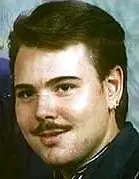
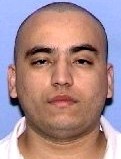
Brian Lee Cherrix
Murderer Brian Kevin Rosenfeld
Murderer · USA · 1985
Brian Kevin Rosenfeld Brian Kevin Rosenfeld was sentenced to three concurrent l…
23 victims
Brian Kevin Rosenfeld
Murderer · USA · 1985
Brian Kevin Rosenfeld Brian Kevin Rosenfeld was sentenced to three concurrent l…
23 victims
 Russell Ellwood
Murderer · USA · 1991
Russell Ellwood was a former taxi driver. Authorities suspected him of killing…
20 victims
Russell Ellwood
Murderer · USA · 1991
Russell Ellwood was a former taxi driver. Authorities suspected him of killing…
20 victims
 Robert Martines Perez
Murderer · USA · 1994
Name: Robert Martines Perez · Other name used in proceedings: Robert Martinez P…
15 victims
Robert Martines Perez
Murderer · USA · 1994
Name: Robert Martines Perez · Other name used in proceedings: Robert Martinez P…
15 victims
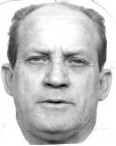 Billy Frank Vickers
Murderer · USA · 1993
Billy Frank Vickers Vickers was executed by lethal injection in Texas on Januar…
14 victims
Billy Frank Vickers
Murderer · USA · 1993
Billy Frank Vickers Vickers was executed by lethal injection in Texas on Januar…
14 victims
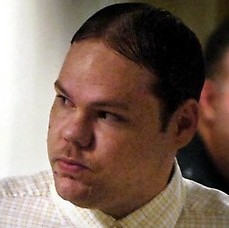 Eugene McWatters
Murderer · 2004
Eugene Wayman McWatters Jr. was sentenced to death for killing three women in t…
3 victims
Eugene McWatters
Murderer · 2004
Eugene Wayman McWatters Jr. was sentenced to death for killing three women in t…
3 victims
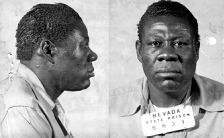 James Williams
Murderer · USA · 1948
James Williams was executed by asphyxiation-gas in Nevada on August 25, 1950. J…
2 victims
James Williams
Murderer · USA · 1948
James Williams was executed by asphyxiation-gas in Nevada on August 25, 1950. J…
2 victims
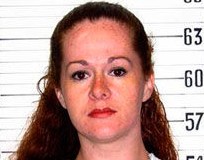 Christa Pike
Murderer · USA · 1995
Christa Gail Pike was sentenced to death on March 29, 1996. She was the younges…
1 victim
Christa Pike
Murderer · USA · 1995
Christa Gail Pike was sentenced to death on March 29, 1996. She was the younges…
1 victim
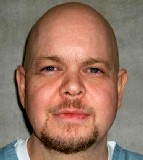 Timothy Stemple
Murderer · USA · 1996
Timothy Shaun Stemple was convicted by jury of first degree malic murder (count…
1 victim
Timothy Stemple
Murderer · USA · 1996
Timothy Shaun Stemple was convicted by jury of first degree malic murder (count…
1 victim
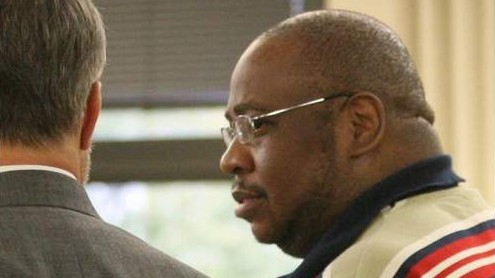 Dellmus Colvin
Serial killer · 1987
Dellmus Colvin (also written as Dellmus Colvin; truck driver): convicted serial…
7 victims
Dellmus Colvin
Serial killer · 1987
Dellmus Colvin (also written as Dellmus Colvin; truck driver): convicted serial…
7 victims
- Gender
- male
- Country
- USA
- Location
- Accomack County, Virginia, USA
- Date of birth
- J une 11, 1963
- Age at first offence
- 31
- Characteristics
- rape, sexual assault
- Victim profile
- Tessa Van Hart, 23 (pizza delivery woman)
- Method of murder
- Shooting
- Date(s) of murder
- January 27, 1994
- Years active
- 1994
- Date of arrest
- June 1996
- Status
-
Executed
Executed by lethal injection in Virginia on March 18, 2004
Case record: Brian Lee Cherrix
Timeline
- January 27, 1994 — Tessa Van Hart worked as a pizza delivery person on Chincoteague Island, and a man telephoned the restaurant to order a pizza delivery to an address in the “Small Piney Island” area of Chincoteague.
- Around 7:45 p.m. (January 27, 1994) — Van Hart left the restaurant to deliver the pizza.
- Shortly after midnight (January 28, 1994) — Police found Van Hart’s vehicle behind a vacant home approximately one mile from the Small Piney Island area; her body was found in the back seat.
- February 1994 — Cherrix told police that his cousin, Robert Birch, III, told him the cousin had lured Van Hart to an unoccupied residence by ordering a pizza, raped and shot her, and discarded the rifle used in the crime in a nearby creek.
- 1995 — Cherrix told authorities that Robert Birch, III died in 1995 (described in the materials as dying in a car crash).
- June 3, 1996 — While in the Accomack County Jail pending sentencing on unrelated charges, Cherrix contacted Accomack County Sheriff Robert Crockett, offering information about the Van Hart murder in return for leniency.
- June 4, 1996 — Cherrix asked to speak with Sheriff Robert Crockett; he told him he had information on the Tessa Van Hart murder that he would share in return for leniency.
- June 7, 1996 — Still contending that Birch shot Van Hart, Cherrix showed police where to find the murder weapon; divers recovered a .22 caliber Marlin rifle at the location indicated by Cherrix.
- August 1996 — Cherrix was transferred to the custody of the Virginia Department of Corrections to serve his sentence after being sentenced on unrelated charges to 20 years imprisonment with all but nine years suspended.
- April 16, 1997 — Cherrix was returned to Accomack County Jail on charges of uttering and grand larceny.
- April 17, 1997 — Counsel was appointed for Cherrix’s uttering and grand larceny charges.
- April 25, 1997 — Cherrix submitted a written request to the Accomack County Jail authorities asking to see Lewis; after being advised of his Miranda rights, Cherrix confessed to the murder and sodomy and then directed officers to locations described in his confession.
- Early 1998 — Cherrix was convicted and sentenced to death.
- February 26, 1999 — The Supreme Court of Virginia upheld Cherrix’s death sentence.
- January 12, 2001 — A federal judge ordered new DNA testing for Virginia death row inmate Brian Lee Cherrix.
- February 5, 2001 — The Fourth Circuit issued an emergency stay blocking the order for DNA testing.
- July 2001 — After hearing arguments from the Virginia Attorney General’s Office, the Fourth Circuit sided with the lower court and ordered that DNA testing be carried out.
- 2003 — DNA testing requested by Cherrix on seminal fluid found in the victim’s body proved inconclusive (as described in the materials).
- March 18, 2004 — Cherrix was executed by lethal injection in Virginia.
- 9:10 p.m. (March 18, 2004) — Cherrix was pronounced dead in the death house of the Greensville Correctional Center.
Background
Tessa Van Hart was 23 years old and was the mother of two young children. She worked as a pizza delivery woman for the Famous Pizza and Sub Shop on Chincoteague Island, where her husband, Walter “Binky” Van Hart, was a cook.
A man telephoned the restaurant and ordered a pizza to be delivered to an address in the “Small Piney Island” area. Van Hart did not know the address was for an unoccupied summer residence.
The offence
On the night of January 27, 1994, Van Hart left the restaurant with the pizza about 7:45 p.m. When she did not return, police were notified and began a search.
Shortly after midnight on January 28, police found Van Hart’s vehicle behind a vacant home about one mile from where she was to deliver the pizza, with the undelivered pizza in the front seat and her body in the back seat. Van Hart had been shot twice in the head and sodomized.
In later proceedings described in the materials, it was stated that Van Hart was lured to a deserted or unoccupied residence by the pizza order, that she was raped/forcibly sodomized, and that she was shot twice.
Investigation
Van Hart’s murder went unsolved for more than two years.
Cherrix, who was in jail pending sentencing on unrelated charges, later contacted authorities and offered to trade information about the Van Hart murder for leniency. He initially told authorities that a cousin, Robert Birch, III, had died in 1995 and had killed Van Hart, and he said Birch had lured Van Hart to an unoccupied residence by ordering a pizza, raped and shot her, and disposed of the rifle in a nearby creek.
The state police investigated Birch’s whereabouts on the night of the murder and concluded he was not a suspect.
Cherrix agreed to go to Chincoteague to show officers the location of the rifle. He directed Trooper Mark Fowler to the place he claimed Birch had told him he threw the rifle. Divers recovered a .22 caliber Marlin rifle at the location indicated by Cherrix.
Later, after additional interviews, Cherrix confessed to committing the murder and sodomy. He accompanied officers and directed them to various locations he described in his confession, and he pointed out where the murder weapon had been thrown into a creek.
At a preliminary hearing, it was described that Cherrix’s confession to Chincoteague police Captain Eddie Lewis was the key piece of evidence, and that over time Cherrix provided conflicting stories about the Van Hart murder.
Dr. Leah Bush, assistant chief medical examiner for the state in Norfolk, performed Van Hart’s autopsy and found evidence of anal intercourse. At trial proceedings described, her autopsy also showed bruises and abrasions on her forehead, cheek, nose, and mouth sometime around the time of death, and her body showed dirt and grass on her knees.
Arrest / custody and related charges
At various points, Cherrix was described as incarcerated on unrelated charges.
One account described him as serving a 9-year sentence for wounding his half-brother with a shotgun, and later being sent back to the Accomack County Jail on new charges including grand larceny. Another account described that, in August 1996, he was transferred to the Virginia Department of Corrections to serve his sentence after unrelated charges resulted in a 20-year sentence with all but nine years suspended.
On April 16, 1997, he was returned to Accomack County Jail on charges of uttering and grand larceny, and on April 17, 1997, counsel was appointed.
Trial
At trial, it was stated that Cherrix contended that his confession was fabricated.
The materials also stated that Cherrix was convicted and sentenced to death for capital murder and that the Supreme Court of Virginia consolidated his appeal with its proportionality review.
Sentencing
Cherrix was sentenced to death in early 1998 for the murder of Tessa Van Hart.
The Supreme Court of Virginia upheld his death sentence on February 26, 1999. The Supreme Court rejected his claims and affirmed the judgment of the trial court, including declining to commute the sentence of death.
Appeals / post-conviction DNA testing
After his direct appeal, federal habeas proceedings included court orders for DNA testing of seminal fluid taken from Van Hart’s body.
In January 2001, a federal judge ordered new DNA testing and ruled that Cherrix needed laboratory work to verify his claim that he was wrongfully convicted. The Virginia Attorney General’s office asked a federal appeals court to block the ruling, arguing the district judge overstepped constitutional authority in ordering the state to turn over evidence.
The Fourth Circuit issued an emergency stay on February 5, 2001, and later, in July 2001, ordered that DNA testing be carried out after hearing arguments. The materials describe that the tests were once again inconclusive.
The materials also described that testing of seminal fluid found in the victim’s body was inconclusive and that later testing consumed remaining DNA evidence, leaving none for future testing.
Outcome
Cherrix was executed by lethal injection in Virginia on March 18, 2004.
He was pronounced dead at 9:10 p.m. in the death house of the Greensville Correctional Center at Jarratt. A statement reported that he declined to make a final statement and that he met with family members, clergy, and his lawyers before execution.
At the execution, it was stated that he had no last words, but a spiritual adviser leaned over and said a few words to him after he was strapped to the gurney.
Other details
Cherrix was described as 30 at the time of execution and was identified as being from Accomack County, Virginia. He was described as having been housed at Sussex I State Prison in nearby Waverly.
Van Hart’s widower and other relatives were described as traveling to attend the execution, with one quoted reaction from Walter “Bink” Van Hart:
- Walter “Bink” Van Hart said: “Good, it will be done and over with,” and “It will put some closure on everything.”
Van Hart’s sister, Grace Hitchens, was quoted:
- Grace Hitchens said: “I saw enough of [Cherrix] at the trial,” and “I think getting a lethal injection is too simple compared to what he did to her.”
Michele Brace, one of Cherrix’s attorneys, was quoted:
- “we are pleased the judge recognized the importance of DNA in this case.”
- “It’s ironic that the attorney general is fighting so hard to prevent DNA testing of a prisoner who may be innocent of the crime, when the Virginia Supreme Court and the General Assembly are looking for ways to make it easier for innocent prisoners to get DNA tests in state courts,”
Robert L. Jenkins Jr., one of Cherrix’s lawyers, was quoted about clemency and a request regarding autopsy:
- “we are in the process of trying to negotiate a resolution. Nothing has been finalized, but we intend to reach a mutually agreeable solution in the next 24 hours.”
At a preliminary hearing, Cherrix’s statements to officers were described through testimony, including the account attributed to Captain Eddie Lewis:
- “I always admired her. I would order pizza and give her a $20 tip just to see her,”
- “She told me I had pretty kids, like their father.” Lewis also testified that Cherrix told him that Van Hart begged for her life and that she would act like it never happened:
- “She lay face down in the dirt, begging for her life, swearing she would act like it never happened.”
The materials included a quoted statement from Cherrix reported as his response when asked about a last statement:
- “No, I do not.”
Spotted an error, or have more information about this case?